Tuxedo Terminology: a Glossary for Beginners
What do facing, galon, cummerbund, studs, wing collar and barathea mean? A short glossary grouped by jacket, trousers, shirt and accessories.
Editor: Mon Amie · Published · about 4 min read · Updated 09/11/2026
In this article
Walk into a tuxedo tailor's and you will hear facing, braid, barathea and studs said as if everyone knew them. That is not meant to intimidate; they are short words that replace long descriptions. This glossary gathers the common terms into four groups: jacket, trousers, shirt and accessories, with the Vietnamese terms tailors use.
The jacket
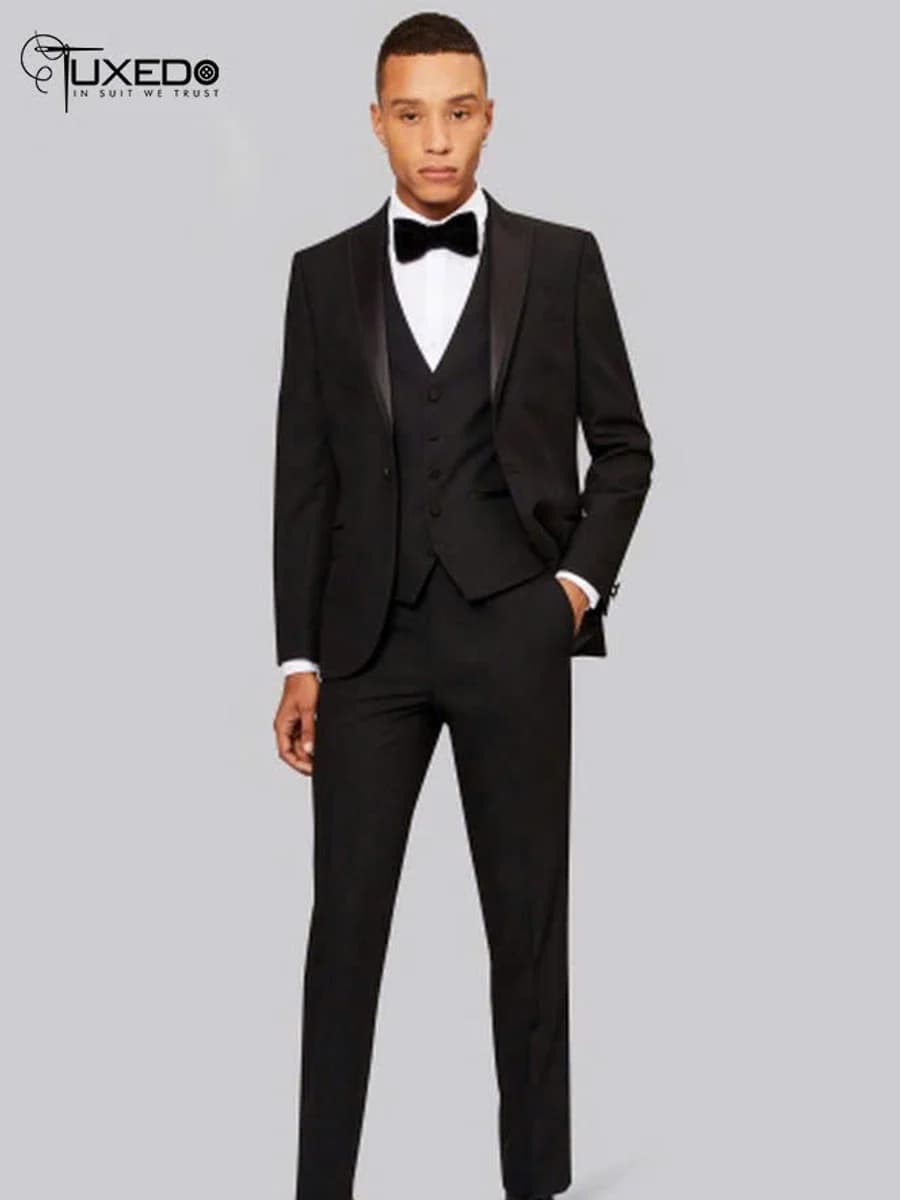
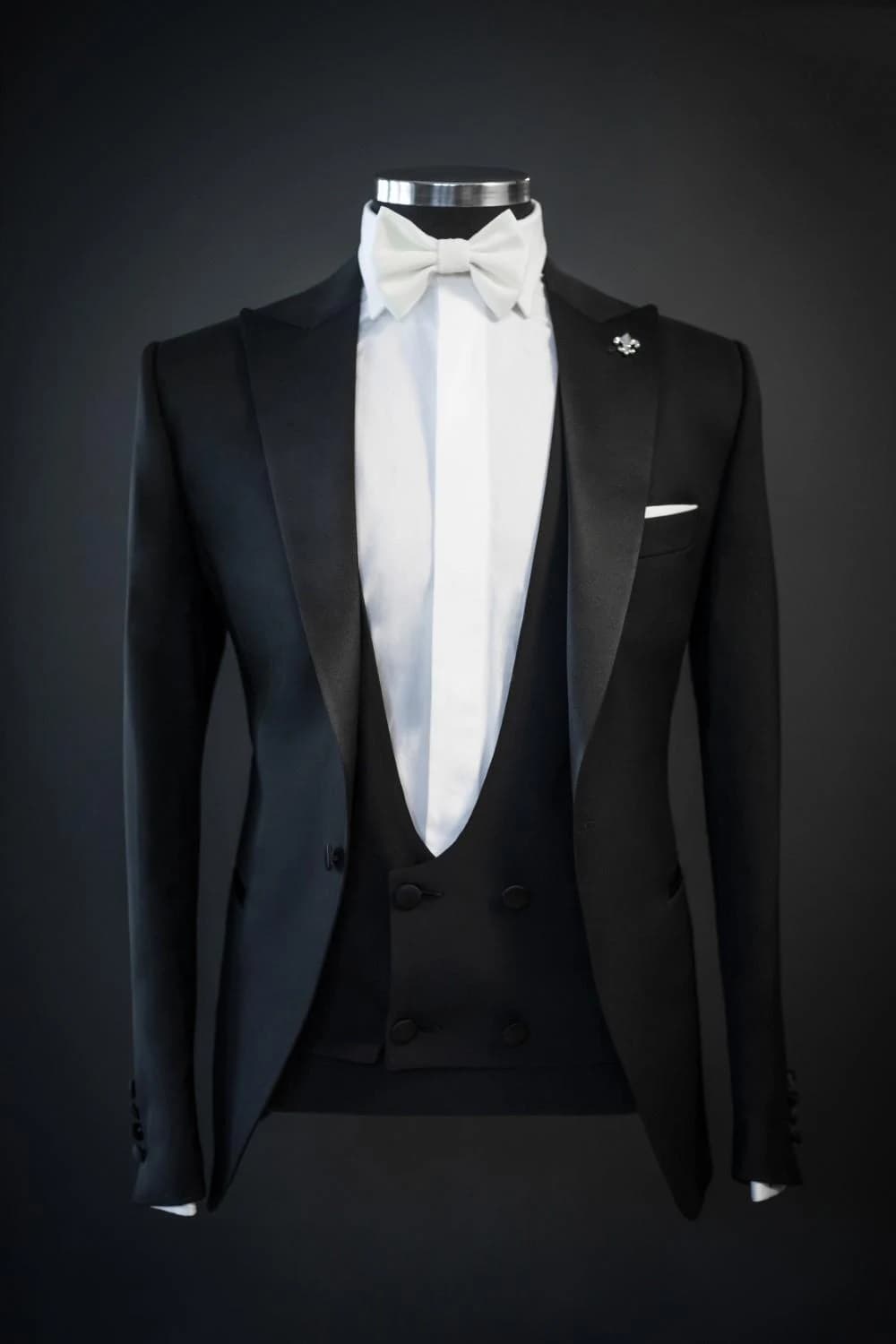
- Facing (mặt ve): the glossy cloth, usually satin or grosgrain, that covers the lapels. It is an easy sign for telling a tuxedo from a suit. Its origin is explained in why tuxedo lapels are faced in silk.
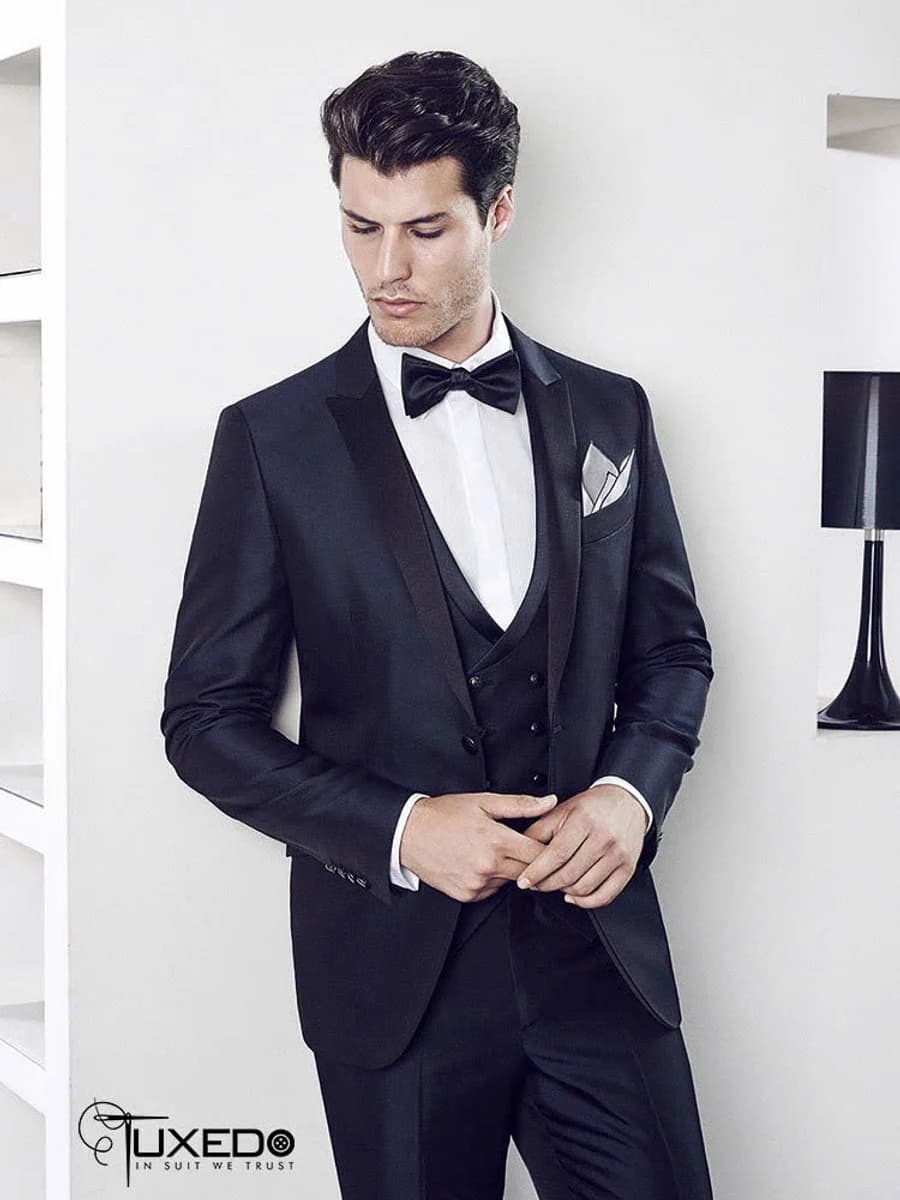
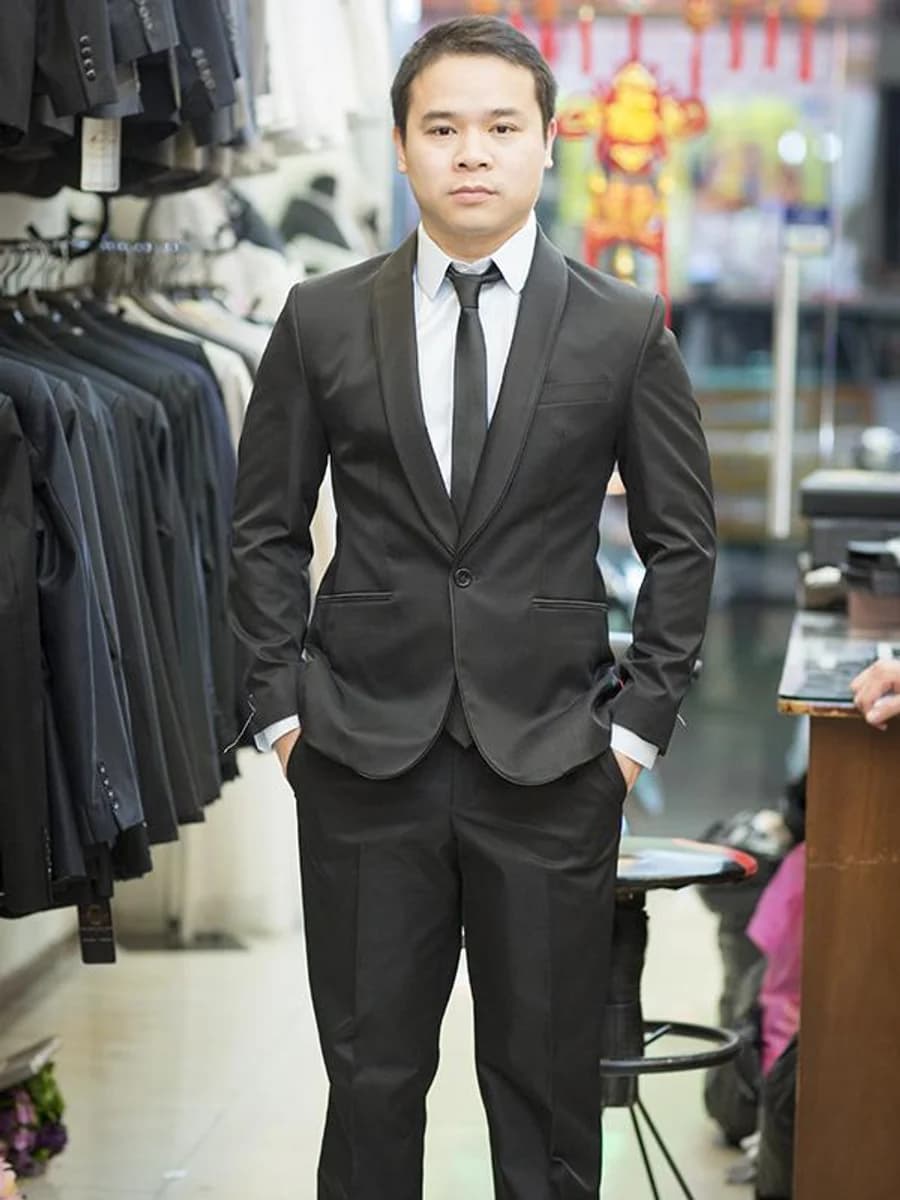
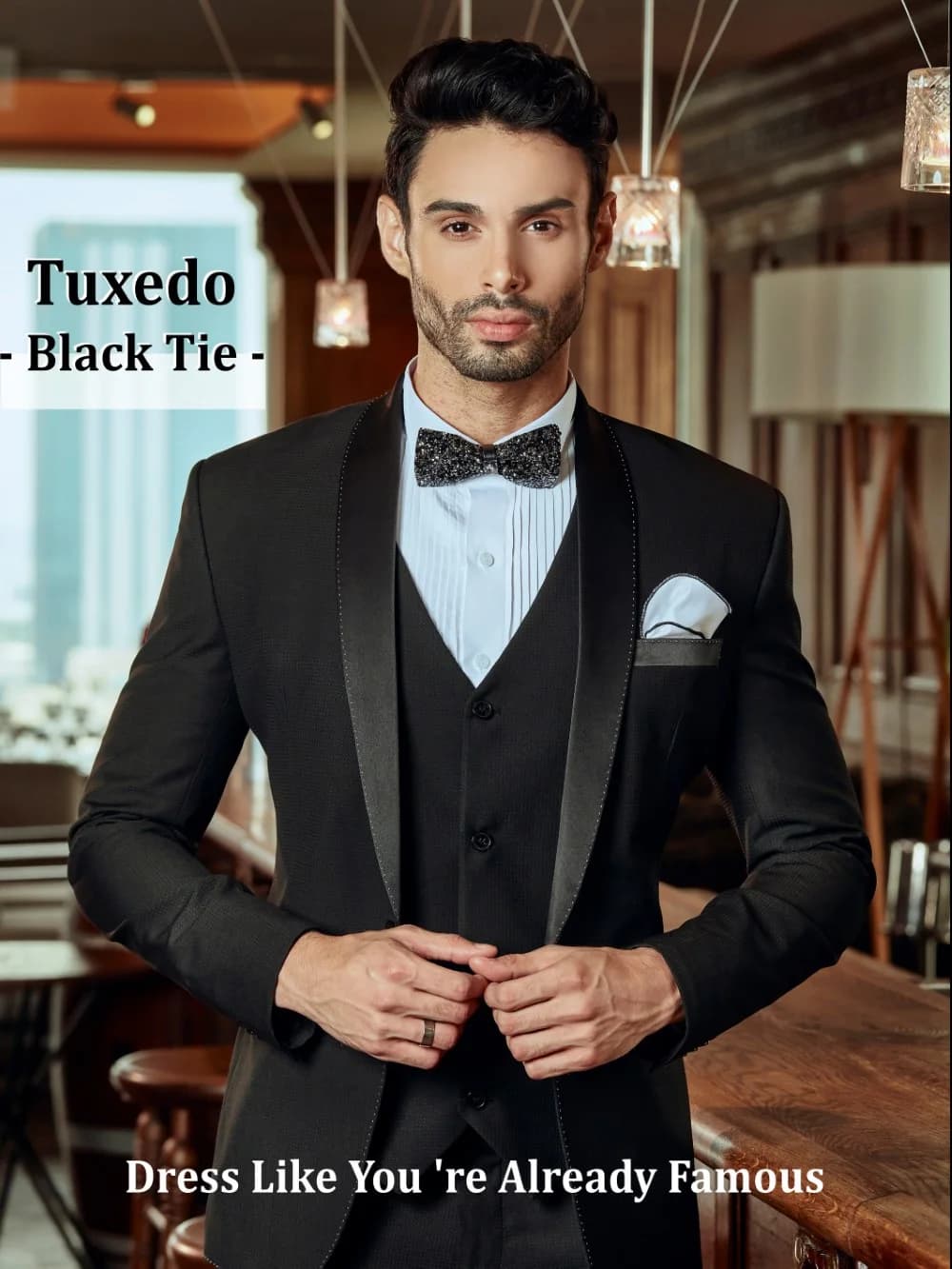
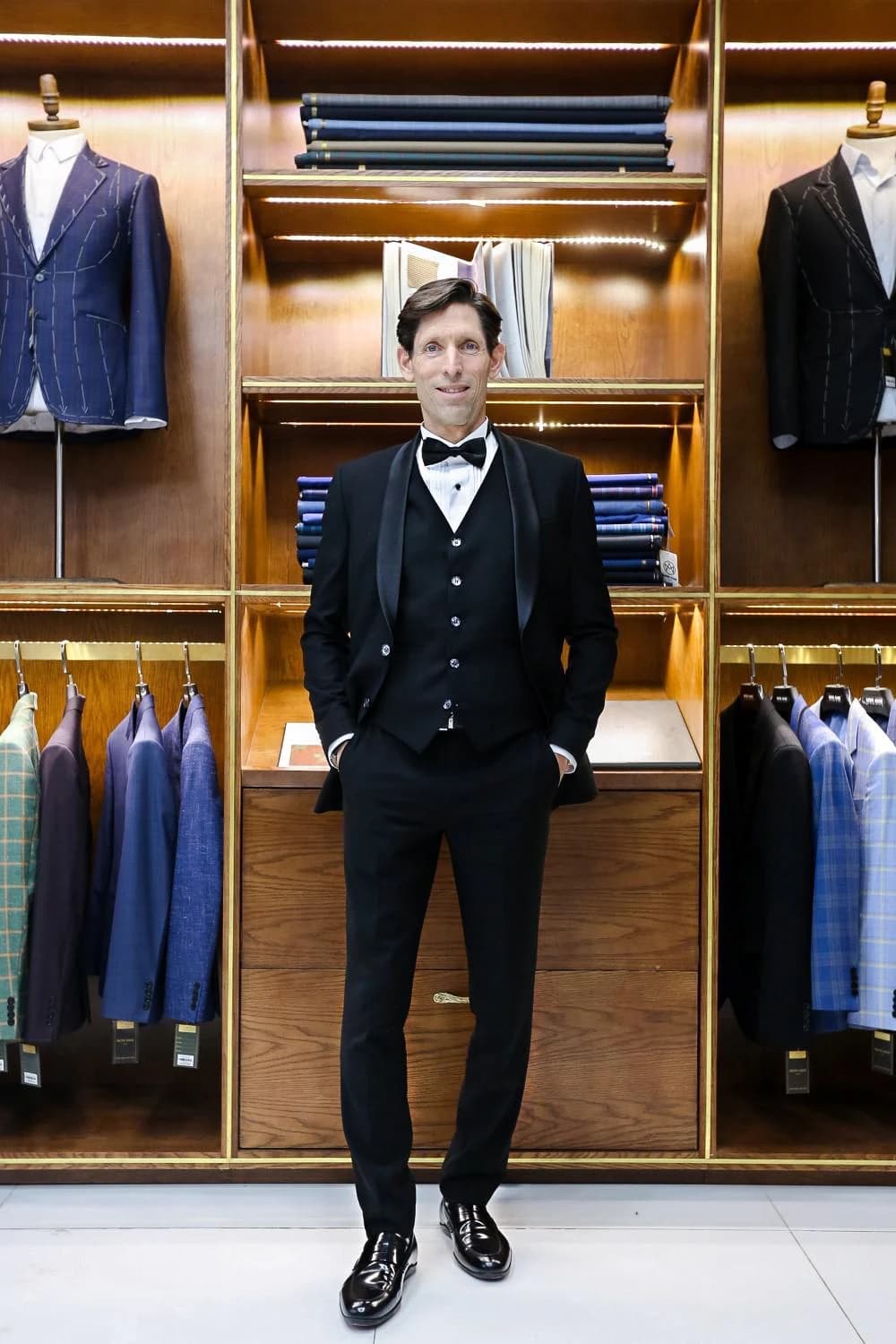
- Shawl lapel (ve khăn): a rounded lapel in one unbroken curve from collar to button, with no notch.
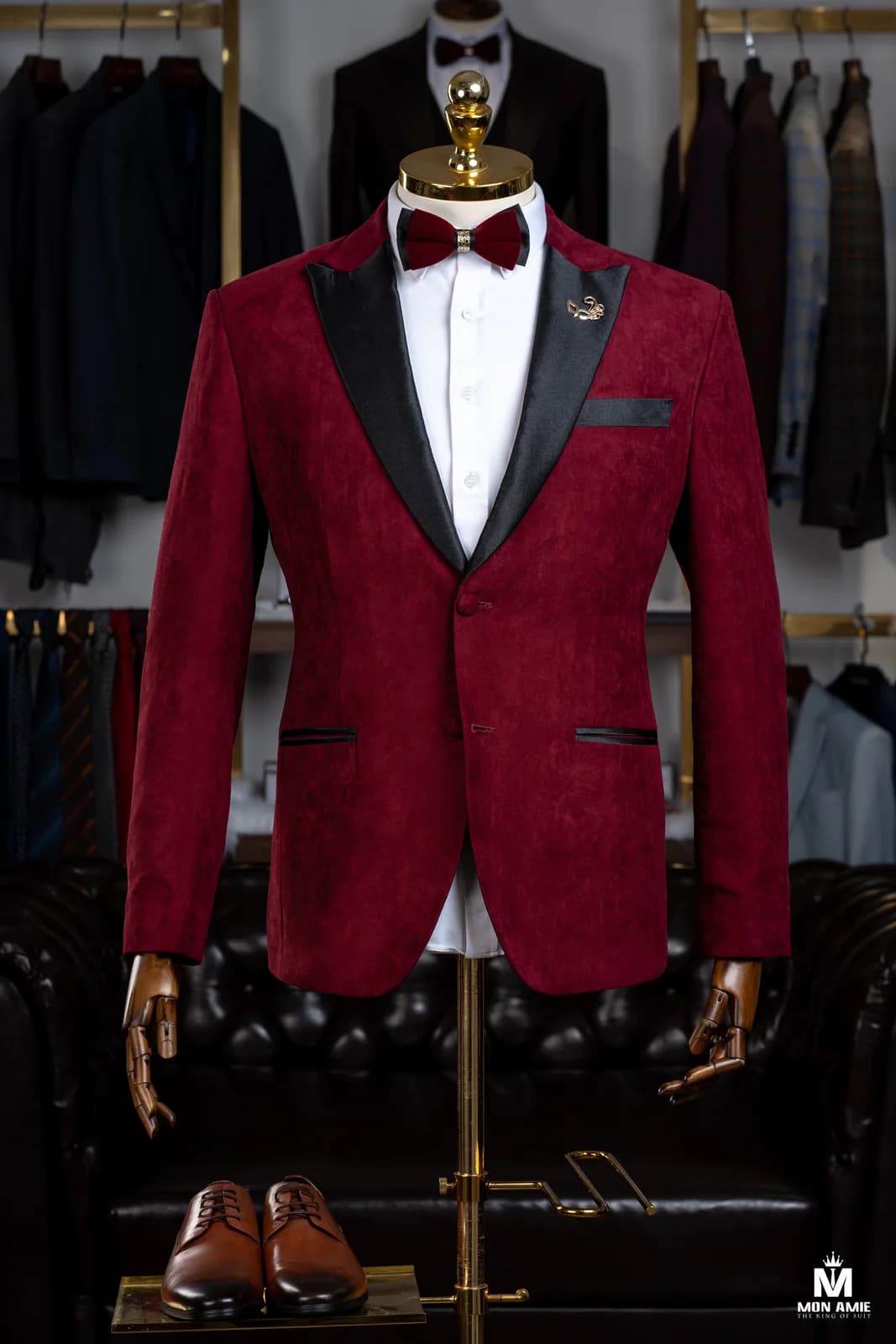
- Peak lapel (ve nhọn): the lapel point sweeps up toward the shoulder, making the shoulders look broader.
- Notch lapel (ve xuôi): a lapel with a notch, as on an ordinary suit, and regarded as less standard for formalwear. Choosing between lapels is covered in choosing a tuxedo lapel.
- Covered button (khuy bọc): a button wrapped in the same cloth as the facing, so it looks seamless with no metal or plastic showing.
- Jetted pocket (túi viền): a pocket cut as a narrow slit with a thin edge and no flap. The traditional tuxedo uses this in place of a flapped pocket.
- Vent (xẻ tà): the slit at the centre back or the sides of the hem. A traditional formal jacket usually has none.
- Canvas (lớp dựng): the stiffening layer inside the chest that holds the shape. A canvassed jacket gives a lapel a more natural roll than a fused one.
- Barathea: a weave with a fine, slightly raised pebbled surface, in wool or silk, classic for the body of a tuxedo.
The trousers
- Braid (galon): a satin or grosgrain stripe down the outside of the leg, matching the lapel facing. Why it is there is told in why tuxedo trousers have a silk side stripe.
- High rise (cạp cao): traditional tuxedo trousers sit at the natural waist, higher than ordinary suit trousers, to cover the shirt base under a waistcoat or cummerbund.
- Side adjusters (đai chỉnh eo hai bên): buckled tabs on each side of the waistband in place of a belt.
- Braces buttons (khuy gài dây đeo): a row of buttons inside the waistband for attaching braces.
- No cuffs, no belt loops: a plain hem and a waistband without loops for a belt. This is explored in what a tuxedo leaves out.
The shirt
- Wing collar (cổ cánh én): an upright collar with the two corners folded outward like wings, worn with a bow tie. More common with white tie, but still used for black tie.
- Turndown collar (cổ bẻ): an ordinary shirt collar, accepted in modern black tie.
- Piqué or marcella front (ngực chần): a chest panel woven in a raised quilted texture, stiff and smooth, worn with studs.
- Pleated front (ngực xếp ly): a shirt front with small vertical pleats, softer than a piqué front.
- Studs (khuy ngực): decorative buttons in place of ordinary shirt buttons, often onyx or metal, fastened through the buttonholes down the front.
- Cufflinks (khuy măng sét): fasteners for the shirt cuff in place of cloth buttons.
- Double cuff or French cuff (cổ tay gập đôi): a cuff folded back on itself to take cufflinks.
Accessories
- Bow tie (nơ): black. A self-tie has a more natural shape than a pre-tied one.
- Cummerbund (đai bụng): a wide band of cloth around the waist with pleats facing up. Details in three-piece tuxedo: waistcoat or cummerbund.
- Evening waistcoat (gile hở ngực): a low-cut waistcoat that shows the shirt front, worn with a tuxedo instead of a cummerbund.
- Pocket square (khăn túi): a handkerchief in the breast pocket, usually white, folded flat or in a point.
- Patent shoes (giày da bóng): lacquered leather. An opera pump is a plain-toe, low-cut shoe with a silk bow, very traditional.
- Lapel pin (ghim ve): a small pin on the lapel, optional.
A quick way to check a tuxedo
To test whether a suit meets the formalwear standard, look at three places: is the lapel faced, does the trouser have a braid, are the pockets jetted. These three details are enough to separate a tuxedo from a dark suit. More on construction is in the anatomy of a tuxedo jacket, and how to style each item is in the rules for styling a tuxedo.
Ask your tailor in your own words
You do not need to memorise any of this. Say roughly what you want, and the consultant will translate it into the language of the trade and put the cloth in your hands. If you would like the terms explained on a particular suit, see the made-to-measure tuxedo page or book a visit to a showroom.
Published 16/10/2026 · Editor: Mon Amie