Style & accessories
Shawl, Peak or Notch: Choosing Your Tuxedo Lapel
Shawl, peak or notch lapels on a tuxedo: their origins, how formal each is, which suits your build and face, lapel width, and satin versus grosgrain facings.
Mon Amie · 15/10/2026
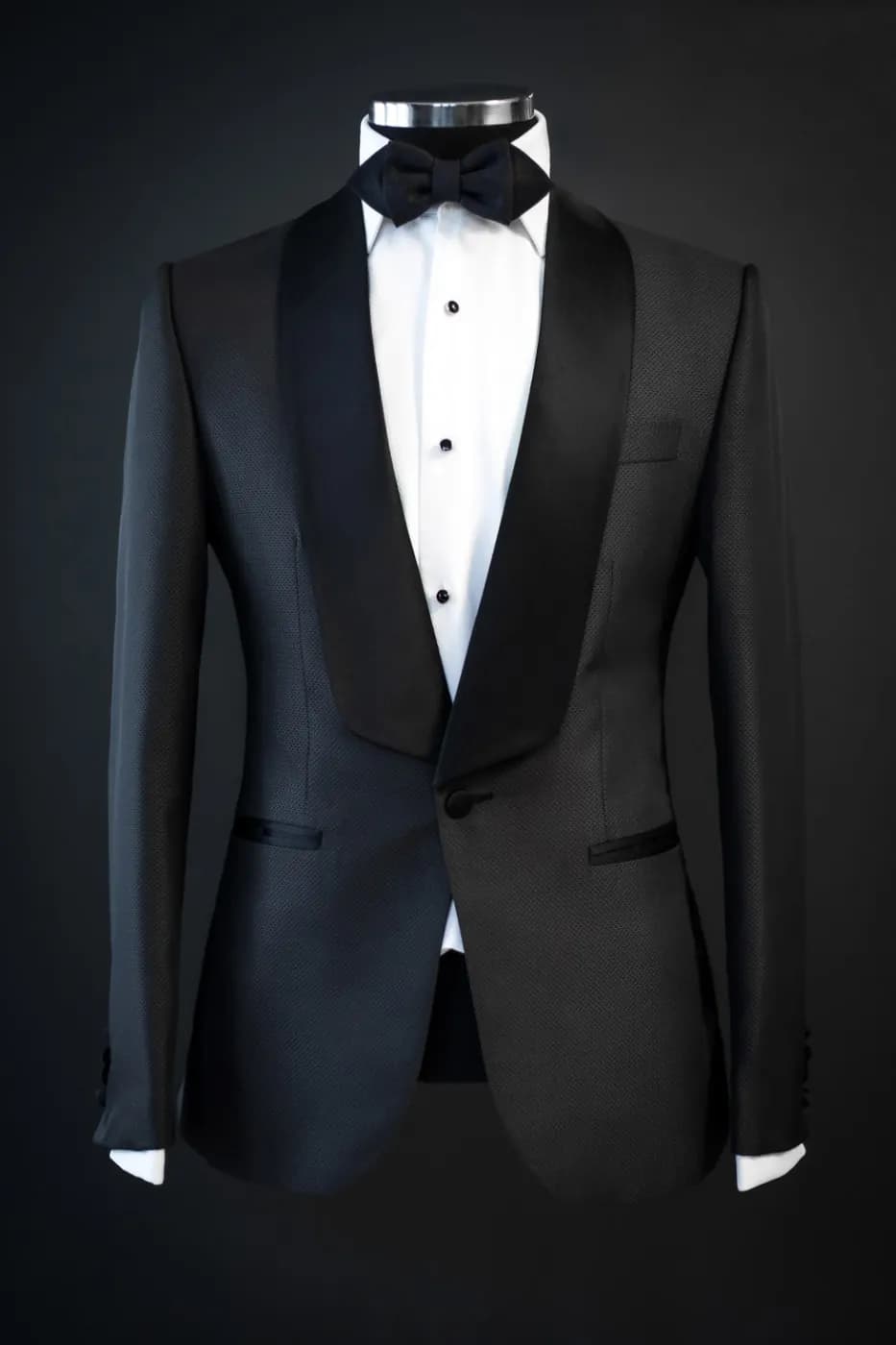
A tuxedo has two traditional lapels: the shawl collar and the peak lapel. The shawl is soft and classic; the peak is sharp, formal and broadens the shoulders. The notch lapel is still widely worn, but it carries the look of a business suit and is therefore less ceremonial. Which one you choose depends on the occasion, your build and your personality.
The shawl collar: one unbroken curve
A shawl collar runs in a single continuous curve from the neck to the button, with no notch and no point. It descends from the Victorian smoking jacket, the velvet jacket gentlemen wore in the smoking room after dinner, and it keeps that relaxed, convivial evening spirit.
The shawl suits tall, slim men, angular faces, and broad-shouldered men who want to soften the chest. If you have a short neck or sloping shoulders, try it on first, as the continuous curve can make the neck look shorter. A pared-back example is TUX-067: jet black, a seamless satin shawl collar and a single button.
The peak lapel: formal and sharp
On a peak lapel, the points sweep up toward the shoulders. It is the lapel of the evening tailcoat, so on a tuxedo it brings a distinctly ceremonial air. Double-breasted dinner jackets traditionally take a peak lapel or a shawl collar.
The line of the peaks draws the eye upward and outward to the shoulders, making you look taller and better proportioned through the upper body. That is why the peak lapel flatters shorter men, fuller builds and rounder faces. If your shoulders are already very broad, keep the lapel to a moderate width. TUX-080, with satin-faced peak lapels and one button, is easy to style for many occasions.
The notch lapel: easy to wear, less formal
A notch lapel has a small step-shaped cut where the lapel meets the collar, as on most business suits. Many traditional tailors regard it as a detail borrowed from the suit, which makes a notch lapel tuxedo less formal than a shawl or peak.
Even so, a satin-faced notch lapel is a sensible choice for a first tuxedo, for a black tie optional event, or when you want a familiar shape that draws less attention. TUX-124, a two-button jacket with a satin-faced notch lapel, is a clean example.
The three lapels at a glance
| Lapel | Formality | Character | Suits | Occasions |
|---|---|---|---|---|
| Shawl | High | Soft, classic, relaxed | Tall and slim, angular faces, broad shoulders | Galas, evening weddings, black tie |
| Peak | High | Sharp, assured, authoritative | Shorter, fuller builds, round faces | Weddings, award nights, black tie, double-breasted jackets |
| Notch | Moderate | Familiar, easy | Most builds | Black tie optional, less ceremonial evenings |
If you will own only one tuxedo
If you are having a single tuxedo made to wear across many occasions over many years, choose a shawl collar or a peak lapel of moderate width, faced in black satin or grosgrain, on a black or midnight blue cloth. That combination is correct black tie, works from weddings to corporate galas, and is little affected by passing trends.
Very wide lapels, dotted trims or beading are better saved for a second tuxedo, once a classic one is already in your wardrobe.
Lapel width: in balance with shoulders and bow tie
Lapel width should balance the width of your shoulders and the size of your bow tie. Tall, broad men can carry a wide lapel; slighter men should choose a moderate width so the lapels do not overwhelm the jacket. Very narrow lapels may look fashionable for a season, but they date quickly in wedding photographs.
A rule of thumb: the outer edge of the lapel and the wings of the bow tie should be in similar proportion. A tiny bow tie between wide lapels, or the reverse, throws the chest out of balance.
Facings: satin or grosgrain
- Satin: glossy, catches the light and photographs crisply. It is the most common choice, especially for weddings and the stage.
- Grosgrain: a fine horizontal rib with a more matte, subdued finish, favoured by men who prefer understatement.
- Self-faced: a white or ivory dinner jacket traditionally has lapels in the same cloth rather than satin, as on TUX-106 with its self-colour shawl collar.
Whatever the facing, the bow tie, covered buttons and trouser stripe should match it. If you plan to wear a flower, ask for a working buttonhole on the left lapel.
Lapels and fit
How good a lapel looks also depends on the fit through the shoulders and chest. A lapel that lies flat, follows the chest and does not lift at the edge when you button the jacket is the sign of a jacket that fits. If a lapel bows or gapes, the cause is usually the shoulders or chest not matching your measurements, not the lapel style itself. The points to check at a fitting are covered in how to choose a tuxedo.
How Mon Amie can help
At the showroom, Mon Amie advisors can show you different lapel styles on sample jackets so you can try them and compare in the mirror, then choose the lapel width and facing that suit your build when you have a made-to-measure tuxedo made. Making time depends on the model and your fitting schedule, and your advisor will confirm it when measuring you. Book a showroom appointment.