Style & accessories
Three-piece tuxedo: waistcoat or cummerbund
A waistcoat and a cummerbund both cover a tuxedo's waist but differ in formality, comfort and wear. A clear comparison, plus the common mistakes to avoid.
Mon Amie · 15/10/2026
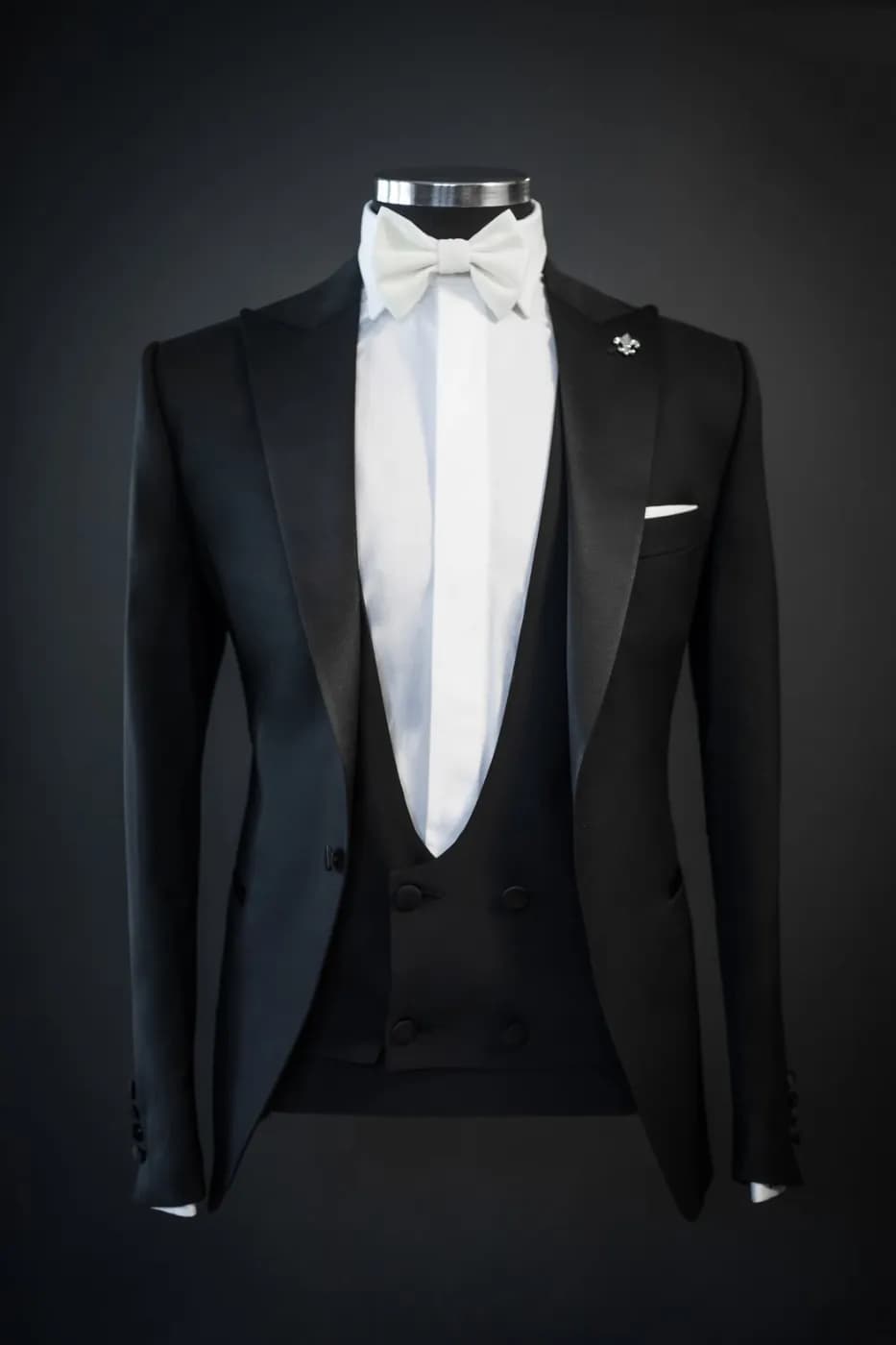
A waistcoat and a cummerbund do the same job: they cover the trouser waistband and the edge of the shirt between jacket and trousers, so the front reads as one clean expanse of black. The waistcoat is more formal and keeps you looking finished when the jacket comes off; the cummerbund is lighter, cooler and thoroughly classic. Choose one or the other, never both.
Why a tuxedo needs the waist covered
A single-breasted dinner jacket usually has a single button and a deep opening that shows a good deal of shirt front. Every time you sit down or reach for something, the gap between the waistband and the jacket button tends to reveal a rumpled band of shirt, which spoils the line.
Traditional tuxedo trousers have no belt loops and are never worn with a belt. They are held up by braces or by side adjusters at the waistband. The waistcoat or cummerbund covers that area and completes the front as a single unbroken surface.
A double-breasted jacket is different. It stays buttoned all evening, the front is already covered, and neither a waistcoat nor a cummerbund is needed.
The cummerbund: light, cool and classic
The word comes from "kamarband", a sash worn around the waist. British officers in colonial India adopted it in place of a waistcoat in the heat, and it made its way from there into evening dress.
A cummerbund is a horizontally pleated band that wraps around the waist and fastens at the back. A few points to remember:
- Pleats face upward. Worn upside down, it is a mistake anyone will notice.
- Match the lapel facing. Satin lapels call for a satin cummerbund, grosgrain lapels for grosgrain. A bow tie in the same material completes the classic pairing.
- Position. It sits over the waistband, with its lower edge covering it completely and no shirt showing.
- Colour. Black is the black tie standard. Coloured or patterned cummerbunds belong to creative black tie and more relaxed evenings.
TUX-054 shows the classic approach: satin shawl lapels, a pleated waist sash and a pleated-front shirt. With a white dinner jacket, a black cummerbund and black trousers, as on TUX-106, is the familiar combination.
The cummerbund's weak point is the moment you take off your jacket. From behind there are only braces and the back of a shirt, which looks far less finished.
The evening waistcoat: formal even in shirtsleeves
A tuxedo waistcoat is not a suit waistcoat. The evening waistcoat is cut low, in a deep U or V, to show the pleated or piqué shirt front and its studs. Some have small shawl lapels, some have none; some are single-breasted, some double-breasted.
What to look for:
- Colour and cloth. Black, in the suit cloth or faced in satin, is the standard. A white piqué waistcoat belongs to white tie, not black tie.
- Length. Long enough to cover the waistband, and never peeking out below the jacket's buttoning point.
- Fit. It should lie flat on the body, without horizontal creases when you sit.
- Backless waistcoat. Some evening waistcoats have only a strap across the back, which keeps them cooler and works well when you plan to keep the jacket on.
TUX-076 is a black three-piece with shawl lapels and a deep V waistcoat that shows just the right amount of pleated shirt front. TUX-031 uses a double-breasted waistcoat for those who like a more layered front.
At a glance
| Waistcoat | Cummerbund | |
|---|---|---|
| Formality | Very formal | Formal, classic |
| Jacket off | Still neat and complete | Braces and shirt back on show |
| Comfort | Warmer, unless backless | Light and airy |
| Effect on the figure | Lengthens the front | Draws the eye to the waist |
| With a double-breasted jacket | Not needed | Not needed |
| Cost | One more tailored piece | Usually lower |
Choosing by occasion and build
- The groom. A wedding day is long, with photographs, dancing and moments when the jacket comes off. A waistcoat keeps you looking put together throughout. See our ideas for wedding tuxedos.
- A gala in an air-conditioned ballroom. Either works. Let the lapel style and your own taste decide.
- Outdoor parties or hot weather. A cummerbund is lighter and cooler, or a backless waistcoat if you still want three pieces.
- A white dinner jacket. A black cummerbund is the familiar choice and keeps the white jacket looking light.
- A fuller midsection. A V-cut waistcoat creates a vertical line that makes the torso look longer and trimmer. A cummerbund draws a horizontal band right across the waist.
- A slim build with a narrow waist. A cummerbund shows off the waistline beautifully.
Common mistakes
- Wearing a waistcoat and a cummerbund together.
- Wearing the cummerbund upside down, pleats facing down.
- A waistcoat so long it shows below the jacket front.
- Wearing a belt with tuxedo trousers.
- Borrowing a high-cut suit waistcoat that hides the shirt front.
- Choosing a loud waistcoat or cummerbund for a strict black tie event.
Once you have settled the waist, our guide to tuxedo styling rules covers the shirt, bow tie and shoes.
How Mon Amie can help
In the showroom you can see waistcoats and cummerbunds on real garments and compare them in front of the mirror. A TUXEDO by Mon Amie consultant will suggest the option that suits your occasion and build. You can book a consultation or call or message us on Zalo at 0888.111.118.