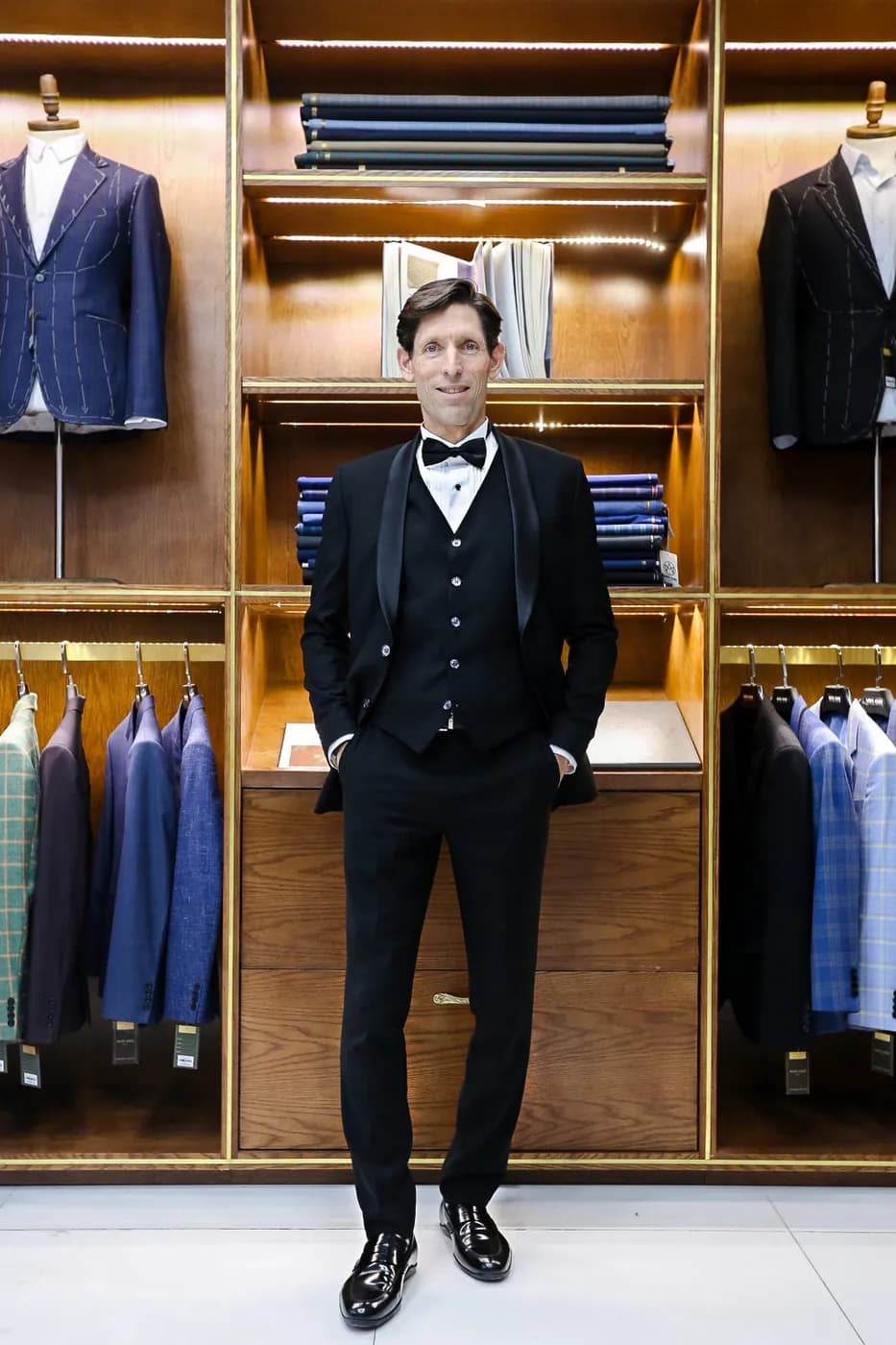
Tuxedo know-how
The Black Tie Tuxedo Standard: What a Proper Tuxedo Includes
What makes a proper black tie tuxedo: colour and cloth, silk-faced shawl or peak lapels, covered buttons, jetted pockets, braided trousers, fit and a checklist.
Mon Amie · 15/10/2026
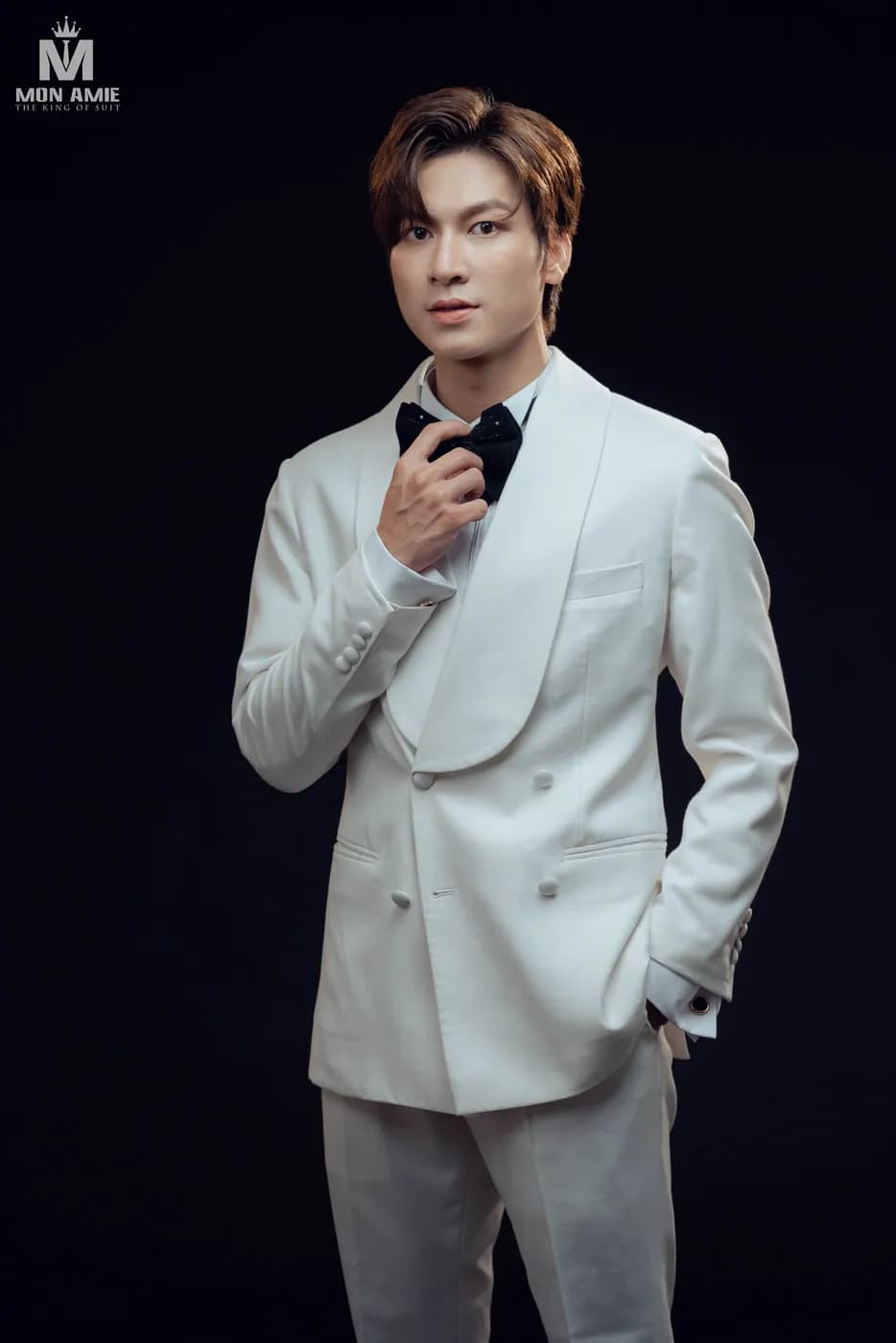
A proper black tie tuxedo consists of a single-breasted one-button (or double-breasted) jacket in black or midnight blue, shawl or peak lapels faced in silk, matching trousers with a side braid, a white shirt with double cuffs, a self-tied black bow tie, a cummerbund or low-cut waistcoat, and polished black shoes. Every variation revolves around that framework. Below, we go through each element so you can check your own outfit.
Colour and cloth
The standard colours are black and midnight blue, a very dark navy that looks remarkably deep under artificial light. The ivory or white dinner jacket is a legitimate variation for evening events in hot climates or outdoors, worn with black braided trousers. Burgundy, emerald or patterned velvet belong to creative black tie rather than the original standard.
The body cloth should be matt or only faintly lustrous, so it contrasts with the silk lapels. Common choices are wool barathea, grain de poudre, wool-mohair blends (a subtle sheen, good crease recovery and breathability, well suited to hot weather) and fine worsted. Mon Amie's cloth library includes Vercelli, Kevinlli, Vitale Barberis Canonico and Holland & Sherry, so you can choose by budget and how you want the cloth to feel.
Jacket: lapels, buttons, pockets and vents
- Lapels: shawl or peak is the standard. A notch lapel is acceptable but less formal.
- Facings: satin (glossy) or grosgrain (ribbed silk). The facing is what defines a tuxedo.
- Buttons: a single-breasted jacket has one front button, covered in the facing silk or in black horn. A double-breasted jacket stays buttoned when standing.
- Pockets: jetted hip pockets without flaps, and a welt breast pocket for the pocket square.
- Vents: traditionally none; side vents are accepted and help the jacket sit cleanly when your hands are in your pockets.
- Sleeves: usually four buttons, matching the front button.
Our classic black peak lapel tuxedo is a clear example of this framework: matt cloth, glossy satin lapels, one button.
Trousers: braid, waistband and hem
The trousers are cut from the jacket cloth, with one braid down the outside seam in the same material as the facings. There are no belt loops; the trousers are held by braces or side adjusters. The rise should be high enough for the cummerbund or waistcoat to cover the waistband completely, with no shirt showing at the waist.
The hem has no turn-up. The trouser leg should just touch the top of the shoe with little or no break, so the braid runs in a straight line from hip to floor.
Shirt, bow tie and waist
A white shirt with a pleated or piqué front, a turndown or wing collar, and double cuffs with cufflinks. A self-tied black silk bow tie that matches the facings. The waist covered by either a cummerbund or a deep-cut waistcoat, never both. How to put each piece together, including shoes, socks and watch, is covered in our tuxedo styling rules.
Fit: the standard lies in the fit
A tuxedo with every correct detail that does not fit you still falls short. These are the points a master tailor always checks:
- Shoulders: clean and smooth, no ridges, no dimpling at the sleeve head.
- Collar: sitting close to the shirt collar, with about 1 cm of shirt collar visible at the back.
- Button point: at or just above the natural waist, lengthening the lapel line and shaping the body.
- Jacket length: just covering the seat.
- Sleeves: showing about 1 cm of shirt cuff.
- Trousers: sitting at the waist, falling straight, not tight across the thigh.
Because tuxedos are worn at moments that are photographed again and again, fit at the shoulders, collar and sleeves is what the camera records more clearly than anything else.
Quick checklist
| Element | Standard | Acceptable variation | Off-standard |
|---|---|---|---|
| Colour | Black, midnight blue | Ivory for hot or outdoor evenings | Grey, brown or stripes when black tie is stated |
| Lapels | Shawl or peak, silk-faced | Notch, silk-faced | Self-fabric, unfaced |
| Buttons | One, silk-covered | Double-breasted, black horn | Metal buttons |
| Pockets | Jetted | Welt breast pocket | Flap pockets |
| Trousers | Side braid, no belt loops | Side adjusters instead of braces | Belt loops, belt, turn-ups |
| Waist | Cummerbund or low-cut waistcoat | Double-breasted needs none | Waistband on show |
| Neck | Self-tied black bow | Pre-tied bow | Necktie |
If you are weighing black against midnight blue, our midnight blue three-piece tuxedo shows how the colour sits beside black satin lapels, while the ivory dinner jacket with black lapel is the choice for an outdoor evening.
How Mon Amie can help
TUXEDO by Mon Amie makes tuxedos to measure on exactly this framework, with the tailors of the Hoang Vy workshop (founded in 1991) and fittings to refine the shape; after you collect your tuxedo, further alterations are available if needed. Price depends on the cloth and details such as satin or velvet facings, a waistcoat or a pleated shirt, which you can preview on our price list. Making time depends on the model and your fitting schedule, and your consultant will confirm it when measuring; please book a showroom appointment well ahead of your wedding or event.