Tuxedo know-how
Why It Is Called a Tuxedo: the Name and Tuxedo Park
The word tuxedo comes from a resort in New York State, not from the jacket. The autumn ball of 1886 and the two legends around it, told with care.
Mon Amie · 15/10/2026
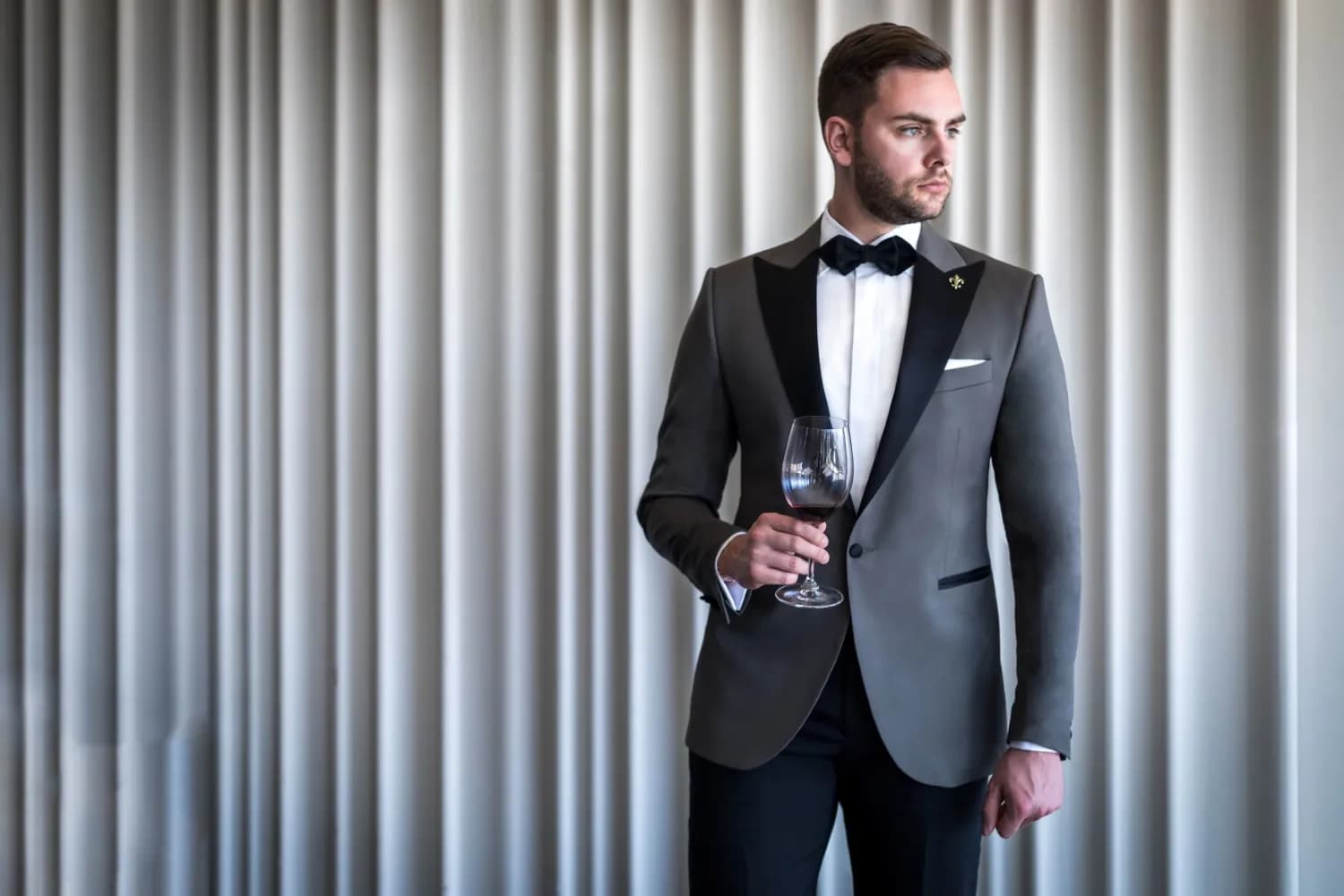
"Tuxedo" was the name of a place before it became the name of an outfit. Tuxedo Park was a private resort community for wealthy New Yorkers, and its club held an autumn ball in 1886 that is often named as the moment the word attached itself to the jacket. The place and the year are fairly solid; who wore what that night rests mostly on retelling.
Where Tuxedo Park is
Tuxedo Park lies in Orange County, north of New York City, around a lake in hilly country. Pierre Lorillard IV, heir to a wealthy tobacco family, laid it out from the mid-1880s as a weekend retreat with a gatehouse, large timber houses and a private club, usually called the Tuxedo Club.
The name "Tuxedo" itself has a deeper source. It is generally said to come from a word used by the native people of the region (the Lenape) for the lake and its surroundings, though the sources do not agree on its meaning. So be wary of any single neat translation.
The autumn ball of 1886
The club opened in 1886, and that autumn it held its first ball for members. The New York press followed the gatherings of high society closely, so what people wore that night was discussed for years.
One thing worth keeping in mind: the evening has been retold far more than it was recorded. Details of who came, what they wore and how many dressed alike come largely from memoirs and later writing, not from a contemporary list that can be checked.
The two stories most often told
The first story says a group of young men at the club, among them Pierre Lorillard's son Griswold, arrived at the ball in dress coats cut without tails instead of the required tailcoat. Onlookers were either startled or pleased, and the style became tied to the place.
The second story involves a member named James Brown Potter. It goes that he travelled to England, was pointed by the Prince of Wales toward the tailor Henry Poole, and brought this short evening jacket home to Tuxedo Park. (The Prince and the tailor are covered in Henry Poole and the first dinner jacket.)
The two tales do not exclude each other, and neither is firmly confirmed. Both may reflect one shared reality: the short evening jacket from England reached New York high society around those years, and Tuxedo Park was where it drew attention.
How the name spread across America
Because Tuxedo Park belonged to people of standing, everything they wore was noticed. Once a style was linked with the place, people began to call it a "tuxedo coat" and then to call the whole outfit a "tuxedo". Tailors and shops, along with the newspapers, helped the term become familiar over the following years.
By the early twentieth century Americans were calling their black evening outfit a tuxedo, often shortened to "tux", while the British kept the term dinner jacket (see smoking, dinner jacket, tuxedo: one outfit, many names). The name travelled with the outfit to many other places, including Vietnam, where "tuxedo" became the usual word for formalwear with satin-faced lapels.
What to remember when you use the word
- Tuxedo is the American name for the jacket, taken from a place, not from a tailor or a cloth.
- It refers to the same type of outfit as the dinner jacket, so an invitation that says "black tie" means the same in both places.
- When you retell the story, say "according to the popular account" for the legend. The firm facts are only these: there was a club called Tuxedo, there was a ball in 1886, and a name stuck to the jacket.
For the whole journey of this garment from smoking jacket to the black tie standard, read the origin of the tuxedo; this article stays with the name.
Book a fitting at Mon Amie
Whether you say tuxedo, smoking or dinner jacket, what decides how you look is still cut, cloth and correct detail. If you have an event with a black tie dress code ahead, book a visit to a showroom and a Mon Amie consultant will measure you and advise on a suitable suit.