Tuxedo know-how
Henry Poole and the First Dinner Jacket for the Prince of Wales
How the Prince of Wales came to order a short evening jacket from Henry Poole in the 1860s, with the documented facts kept apart from the legends told about it.
Mon Amie · 15/10/2026
The familiar account is that the dinner jacket was born in the mid-1860s, when Prince Edward of Wales asked Henry Poole & Co. for a short jacket to wear at informal dinners. The core of the story is sound, but many of the details around it have been embroidered over the years. This article keeps what stands up and says plainly which parts are legend.
A dinner at Sandringham called for a different coat
Edward, the eldest son of Queen Victoria, was born in 1841 and later reigned as Edward VII. In 1862 the royal family bought the Sandringham estate in Norfolk for him, and it became the place where he entertained friends, shot, and dined away from the formality of the court.
In those years a man at an evening dinner was expected to wear a black tailcoat, even when the meal was just a few friends in the country. The long tails were stiff, warm and awkward when you sat at table for hours. A shorter, lighter coat without tails was an obvious wish for a man as interested in clothes as the Prince.
Who Henry Poole & Co. were
Henry Poole & Co. is a London tailoring house dating from the early nineteenth century, associated with Savile Row and with the aristocracy and royal courts of Europe. The firm's own account is that it made the Prince a short jacket in the style of a smoking jacket, the garment worn in the smoking room after dinner, around 1865.
To be straightforward: the main source for this detail is the firm's own records and oral tradition, not a contemporary document confirming an exact date. That is why careful costume historians write "is said to" or "is generally credited", and it is the honest way to put it.
How a short jacket differs from a tailcoat
| Tailcoat | Dinner jacket | |
|---|---|---|
| Body | Cut away at the waist in front, long tails behind | Hip length, no tails |
| How it is worn | Open, not buttoned | Buttoned with one or two buttons |
| Feel | Ceremonial, stiff | Compact, more relaxed |
| Occasion | Grand dinners and balls | Informal dinners, gentlemen's clubs |
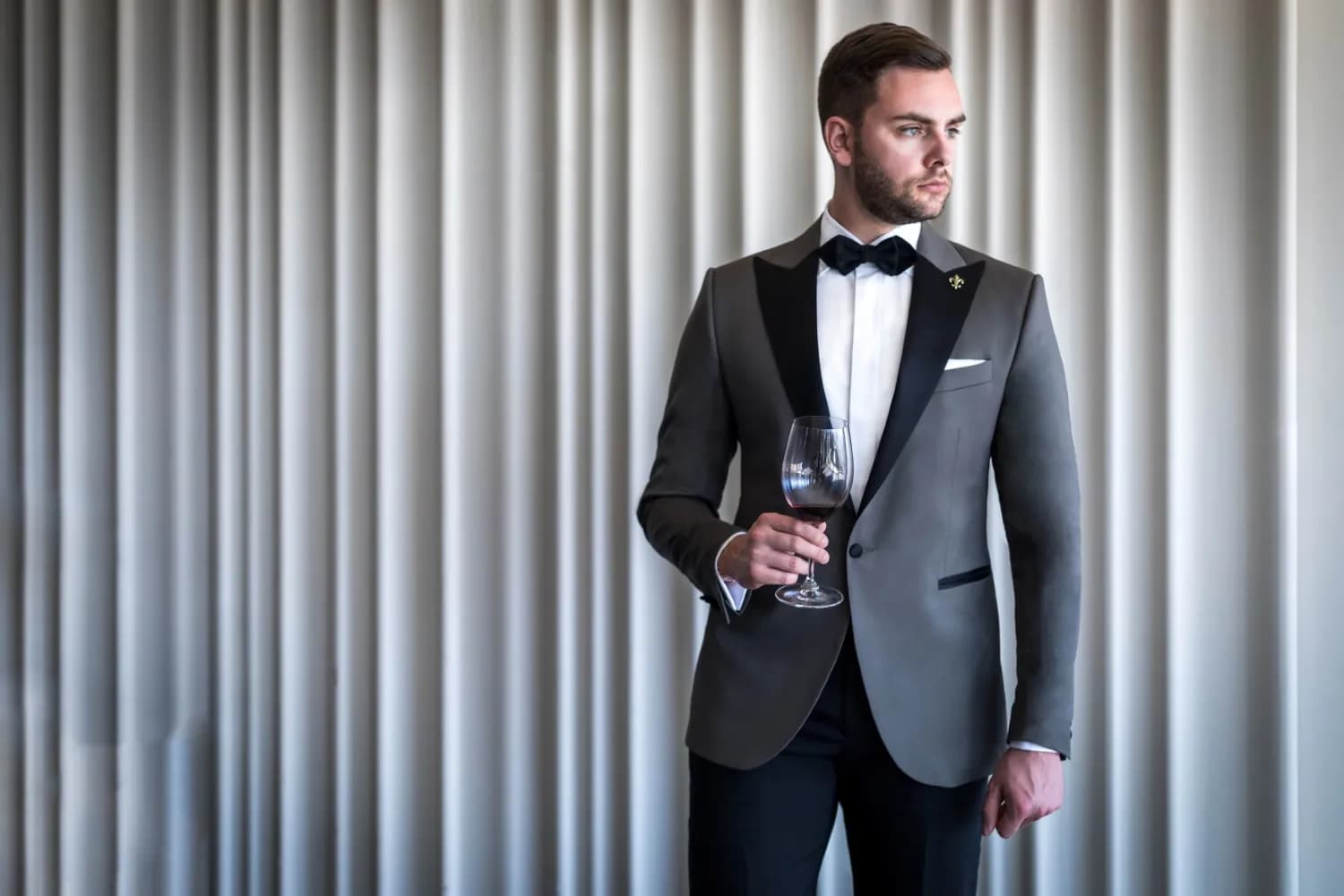
The short jacket did not abandon every sign of formality. It borrowed silk-faced lapels from the tailcoat and added the neatness of the smoking jacket. That is why a tuxedo today still carries satin lapels on a short body.
Why the story keeps being told
There are three reasons. First, the central figure is memorable: the Prince of Wales set the tone for a generation of men's dress. Second, the tailoring house still exists and still keeps its archive, so the story has custodians. Third, it explains something hard to explain, since a new garment has to have a first moment.
In truth, clothing rarely has a single inventor. Short jackets for evening wear already existed as smoking jackets. What Poole and the Prince contributed was to carry the style from the smoking room to the dinner table, and that is enough to earn them a place in the story.
From anecdote to habit
At first the short jacket suited only private occasions, among men and without ladies present. The tailcoat remained the choice for large dinners and balls for decades. Gradually, especially through gentlemen's clubs and high society across the Atlantic (see why it is called a tuxedo), the short jacket was worn to more evenings, and in the twentieth century it became the standard of black tie.
For the stages of that shift, read the origin of the tuxedo.
Fact and legend, separated
Reasonably solid:
- Prince Edward was real and a style leader.
- Henry Poole & Co. was his tailor and still trades today.
- A short jacket for dinner appeared during the 1860s.
Better treated as legend:
- That it was the very first dinner jacket in the world.
- The exact date, the colour, the words the Prince said to the tailor.
- The tale of an American guest carrying this style home from England (covered in the next article).
Saying "is said to" instead of "has been proved" does not make the story less enjoyable. It simply keeps the teller from being caught out.
A note from the Mon Amie workroom
What remains valuable from this story is the tailor's logic: formalwear should be dignified yet wearable all evening. A properly made-to-measure tuxedo, with satin-faced lapels and a clean short body, the details set out in the tuxedo standard, still follows that logic. You can read about made-to-measure tuxedos and then book a fitting at a showroom so a consultant can advise on cut and cloth for your build.