Tuxedo know-how
Tuxedo Jacket Buttons: Why One, and Why Covered
Why a tuxedo jacket usually has one button, covered in the lapel cloth or in black horn, four working cuff buttons, and the rule: fasten standing, open seated.
Mon Amie · 23/10/2026
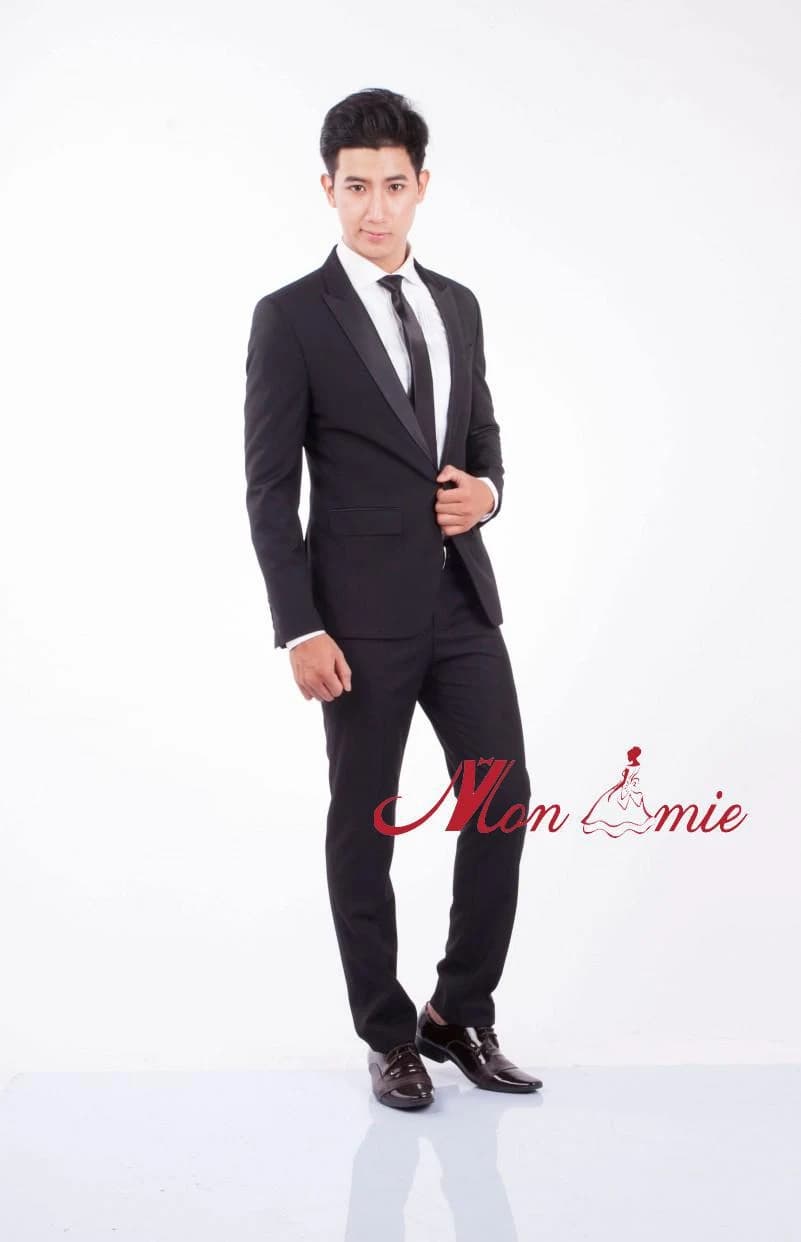
A tuxedo jacket usually has a single button because one button lets the lapel run long and low, opens up the shirt front and keeps the jacket slim. The button is often covered in the same cloth as the facing for a seamless look. Even the fastening has its own rule: button when standing, undo when seated.
Why one button
A single button at the natural waist means the lapel is not cut across by a second or third button. The lapel line therefore runs long, forming a deep V that shows more of the shirt front. In a tuxedo the shirt front is where the studs, the piqué or pleats, and the bow tie sit, so showing more of it makes sense.
With one button fastened, the body also closes neatly at the waist while staying open at the chest, giving a slim line from shoulder downward. On a shawl lapel the unbroken curve from collar to button gives a soft effect; on a peak lapel the diagonal is sharper. The TUX-080, a black tuxedo with satin-faced peak lapels and one button, is exactly of this type.
It should be said plainly: two-button jackets exist and some men like them. They are not wrong, only they shorten the lapel line and sit closer to a day suit. The article on one-button or two-button tuxedos sets the two side by side.
Covered buttons or black horn
There are two common treatments, both correct.
A covered button is wrapped in the same cloth as the facing, satin or grosgrain. Looking at it you see no metal or plastic, only a round button the colour of the lapel. It gives a very seamless look for formalwear and suits the spirit of hiding anything that shows off.
A black horn button has a natural, slightly matte surface, suited to tuxedos that want a warmer classic note. Black horn rarely glitters.
What to avoid in formalwear is bright gold or silver metal buttons, which compete with the studs and cufflinks. More on the types is in covered, horn or metal buttons.
Four buttons at the cuff
The sleeve end of a tuxedo jacket usually carries a row of small buttons set close together, commonly four, though the number can vary with the tailor and style. On many made-to-measure suits these are working buttons, meaning they can be undone and fastened, a detail tied to higher craftsmanship. On ready-made suits they are often decorative buttons simply sewn on.
Cuff buttons usually match the body button. The TUX-080 and other suits in the collection have cuffs with small buttons in this manner. With about a centimetre or two of shirt cuff showing, the cufflink and the row of sleeve buttons make two layers of detail answering each other.
The rule: fasten standing, open seated
For a one-button jacket the rule is very simple:
- Standing, walking, greeting: fasten the button. The jacket holds its shape and the lapel lies correctly.
- Seated: undo the button. The skirt is not pulled tight, no creases form across the stomach, and you sit more comfortably.
- Rising: fasten again, usually a habitual motion done while standing.
This rule applies to every suit and formal jacket, not only the tuxedo. The difference is that a tuxedo has only one button, so there is no "bottom button left open" to remember. If you wear a two-button jacket, the lower button is usually left undone.
Common mistakes
- Buttoning while seated, which creases and strains the jacket at the waist.
- Leaving a loose thread on a button about to fall off, when formalwear needs every detail neat.
- Choosing bright metal buttons for a black tie suit.
- A button set too low or too high against the natural waist; button position is the tailor's concern when drafting, so it needs trying on beforehand.
Book a fitting at Mon Amie
Button position, covering cloth and depth of the lapel line only show properly when tried on the body. You can book a visit to a showroom and a consultant will let you handle each button sample and set the position to your frame.