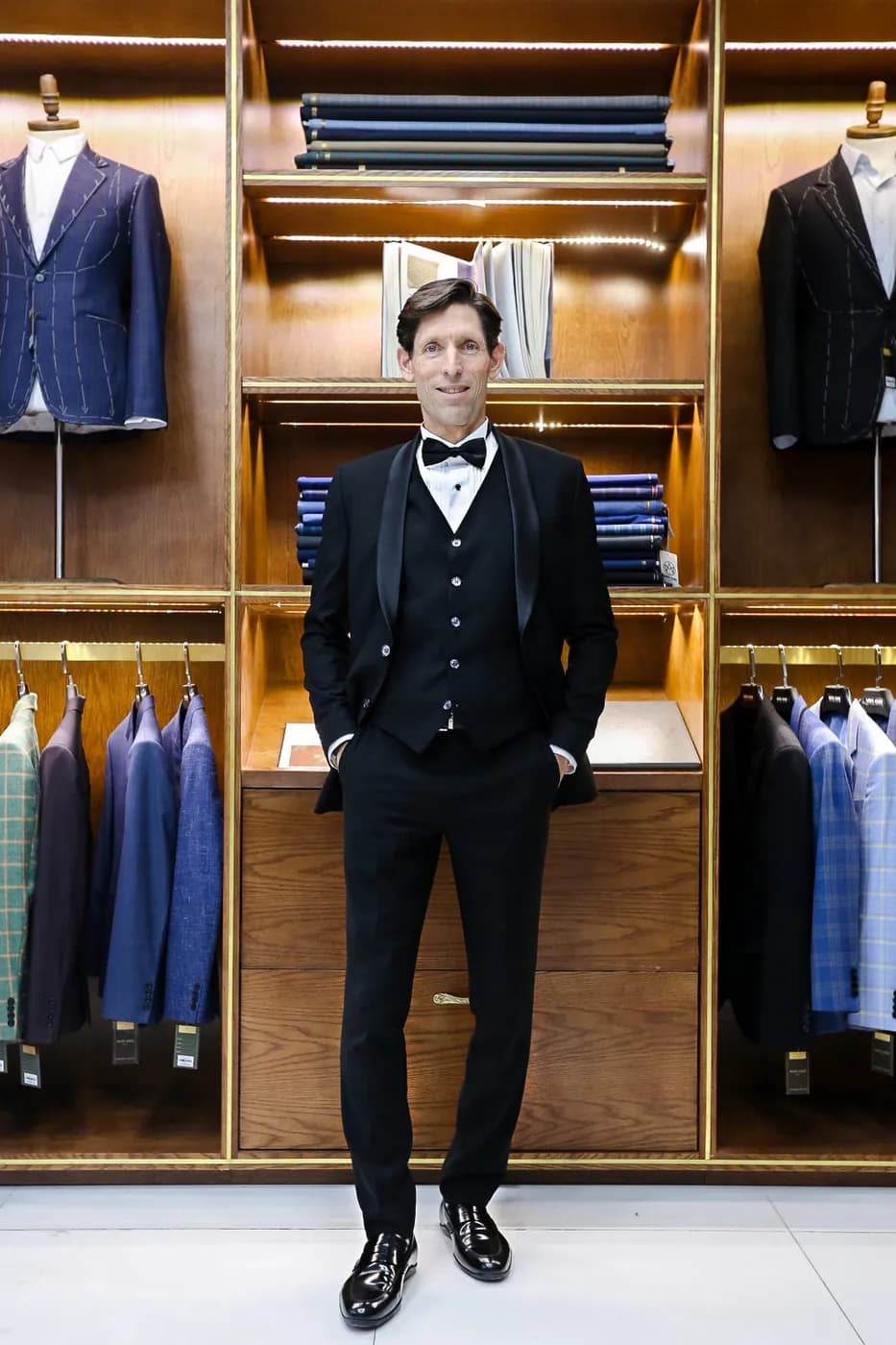
Tuxedo know-how
The Origin of the Tuxedo: From Smoking Jacket to Tuxedo Park
The tuxedo began as an evening jacket in 1860s England, linked to the Prince of Wales and Henry Poole, and took its name from Tuxedo Park, New York in 1886.
Mon Amie · 15/10/2026
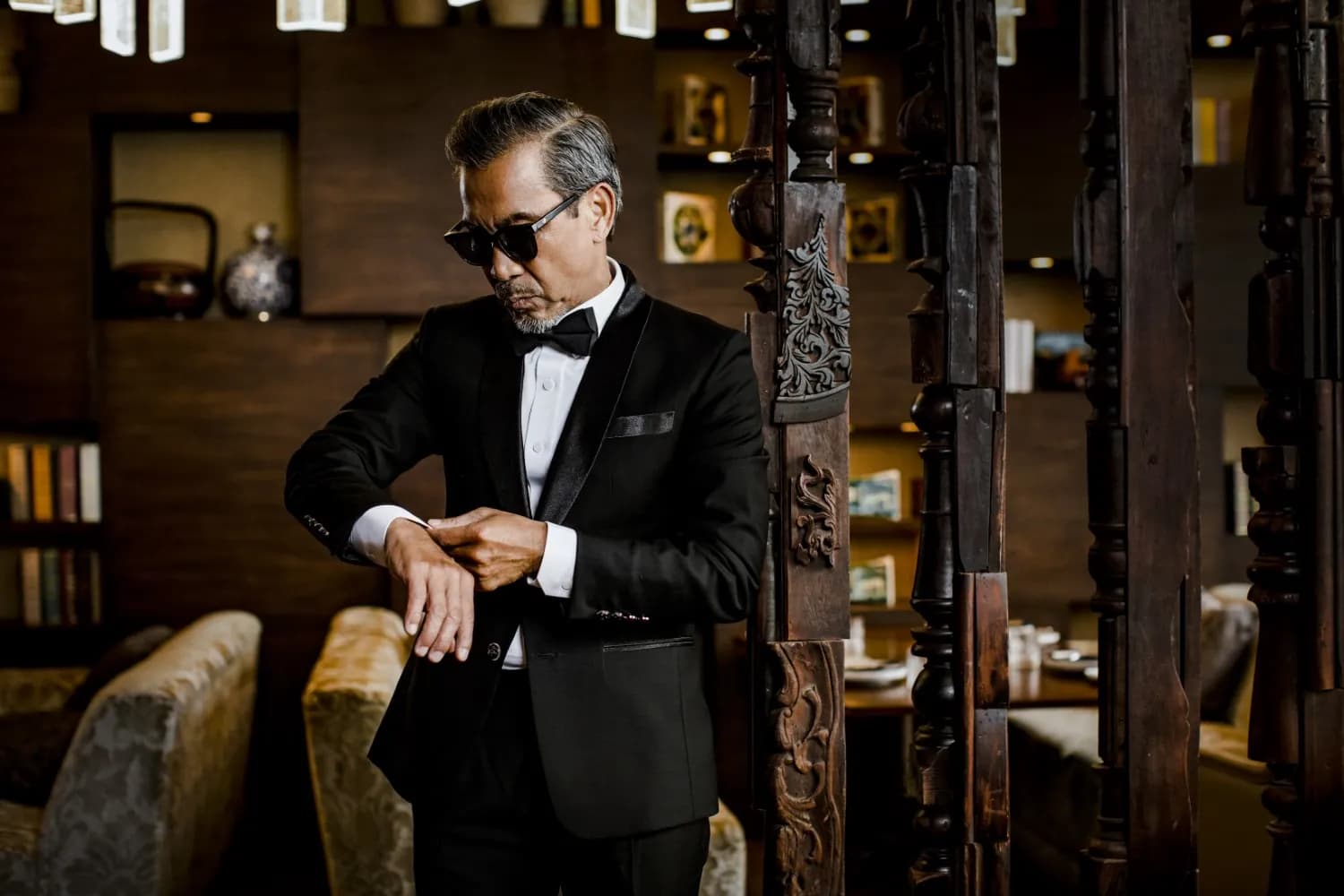
The tuxedo is a short, tailless evening jacket that emerged in England around the mid-1860s as a more relaxed alternative to the tailcoat. Once it crossed to America, it took its name from Tuxedo Park in New York, where the style caused a stir in 1886. Knowing that journey explains why today's tuxedo still keeps its silk lapels, braided trousers and black bow tie.
Before the tuxedo: the tailcoat and the smoking jacket
In the 19th century, a British gentleman's evening dress was the tailcoat, worn with a white waistcoat, a wing-collar shirt and a white bow tie. Today we call that code white tie. It was handsome, but stiff, and it demanded full ceremony from collar to shoe.
After dinner, gentlemen would often retire to the smoking room. There they put on a smoking jacket: a short coat in velvet or silk with a shawl collar, fastened with a tie belt or frogging, so the smoke would not cling to the tailcoat. This relaxed, private garment left the tuxedo two legacies: the shawl lapel and a soft, quietly lustrous finish.
The Prince of Wales and Henry Poole
Edward, Prince of Wales (later King Edward VII), cared a great deal about clothes but also liked his comfort. Henry Poole & Co. of Savile Row say their records show that in 1865 they cut the Prince a short, tailless jacket to wear at informal dinners.
At first, the jacket stayed in private settings: dinner at home, evenings among friends. For formal occasions, the tailcoat kept its place. The British called it the dinner jacket, and in Britain the name is still used today.
1886: the name comes from Tuxedo Park
Tuxedo Park was an exclusive retreat in New York State, founded by Pierre Lorillard IV in 1886. According to the accounts most often repeated, at the Tuxedo Club's autumn ball that year a few young men arrived in short, tailless jackets instead of tailcoats. It caused a small sensation, and Americans began calling the style after the club: the tuxedo.
A familiar story comes with it. James Brown Potter, a Tuxedo Park resident, was invited to Sandringham, asked the Prince what to wear for dinner, was sent to Henry Poole, and brought the jacket home. Dress historians consider this tale at least partly embellished. The direction of travel is clear, though: the dinner jacket went from England to America, and the word tuxedo was born at Tuxedo Park.
One garment, many names
The same style goes by different names depending on where you are:
- Britain: dinner jacket, or dinner suit for the full outfit.
- United States: tuxedo, or simply "tux".
- France and much of Europe: smoking, a nod to the smoking jacket.
- Spain: esmoquin, also derived from "smoking".
- Vietnam: usually tuxedo, or lễ phục (formal dress).
When a tailor says "smoking" or "dinner jacket", you can safely read it as tuxedo.
From lounging jacket to the black tie standard
Into the 20th century, the dinner jacket was gradually accepted at less ceremonial evening events, while the tailcoat was kept for grand occasions. Two levels of evening dress took shape, named after the colour of the tie: white tie and black tie. Over the first half of the century, black tie became the usual evening code, and white tie narrowed to a handful of special ceremonies.
The 1920s and 1930s refined the tuxedo. The peak lapel was borrowed from the tailcoat. The cummerbund, derived from the cloth waist sash British officers adopted in India, joined the low-cut waistcoat as one of two ways to cover the waist. Midnight blue grew popular because under electric light it reads as a deeper black than black itself; the Duke of Windsor is often credited with helping to popularise it. In the same period, the white dinner jacket appeared in warmer climates.
What survives in today's tuxedo
More than a century and a half later, the tuxedo still carries traces of each stage:
- Shawl lapel: inherited from the smoking jacket, soft and unbroken. Our black tuxedo with velvet shawl lapel keeps that spirit clearly.
- Peak lapel and trouser braid: drawn from the tailcoat, more structured and severe.
- Satin or grosgrain facings: the mark of evening wear in a room full of suits.
- Cummerbund and low-cut waistcoat: the two waist coverings settled in the early 20th century.
- Midnight blue and ivory: two colour variations with their own history, as in the midnight blue three-piece tuxedo or the ivory dinner jacket with black lapel.
None of these details are decoration. They are the grammar of evening dress, and each one you remove pushes the outfit closer to an ordinary suit. To see what a complete tuxedo needs today, read our guide to the black tie tuxedo standard.
How Mon Amie can help
At TUXEDO by Mon Amie, the tailors of the Hoang Vy workshop, founded in 1991, keep these classic details intact when making your tuxedo to measure: satin or grosgrain facings, covered buttons, jetted pockets and braided trousers. Making time depends on the model and your fitting schedule; your consultant will confirm it at the measuring appointment, so please book well ahead of the wedding or event. You can book a showroom appointment or message us on Zalo at 0888.111.118.