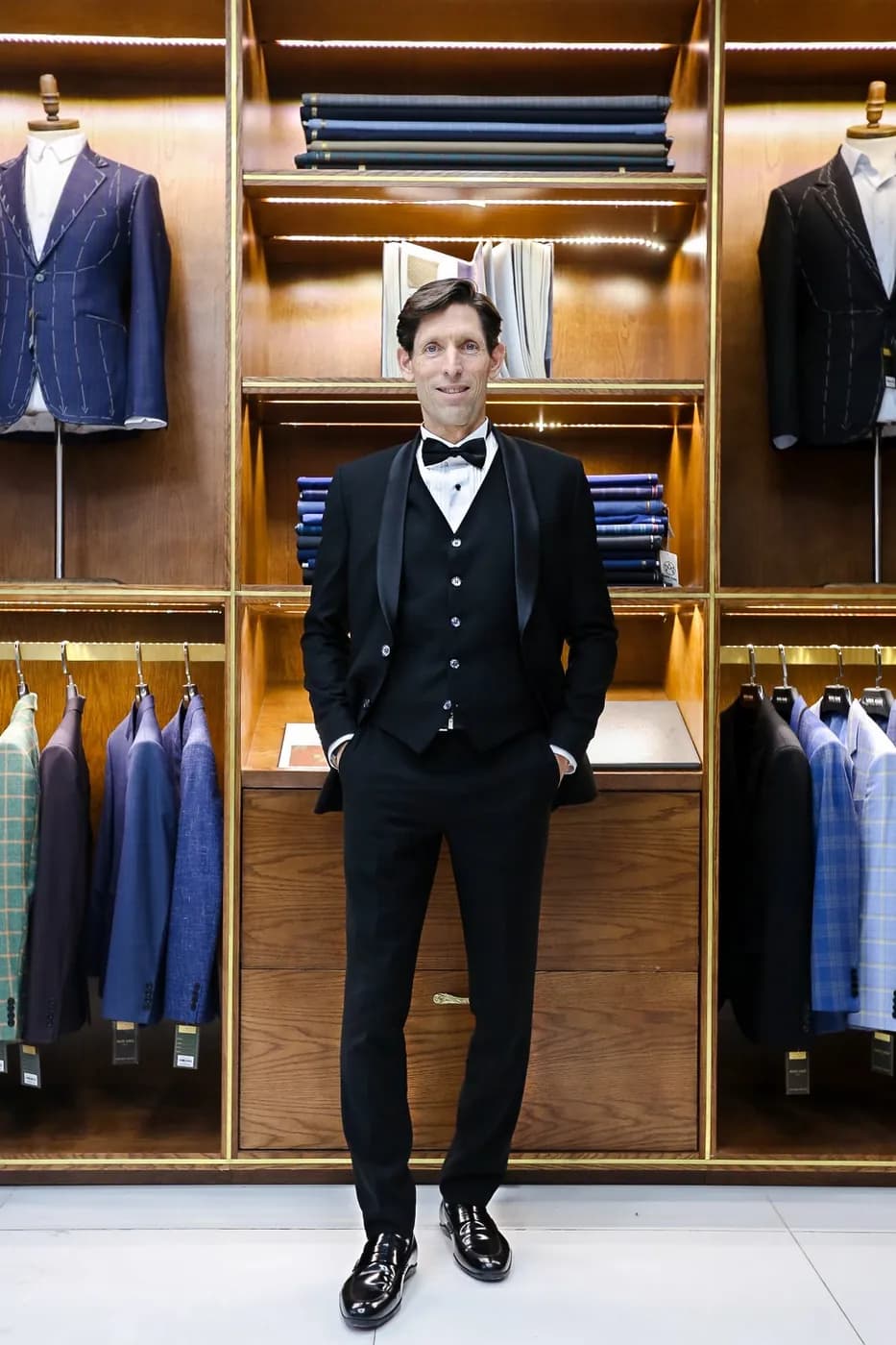
Why a tuxedo
Why the Tuxedo Never Goes Out of Style
The tuxedo's structure has barely changed in over a century. Why that is, which classic details keep a suit lasting, and which trends to avoid.
Mon Amie · 20/10/2026
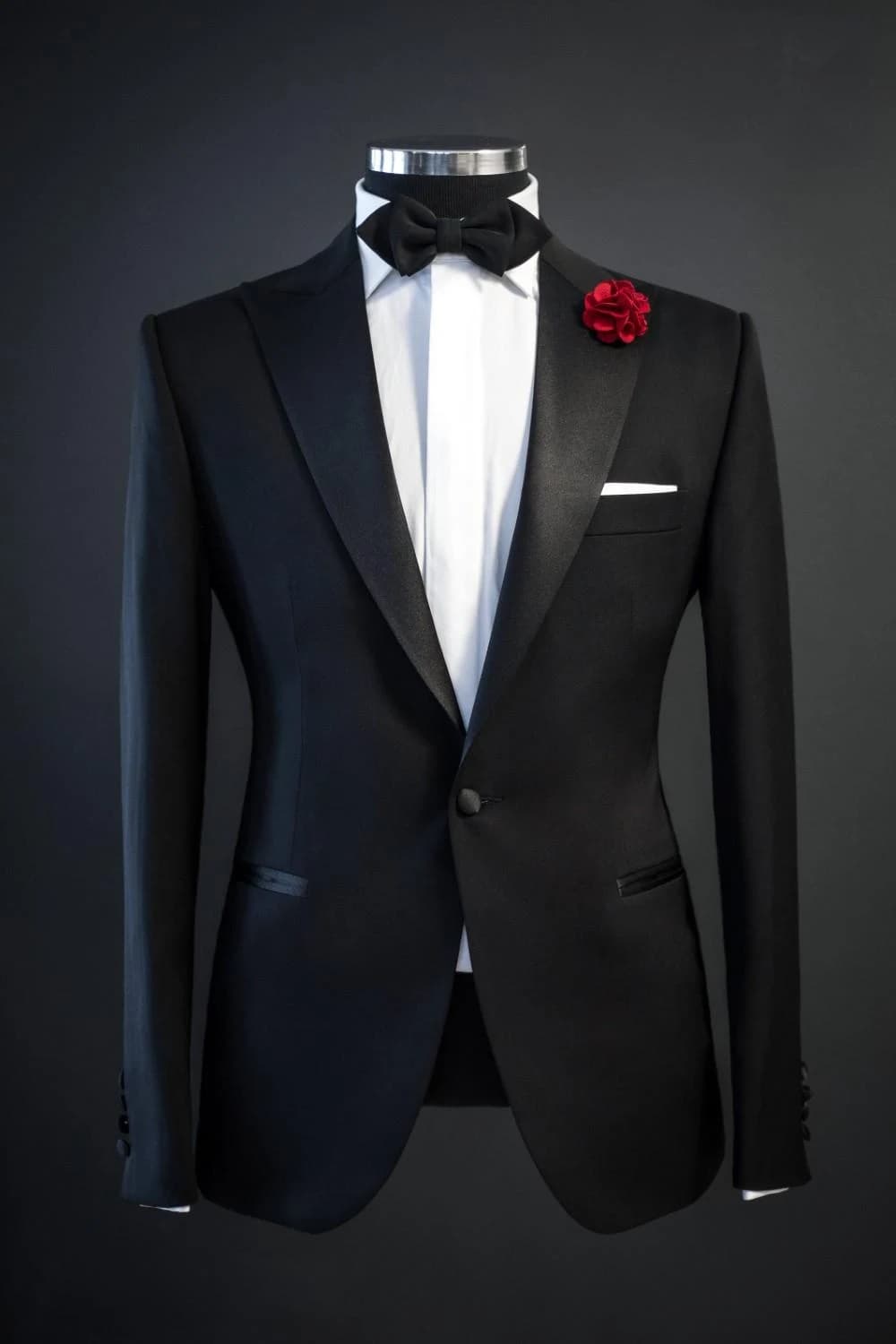
A tuxedo made in the 1930s and one made today, set side by side, are still instantly recognisable as the same garment: satin-faced lapels, braided trousers, white shirt, black bow tie. That is rare in menswear. The reason lies in its purpose, plus a few choices that stop your own suit from being tied to a particular year.
A structure unchanged for over a century
The modern tuxedo descends from the dinner jacket that appeared in England in the 1860s, later popularised in America as the tuxedo, linked to the Tuxedo Park club in New York in 1886. Since then its framework has changed very little: a jacket with satin or grosgrain lapels, covered buttons, jetted pockets, trousers with a braid down the side seam, worn with a white shirt and black bow tie.
Why has it held? The tuxedo is the uniform of the formal evening, and a uniform exists to be consistent, not novel. Black tie has clear rules, so the pattern has little reason to shift. Each detail has a function or a meaning, and the wearer does not need to "keep up" every season.
What does change over time is mostly proportion: lapel width, jacket length, how close the body is cut, the trouser leg. These are refinements, not a new silhouette.
Choose classic details to last
If you want a tuxedo that serves you for years, pick details that have stood for decades rather than those currently in vogue.
- Colour. Black, or midnight blue, is always correct. Classic colours are rarely tied to a moment.
- Lapel. Peak or shawl, faced in black satin, of moderate width: not too broad, not too thin. See choosing a tuxedo lapel.
- Buttons. Single-breasted with one or two buttons, covered in matching fabric.
- Pockets. Jetted, without flaps.
- Trousers. A straight, moderate leg with a single satin braid. Neither skinny nor wide.
- Cloth. Fine wool with a modest sheen. Wool-mohair blends and barathea are familiar choices.
Examples of classic models
A few models in the collection show this spirit. TUX-060 is a solid black suit with black satin peak lapels in a traditional cut, the kind of jacket that will not look out of place thirty years from now. TUX-078 is a one-button black three-piece with a matching waistcoat and black satin shawl lapels, softer in line but equally traditional. In blue, TUX-018 is a one-button midnight navy with peak lapels. Browse further in the classic black collection.
If you enjoy the historical background, see black tie through the decades to learn which parts have changed over time, and the classic black peak-lapel tuxedo for one style that endures.
Trends to avoid
Not every trend is bad. But if you want a suit for the long term, be careful with elements tied to a season:
- Strong metallic finishes or large patterns. Fine for a single wearing, but they date quickly.
- Cuts that are too tight or too short. A jacket barely covering the belt line, skin-tight trousers, a hem that exposes the sock: these follow fashions that fade fast.
- Very wide or very thin lapels. Both tend to pin a jacket to a particular decade.
- Attention-seeking accessories. Oversized jewelled bow ties, loud printed studs, shoes with their own pattern.
This does not mean giving up personality. Keep it in the easily changed accessories, such as the pocket square or cufflinks, and let the frame stay classic.
A suit to wear for years
The greatest virtue of a tuxedo that does not date is that you do not have to replace it after a few seasons. Add to that the seam allowances left in a made-to-measure suit for adjusting as your body changes, and the suit can accompany you through many occasions in your life, from weddings to galas.
How Mon Amie can help
When choosing a style, ask a specialist what will still be right in ten years. A tailor usually gives a straight answer. You can book a fitting at a showroom to see fabrics and cuts in person.