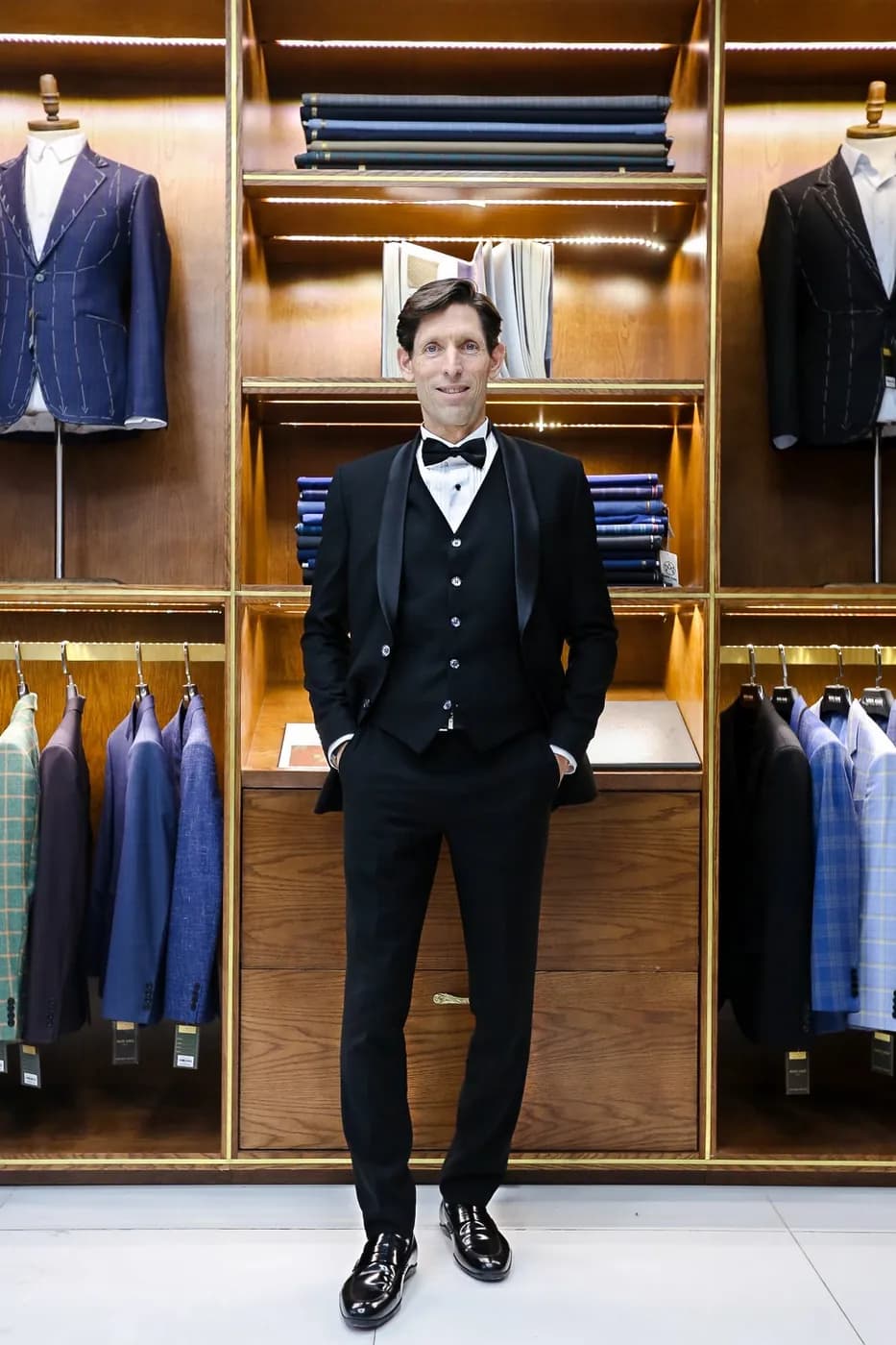
Why a tuxedo
Why Tuxedos Always Photograph Well, and How to Pose
Strong black-and-white contrast, structured shoulders and satin lapels make the tuxedo photograph cleanly and age slowly. Plus tips for standing at ease.
Mon Amie · 16/10/2026
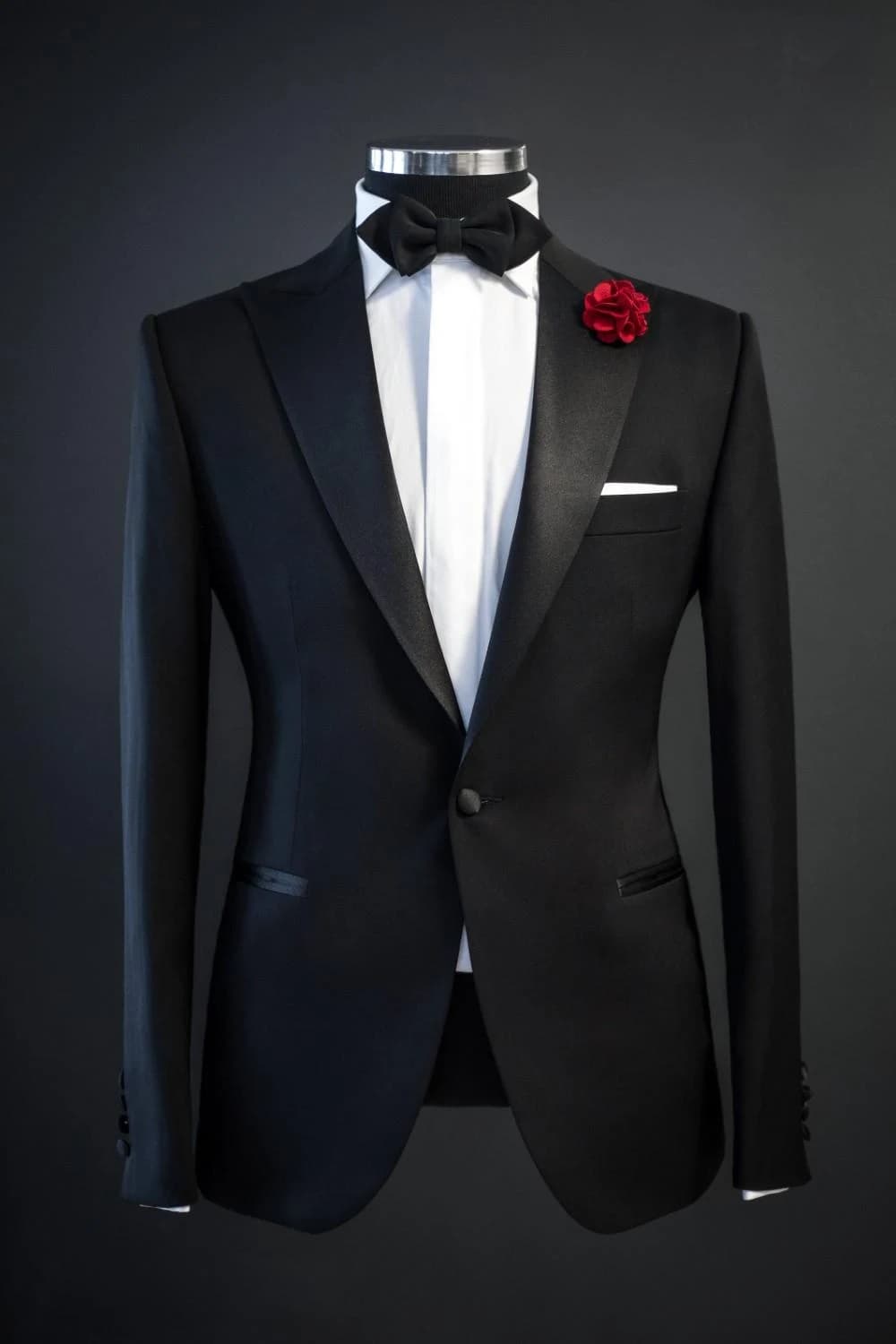
A tuxedo photographs well because it is built around what a lens likes: clear contrast, clean lines and balanced shapes. You do not need to be a model. The garment does most of the work, and you only need to stand well and choose the right details.
Clear black-and-white contrast
Cameras, phone cameras included, read bright and dark zones well when they are clearly separated. A classic tuxedo has that built in: a black jacket, a white shirt, a black bow tie, and satin lapels that catch light differently from the wool around them. Your face and hands become the two bright points rising out of a dark ground.
The result is that the viewer looks at you first, not at a distracting pattern or colour. On an all-black model such as TUX-060, black with black satin lapels, the lapel edge reads crisply against the body of the jacket. On a white jacket such as TUX-088 (white, black satin lapels, black trousers), the dark lapel cuts a clean shape out of the light cloth, a different contrast but just as tidy.
Shoulders and lapels give you a shape
A tuxedo has structure. The shoulder is built up, the chest holds its form, the waist is lightly suppressed, producing the familiar inverted triangle. The lapel draws the eye from shoulder to waist in a single line, so the torso looks longer and leaner.
A peak lapel makes upward diagonals, flattering to a fuller face. A rounded shawl lapel gives a softer, uninterrupted curve. For more on choosing, see shawl, peak or notch lapel. A well-cut jacket also keeps its shape whether you stand, sit or turn, so candid shots stay tidy.
It does not date in the album
Look back at your parents' or grandparents' wedding album. The wide collars, heavy padding and unusual colours of each era are easy to spot. A classic black tuxedo with satin lapels, white shirt and black bow tie carries almost no obvious period stamp. Its structure has changed very little in over a century.
That is why pictures taken in a classic tuxedo age slowly. Ten years on, what you remember is the moment, not a jacket that has fallen out of fashion. To see why the design endures, read why the tuxedo never goes out of style.
Tips for better pictures
These come from what returning clients tell us about their photo days and from common photographers' practice. Every photographer works differently, so ask yours.
- Button at the right moment. On a single-breasted jacket, fasten when standing and unfasten when seated. It keeps the front from bunching.
- Turn slightly. Angle your body about a quarter turn from the camera rather than facing it square. It slims the shoulders.
- Give your hands a job. One hand in a trouser pocket with the thumb outside, the other relaxed at your side. Avoid clasping both hands tightly in front.
- Do a quick check before the shutter. Pull the jacket skirt down, check the pocket square, bow tie and hair. Those three seconds save a lot of retouching.
- Sitting and standing. When you sit, lift the trouser leg gently at the knee to avoid creasing. When you stand, do not stuff the jacket pockets; bulging pockets spoil the line.
- Light. Under harsh light, black can drift towards grey if the cloth is poor, so good wool matters most on black. If a satin lapel reflects too strongly, change your angle.
If you plan a separate portrait session in the suit, see portrait photography in a tuxedo. For colour choice in monochrome pictures, see tuxedo colours in black-and-white photography.
Fit beats every trick
None of these tips works unless the suit fits. A jacket loose at the shoulder creates horizontal creases across the chest in a photo; sleeves that are too long hide the wrists; trousers that pool on the shoes leave a bulge of spare cloth. The camera misses nothing, and on an enlarged print it shows even more.
That is why a made-to-measure suit usually photographs more cleanly than a borrowed or off-the-rack one. It is not that the cloth is better, but that every seam sits where it should on your body.
Book a fitting at Mon Amie
If an occasion that calls for good pictures is coming, such as a wedding, an anniversary or a portrait session, try the cut before choosing the cloth. A specialist will measure you and advise on colour and lapel to suit your frame and the setting. You can book a fitting at a showroom or read more about our made-to-measure tuxedo service.