Tuxedo trimmings: shoulder pads, canvas, buttons, thread
Trimmings decide a tuxedo's shape and durability: shoulder pads, horsehair canvas, covered or horn buttons, thread and hand stitching. What to ask your tailor.
Editor: Mon Amie · Published · about 3 min read
In this article
Cloth is what you see; trimmings are what keep a tuxedo in shape, durable and comfortable. Four items are worth asking about: the shoulder pad, the canvas inside the chest, the buttons and the thread. They almost never show in photographs, yet they decide whether the jacket still looks good after many wearings.
Shoulder pads: thin or thick
The pad forms the shoulder line and helps the jacket fall straight from the shoulder. There are two familiar approaches:
- Thick, structured padding: a square shoulder, upright chest, an authoritative line. Suits men with sloping shoulders or those who like a classic, formal look.
- Thin or almost no padding: a soft shoulder that follows the natural line, lighter and cooler. Suits men whose shoulders are already well formed, and warm climates.
There is no single right answer. For level shoulders, a thin pad feels natural. For sloping or uneven shoulders, a thicker pad or a correcting pad on one side balances the jacket. Before deciding, see what to consider when choosing a tuxedo to learn which suits your build.
Horsehair canvas
Canvas is the stiffened interlining between the outer cloth and the lining, across the chest and lapel. It is the jacket's skeleton. Traditional canvas is woven from horsehair mixed with wool or cotton, which gives it spring: the chest moulds to the body, bounces back after sitting, and the lapel rolls naturally.
The alternative is a fused interlining, where a resin-coated layer is pressed to the back of the cloth. It is quicker and cheaper, but over time and with cleaning the adhesive can fail, the outer cloth may bubble, and the jacket loses its shape. The difference is examined in canvas or fused construction. The canvas used can vary with price tier and construction, so ask the consultant which one your suit has.
Covered buttons and horn buttons
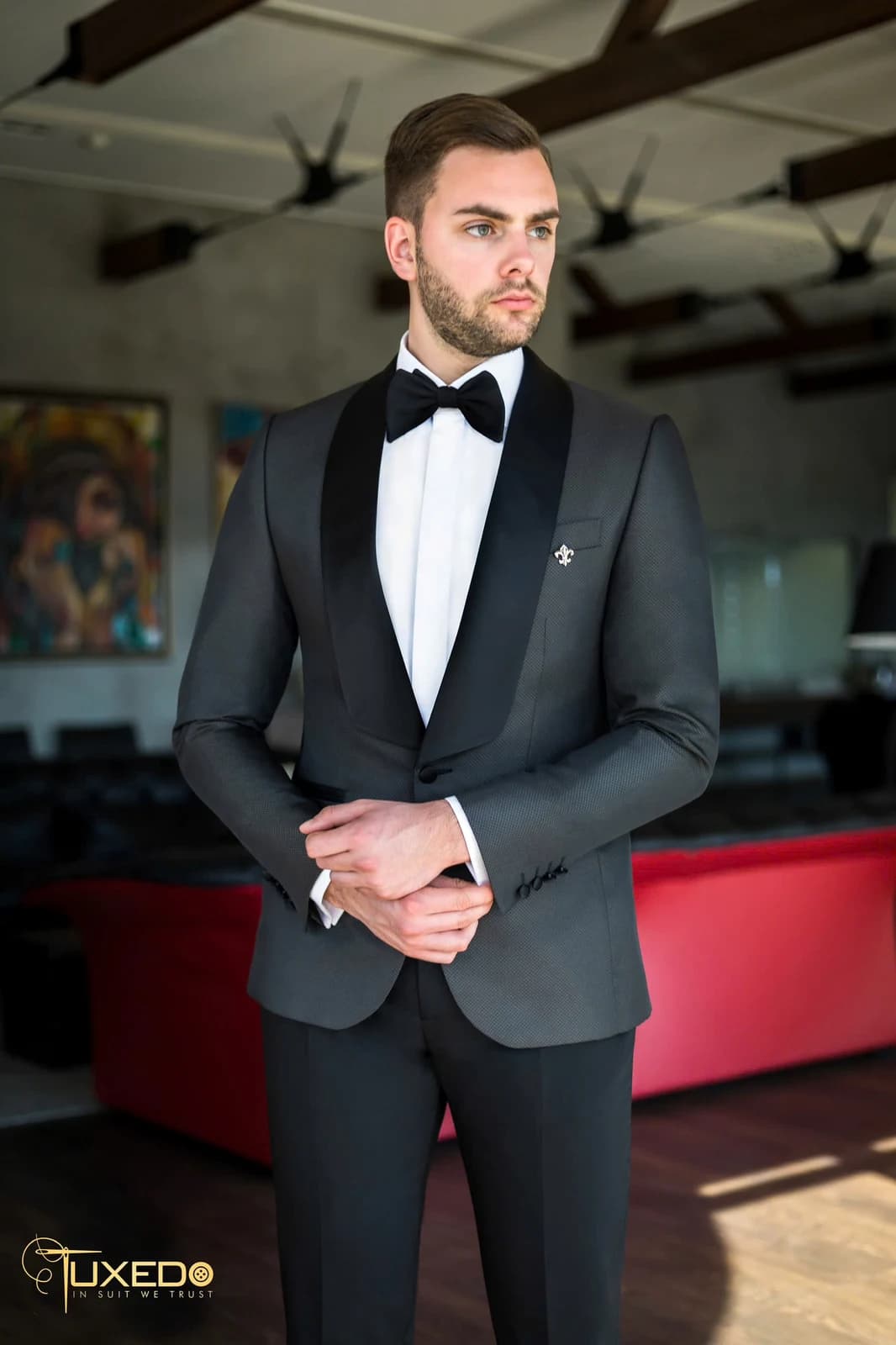
Buttons are small, but everyone sees them. On a tuxedo, buttons are traditionally covered in the same material as the lapel facing (satin or grosgrain), so they stay discreet and continuous with the jacket's lines. The alternatives:
| Button type | Character | Suits |
|---|---|---|
| Covered in cloth | Same material as the facing, dark and discreet | Classic black or navy tuxedo |
| Horn | Matte, natural, durable, each with its own grain | Relaxed dinner jackets, coloured suits |
| Metal | Shiny, eye-catching | Statement suits, unusual colours |
The full discussion is in covered, horn or metal buttons. The point to remember: buttons should agree with the facing and the other details so the whole looks calm rather than busy.
Thread and hand stitching
Thread is rarely discussed, but one weak seam spoils a jacket. Thread is chosen by function:
- Thread matched to the cloth for body seams, so the seams disappear.
- Silk or twisted thread for buttonholes and stress points, as it is lustrous and strong.
- Strong, low-stretch thread at points of strain such as the underarm and the trouser seat.
Hand stitching is a sign of care. In a carefully made jacket, a tailor may stitch the lapel facing by hand, work the buttonholes by hand, and baste the edges and the sleeve attachment. How much is done by hand depends on the price tier and the brief, so ask which parts are hand-finished rather than relying on the phrase "handmade".
How to question your tailor
Rather than asking in general terms, ask four things:
- Is the shoulder pad thin or thick in this suit, and why does it suit my frame?
- Is the chest horsehair canvas or fused?
- Are the buttons covered to match the facing, horn, or another type?
- Which parts are hand-sewn and which are machine-sewn?
Specific answers show that the person advising you understands the garment. Vague ones tell you something too.
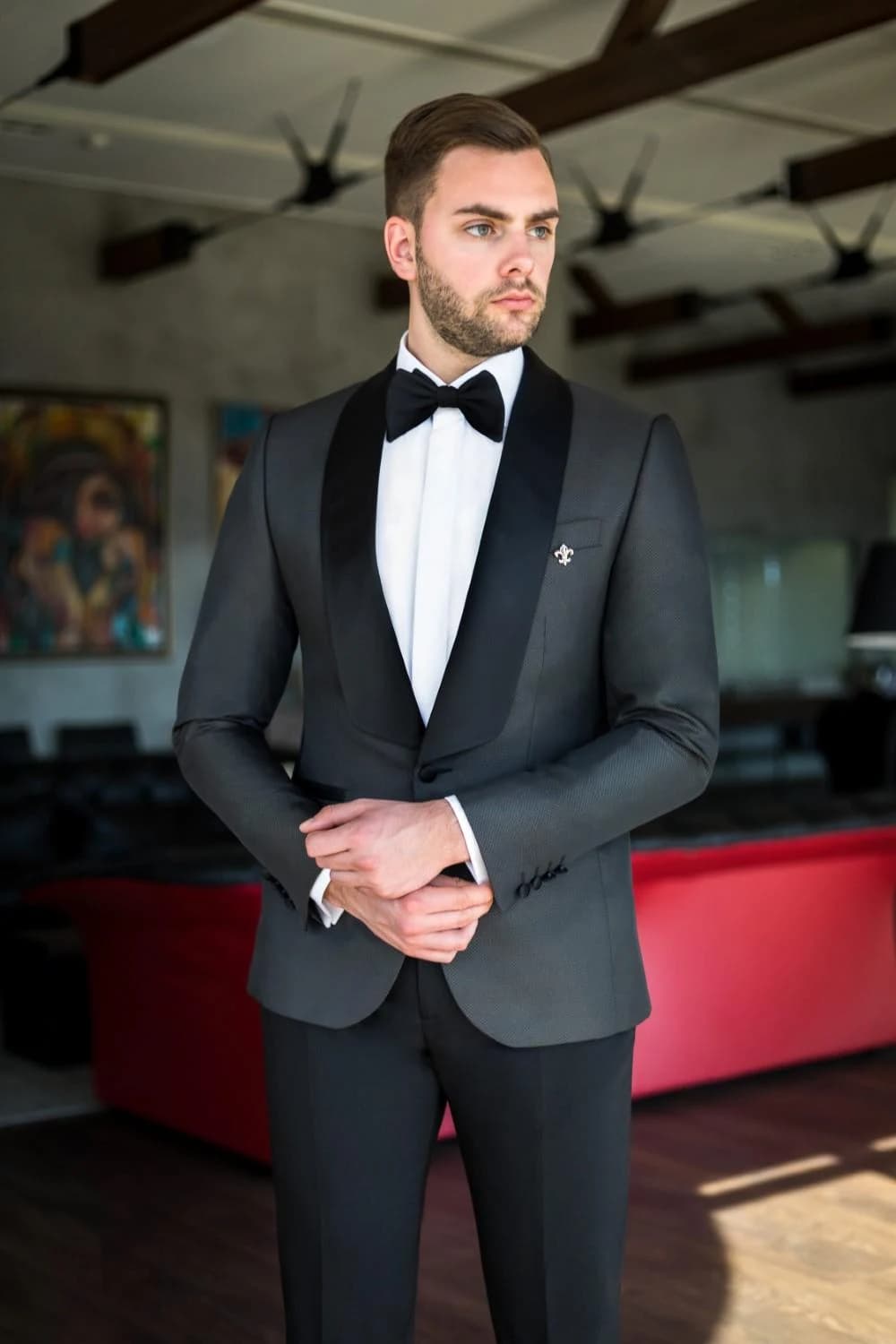
See the trimmings at Mon Amie
Trimmings make far more sense when you see them: canvas samples, shoulder pads and buttons laid side by side. The made-to-measure process and the detail choices are explained on our bespoke tuxedo page. When you are ready, book a showroom visit and a consultant will show you and advise according to the price tier you choose.
Published 12/11/2026 · 20:30 · Editor: Mon Amie