Fit Matters More Than the Label: Why Cut Decides Everything
People read the silhouette before the label. An expensive suit that is loose still looks poor; here is what measuring fixes at shoulder, sleeve and hem.
Editor: Mon Amie · Published · about 4 min read · Updated 09/11/2026
In this article
In a ballroom nobody reads the label inside your collar. They see how you stand, the line of your shoulder, the length of your sleeve, the way your trousers fall onto your shoes. The silhouette is what the eye reads first, and it decides whether an outfit looks polished or careless, whatever the name stitched into it.
People see the cut first
A label only works if you choose to show it. The fit reveals itself with every step. From three or four metres, the person facing you cannot tell which maker your jacket comes from, but they notice at once whether the shoulder sits in the right place, whether the body lies flat or pulls into creases, whether the trousers sag.
That is how the eye works: it reads shape and proportion first, then detail. A tuxedo with good proportions looks tidy even in ordinary cloth. By contrast, a suit in expensive cloth with the wrong proportions makes its wearer look untidy.
An expensive suit that is loose still looks poor
Every gentleman has seen it: a famous label, a high price, yet the shoulder is a finger-width wider than the man's own, the sleeve covers the wrist, and the back holds spare cloth. Money does not compensate for a cut that is off.
Conversely, a suit at an ordinary price that is cut close and true to the frame makes a much stronger impression. I am not saying cloth does not matter; cloth and fit are two different things. Cloth gives a garment material and feel, while fit gives it shape. If you must prioritise, put fit first.
This is especially true of the tuxedo. It has a clear structure, satin-faced lapels and trouser braid, so any flaw in the cut stands out more than on an ordinary suit.
Where flaws show
A tailor looks at a few places first, because they are hard to hide.
Shoulder
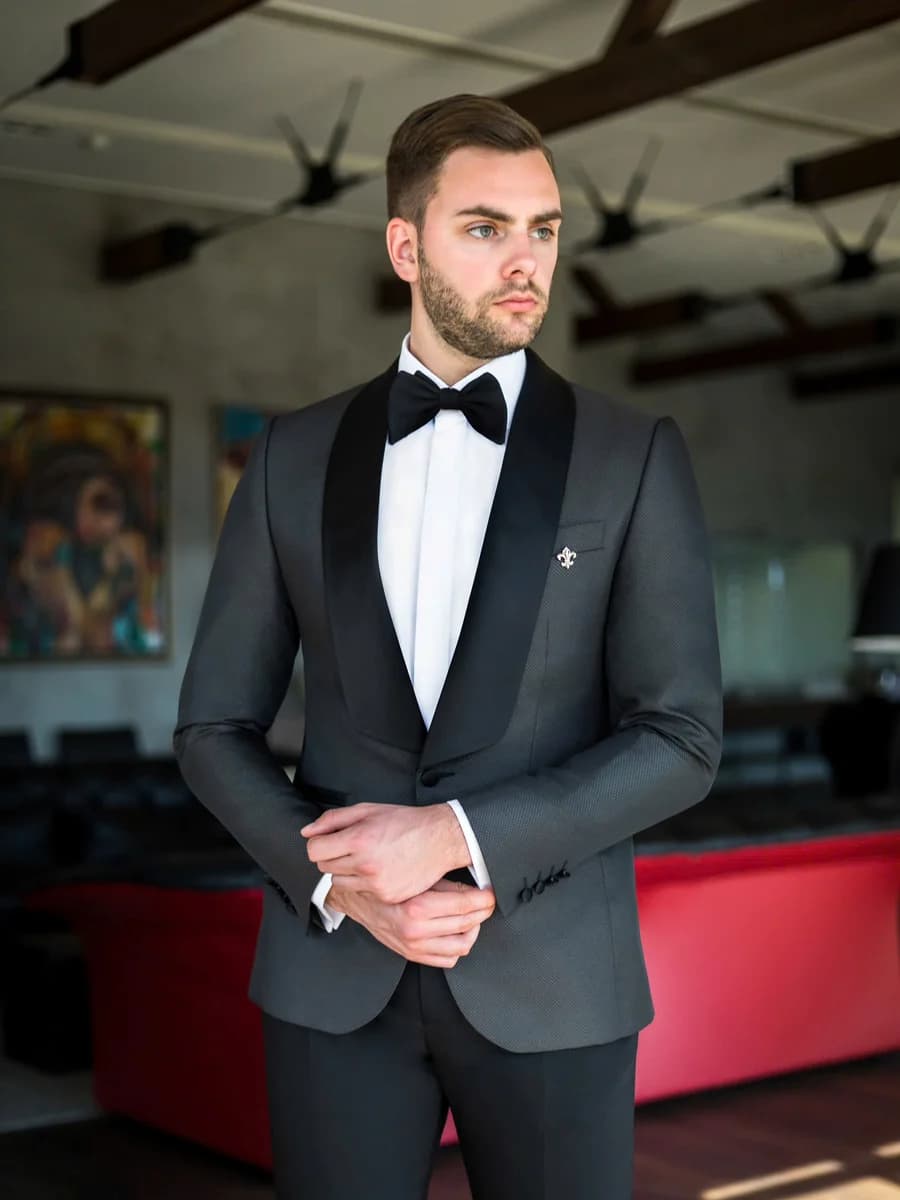
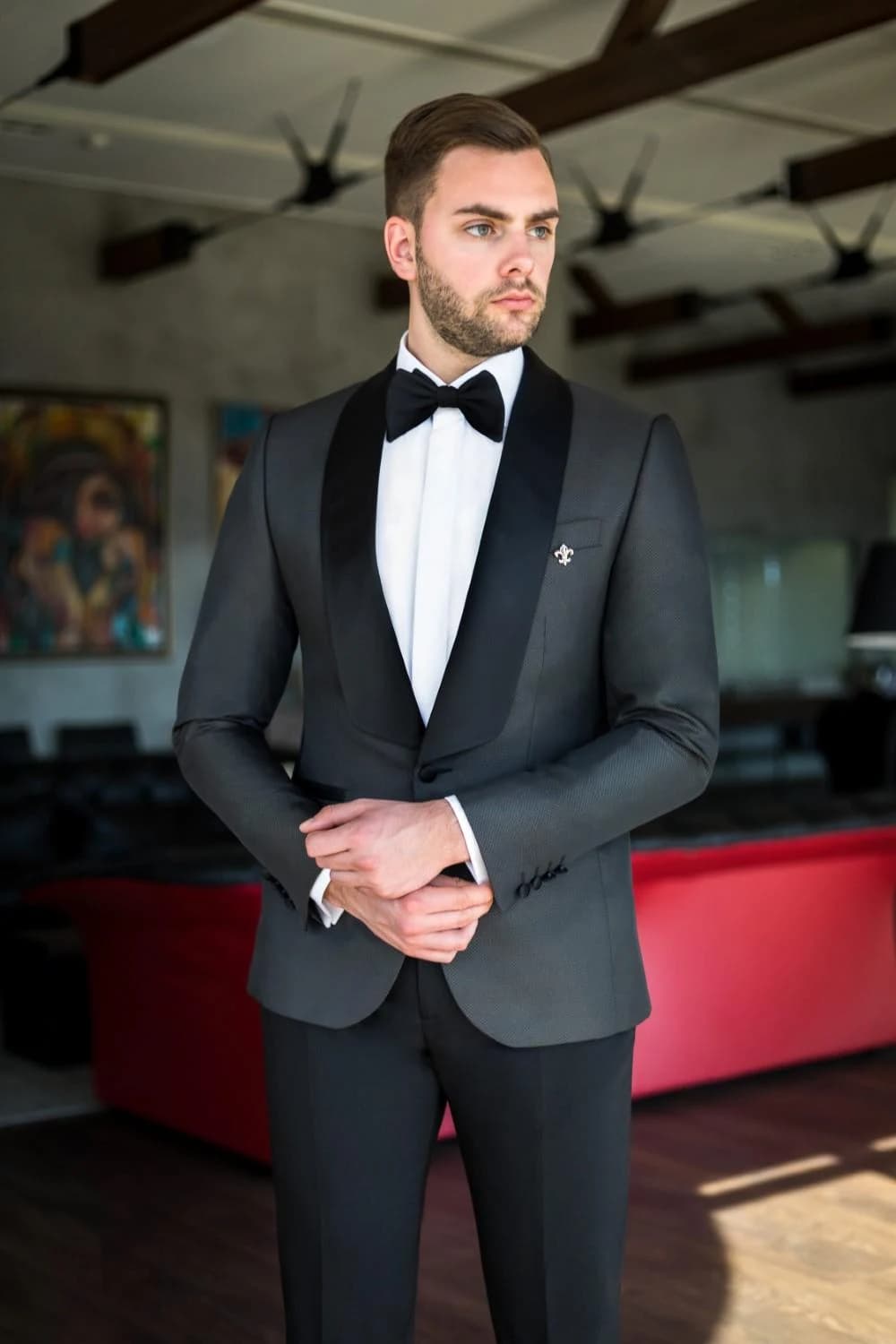
The shoulder seam must end where the shoulder bone ends. If it slides outward, the jacket is too big and the shoulder collapses; if it sits inward, the jacket is too tight and drag lines run across the upper arm. The shoulder is nearly impossible to alter by much, so it must be right from the start.
Sleeve
The sleeve should end around the wrist and let a short length of fine shirt cuff show below. Too long, and it hides the shirt cuff and cufflinks; too short, and you look as though you borrowed someone else's jacket. In a tuxedo the cufflinks are worth showing, so that sliver of cuff matters even more.
Trouser hem
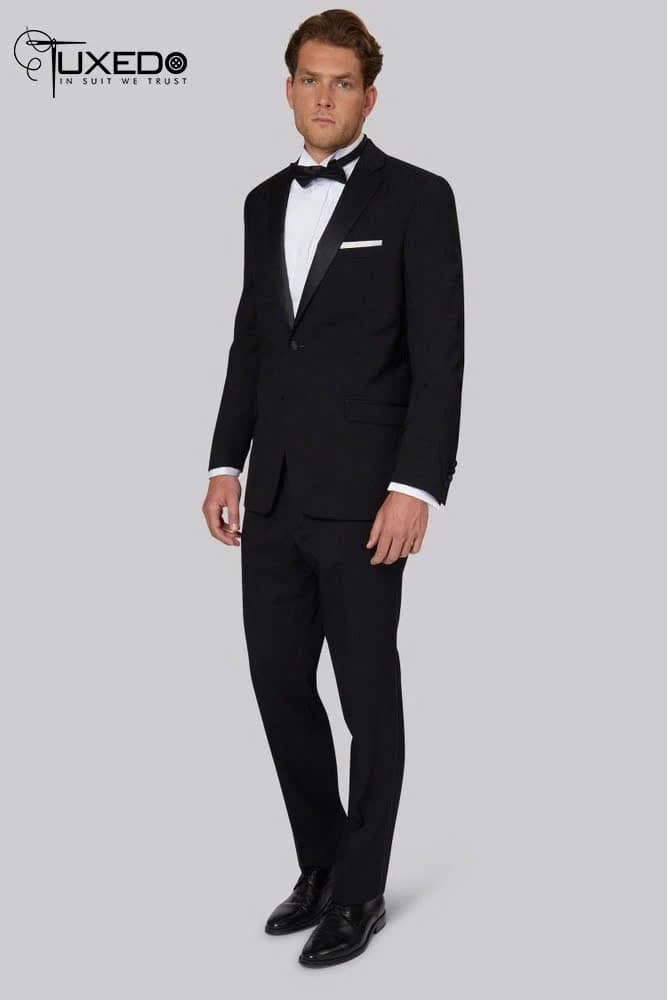
Tuxedo trousers usually fall straight to the instep, resting with a slight break or none, depending on style. A hem that bunches over the shoe is an easy fault to spot, and it shows even more when you sit.
Collar and lapel
The collar must hug the back of the neck without a gap. The lapel must lie flat on the chest and not bow outward. If it bows, it is often a sign that the chest shape does not match the wearer.
What measuring does
A made-to-measure suit starts from your body, not from a stock size. The tailor takes many measurements: shoulder, chest, waist, arm, body length, and also notes your posture, such as one shoulder higher, a slight curve of the back, a prominent stomach. From that, a pattern is cut for you, and over the fitting you see the jacket take shape on your own frame and refine it.
Shoulder, sleeve and hem are all handled to your measurements. That is something off-the-rack clothing cannot do, because it has to fit a great many people at once. The guides on how to make a tuxedo look expensive and on bespoke and made-to-measure help you understand the levels of tailoring.
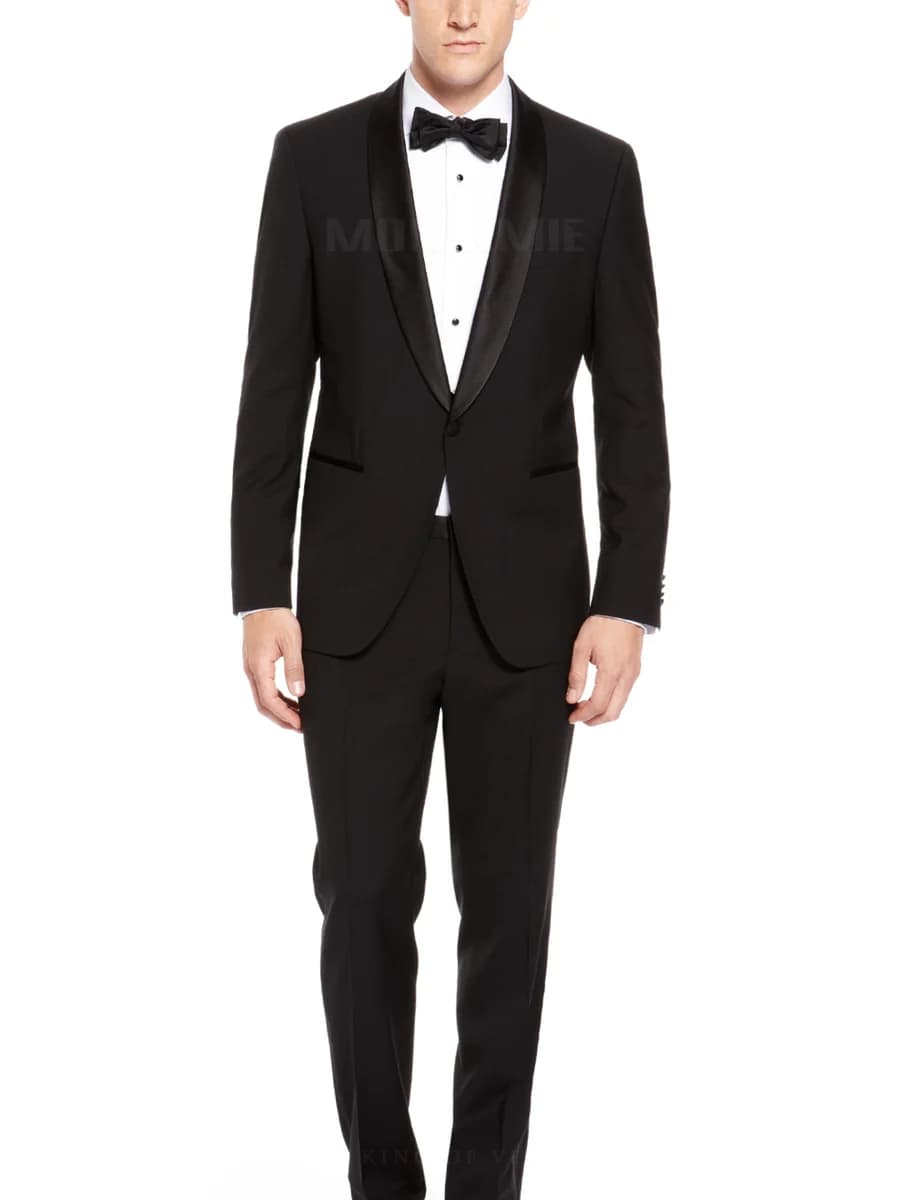
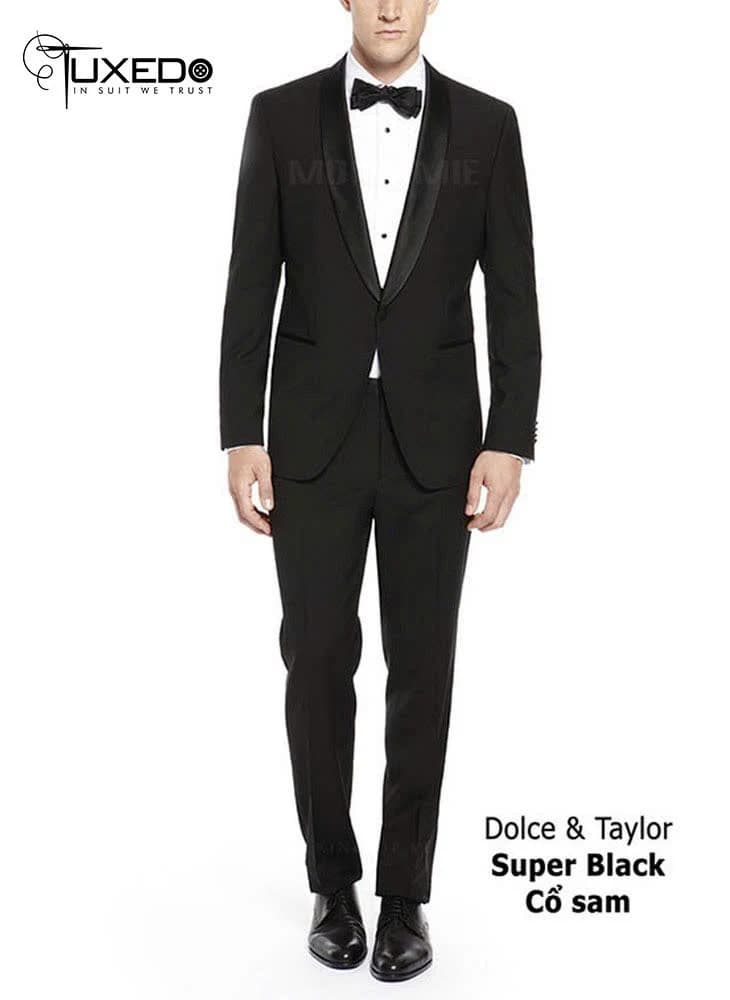
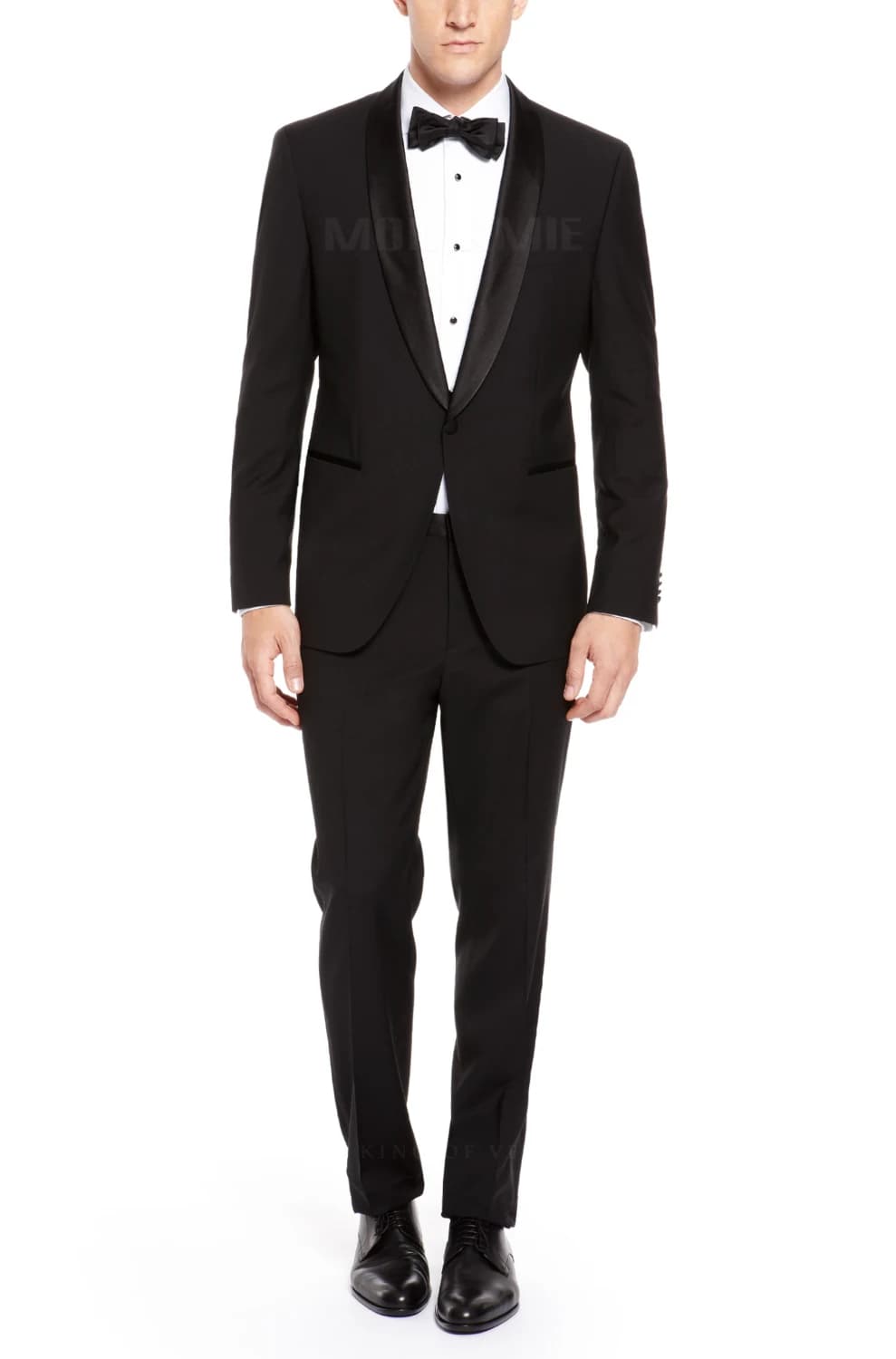
A slim-cut model such as TUX-089, solid black with satin shawl lapels in a close cut, only looks right when the measurements are exact; cut slightly off, a close fit turns into a tight one.
Tips for the fitting
- Stand straight, let your arms hang and look at the shoulder seam.
- Raise both arms forward, then sideways, to check whether the jacket restricts you.
- Sit, fasten the button and see whether the jacket pulls across the stomach.
- Walk a few steps so the trousers fall naturally.
Do not hesitate to tell the tailor about anything that feels wrong; that is the purpose of a fitting.

Book a fitting at Mon Amie
If you want to see how a tuxedo cut for your own frame differs from what is ready-made, a measuring session at a showroom gives the clearest answer. You can read about the made-to-measure tuxedo service and book a fitting.
Published 26/10/2026 · Editor: Mon Amie