The white silk evening scarf with a tuxedo
The white silk evening scarf with a tuxedo: fringed or plain, how to drape it under an overcoat, and why it suits cold northern evenings more than the south.
Editor: Mon Amie · Published · about 4 min read
In this article
The white silk evening scarf is a classic accessory for outdoors: worn as you arrive at and leave a formal evening, not draped on while seated in the ballroom. Drape it neatly, let the ends fall beneath the coat lapels, and hand it in at the cloakroom. It is at its most useful on cold evenings, which is why you see it less in the south.
What it is
An evening scarf is a long, thin scarf, usually in white silk or a silk blend, sometimes lined with cashmere. Its purpose is twofold: to keep warm the neck and chest exposed between the lapels of an overcoat, and to add a clean flash of light under the collar, in contrast to a black or charcoal coat.
Unlike a daytime wool scarf, white silk is soft, lightly glossy and falls in a drape. It is for evening only and goes with formal dress such as the tuxedo or white tie. With everyday clothes, a white silk scarf looks lost.
Fringed or plain
Both are used, with a difference in mood:
- Fringed: the ends finish in a short fringe. This is the classic style, recalling older evening dress and seen in vintage black-tie photographs. Keep the fringe short and in the scarf's own colour, not long and trailing.
- Plain: a neat hemmed edge with squared ends. It looks more modern and discreet, and is easier to wear today.
A typical length is around a metre and a half or more, enough to wrap and let the ends hang. A width of about thirty to forty centimetres drapes well without being bulky. White silk marks and creases easily, so keep it in a cloth bag after use and keep it away from lipstick, wine and perfume.
How to wear it
There are a few simple ways, and the simple ones usually look right:
- Drape with ends hanging: fold the scarf in half lengthwise, place it around the back of the neck and let both ends fall straight down the chest, under the coat's lapels.
- One loop: fold in half, loop it behind the neck, then pass the ends through the loop (the Parisian knot), making a small neat knot at the chest.
- Lightly draped: lay it over the shoulders with the ends hanging, untied, like a ribbon of silk around the neck.
A few notes:
- Keep the scarf inside the coat's lapels, not over the outside, so the lapels are not pushed out of shape.
- Do not wrap it too thickly. Silk is thin, so if you need more warmth, choose a silk scarf lined with cashmere.
- When you go inside, take it off with the coat. Nobody sits at a banquet table in a scarf.
Worn with an overcoat
The white scarf does not stand alone; it belongs with the overcoat. The classic pairing is a black Chesterfield with a velvet collar, or an opera cape, with the white scarf showing at the neck. The white reads clearly against the dark cloth, and that is exactly its charm. Our piece on overcoats for a tuxedo covers those two coats in more detail.
Avoid pairing a white scarf with a sporty jacket, a windcheater or a puffer. The clash of styles makes both look wrong.
Suited to cold evenings in the north
In Hanoi and the northern provinces, winter evenings can be cold and damp. Walking from the car into the hall, or waiting outside, a white silk scarf and a wool overcoat keep you warm without spoiling the line of the tuxedo. Highland places such as Da Lat and Sa Pa also have evenings cold enough to use it.
In Ho Chi Minh City, where it is warm all year, the scarf is mostly a gesture for rainy evenings, a very cold air-conditioned hall, or when you are travelling to a country with a real winter. If you are planning such a trip, see wearing a tuxedo in cold weather.
The scarf and the tuxedo in our collection
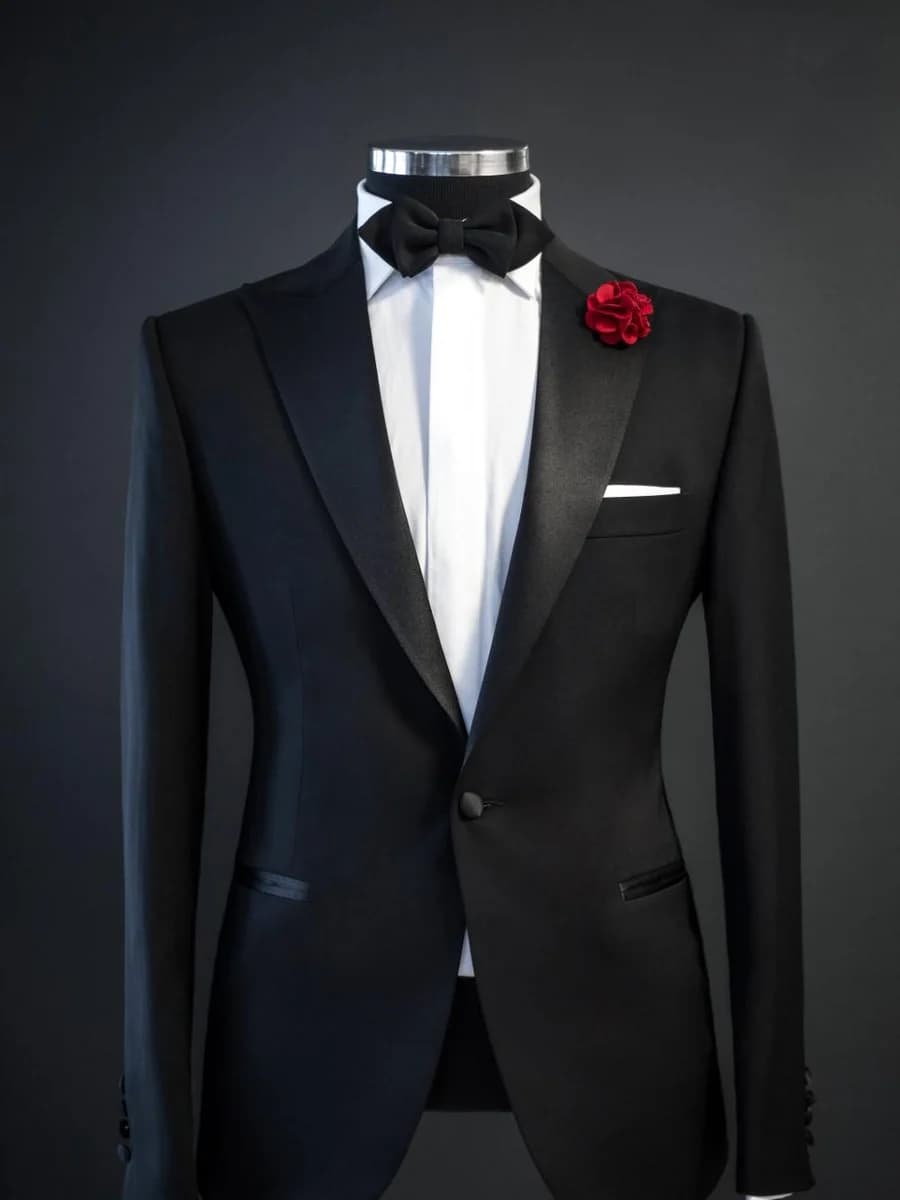
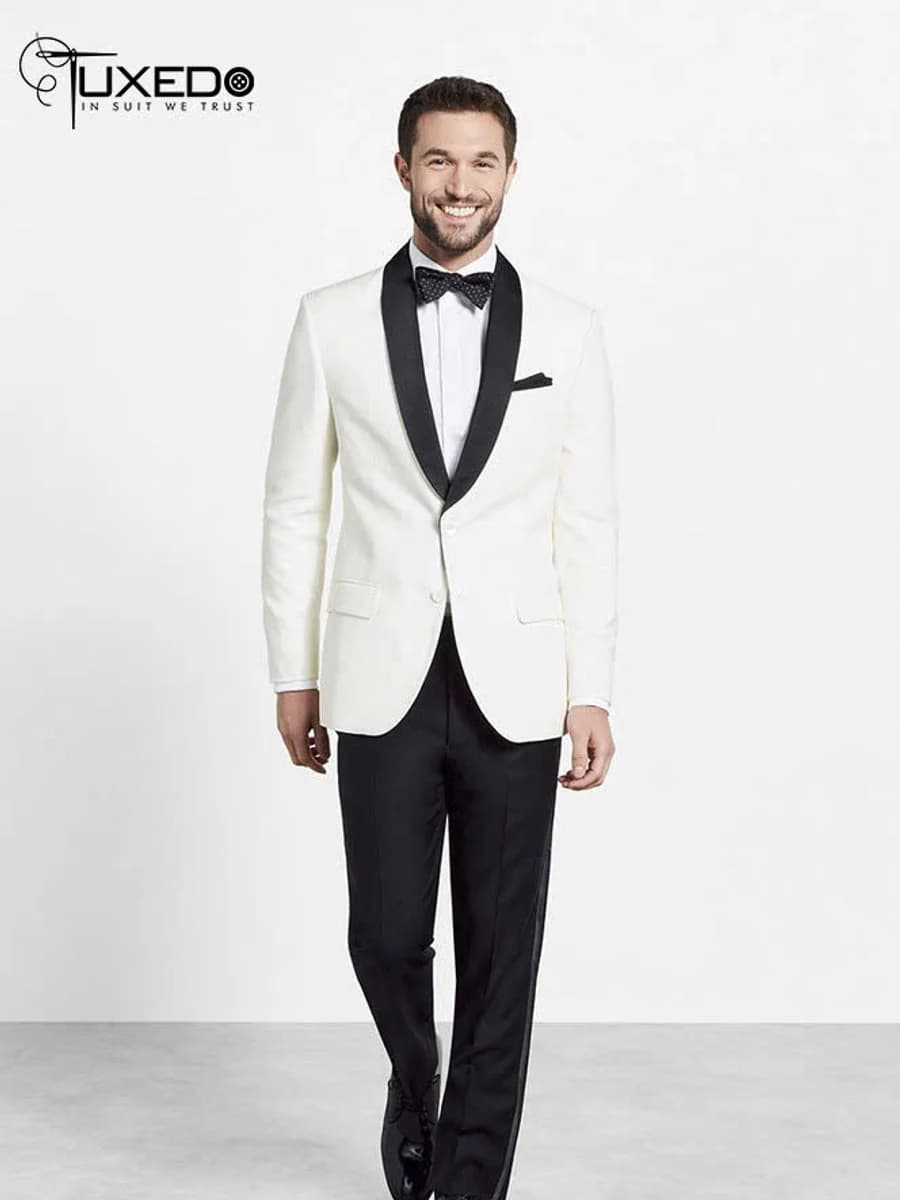
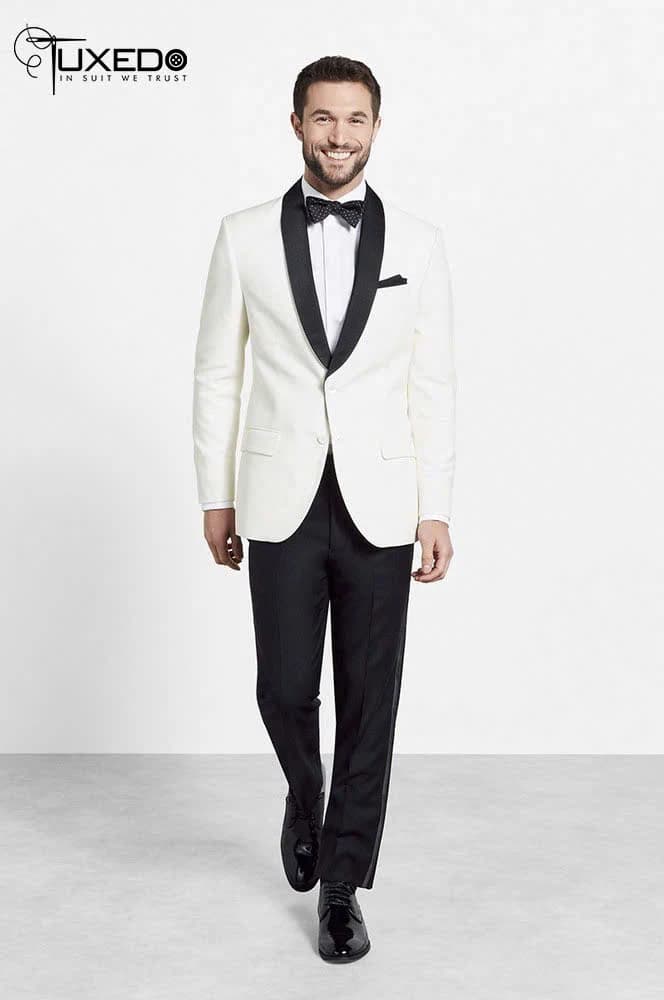
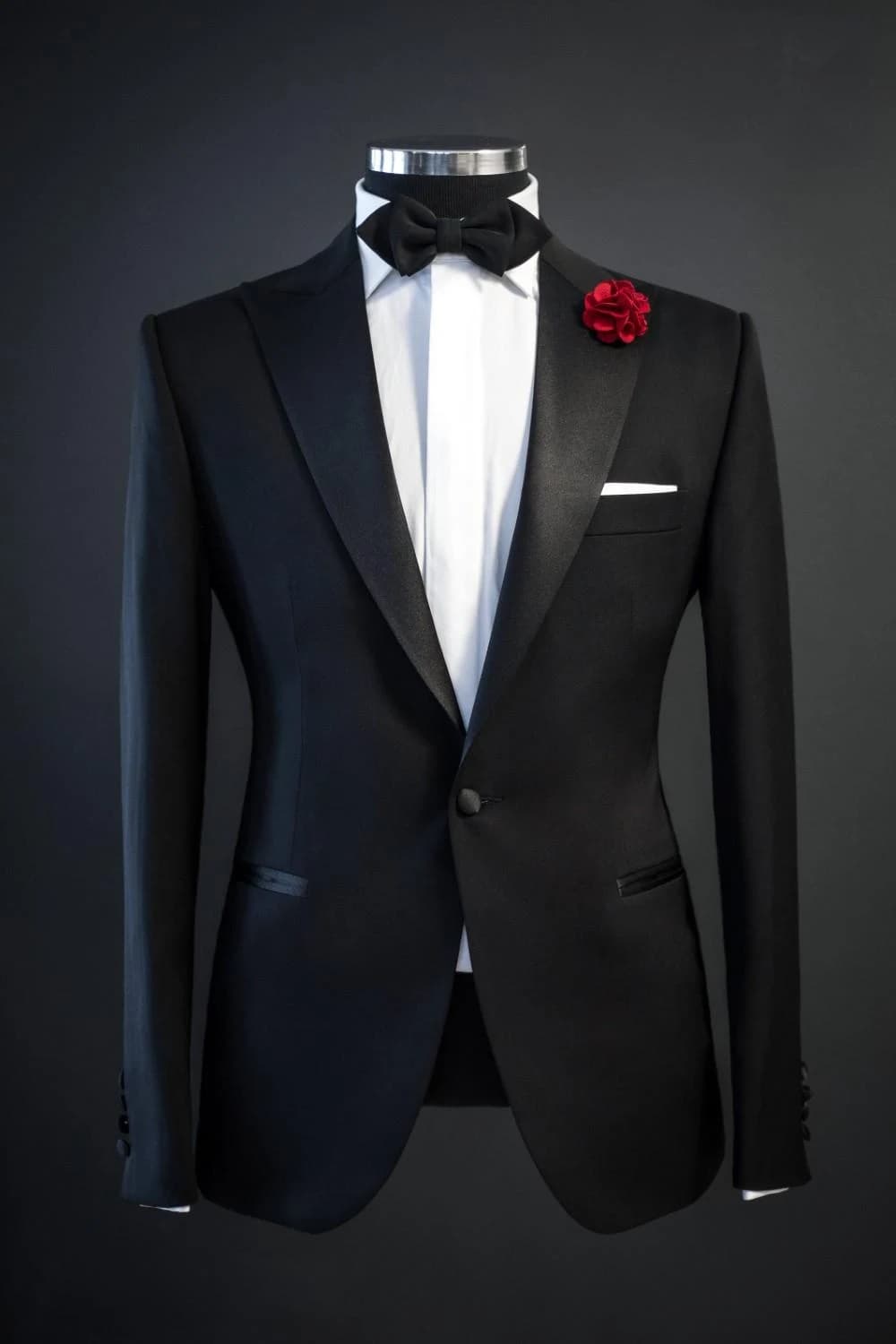
White stands out against a dark tuxedo. A suit like TUX-060, pure black with black satin lapels, under a black Chesterfield with a white silk scarf gives exactly the classic picture. With an ivory jacket such as TUX-015, a white scarf loses its contrast, and a darker scarf or none at all is better.

From the Mon Amie workroom
If you plan to wear a tuxedo with an overcoat, tell your consultant at the measuring stage so the coat is cut to allow for the thickness of the jacket beneath. Book a fitting at a showroom or see our bespoke tuxedo page.
Published 09/11/2026 · 17:30 · Editor: Mon Amie