Tuxedo vents: none, centre or side
A ventless tuxedo is the traditional standard; side vents ease sitting and reaching into pockets; a centre vent is rare in formal wear. Choose by seat and hips.
Editor: Mon Amie · Published · about 3 min read
In this article
A traditional tuxedo has no vent, and that remains the cleanest choice for evening dress. Side vents help if you sit a lot or often put your hands in your pockets. A centre vent is seldom seen on formal wear. The right choice depends on your seat and hips and how you will wear the suit through the evening.
What a vent is
A vent is the opening at the back, below the waist of the jacket. It lets the skirt of the coat part when you sit, bend or swing an arm, so the cloth is not pulled across the seat. There are three types: no vent, a centre vent (one slit up the middle of the back) and side vents (two slits at the sides).
Ventless: the traditional standard
Traditional evening jackets are ventless, giving one uninterrupted skirt that falls from the waist. The unbroken surface gives a sleek line that fits the ceremony of black tie. From behind the jacket reads as one elegant mass, unbroken.
The advantages: a clean, formal shape, and it suits slighter men with a slim seat. The drawback: when you sit, the skirt has to part by itself, so the jacket can wrinkle or pull across the seat. For a man with fuller hips, an unvented skirt can ride up at the back, although a tailor can reduce this by adding width to the skirt when drafting.
Side vents: easy to sit in
Side vents come from English tailoring and began on riding coats. The two slits let the back skirt open in two halves, so when you sit or reach into a trouser pocket, the jacket moves aside instead of being dragged.
The advantages: easy to sit in, easy to reach into trouser pockets, good for a fuller seat or wider hips, and the back still hangs straight. The drawbacks: the vents can expose the seat if the cloth is thin or the pattern is off, and the back is less seamless than ventless. A side-vented tuxedo is still correct as formal wear if the other details are right, so it is a practical choice many gentlemen make.
Centre vent: seldom for formal wear
The centre vent is common on American-style ready-made suits. It is simple, cheap and easy to make. On eveningwear it is rarely used, because a single opening in the middle of the back leans towards business dress, and it can gape on a fuller seat. When you sit, the two sides of the skirt do not part evenly and sometimes overlap in folds.
If the invitation asks for strict black tie, avoid it and choose ventless or side vents.
Choosing by seat and hips
| Build | Suggestion |
|---|---|
| Slim seat, narrow hips | Ventless, for the traditional line |
| Fuller seat or wider hips | Side vents |
| Sits for long periods, hands often in pockets | Side vents |
| Prefers ceremony, many standing photographs | Ventless |
| High seat, short back | Side vents, moderate length |
Vent length matters too: for evening wear, side vents should be on the shorter side, enough for the jacket to part without showing the seat. The tailor will set the exact length against the jacket length and your build at the fitting.
Things to know before you choose
- A vent is hard to add or sew closed once the jacket has been pressed into shape without leaving marks, so decide at the start.
- A shorter jacket usually suits side vents; a longer jacket suits ventless.
- For other traditional details, see what a tuxedo should not have, and for the general construction, the anatomy of a tuxedo jacket.
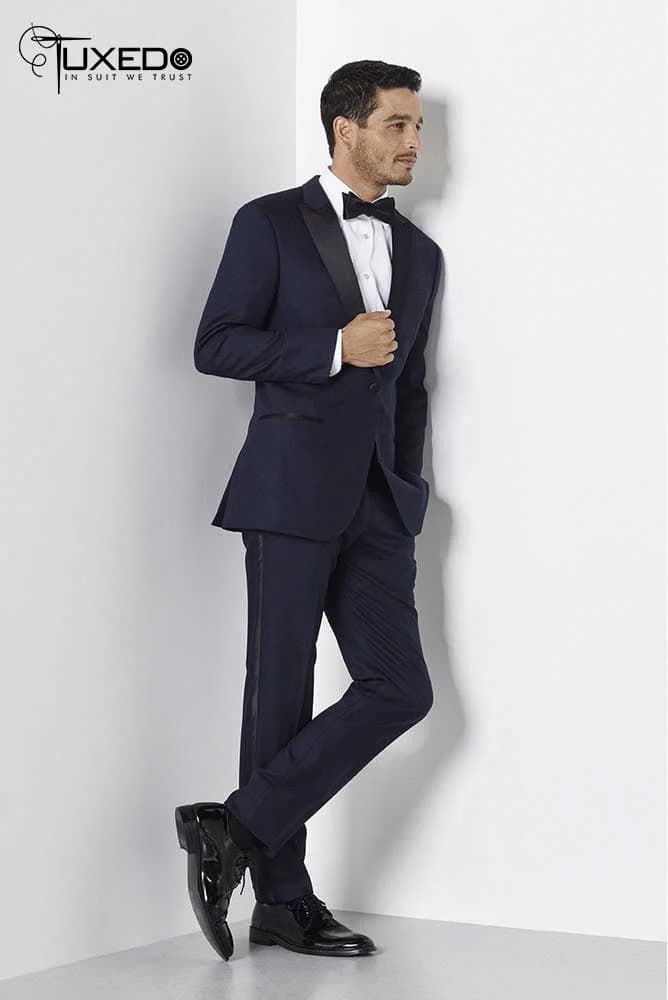
Sit and stand in front of the mirror
The sure way to choose is to try. The consultant will have you sit, put your hands in your pockets and look at the back of the jacket, so you can tell which type suits you. Book on the appointment page, or read about our made-to-measure tuxedo service.
Published 07/11/2026 · 08:30 · Editor: Mon Amie