Monogramming a Tuxedo Shirt: Where Do the Initials Go
A monogram on a tuxedo shirt belongs low on the torso or on the cuff, in white thread on white, small and plain, and never across the pleated front.
Editor: Mon Amie · Published · about 4 min read
In this article
A monogram on a tuxedo shirt belongs where only the wearer and those close to him will see it: the lower torso near the waistband, or on the sleeve. Use white thread on white cloth, small lettering and a plain typeface. The pleated front stays untouched, with nothing embroidered on it.
Initials are one of the most refined personal touches in made-to-measure clothing. They are not there to show off but so that the wearer knows the shirt is his alone. For that reason the position, the colour of the thread and the size of the letters all follow one principle: discretion.
What a monogram is, and how it differs from a full name
A monogram is the initials of a name, usually two or three letters, stitched together as a small emblem. It is more compact and more traditional than embroidering a whole name. In Western tailoring, the common arrangement for three initials puts the surname in the centre in a larger size, with the first and middle names on either side. That is a Western convention; for Vietnamese names (family, middle and given name), you may choose two or three letters as you prefer.
This personalisation sits among many other options in made-to-measure work. For more, read about personalising a made-to-measure tuxedo.
Discreet positions: lower torso and sleeve
Two positions are favoured by tailors because they are private yet traditional:
- Lower left torso: on the shirt tail near the waistband, usually hidden beneath a waistcoat or cummerbund, or just above the waistband. No one sees it when you are fully dressed, but it is exactly where it should be when you pick the shirt up.
- Sleeve: usually on the left cuff or on the sleeve just above it. The jacket covers this position least. When you push back a sleeve or take off the jacket, the letters appear quietly.
Some wearers choose the back tail or the inside of the collar band. Any position works so long as it is not directly in the line of sight of the person facing you. If you are left-handed, talk with your consultant about which side is convenient.
Nothing on the pleated front
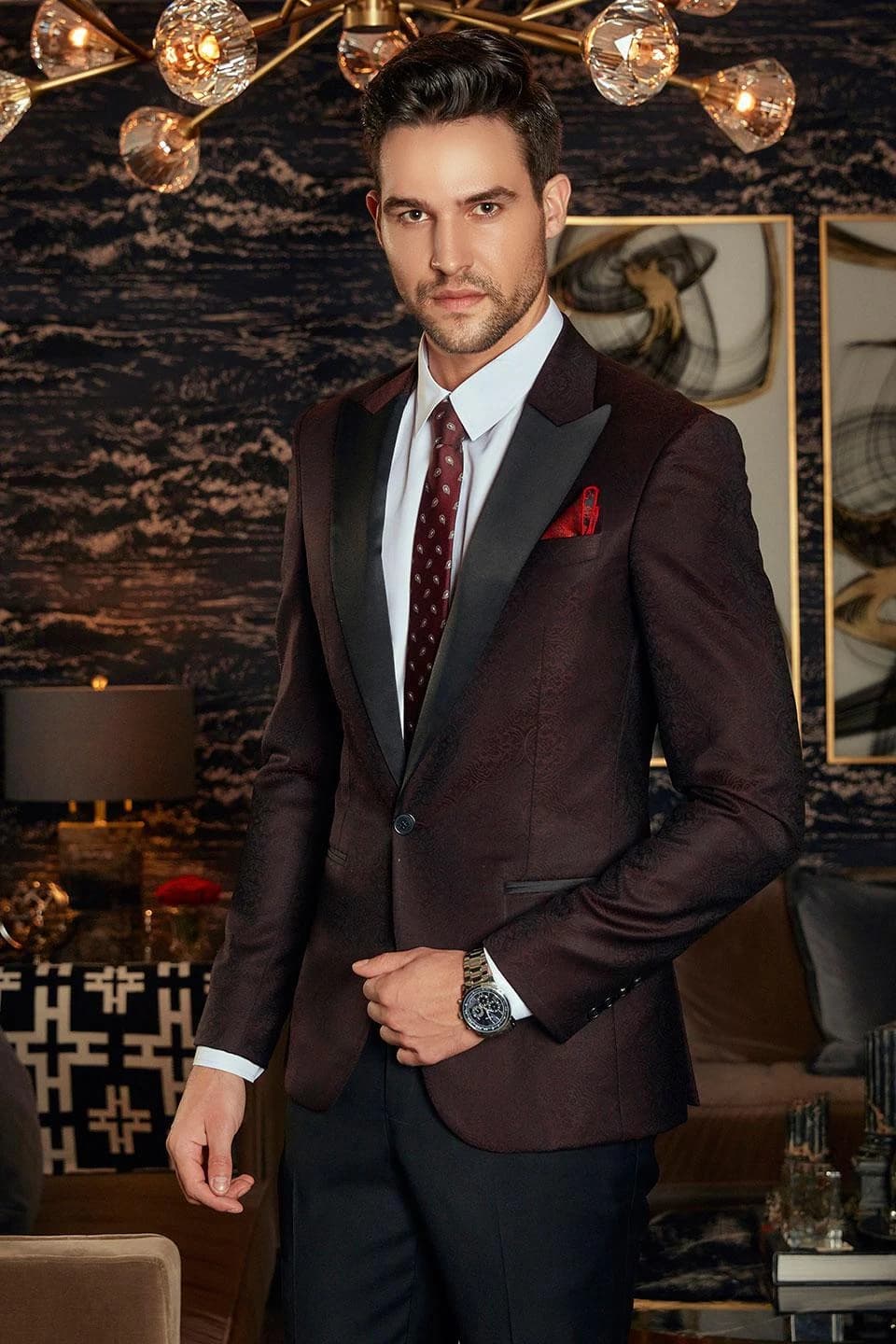
The front of a tuxedo shirt is the part seen most between the lapels, where pleats or a woven piqué have already created their own texture. Adding embroidery there has three drawbacks:
- The letters disturb the regular rhythm of the pleats.
- Embroidered cloth is denser, so it creases or forms ridges around the letters when pressed.
- The bow tie, the lapels and the row of studs already draw the eye, and added lettering makes the outfit less elegant.
So the rule is simple: leave the chest empty and place the letters elsewhere. The same principle applies to a plain-front shirt with a concealed placket.
Thread colour: white on white
On a white shirt, thread in the same white, or a very faint cream, gives a refined effect. The letters show through the raised texture of the stitching rather than through colour. You see them clearly only in raking light, which suits the spirit of black tie.
Other options:
| Thread colour | Effect | Use when |
|---|---|---|
| White on white | Subtle, visible mostly at an angle | White shirt, formal occasions |
| Light grey | Slightly clearer | You want legibility yet discretion |
| Dark blue or black | Prominent | Lower torso only, avoid the sleeve |
| Red, gold, bright colours | Showy | Not suited to a tuxedo shirt |
Contrasting thread belongs more to an everyday shirt than to a black-tie one. If in doubt, choose thread that matches the cloth.
Typeface and size
The lettering should be simple and legible. A classic serif or a clean block face both work. Avoid ornate scripts with many extra strokes, because small details tend to blur when stitched on thin cloth.
As for size, a height of about one to two centimetres is enough for the lower torso or sleeve. Small letters are both discreet and kind to the flatness of the cloth. With two or three letters, the embroiderer usually makes the middle one slightly larger, or keeps all three equal in a block style.
A practical note: ask to see the lettering stitched on a sample of the actual cloth before it is done, because thin and heavy fabrics show the stitch differently.
Ask your consultant when you order
Decide on embroidery when you order the shirt, not afterwards, since the position depends on the cut and on what the waistcoat or cummerbund will conceal. Ask your consultant about what embroidery is possible and the options available before you confirm the order.
You can read about our made-to-measure tuxedo service at Mon Amie and book an appointment at a showroom to choose the placement on an actual shirt.
Published 19/11/2026 · 07:00 · Editor: Mon Amie