Dress shirts
Pleated-bib tuxedo shirts: pleat size, count and fit
How to choose a pleated-bib tuxedo shirt: fine, medium or wide pleats, how many on each side, and how the bib should meet a cummerbund or waistcoat.
Mon Amie · 15/10/2026
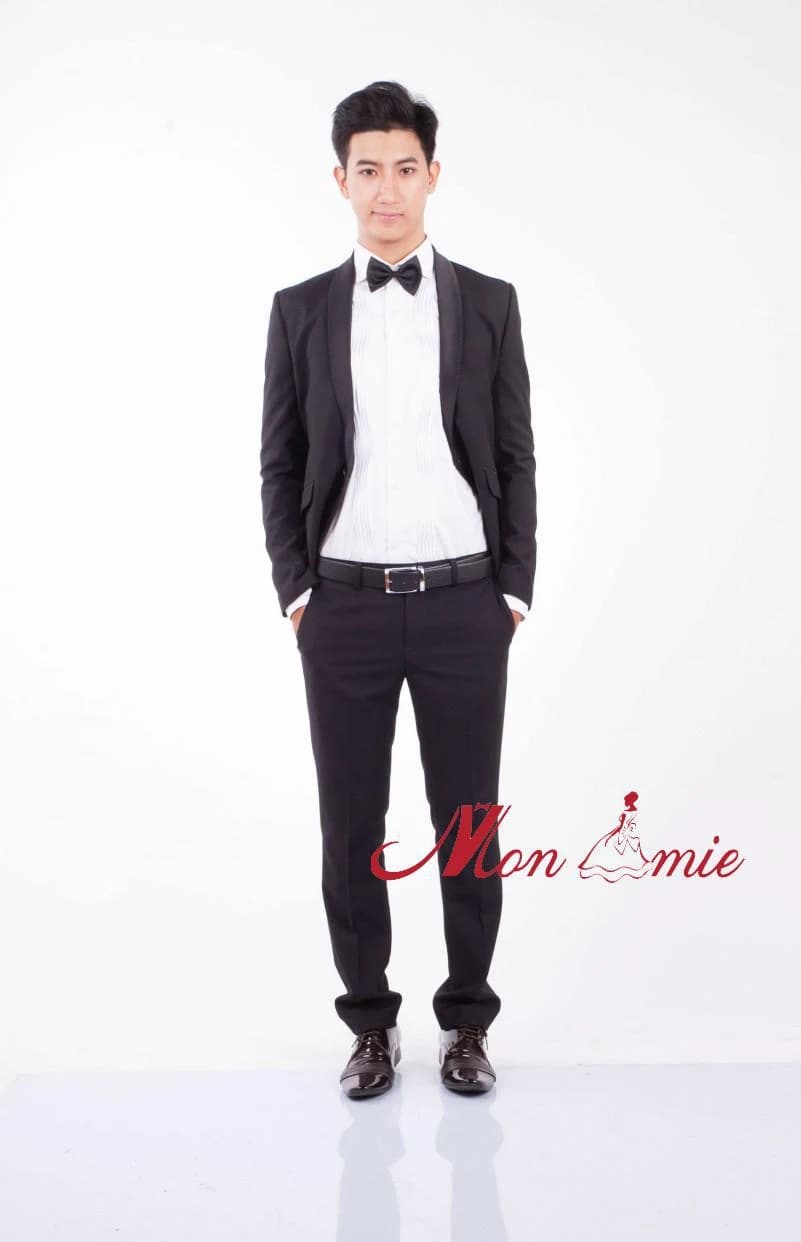
To choose a pleated-bib shirt well, you need to settle three things: whether the pleats are narrow or broad, how many sit on each side, and how long the bib runs before it meets the cummerbund or waistcoat. Get those right and the shirt sits quietly beneath the lapels without anyone noticing a mismatch.
The pleated bib is a classic formal detail. Vertical pleats are sewn into the chest, running parallel on both sides of the placket. They give the chest a rhythm without needing any extra accessory, which is why they suit a two-piece tuxedo with satin lapels so well.
Fine, medium and wide pleats
Pleat width is the breadth of each fold. Tailors usually talk about three groups.
- Fine pleats. Narrow folds set close together, producing a smooth, ribbed surface. This is discreet and refined, and it suits men with an average or slim chest, since many small folds make the chest read slightly fuller. Under party lights fine pleats almost merge into a single textured plane.
- Medium pleats. Wide enough that the eye picks out each line, yet not dominant. This is the easy, safe choice for weddings and dinners alike, and it works on most builds.
- Wide pleats. Broad folds, fewer of them, with a bolder and slightly nostalgic character. They need a broader chest to avoid looking cramped, and they look right with a classic black tuxedo.
Exact measurements vary by pattern and by workroom, so do not memorise fixed numbers. What matters is the overall impression: the wider the fold, the more theatrical the shirt and the more visible it is from a distance.
How many pleats on each side
The pleats sit symmetrically either side of the placket, so the count is always equal. For a given bib width, fewer pleats means each one is broader, and more pleats means each is finer. A simple way to think about it:
- A narrow bib calls for fewer pleats of medium width, so the folds do not crowd one another.
- A broad bib on a larger frame calls for more fine pleats, which look tidier.
- If you plan to wear large studs, keep the pleats slightly away from the placket so the studs do not cover them.
Above all, both sides must be even and straight. A single pleat out of line is obvious in the opening of the lapels.
Making the bib meet the cummerbund or waistcoat
This is where many ready-made shirts fail. The pleated section has to end exactly where the cummerbund or waistcoat begins, with no extra cloth below and no gap above.
- With a cummerbund: tuxedo trousers sit higher than ordinary suit trousers, and the cummerbund covers the lower edge of the bib. The bib should be long enough to fill that area without bunching under the band. More on this in three-piece tuxedo: waistcoat or cummerbund.
- With a low-cut waistcoat: more of the chest is exposed, so pleat width and count must be even and the placket perfectly straight. A higher-cut waistcoat shows less, and fine pleats are enough.
- With neither: the shirt tail is tucked into the waistband, so the body needs enough length not to pull out when you sit.
A practical test: put on everything, tie the bow tie, then sit down and raise your arms. If the chest does not pull sideways, no gap appears and the pleats stay straight, you have chosen correctly.
Two real tuxedos to see pleats in context
For a look at how a pleated bib sits within a whole outfit, see TUX-079, a black two-piece tuxedo with a medium satin-faced shawl lapel, a white shirt with a vertically pleated front and a medium black bow tie. The suit is clean, and the shirt front is the only point of rhythm. Then look at TUX-102, with rounded satin shawl lapels and a single button, where the pleated shirt closed with black studs follows traditional black-tie convention. Both use a pleated bib, but the first feels lighter and the second more formal.
Care and wear
A pleated bib should be pressed along the pleats, never flattened. Wash in a laundry bag or by hand, then steam from the inside first and the outside after. If you use starch, keep it light so the pleats stand without turning stiff as card.
Set beside how a tuxedo shirt differs from a business shirt, the pleated bib is the detail that most clearly separates the two.
Book a fitting at Mon Amie
Mon Amie makes pleated-bib shirts to your measurements so that the collar sits close and the pleats fall in the centre of the chest. Tell your tailor whether you will wear a cummerbund or a waistcoat so the bib length can be matched. See our made-to-measure tuxedo page, or book a showroom fitting to try the full outfit.