Dress shirts
Tuxedo Shirt Fit: Collar, Chest, Sleeves and Body
A well-fitted tuxedo shirt comes down to four points: a collar with one finger of room, a flat chest, cuffs that show, and a body long enough to stay tucked.
Mon Amie · 26/10/2026
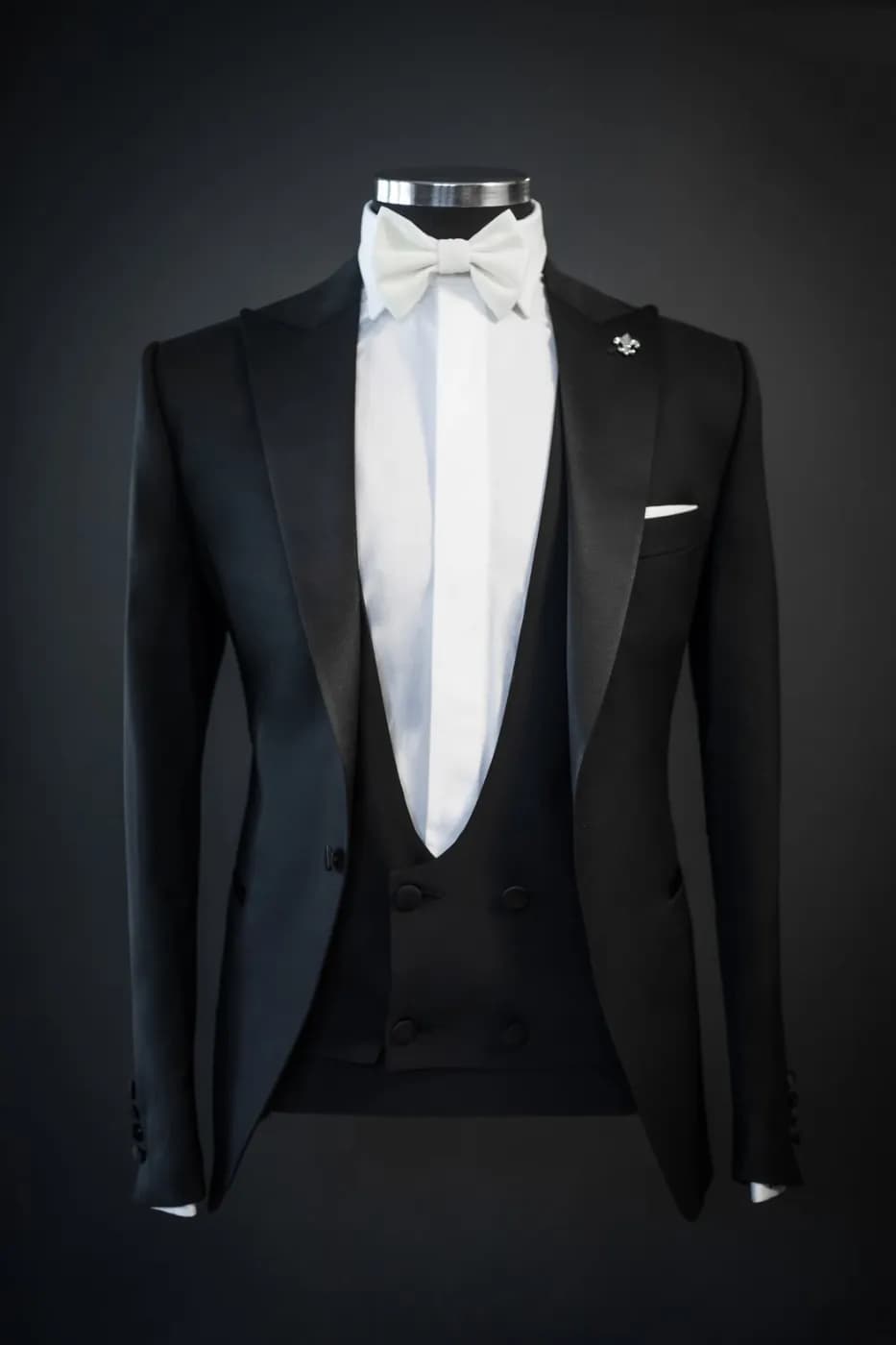
A well-fitted tuxedo shirt passes four simple checks: the collar leaves room for exactly one finger, the chest lies flat, the jacket sleeve stops short enough to show the cuff, and the body is long enough to stay tucked in however you move. Miss any one of them and even an expensive tuxedo loses points where the eye lands first.
Evening shirts are less forgiving than office shirts because they sit at the centre of the picture. A tuxedo jacket is usually fastened with a single button, leaving a deep V that shows the whole chest and collar. Every crease and every gap is on display.
Collar: one finger of room
Measure with the top button fastened. You should be able to slide one finger between collar and neck, no less and no more. Tighter and you will feel strangled by the second hour of the party, and the bow tie will be pushed off centre. Looser and the collar gapes, the wings spring up, and the bow slides down.
With a wing collar or a turndown worn with a bow tie, fit matters even more, because the collar is the platform the bow rests on. If you last measured your neck a few years ago, measure again; necks change with weight and training.
A tailor's habit worth copying: try the shirt with the chest studs closed and a bow tie in place, then turn your head left and right. If the collar presses on the Adam's apple or the tie bites into the skin, it needs more room.
Chest: flat, never puffed
The chest is where a tuxedo shirt shows its flaws fastest, especially a pleated bib. A good chest lies flat when you stand and still does not buckle when you sit or raise an arm. Common warning signs:
- Horizontal pulls around the button stand: the shirt is too tight across the chest or stomach.
- A bubble at the bib when you sit: the bib is too short or the body lacks length. Our piece on a shirt front that puffs out when seated goes further into this fault.
- Twisted or uneven pleats: caused by poor pressing or a shirt that does not match the body.
A fitted chest does not mean a tight one. There should be a small allowance across the chest for breathing, and so that the fabric is not stretched when you sit down at the table.
Sleeves: let the cuff show
Standing straight, the jacket sleeve should end at the wrist bone, and the shirt cuff should show a little beyond it, usually somewhere between a centimetre and a centimetre and a half. This is where the cufflinks catch the light, and it is one of the hallmarks of formal dress.
If the shirt sleeve is too long, the cuff vanishes inside the jacket, and you lose both the detail and the balance. Too short, and bare wrist appears, as if the shirt were borrowed. Measure with your arms relaxed at your sides, not bent, and remember that the jacket sleeve has to be cut to work with the shirt sleeve.
With a double (French) cuff, check the cuff opening too. The links should close without pinching, and your hand should still pass through easily. More on this in our note on French cuffs and cufflink styles.
Body: long enough to stay in
The part most often forgotten in ready-made shirts is the length of the body. A dress shirt must be long enough that when you bend, sit or raise a hand in greeting, the tails stay put. The tails should cover the seat and fall to roughly the upper thigh, enough to tuck in without being dragged out.
Tuxedo trousers sit high, and the waistband hides the join between shirt front and trouser. If the body is short, the shirt pulls out, the bib drags down, and a strip of stomach can show between waistcoat or cummerbund and trousers. The body should not be too full either: surplus fabric at the waist bunches under the jacket and makes the midsection look larger.
A mirror test
- Fasten the collar and place the bow tie on, or lay it across the neck.
- Raise both arms: if the shirt stays tucked, it passes.
- Sit in a chair and look at the chest: flat passes, bubbling needs correction.
- Put on the jacket and lower your arms: a centimetre to a centimetre and a half of cuff is right.
When one point fails, do not blame your build. A small adjustment to the pattern usually solves it. If you are buying off the peg, our guide to sizing a tuxedo shirt shows what to measure.
How Mon Amie can help
A made-to-measure shirt lets us adjust each of these points individually, from the collar to the chest and from the sleeve to the length of the body, instead of settling for the nearest stock size. You can bring a shirt you already own to our tuxedo tailoring service and the consultant will compare it with your measurements, or book a showroom appointment and be measured for the shirt at the same time as the tuxedo.