Stiff-Front Shirts: White Tie or Black Tie?
The stiff-front shirt is the standard for white tie and rarely seen with black tie today. Learn how it feels, how to sit in it, and the soft piqué alternative.
Editor: Mon Amie · Published · about 3 min read
In this article
The stiff-front shirt belongs to white tie. For black tie today it is rarely used, and a soft piqué or lightly pleated front is entirely correct and far more comfortable. If your invitation says black tie, you can safely do without a stiff front.
What a stiff front is
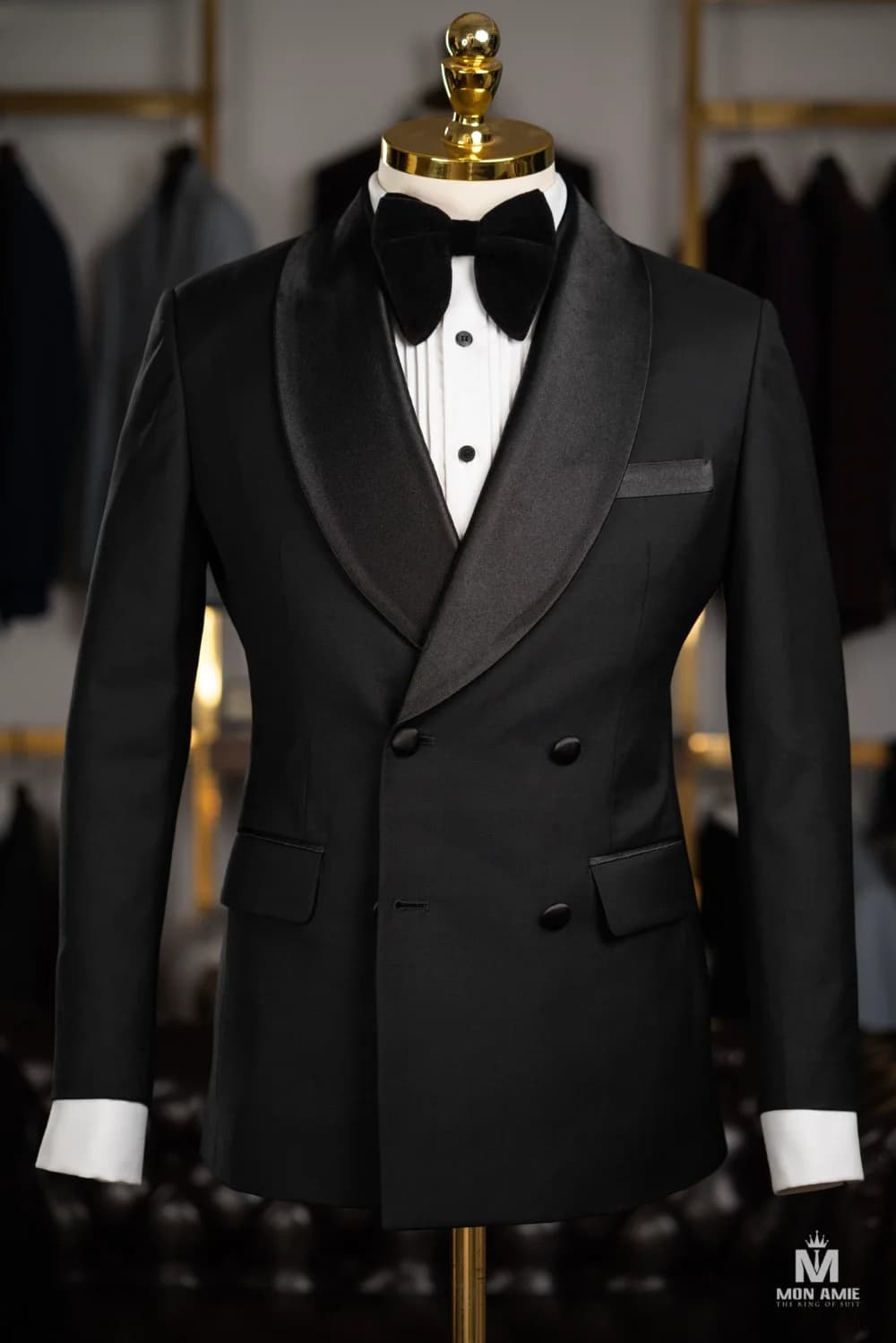
It is a shirt whose chest panel, the bib, is stiffened with starch or interlining so that it hardly bends with the body. The bib is usually made in piqué (a woven cloth with a raised texture), lies flat like a board, and closes with two or three studs. The old nickname for it is the "boiled shirt".
The body and sleeves behind stay as soft as on any ordinary shirt. Only the front is rigid, giving a smooth plane under the white waistcoat and the tailcoat.
The white tie standard
White tie is the most formal evening dress code, made up of a tailcoat, white waistcoat, white bow tie and a stiff-front shirt with a wing collar. There the rigid, flat bib gives the exact shape to the area of chest that shows between the tailcoat's fronts. The details of the dress code are in our article on the tuxedo and the white tie tailcoat.
The shirt is fastened with removable studs, traditionally three for white tie, though some shirts take two. For guidance on choosing them, see shirt studs.
Rarely used for black tie now
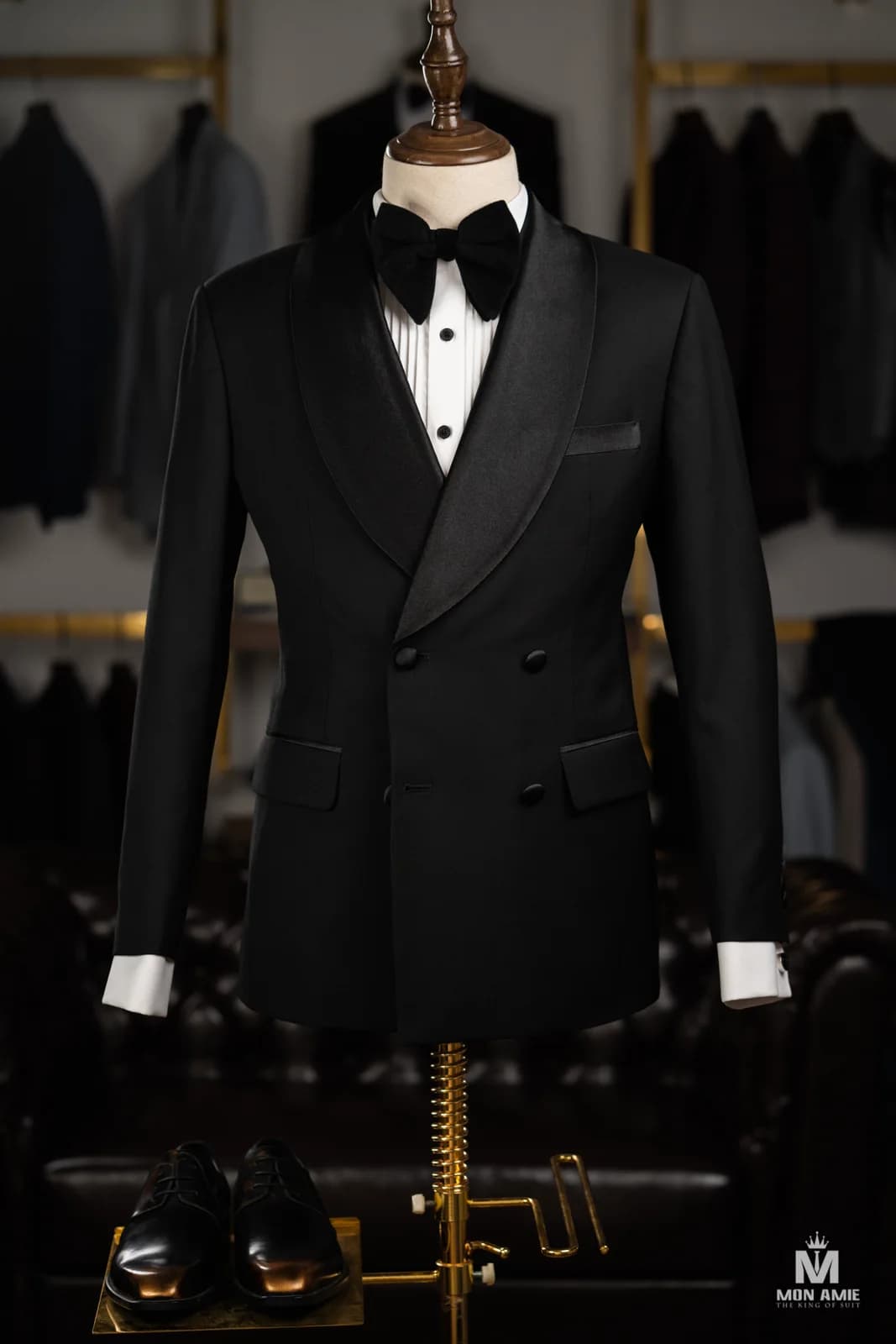
For black tie, the stiff front is no longer the main choice. Most men today choose one of two options:
- A pleated-front shirt with a softer bib and a refined look.
- A piqué or plain-front shirt with a light surface texture.
The main reason is comfort. A stiff front does not move with the torso. When you sit, the bib can ride up or slide sideways, and it is not pleasant in a hot, humid climate. If you wear black tie in an air-conditioned hotel or restaurant a stiff front is still workable, but most men choose ease.
How it feels and how to sit
Wearing a stiff front is unlike wearing an ordinary shirt. You will notice a few things:
- The bib keeps its shape, so the upper body holds a clearly upright posture.
- On a deep breath the bib does not stretch, so you may feel slightly confined.
- When you sit, the rigid panel tends to lift at its lower edge. Sit tall and lean forward gently from the hips instead of slouching.
- The waistcoat and studs keep the bib in place. Some shirts add a strap or tab that buttons to the trousers to stop it springing up.
- When you bend to pick something up, fold from the hips so that the bib is not creased.
For comfort, pick a chair that fits, and avoid leaning all the way back if the bib starts to rise. A shirt body that fits well and is long enough also helps, as in our piece on a shirt front that puffs out when seated.
The soft piqué alternative
If you like the crisp look of a stiff front but not the restriction, a soft piqué bib is the usual answer. Piqué has a small raised weave that gives the surface depth, and a light interlining keeps it flat while still following the body. You get a neat chest that you can still sit, bend and dance in. See piqué-front shirts for details.
Mon Amie generally recommends soft piqué or pleats for most tuxedo clients, because weddings and galas in Ho Chi Minh City often run for hours in hot weather.
Should you buy one
If you have a true white tie occasion, a stiff front is the original choice and worth considering. For someone who wears black tie a few times a year, a piqué or pleated shirt is correct and more practical. Let the occasion decide, not the fear of being under-dressed.
When to ask your tailor
Ask a consultant if you are torn between bib types for a particular event. They can let you try each one to feel the real stiffness. You can look at our tuxedo tailoring and then book a showroom appointment.
Published 01/11/2026 · 16:00 · Editor: Mon Amie