Dress shirts
How to fit shirt studs on a tuxedo shirt
How to fit studs on a tuxedo shirt: three or four studs, fitted before you put the shirt on, onyx or mother-of-pearl, and how to ease tight buttonholes safely.
Mon Amie · 21/10/2026
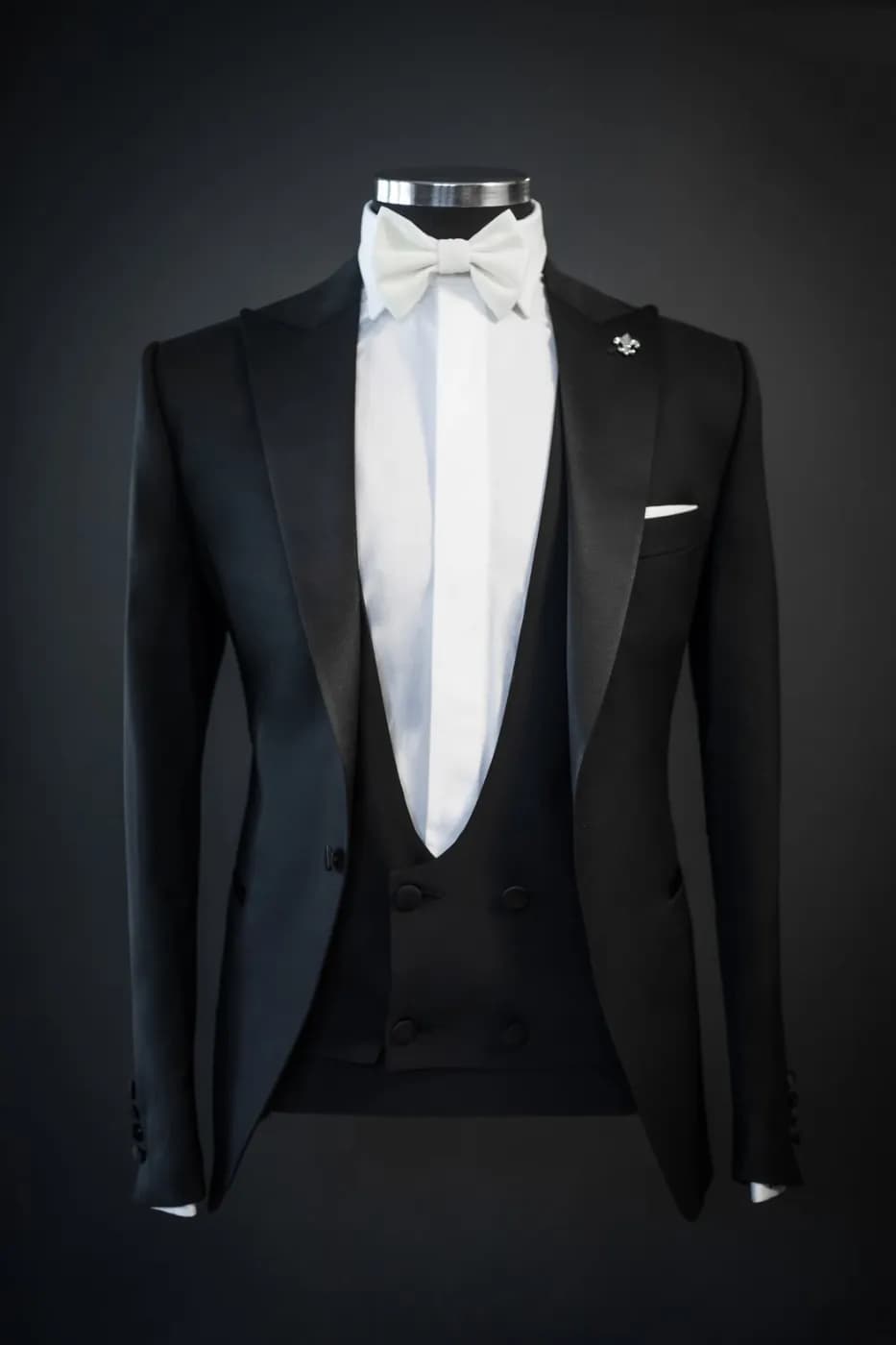
Studs are loose fasteners that replace sewn buttons on the placket of a tuxedo shirt. Fitting them is simple but the order matters: fit the studs while the shirt is off, usually three or four of them, and ease the cloth gently if the buttonholes are tight. Do that and the row of studs sits straight, even and secure all evening.
Three or four studs
The number depends on the length of the shirt front and how much of the chest the lapels reveal.
- Three studs: the most common, right for a medium-length front. Three give a slender row with an even beat.
- Four studs: for a longer front, particularly under a low waistcoat that shows more chest, or on a tall man with a long torso.
- Two studs: found on some short-fronted shirts and rarely used.
The tailor cuts the buttonholes to the shirt's design, so you do not add or remove them yourself. If you prefer a different count, say so before the shirt is made. The studs should be evenly spaced, and the lowest one should sit where the edge of the cummerbund or waistcoat covers it, so a lone stud does not peek out below.
What separates a stud placket from a row of business-shirt buttons is not just material but the fact that the studs come out: you can change them to refresh a look. This is one of the differences discussed in how tuxedo shirts differ from business shirts.
Fit them before you put the shirt on
Many men do this the wrong way round. Studs should be fitted while the shirt lies flat on a table, not while it is on your body.
- Lay the shirt on a flat surface. Spread the placket straight, outer face up.
- Pass each stud from the outside in. The decorative head stays outside; the post or back stays on the inner side.
- Fasten through both layers of the placket. The stud goes through the buttonhole on one side and then the other, so check the two holes line up in the column.
- Set the back. Depending on the type, turn the swivel bar or snap the spring; then tug lightly to confirm it holds.
- Put the shirt on, then adjust. Pull the placket straight, then tie the bow tie.
The reason for doing it first: fitting studs on the body means twisting your hands against your chest, which bends the stud, tears a buttonhole or leaves the row crooked. With the shirt flat you can see both edges aligned.
Onyx or mother-of-pearl studs
The material of the studs changes the feel of the whole outfit.
- Black onyx: tied to the black tuxedo and traditional black tie. The glossy black stone contrasts with the white bib and looks very clean.
- Mother-of-pearl: a soft creamy glow that suits an ivory tuxedo, lighter colours or midnight blue. Under evening light it gives a warm white, less harsh than metal.
- Silver or gold: neat and in the spirit of black tie if the face is plain. Avoid heavily jewelled studs, since light catches on the chest and pulls attention away from the bow tie.
The familiar rule is that studs and cufflinks should be a set, or at least the same tone, so that chest and wrists speak one language. More in choosing cufflinks and studs.
Dealing with tight buttonholes
A new shirt, especially a stiffly starched one or a dense weave, often has tight buttonholes, and studs with large heads are hard to thread. Do not force them, as you may break the stitching round the hole. A few sensible remedies:
- Thread at an angle. Slide the head in obliquely and turn it gradually straight, rather than pushing it in square.
- Soften the cloth around the hole. Wash the shirt once before first wear so the placket loses some starch and the holes ease.
- Hold the edges with your fingers. Spread the hole gently as you thread, never pull with a pointed tool.
- Ask the tailor to open the hole. If it is still too tight, a tailor can adjust the buttonhole quickly, which is safer than cutting it yourself.
- Pick studs with a suitable head. A head that is out of scale with the hole is a common cause.
The opposite also needs attention: if a hole is too loose the stud sits slack and tilts when you sit. Then the hole needs taking in, or you should choose a slightly larger head.
If you prefer not to use studs
Not everyone wants removable fasteners. If you want a cleaner front, choose a shirt with a fly placket; the two are compared in fly-front tuxedo shirts.
Book a fitting at Mon Amie
Fitting studs for the first time can be awkward, so if you are not used to it, let a specialist show you when you collect the shirt. Mon Amie makes shirts to measure with the tuxedo; see our made-to-measure tuxedo page or book a showroom fitting.