Staying cool in a tuxedo in Saigon heat
Wearing a tuxedo in Saigon heat: change close to the hour, absorbent undershirt, light shirt, cummerbund instead of waistcoat, and when to take the jacket off.
Editor: Mon Amie · Published · about 3 min read
In this article
The tuxedo was designed for cool European and North American evenings. In Saigon, where heat and humidity stay high all year, you need a plan as well as a good suit. The problem is not whether the cloth is expensive but how you manage the evening: changing late, moving between cool spaces and cutting the layers you do not need.
Change close to the hour, travel in air-conditioning
Do not wear the tuxedo from the moment you leave home if part of the journey is in the sun. Carry it in a garment bag and change at the hotel, a dressing room or the venue's cloakroom shortly before the event. If someone is travelling with you, this is easier.
When you move, favour an air-conditioned car and a drop-off near the entrance. The walk from car to lobby should be short. If you must cross open ground, carry the jacket over your arm until you are inside, but hang it straight in the car rather than flinging it over a seat so the back does not crease.
Before putting it on, let the jacket rest in a cool room for a few minutes. Wool that has cooled is much more comfortable than a jacket straight from a hot boot.
Absorbent undershirt and a light dress shirt
The two layers closest to the skin decide how the evening feels:
- An absorbent undershirt. Fine cotton or a breathable technical fibre, crew or deep V neck so it does not show through the shirt. A shade close to skin tone is more discreet than white beneath a white shirt.
- A light dress shirt. Breathable cotton such as a light poplin or voile is better than a heavy weave. A pleated bib in double cloth is warmer, so ask your tailor which front stays crisp with the lightest cloth. See dress shirts for hot climates.
One caution: never skip the undershirt for coolness. Sweat going straight into the shirt shows as marks under stage lights and in photographs.
Cloth and weight
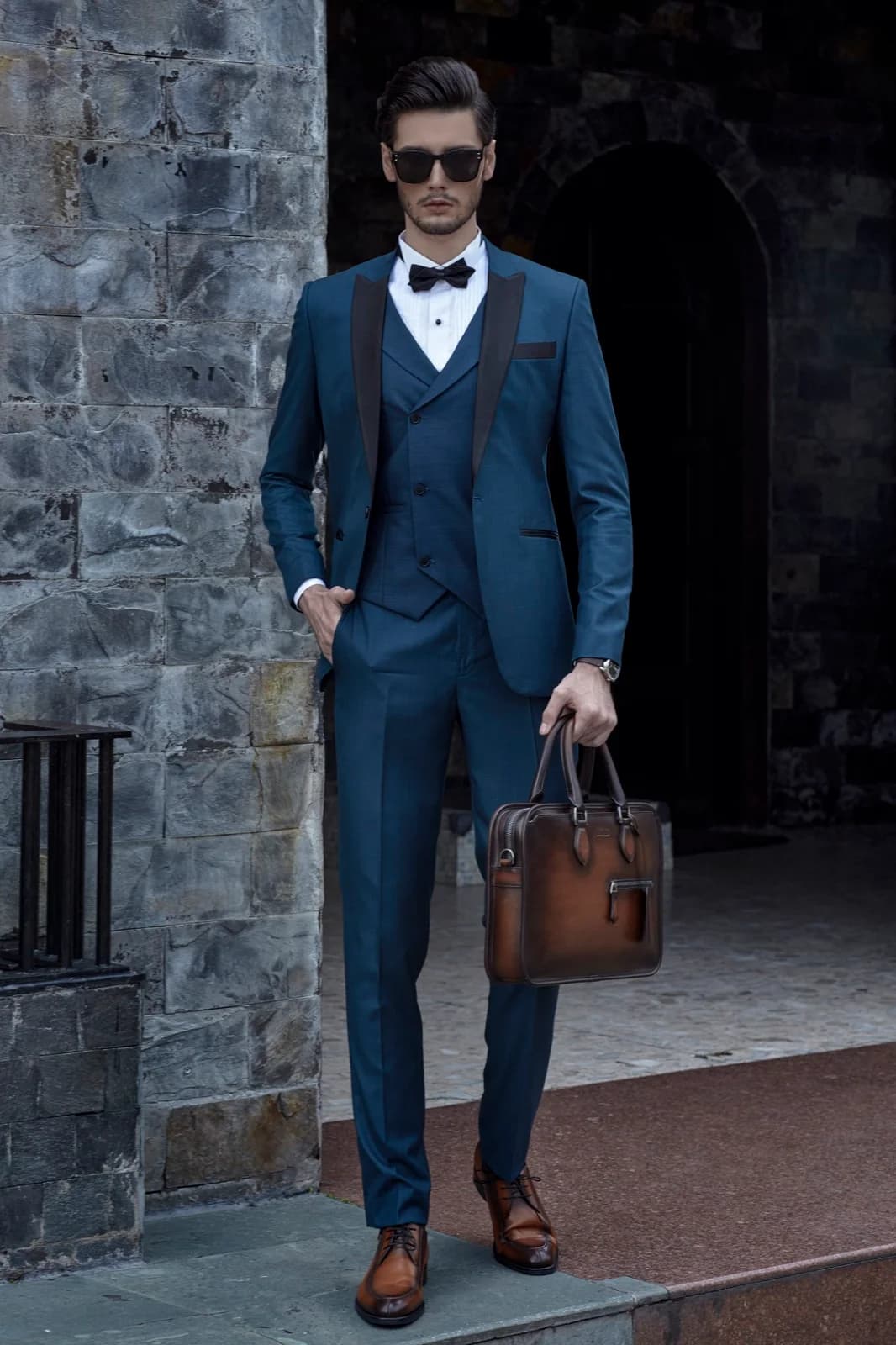
Open-weave, lightweight wool, or a wool-mohair blend, is a classic choice for formalwear in warm climates because it breathes and holds its shape. Tell the tailor at the measuring that the suit will be worn in Saigon; that is when cloth weight is chosen and a half-lining can be suggested if it suits. Our article on choosing tuxedo cloth weight goes into this.
Colour matters too. Black absorbs more heat in direct sun, though indoors at night the difference is small. Midnight blue and charcoal feel a little lighter.
A cummerbund instead of a waistcoat
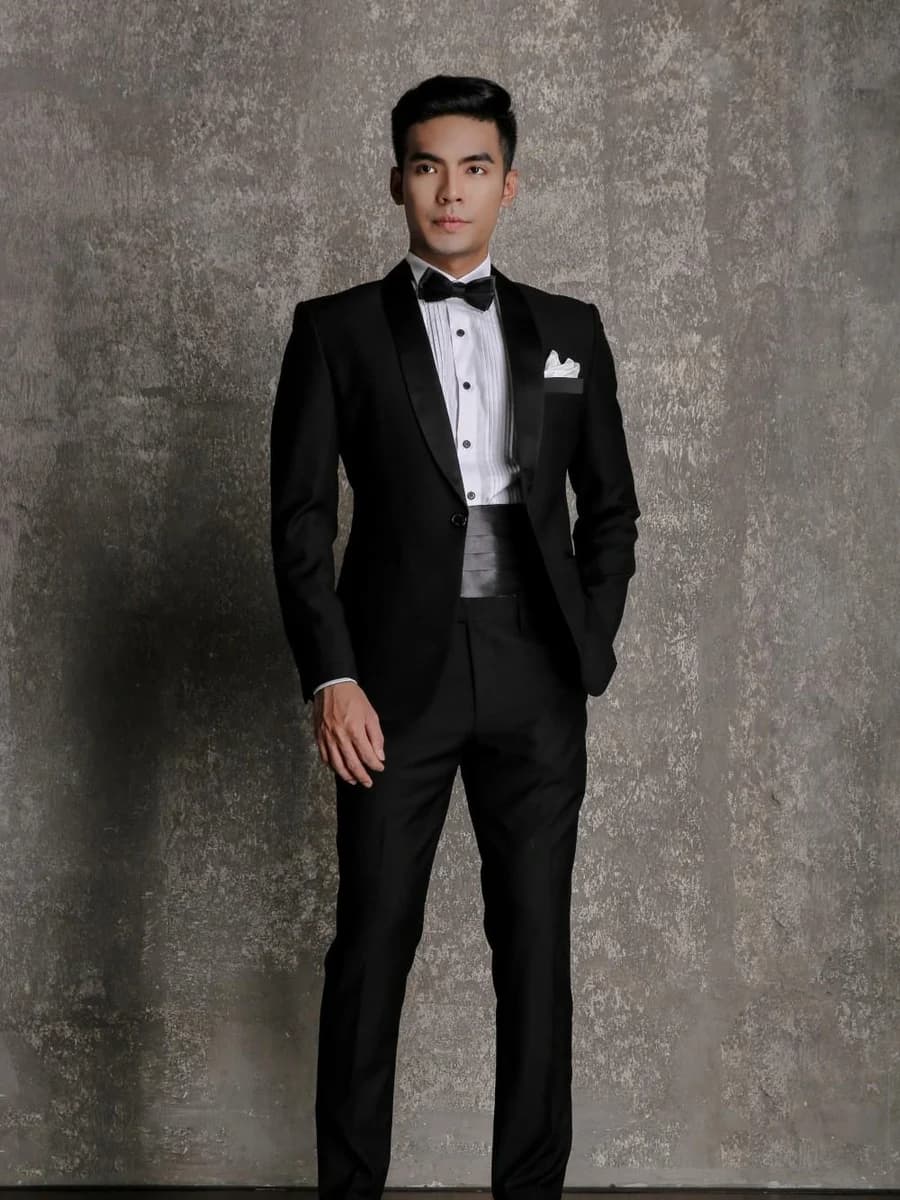
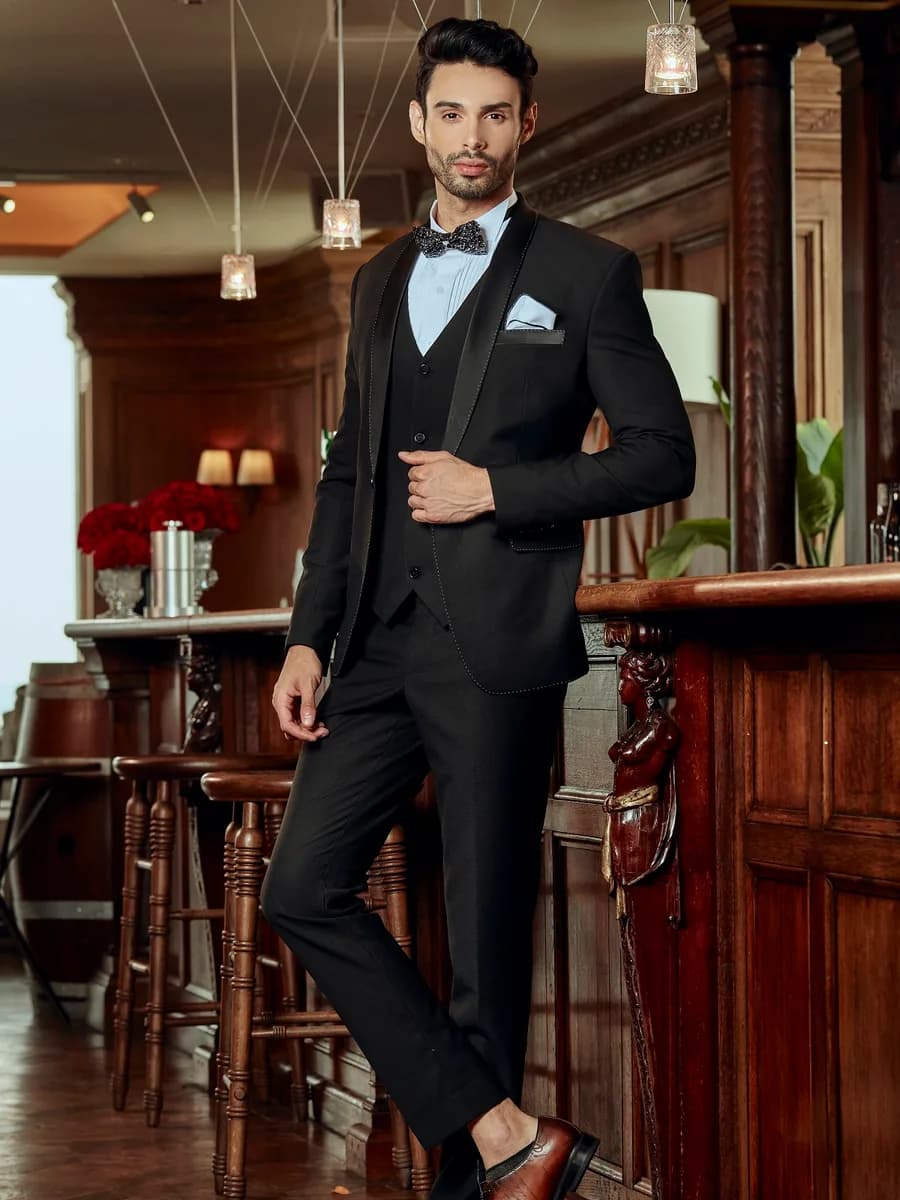
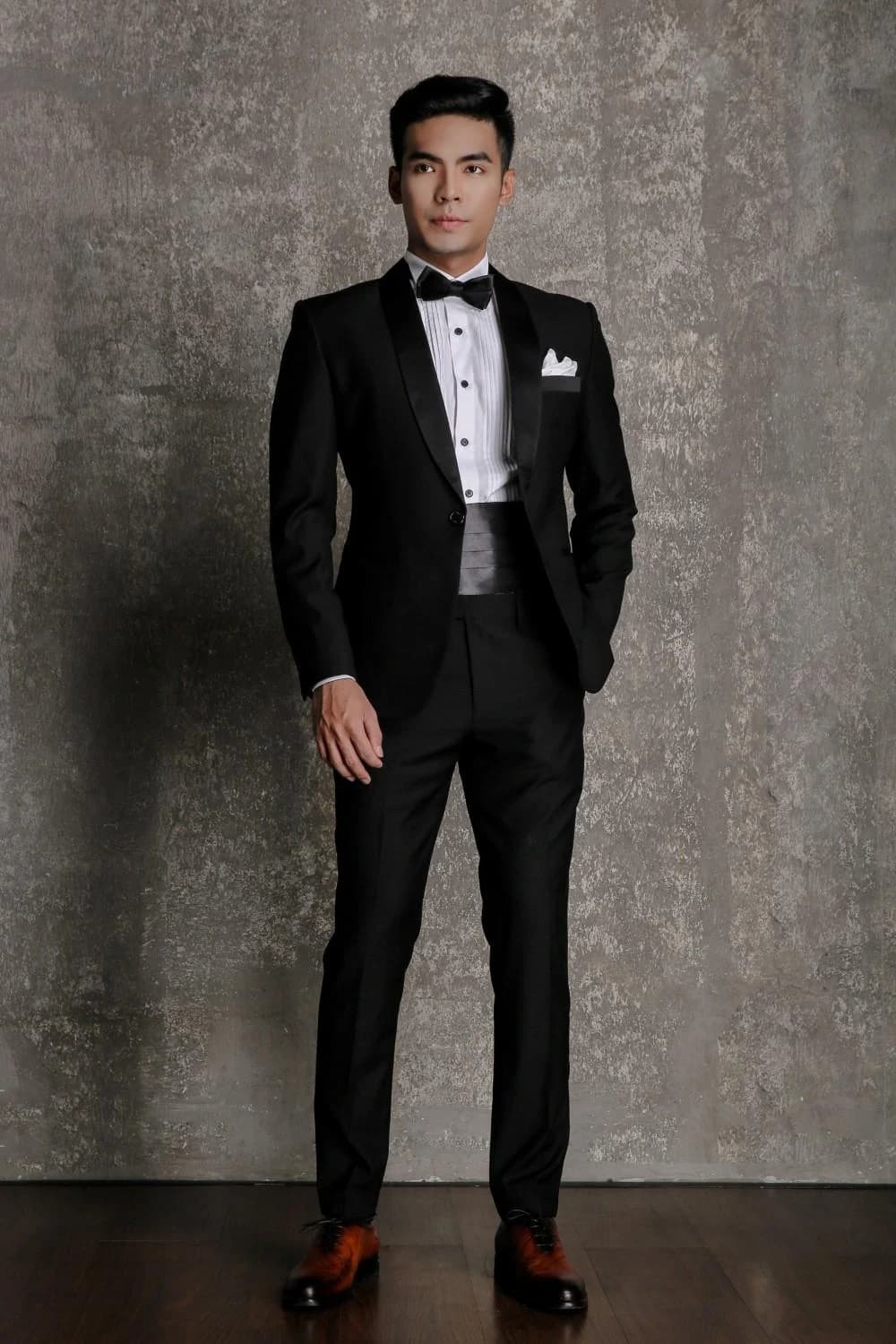
A waistcoat adds a layer of wool around the torso, and that is the layer most likely to feel stuffy. A cummerbund covers only the waist and still meets black-tie standards while dropping the heavier layer. A model like TUX-054, with satin shawl lapel, pleated cummerbund and pleated shirt front, suits warm weather. If your suit has a waistcoat, ask the tailor whether the back can be made in a thin lining.
If you are weighing the two, see three-piece tuxedo: waistcoat or cummerbund.
When you may take the jacket off
The unwritten rule: take it off when the host, or an older guest, has taken theirs off first, or when the party moves into dancing and mingling. More specifically:
- Do not during the main ceremony, speeches, toasts or group photographs.
- You may at the table once the host has done so, or later in a wedding reception when the groom does.
- If you remove it, hang it on your chair back and do not roll the shirt sleeves high. Keep the bow and cummerbund on.
When in doubt, ask the organiser first; a short question avoids a lot of awkwardness.
For fierce climates where the jacket is traditionally dropped, the Red Sea rig is an interesting reference.
Book a fitting at Mon Amie
If the tuxedo is being made for Saigon weather, say so at the measuring. Our advisers will recommend cloth, lining and whether a cummerbund or waistcoat suits each occasion. You can book a fitting at a showroom.
Published 06/11/2026 · 10:00 · Editor: Mon Amie