Care
Keeping a White Dinner Jacket From Yellowing
A white or ivory dinner jacket yellows from perspiration, sunlight and poor storage. Clean it after each wear, avoid plastic bags, store in dark cloth.
Mon Amie · 28/10/2026
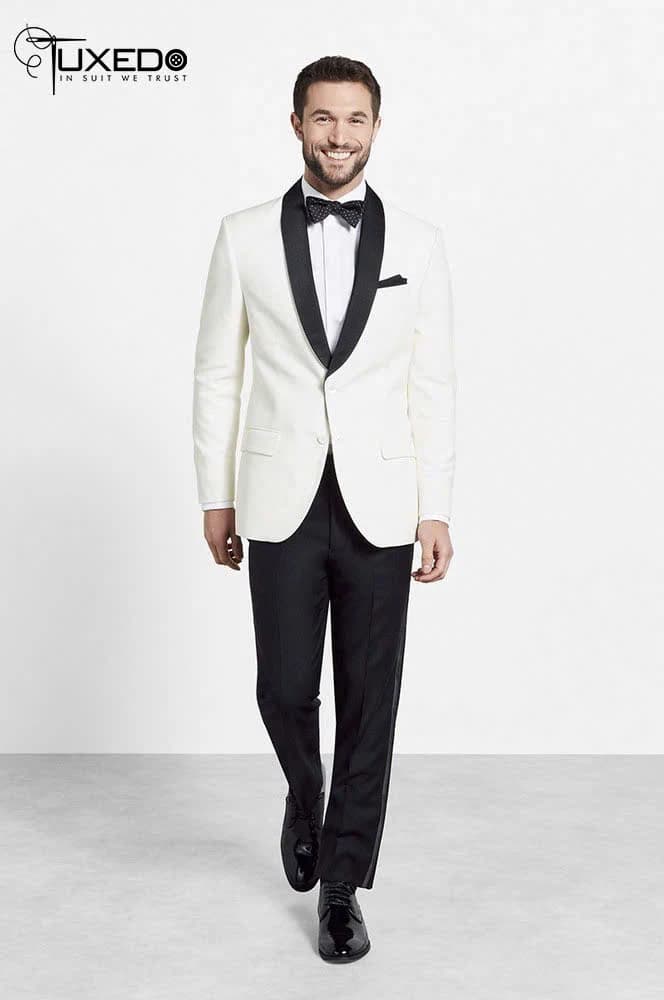
A white dinner jacket turns yellow mostly because of things you cannot see: perspiration, skin oil and moisture left in the cloth, which time, light and bad storage then darken. So the way to keep it white lies less in any cleaning product than in habit: clean it before it is put away, and keep it somewhere dark, airy and free of plastic.
Why white cloth yellows
Most yellow marks do not start as visible dirt. Perspiration and skin oil soak into the fibre and at first are almost clear. Over time they oxidise to a yellow-brown, usually at the collar, underarm and cuff edge. Wine, soft drinks and food in the weave do the same: a dried sugar stain is hard to see when fresh and darkens as the weeks pass. Sunlight also pulls the colour of wool toward yellow, and trapped moisture helps both processes along.
The ivory of a dinner jacket is already slightly warm, so the shift hides in the base colour until the jacket is placed beside a clean one. Then the difference shows.
Clean it after every wear
With a dark jacket you can brush and air it between outings. A white jacket is different: because invisible stains develop later, it makes sense to have it dry cleaned before it is put away, especially after a warm, crowded evening or one with drinks. Tell the cleaner it is a white jacket and point out the places you suspect (wine, a soft drink), so they treat those before pressing.
If you wear it several times in a season, keep a balance: cleaning too often dries the wool, so ask the cleaner to judge by the actual condition rather than follow a fixed routine. The general principles are in dry cleaning a tuxedo.
Perspiration at the collar and underarm
The collar, inner shoulder and underarm are where a white jacket spoils first. Small things make a difference:
- Wear a clean white shirt, wing or standard collar, so skin does not touch the jacket collar directly.
- Do not let perspiration dry in the cloth: once home, hang the jacket in the air rather than leaving it damp in a bag.
- On a bespoke jacket, choosing a breathable lining lets moisture escape instead of working back through to the outer cloth. Your tailor can advise when you choose the lining.
- Ask the cleaner to give the collar and underarms separate attention when cleaning.
Do not apply bleach or detergent to the wool yourself. Strong chemicals can strip the softness or leave a ring.
Avoid sunlight and plastic bags
Hanging a white jacket in the sun to "freshen it" is a way to yellow it faster, because sunlight alters the colour of the wool. Hang it in an airy place in shade.
Plastic bags, including the film the cleaner wraps around the jacket, are only for carrying it home. Plastic lets nothing out, so it keeps moisture and any chemical residue against the cloth and encourages yellowing and mould. Remove the film the moment you get home.
Store in a dark cloth bag
The sound method is a breathable, dark cloth garment bag with a zip: it shuts out light but lets moisture pass. Hang the jacket on a broad hanger in a dry wardrobe, not pushed against a door where light leaks in. In humid weather a moisture absorber in the wardrobe helps. Be careful with scented sachets and mothballs: a strong smell can cling to white wool, so ask your cleaner before using them.
More on wardrobe storage is in storing a tuxedo between wears.
Choosing the cloth helps too
A dense, closely woven cloth without too much sheen tends to hold its colour and show fewer marks; cloth for a white dinner jacket explains the choice. Our models such as TUX-015, an ivory jacket with a black satin shawl lapel and black trousers with a satin stripe, and TUX-042, ivory with broad black satin peak lapels, both carry black and white contrast, so tell the cleaner to avoid pressing directly on the satin.
For when to wear it and how to style it, read the white dinner jacket.
If it has already yellowed
If the jacket has already turned, do not try to bleach it yourself. Take it to a cleaner experienced with fine tailoring, tell them it has yellowed over time and show them where. Light discolouration often improves; deep marks may not return fully to white. A Mon Amie tailor can also check the lining and collar, since sometimes the trouble lies in the inner layers. Book a visit to the showroom to have it seen in person.