Care
Storing your tuxedo between wears
A broad wooden hanger, a breathable cloth bag instead of plastic, a dry closet with space between garments and trousers hung by the hem: how to store a tuxedo.
Mon Amie · 15/10/2026
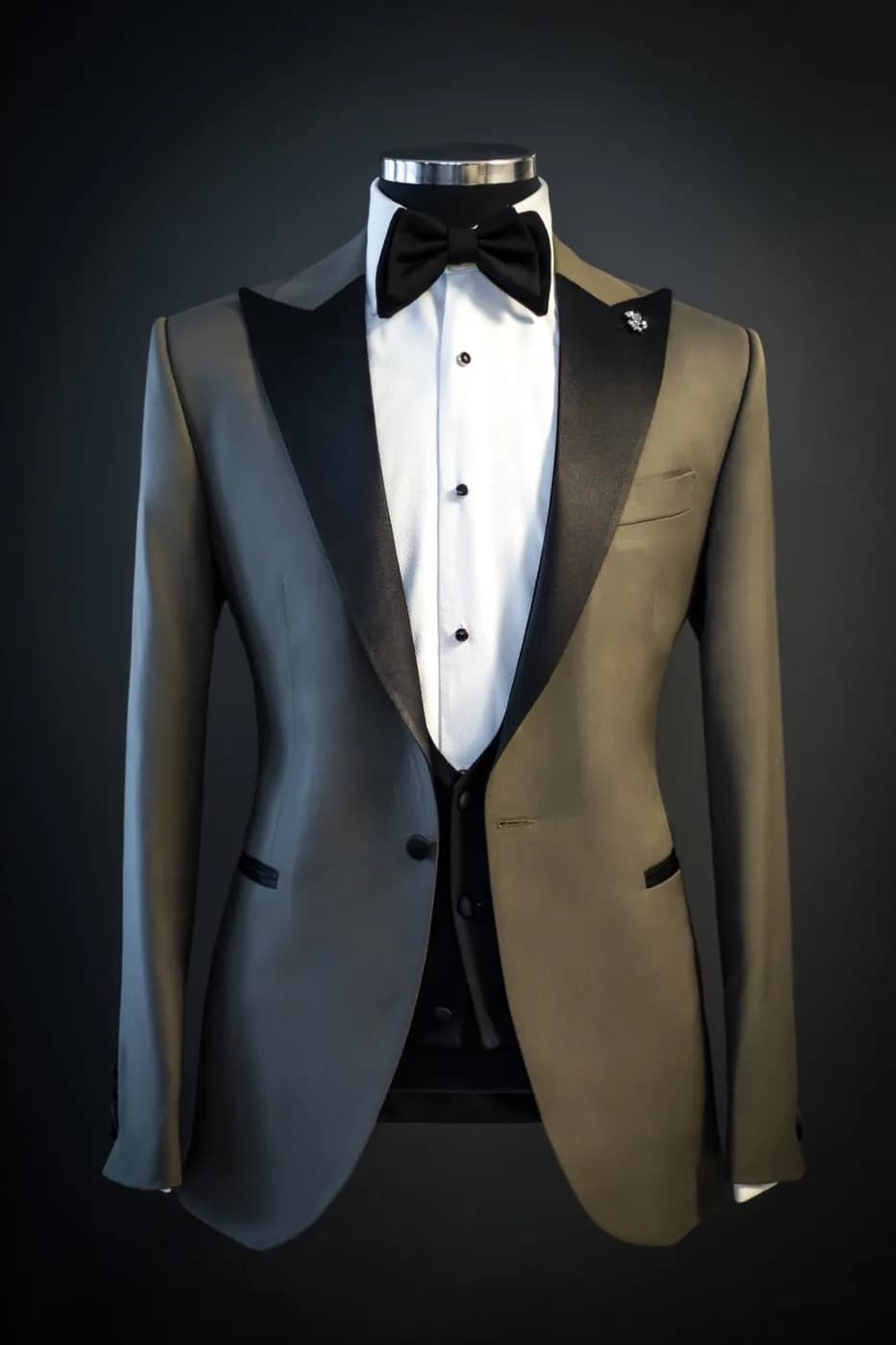
A tuxedo spends far more time in the wardrobe than on your back, so how you store it decides much of its lifespan. Four habits matter: hang the jacket on a broad wooden hanger, cover it with a breathable cloth bag, keep the closet dry with space between garments, and hang the trousers by the hem or over a padded bar. Do those four and you avoid the most common ways a good suit gets ruined.
A broad wooden hanger
The shoulder is the part the tailor builds with the most care: padding, wadding and a curve that follows your shoulder blade. A thin wire hanger or a small plastic one pulls the shoulder down into a point and leaves a permanent dent within weeks.
Choose a wooden hanger with a contoured shoulder, nearly as wide as the jacket's own. It should support the whole shoulder line, not just the tips. Wood also draws off a little of the moisture left in the cloth, which plastic does not. If the hanger has a bar for trousers, cover it with a layer of cloth so the trousers are not marked.
When you hang the jacket, fasten the middle button (the only button, on a single-breasted jacket) so the fronts hang properly. With a satin or shawl lapel, make sure the lapel is not folded or caught under the hanger.
A breathable cloth bag, not plastic
A clear plastic cover is convenient to see through, but it traps moisture and stops the wool from breathing. In a warm, humid climate like Ho Chi Minh City, a sealed plastic bag is an ideal setting for damp smells and mould. The thin plastic from the dry cleaner is only for carrying the suit home. Take it off as soon as it reaches the wardrobe.
Use a breathable garment bag, usually non-woven fabric or cotton. It should be long enough to cover the whole jacket, and if it has a zip, close it gently so it does not press on the cloth. For a suit you wear rarely, add a layer of tissue paper around the satin lapel to guard against dust and rubbing.
If you own several suits, give each one its own bag. Do not push two jackets into one, and do not store heavy accessories such as shoes or a bag in the same cover.
A dry closet with space
A damp closet is wool's enemy. Place the wardrobe somewhere airy, away from wet walls and bathrooms. Inside, put a moisture-absorbing sachet or a cedar block in a corner. Cedar has a scent that deters insects, but the scent fades, so lightly sand or replace it from time to time. More detail is in protecting your tuxedo from moths and damp.
Space matters just as much. Jackets packed shoulder to shoulder get crushed, the lining wrinkles and satin facings rub against the next garment and pick up shine. Leave roughly a hand's width between each. Do not hang a tuxedo hard against the wardrobe door, which brushes it every time it opens.
If the closet gets direct light, keep the tuxedo out of the beam. Sunlight fades black and navy cloth over time, and the part facing the light will look different from the rest.
Trousers hung by the hem
Tuxedo trousers have a sharp crease and a satin braid, and neither tolerates being folded in half over a thin wire bar. There are two better ways.
- Hem clips. Use a hanger with clips, attach them to the edge of the hem and let the trousers hang straight. Their own weight pulls out the wrinkles. Choose padded clips so they do not leave teeth marks.
- A padded bar. Fold the trousers along the crease and lay them over a wooden or cloth-covered bar, with the crease centred.
Whichever you choose, empty the pockets first, from wallet and keys to tissues, which pull the pockets out of shape. Braces should come off and be stored separately.
Before the season ends
Before hanging a suit for several months, check three things: it is fully dry, any stains have been dealt with, and there is no smell of sweat. See after each party in your tuxedo for what to do after an evening out. When you take it out again, hang it in open air for a while and steam it lightly if needed before you wear it.
Advice from the Mon Amie workroom
If your tuxedo was made at Mon Amie, ask the tailor how to hang it for the particular shape and cloth. If you are thinking of ordering one, we explain how to care for each cloth when you choose it. Book a consultation at the showroom or read about made-to-measure tuxedos.