Care
Weight Change: How Much Can a Tuxedo Be Altered
If your weight changes, will the tuxedo still fit? Seam allowances, letting out or taking in the waist, the limits at shoulders and chest, and when to make new.
Mon Amie · 22/10/2026
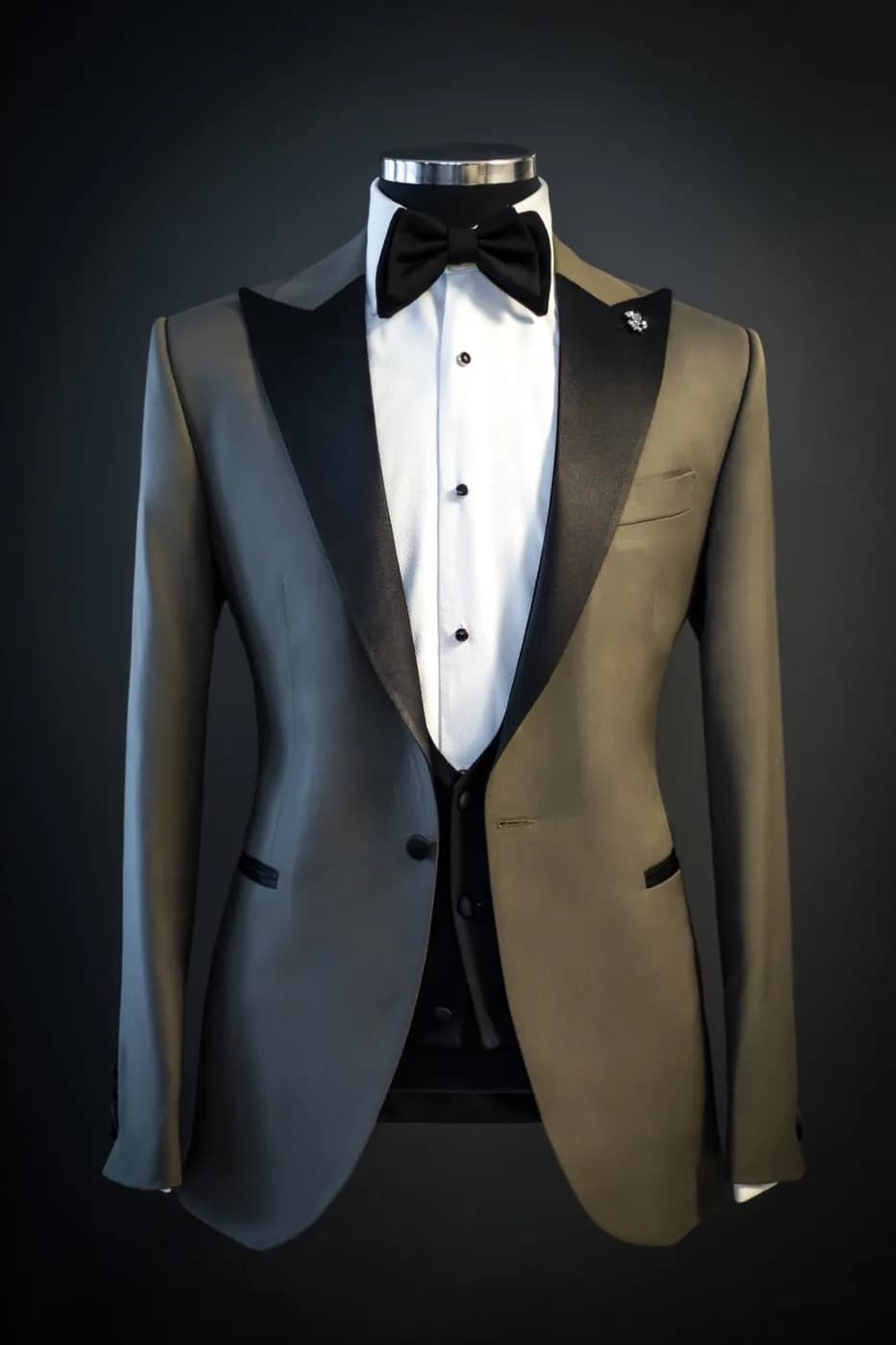
A tuxedo can be altered within a limit, and that limit is set by the seam allowance inside the garment, not by the tailor's goodwill. Waist, trouser seat and midsection are easy to adjust. Shoulders, chest and armholes are close to fixed. When your weight changes a lot, that boundary decides whether you alter or start again.
Why made-to-measure leaves room to move
When a suit is cut to your measurements, the cutter does not trim every seam to the exact edge. Extra cloth is left at the places that follow the body as it changes: the centre back seam, the two side seams, the seat seam of the trousers and the waistband. You cannot see this from outside, but it sits in the cloth waiting for the day it is needed.
Ready-to-wear garments usually leave less, because manufacturers save cloth. For the same weight gain, a bespoke suit has a clear advantage. For an off-the-rack jacket, read adjusting an off-the-rack tuxedo.
Waist and trousers: the easy part
Trousers are the most forgiving. The waistband can be let out or taken in through the back seam, the seat seam gives or takes a little, and the tailor adjusts the thigh to match. Many tuxedo trousers carry side adjusters at the waist, but these are a small allowance and do not replace letting out the seams after a real weight gain.
The jacket works the same way: the body can be taken in at the side seams and centre back to follow the waist again, or let out if cloth has been left. Taking in is always easier than letting out. If you have lost weight, the tailor removes cloth. If you have gained, he can only release what was left in.
The limit at shoulders and chest
This is where alterations stop. The shoulder is the hardest part of a jacket to touch, because it is built from canvas, padding and complex seams. A tailor can hardly narrow or widen it without rebuilding the whole jacket, and at that point a new one makes more sense.
The same goes for the armhole and chest. As weight rises, the chest and armhole begin to pull, and an X-shaped crease appears around the button. That crease tells you the allowance has run out. Letting out the lower body helps a little, but the upper part stays tight. The collar can also stand away from the shirt collar if you lose a lot of weight or your back changes shape.
Signs the jacket can still be adjusted
- It hangs clean when buttoned, with no diagonal strain around the button.
- The shoulder still ends at your shoulder point and the sleeve does not twist.
- The collar hugs the neck without lifting or showing a horizontal crease.
- The tailor opens the seams and finds enough cloth left, not old folds or worn edges.
If most of those hold, alteration is usually sensible. If not, do not force it.
Losing weight before a wedding
Many grooms lose weight in the last stretch before the ceremony. The wise course is to wait until your weight settles before the final measurements are fixed, because a suit measured too early will hang loose on the day. We cover this in slimming down before the wedding. If you are in the middle of a change, tell the tailor so he can leave extra allowance in sensible places.
When to make a new suit
Consider a new suit when:
- The shoulders and chest no longer fit, even if waist and trousers can be adjusted.
- Your weight has changed so much that every allowance is already used.
- The cost of alterations approaches the cost of a new suit.
- You would like a different lapel, colour or cut that suits your present shape.
A tuxedo made for your new shape will fit far better than an old one stretched to cope, and you get to choose cloth and details again. The steps are on the made-to-measure tuxedo page.
A tuxedo that has sat in the wardrobe
If the suit has been in the closet for a long time, try it on early to see whether it still fits. The checks are in a tuxedo you haven't worn for a while: pre-event checks.
Let a tailor judge before you decide
The quickest way to learn how much your tuxedo can give is to have a tailor put it on you and open the inside seams. Bring the suit to a showroom and a specialist will say plainly whether to alter or to make new. Book a fitting at Mon Amie early so there is time to adjust, because the work depends on the condition of each suit.