Care
Refreshing an Old Tuxedo: What a Tailor Can Do
An old tuxedo can often be saved: new satin lapel facings, buttons, tapered trouser legs, fresh lining and proper cleaning; and when to stop.
Mon Amie · 21/10/2026
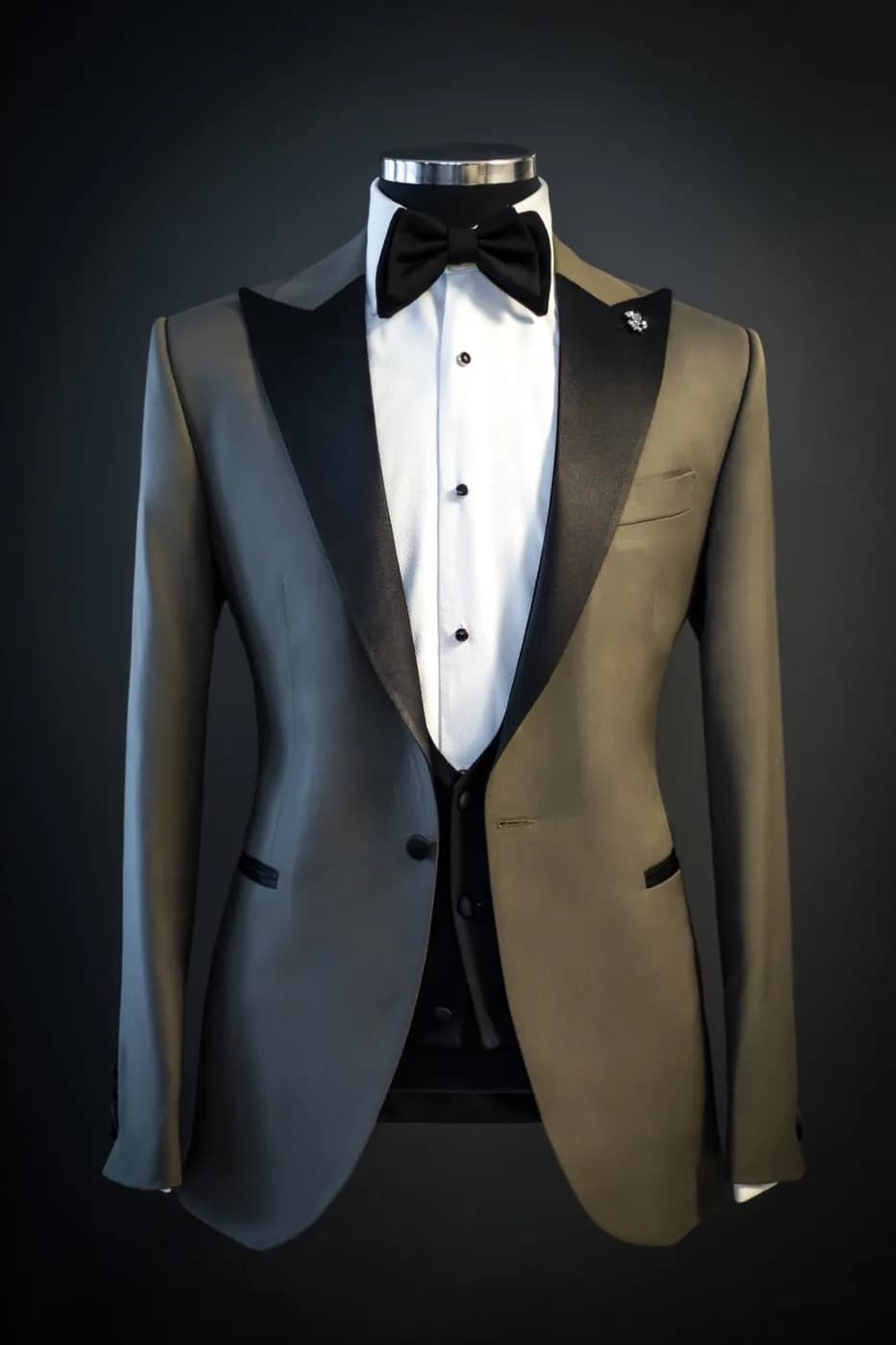
Most older tuxedos can be refreshed, provided the cloth and the stitching are still sound. What wears out first is usually the supporting cast: the satin on the lapels, the buttons, the lining, a trouser leg cut for another decade. A tailor can replace all of those without touching the structure of the jacket.
The better question is not "what can be fixed" but "is this suit still worth fixing". What follows runs from the light jobs to the heavy ones, then shows where to stop.
Start with a proper clean
Many tuxedos look tired only because of dust, perspiration and creases built up over a few party seasons. A correct dry clean, with the lapels and trouser creases pressed under a cloth, changes the look of a suit more than you would expect. It is also the cheapest step, so it comes before any other decision.
Tell the cleaner at the counter that the jacket has satin lapels, so nobody presses directly onto the facing. We cover how to keep lapels and creases flat in pressing a tuxedo without shine.
Replacing the satin lapel facing
The lapel takes more knocks than any other part: camera straps, pins, clip-on microphones, the rub of a car seat. When the satin is scratched, frayed at the edge or patchy with shine, a tailor can remove the old facing and apply new satin over the existing lapel structure. On a bespoke jacket the canvas underneath is usually intact, so the job is clean. The different cases, from light scuffs to a lifting facing, are in damaged satin lapels: can they be fixed.
The new satin must match the satin on the pocket jettings, the covered buttons and the trouser stripe. If the tones differ, the suit looks patched together, which is worse than the damage you started with.
Buttons and small details
Covered buttons fray, lose their thread or change colour over time. A new set in the same material as the lapel is a modest repair that shows at once. The tailor will also check the stress points: button shanks, pocket corners, underarm seams. A loose stitch that gets ignored turns into a tear the moment you raise a hand to greet a guest.
Tapering the trouser legs
Older dinner trousers are often too wide in the leg, or sit higher than today's taste. Tapering is routine work: the inside and outside seams are taken in evenly while the satin stripe along the side is kept straight. Because the stripe sits right on the outside seam, the tailor has to unpick it and set it back accurately, and this is where skill shows.
Taken in too far, the trouser loses its drape. A tuxedo leg should be clean but never tight, with the hem just kissing the instep of the shoe. A good tailor will suggest a taper that suits your leg rather than copy a photograph.
Relining the jacket
Lining is the part that fails early and that nobody sees: worn under the arms, yellowed by perspiration, split along a seam. Relining is also a chance to clean the interior canvas and look at the shoulders. You can choose a new lining colour, which is where many men like to add a little personality.
When it is not worth repairing
A few signs suggest a new suit will serve you better than a restoration:
- The cloth has gone thin and shiny at the elbows, seat or knees, or has worn through. Worn wool cannot be restored.
- Moth holes in the body of the jacket. Small holes can be darned invisibly, but holes that spread are a lost cause.
- The jacket is far from your present shape, beyond the seam allowances left inside. Altering that much changes the whole silhouette of the garment.
- The jacket is fully fused and the glue has bubbled across the chest. If the interlining has failed over a whole area, restoring it often costs more than making a new one.
- The style no longer suits you: heavily padded shoulders, very narrow lapels, and you simply do not like the suit.
An honest look from a tailor is worth more than any price list. If the jacket began life off the rack and needs fitting, see adjusting an off-the-rack tuxedo. If it belonged to a father or grandfather, vintage tuxedos: how to judge one and whether to buy explains how to assess it.
Repair or make new
Repair makes sense when the suit has sentimental value, good cloth and sound stitching. If the combined cost approaches a new suit in our Essential range (4,800,000 to 10,000,000 VND), a new one is usually the better choice, because you get the right cut, cloth and details for today. The price guide lets you compare.
Bring the old suit to a tailor
Do not wait until the week of the event. Repair time depends on the condition of each suit and the workroom schedule. Bring the tuxedo to any Mon Amie showroom and a specialist will look at the cloth and seams and tell you which jobs are worth doing and which are not. Book a fitting at the showroom beforehand so someone can give it proper attention.