Care
Shiny tuxedo cloth: causes and fixes
Why elbows, seat and lapel edges of a tuxedo turn shiny, and what helps: steam with a soft brush, diluted vinegar when it is safe, plus how to prevent shine.
Mon Amie · 18/10/2026
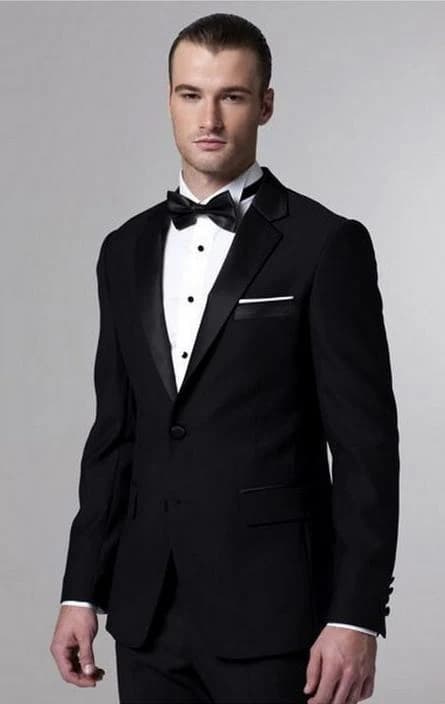
Wool tuxedo cloth goes shiny when the surface fibres are flattened, usually by direct pressing or by repeated rubbing at the elbows, seat and lapel edge. Light shine can often be improved with steam and a soft brush; stubborn shine on wool may respond to diluted vinegar, but with conditions. Where the shine has set, expectations should be realistic: it can be softened, though not always removed completely.
Telling satin sheen from unwanted shine
First, be sure what you are looking at. The satin lapel, trouser braid and bow tie are meant to be glossy. That is the design of a tuxedo, not a flaw. The shine to fix is where matte wool turns pale and slick: elbows, the seat and thighs of the trousers, lapel and pocket edges, cuffs, and the shoulder where a seat belt or bag strap presses.
You can recognise it by looking sideways under a light. The patch is brighter than the cloth around it and feels smoother to the touch. Black and navy show it most clearly.
Causes: direct pressing and friction
Direct pressing. This is the main culprit. Heat and pressure from an iron push the fibre ends flat, so the surface reflects light instead of scattering it. It is especially risky when you press the right side of dark cloth without a cloth in between.
Friction. Long sitting, elbows leaning on a table, a seat belt or bag strap rubbing the shoulder, the jacket hem brushing a chair. Each rub is small, but they add up, breaking and flattening the fibres, particularly in thin cloth or short fibres.
Repeated dry cleaning and pressing. Each press is another round of heat and pressure. Dry cleaning a tuxedo explains why to keep it infrequent.
Weaker or synthetic-blend cloth. Synthetic fibre shines more easily and recovers less well than good wool.
Steam and a brush
The first and safest approach.
- Hang the jacket or trousers on a hanger.
- Steam the shiny area, keeping the nozzle a little off the cloth. Steam swells the fibres and lifts those that were pressed down.
- While the cloth is warm and damp, brush gently with a soft-bristled brush in several directions, then with the grain.
- Let it dry naturally on the hanger. Do not press.
After a few rounds, light shine usually fades considerably. Be patient and do not scrub, because hard rubbing creates more shine. See also steaming and pressing without shining the satin.
Diluted vinegar: when to use it
For stubborn shine on wool, tailors sometimes use diluted white vinegar to soften the fibres and lift them. It needs care.
How. Mix white vinegar with water, one part to one, or weaker. Dip a white cotton cloth, wring it nearly dry, lay it over the shiny patch and steam or press lightly through the cloth. Let it dry, then brush gently.
When. Only on pure wool or wool blends, in dark colours, after steam and a brush have not been enough.
When not.
- On satin, silk or velvet. Vinegar can leave marks.
- On cloth of unknown content or a colour that bleeds.
- On areas with fused interlining, where moisture may cause lifting.
Always test on a hidden spot first, such as the inside of the trouser hem, and wait until it is fully dry to see if the colour changes. The vinegar smell goes once the cloth is dry and hung in fresh air. If you are not sure, do not try it; ask the tailor.
When the shine has set
If the fibres are truly worn, like trousers that have thinned and shone at the seat after years, steam only softens the look and does not restore it. A tailor may then suggest options: replacing a lining, moving a detail or, for trousers, making a new pair from the same cloth. That is why adding spare trousers and a waistcoat is wise to do from the start.
Prevention
- Always press through a cloth, and for satin, steam only.
- Rotate your suits, or at least the trousers, so the cloth can recover.
- Avoid repeated friction: keep a bag strap off the jacket shoulder and do not lean the elbows on rough surfaces.
- Brush lightly after each wear so the fibres are not left pressed flat.
- Hang it properly, see storing your tuxedo between wears.
- Start with good cloth. Models such as TUX-052, jet black with black satin, or other solid black sets, are made to be worn many times when cared for correctly.
Ask the tailor at Mon Amie
If the shine is heavy or you are unsure what to do, bring the suit in so a tailor can see it. Book a visit at the showroom and your consultant will set aside time for you.