Gallery opening nights: tuxedo or dark suit
Tuxedo or dark suit for an art opening: black tie is rarely needed, so consider a velvet jacket, a roll neck, a tuxedo without bow tie, and respect the artist.
Editor: Mon Amie · Published · about 3 min read
In this article
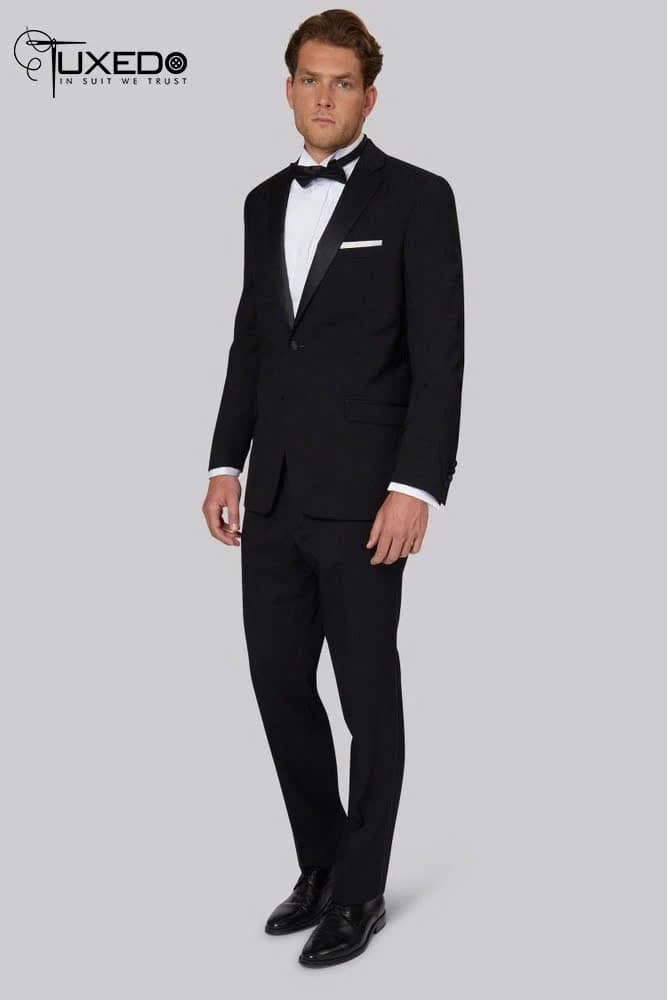
Most gallery openings do not call for black tie. A dark suit, or a velvet jacket with wool trousers, is polite enough and suits the mood. The tuxedo still has a place, but in a softened form: drop the bow tie, add a roll neck, choose velvet over glossy wool. What matters is not what you wear but how, so that you never upstage the works on the wall.
Black tie is rarely needed
An opening, or private view as it is often called, is a gathering. Guests wander, study the work, talk with the artist and collectors, glass in hand. There are no tables and no heavily ceremonial awards. The dress code is usually:
- Elevated smart casual or cocktail: dark suit, blazer, shirt, with or without a tie.
- Artists and creatives dress more freely, so a truly formal outfit can stand out more than needed.
- Charity auctions and museum galas are the exception. Those nights usually say black tie on the card.
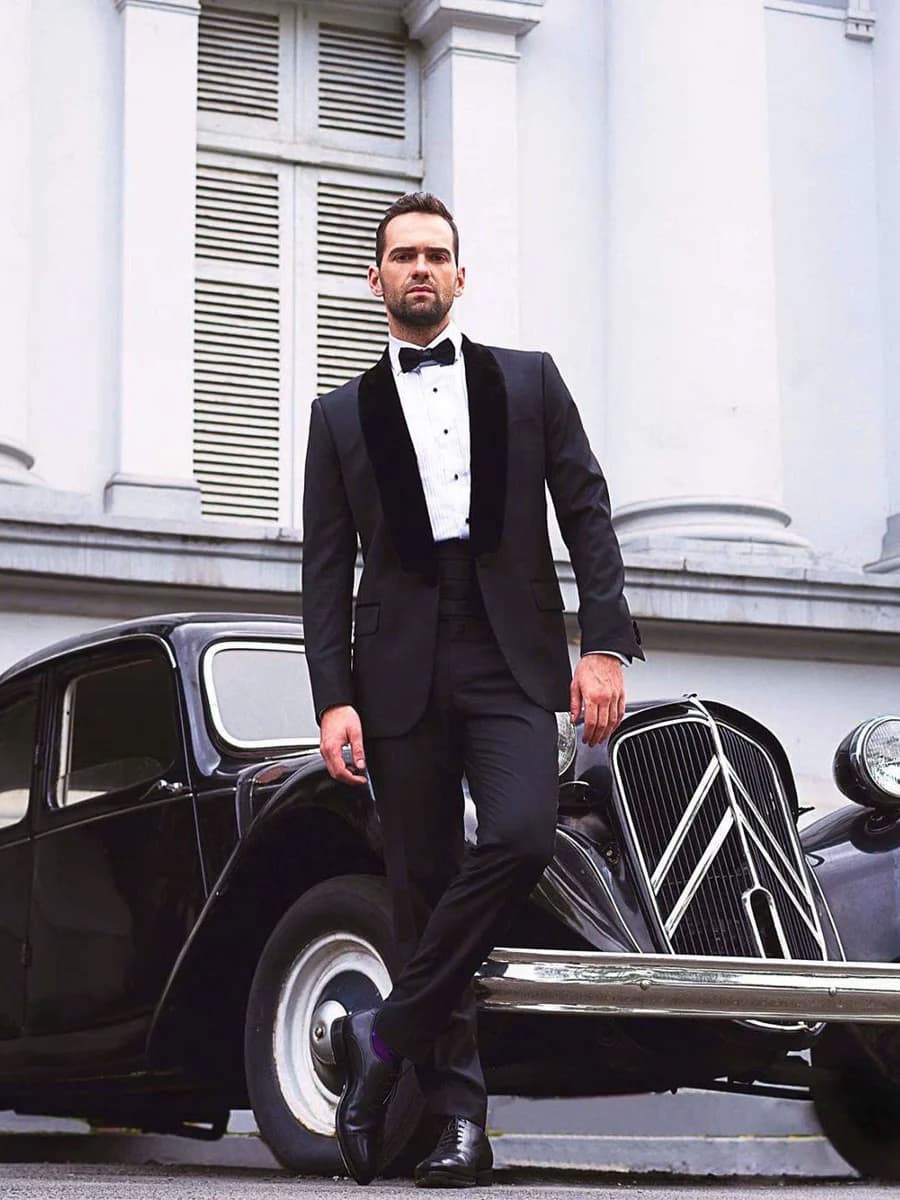
So a full tuxedo at an ordinary opening tends to make you more conspicuous than the host and the artist, in a room meant for the artwork. Keep the complete tuxedo for the nights that really say black tie.
Velvet, roll necks, tuxedo without a bow tie
If you still want tuxedo character in a gallery, there are three gentle routes:
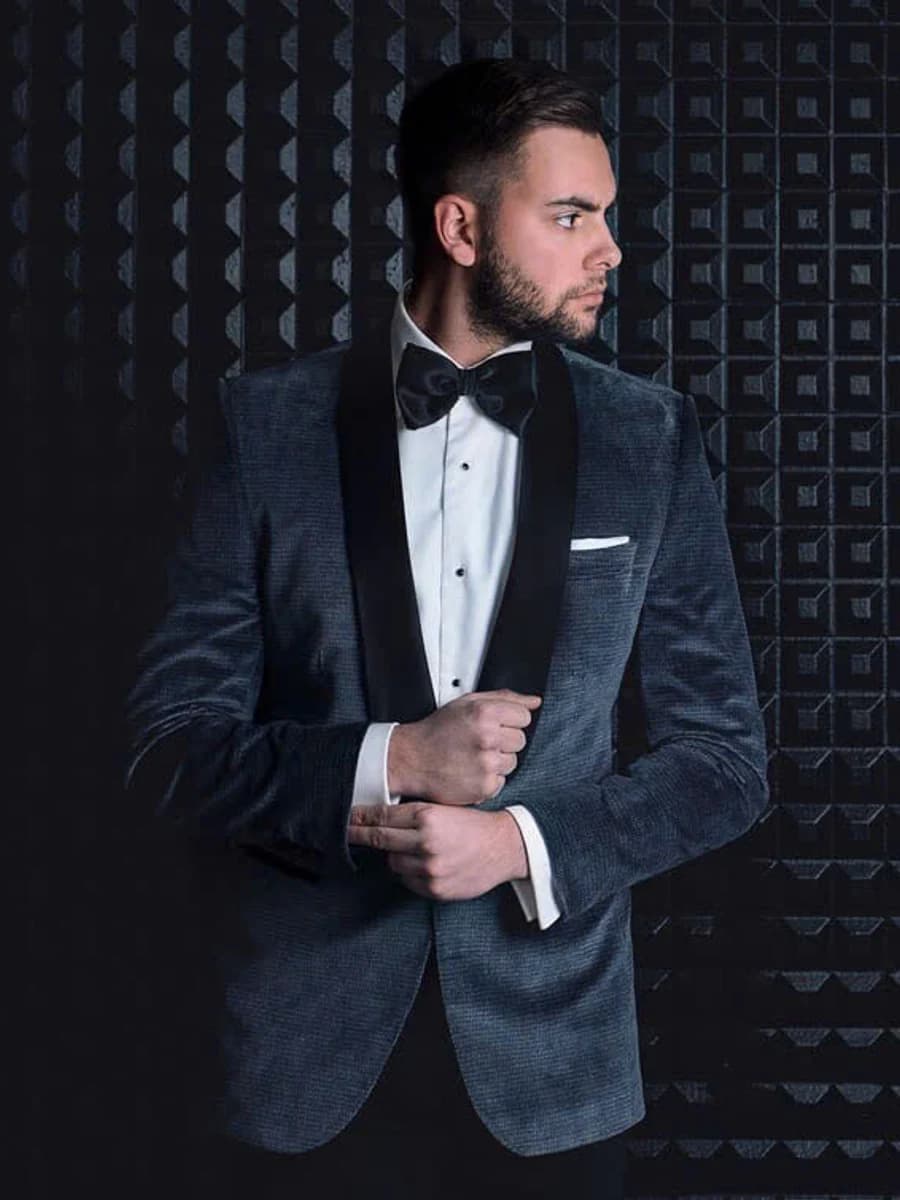
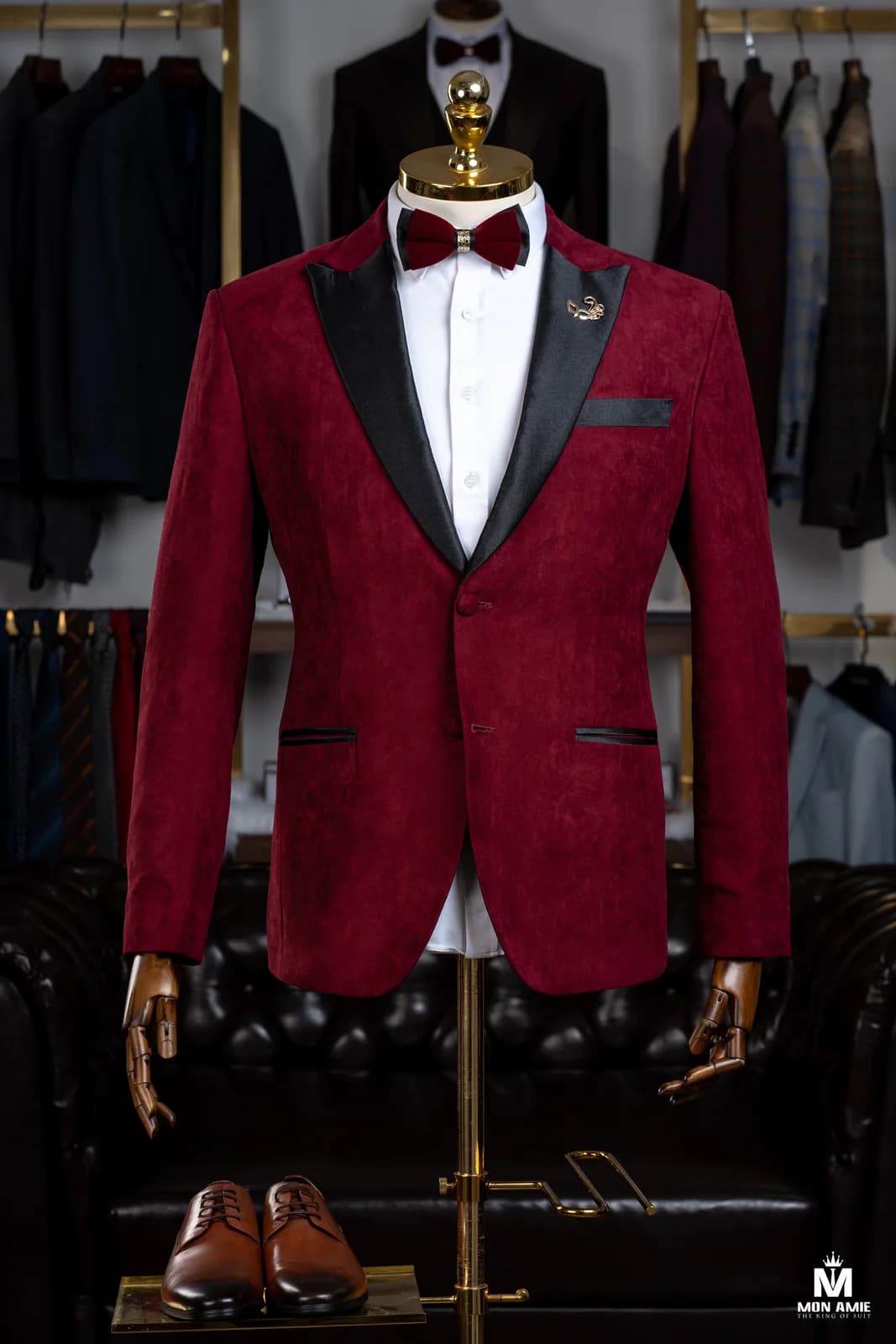
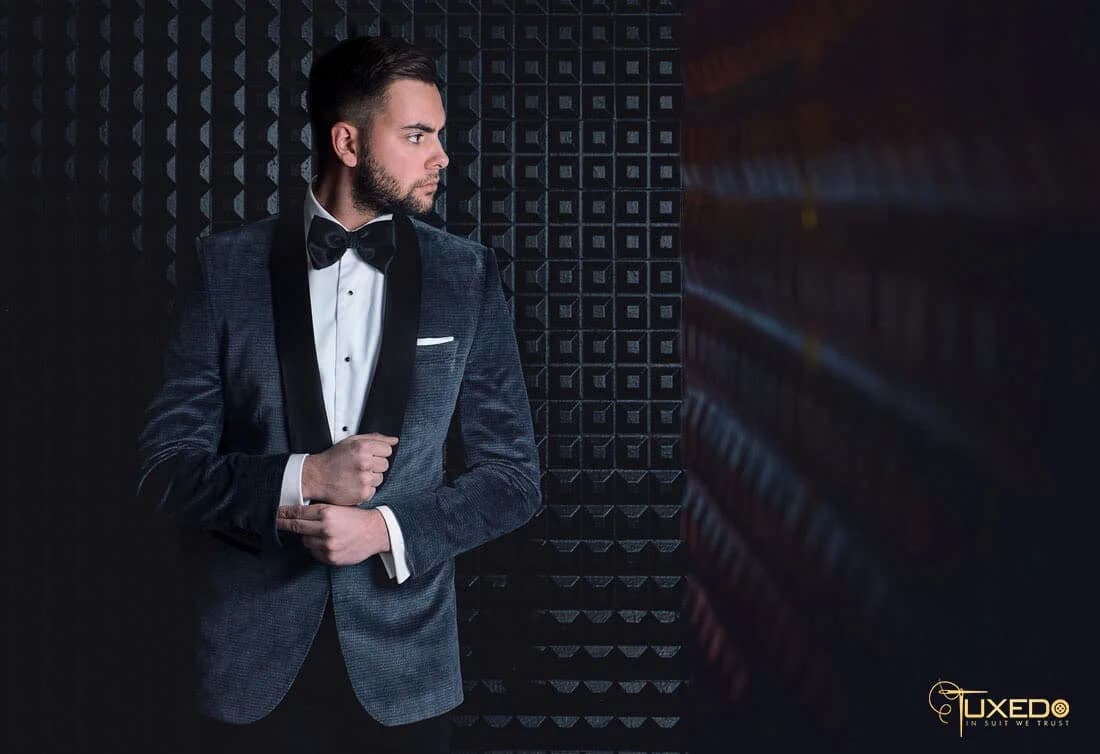
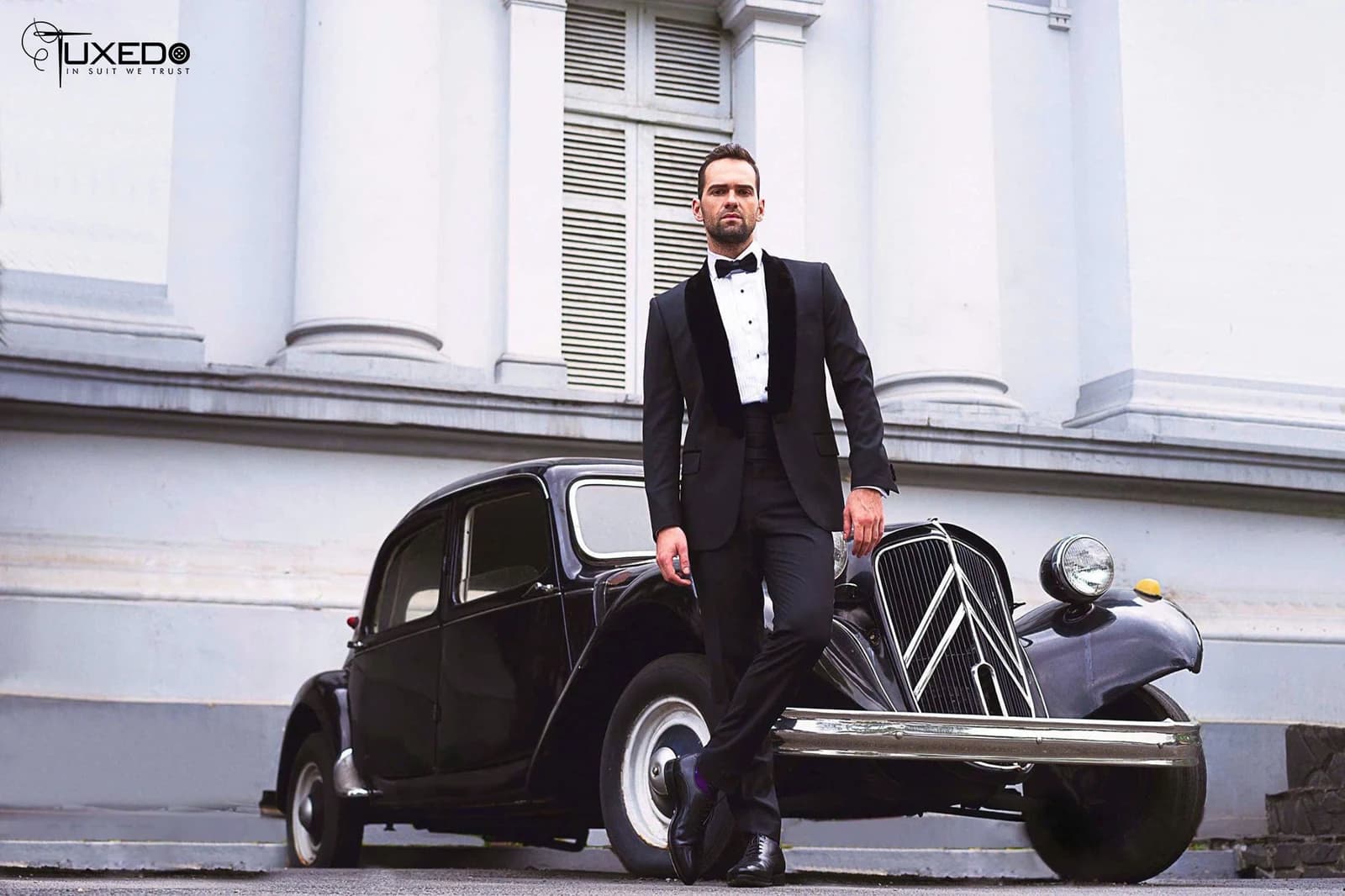
- A velvet jacket. A velvet dinner jacket with charcoal or black wool trousers and a white open-neck shirt. Velvet looks rich without the ceremony of satin. The article on the velvet tuxedo jacket explains. TUX-012 is a smoke-grey velvet tuxedo with shawl collar, a neutral tone that stands easily among paintings.
- A roll neck. A fine-knit merino roll neck under the tuxedo in place of shirt and bow gives a clean, modern line that suits a gallery. The pairing is discussed in the tuxedo with a roll neck sweater. Choose thin knit in a dark colour or cream, with a neck that fits so it does not feel stuffy.
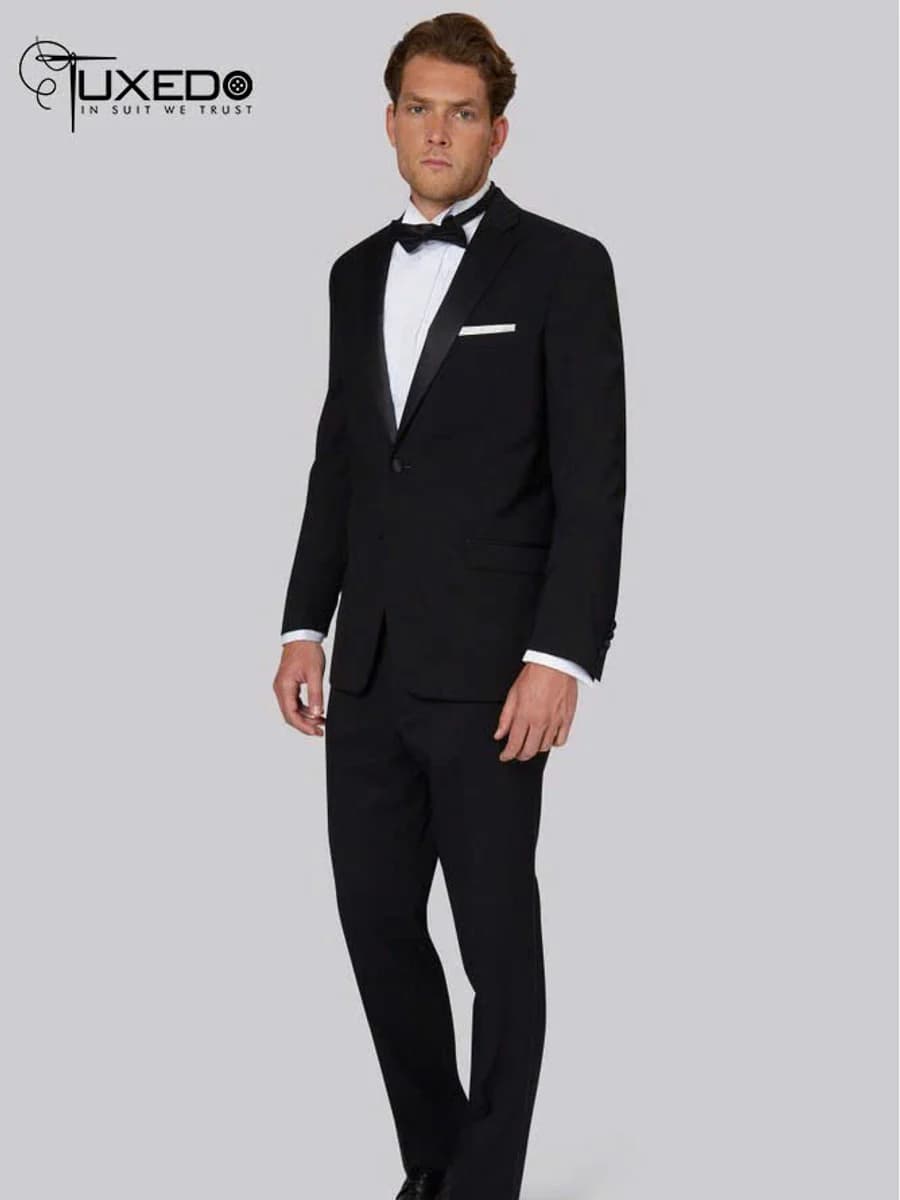
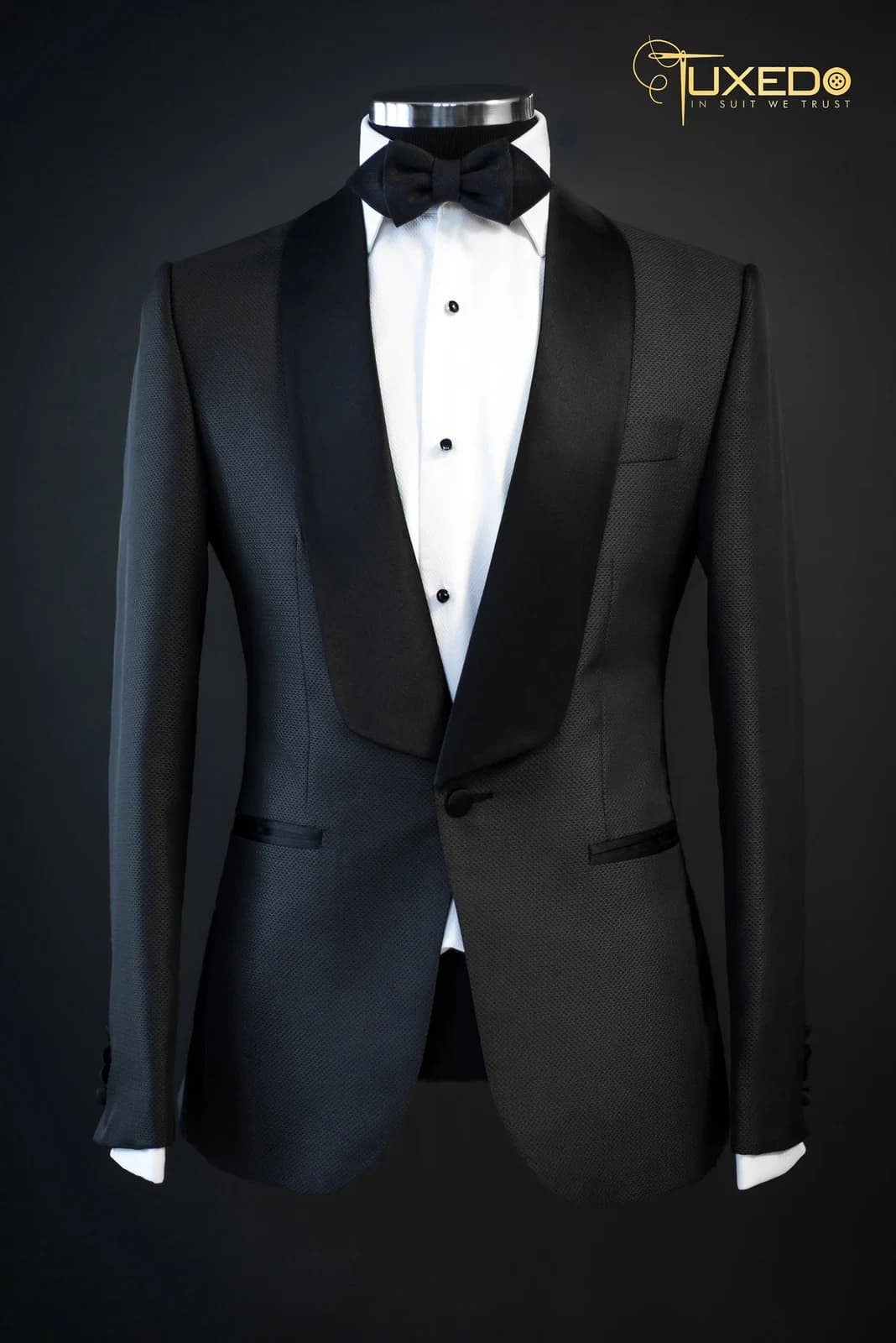
- A tuxedo without a bow tie. Keep the tuxedo, wear a white shirt, open the top button and leave off the bow. This lowers the ceremony while the suit keeps its evening character. See wearing a tuxedo without a bow tie. TUX-040, with its pared-back black cut, suits this approach.
With all three, polished black leather shoes or loafers work, and patent is unnecessary.
Respect the artist and the work
An opening night is the artist's night. Every dressing decision should start from that.
- Do not upstage. An outfit that is too bright, showy or metallic pulls the eye from the work. In a white gallery space, plain dark colour is the most neutral backdrop for both people and paintings.
- Look at the work. If the paintings are full of colour, a dark suit is a good frame. If they are minimalist black and white, a touch of colour in the pocket square or pin is fine.
- Keep a light touch. Strong cologne, clinking jewellery or studded clothing can get in the way near the works. Move gently.
- Meeting the artist. If you come to congratulate, dressing with care shows you take the event seriously. If you are a collector, restrained refinement is what fits.
Read the invitation closely
The invitation usually gives time and place, and sometimes a dress code. Read what it says:
- Black tie or evening dress: full tuxedo.
- Cocktail attire: dark suit or velvet jacket.
- Creative: patterned jackets, variations.
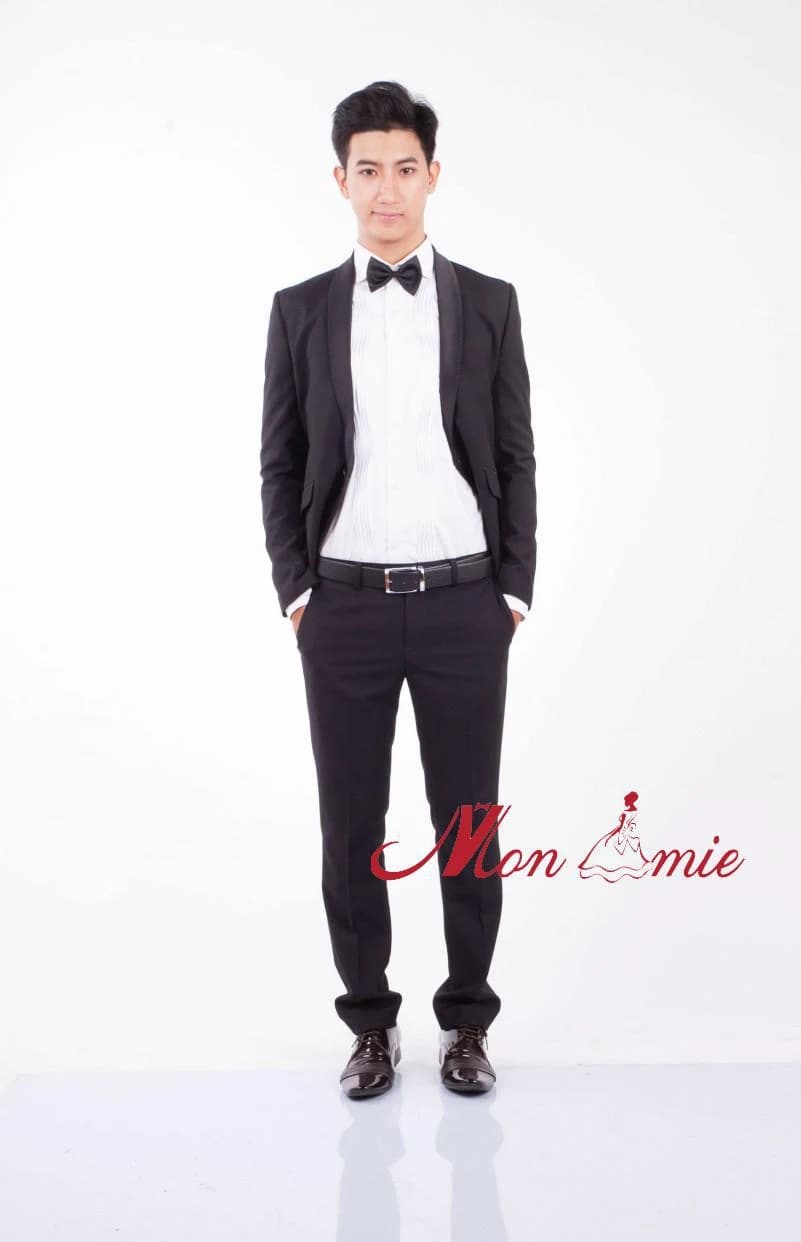
- Nothing stated: a tuxedo without bow tie or a dark suit is the sure choice.
If you can, ask the gallery or organisers beforehand. One short question prevents awkwardness, and galleries are usually glad to answer. The general framework for the levels is on the dress code page.
Book a fitting at Mon Amie
If you often attend cultural and art events, consider a velvet jacket or a tuxedo that can be worn in several ways. The consultant will help you choose colour and cloth to suit the space. You can book a fitting at the showroom to try them.
Published 14/11/2026 · 11:30 · Editor: Mon Amie