By occasion
Opera, Ballet and Concerts: Is a Tuxedo Needed
Not every performance needs a tuxedo. When opening nights and galas ask for black tie, when a suit will do, which cloth suits long sitting, and house etiquette.
Mon Amie · 19/10/2026
For most ordinary performances a neat dark suit is all you need. The tuxedo belongs to special evenings: the opening night of a season, a fundraising gala, a premiere with important guests. Knowing the difference keeps you from looking out of place in the auditorium and from overdressing for an everyday night.
Opening nights and galas are usually black tie
The tradition of attending the great theatres is closely tied to evening dress. Since the nineteenth century the opera house in Europe has been where society appeared in its most formal clothes, and traces of that survive on special nights today.
- Season opening night: many theatres state black tie on the invitation or ticket.
- Fundraising galas and artist tributes: almost always black tie, sometimes black tie optional.
- Opera balls: some celebrated balls ask for an even higher level, white tie with tailcoat. If the card says white tie, a tuxedo is not enough; see the ladder of men's formalwear.
- First night of a new production is often more formal than later performances, since guests, press and a reception are involved.
The surest way is to read the ticket or the theatre's website, because each house sets its own rules and may change them for each programme. If nothing is stated, call the box office. If you are going as a guest or with a partner, ask whoever invited you. For the tradition behind this, read why orchestral musicians wear tuxedos.
Ordinary performances: a suit is enough
A weekend afternoon concert or a midweek ballet does not require evening dress. A sensible choice for you:
- A navy or charcoal suit, a white or pale blue shirt, a dark tie.
- Black oxfords or derbies, well polished.
- No bow tie, cummerbund or patent shoes needed.
If you still want to wear a tuxedo to an ordinary evening, think twice: you may be the most formally dressed person in the room, which is fine only if you feel at ease with it. The difference between the two outfits lies in the lapel, covered buttons, trouser braid and shoes; the details are in the difference between a tuxedo and a suit.
When in doubt, err slightly on the formal side of what you expect. A dark suit with a silk tie is never wrong at the theatre.
Sitting for hours: choose a breathable cloth
An opera can run three hours or more with the interval. Seats are often tight, so the jacket will take some strain.
- Light wool, medium weight: breathable and resistant to creasing. A tropical-weave wool suits a hot, humid climate; see tropical wool.
- Breathable lining: cupro or a half lining stops the back from overheating.
- A proper armhole: when you sit, the shoulder and underarm should not pull. Ask the tailor to check by sitting down at the fitting.
- Jacket length: not so short that the jacket rides up your back when you sit. Unbutton when seated and fasten when you stand.
- Trousers with firm pressing: so the knees do not crease on standing.
Theatres often run strong air conditioning, so bring a light layer or a wrap if you attend with a companion.
Theatre etiquette
Beyond clothing, a few conventions help you fit in:
- Arrive early: many theatres do not admit latecomers once the performance has begun, or only at the interval.
- Silence your phone completely, including the lit screen.
- Do not applaud between movements of a multi-movement piece; wait until the conductor lowers his hands. In opera and ballet, applause usually comes at the end of an act or after striking solo passages.
- Remove your hat and do not let a heavy coat obstruct the person behind.
- Go light on fragrance: the space is enclosed and crowded.
- No food or drink in the auditorium unless the house allows it.
These conventions can differ from house to house, so read the organiser's guidance when you buy tickets.
If you need a suit for a gala
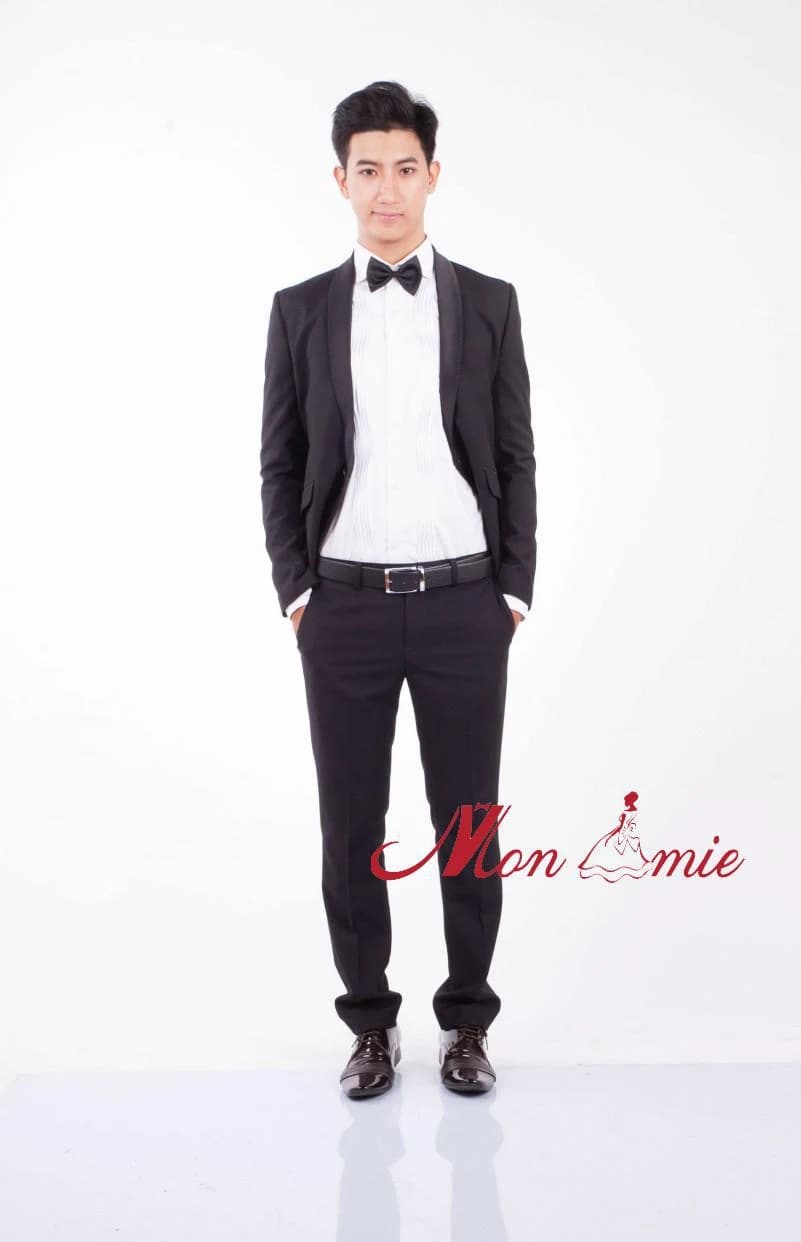
If you are invited to an opening night or gala and do not yet own a tuxedo, you can browse the classic black collection, such as TUX-079: a black shawl-lapel tuxedo with satin facing and a pleated-front shirt. You can also read the general dress code guide. Mon Amie can measure you, choose a breathable cloth for a long evening in the stalls and check the jacket while you are seated. Book on the fitting page; making time depends on the style and fitting schedule, so book before the date.