Cloth & materials
Tropical wool: a tuxedo cloth for hot climates
Tropical wool is a light, openly woven worsted that breathes yet still drapes and holds shape. How it compares with polyester blends and why it suits Saigon.
Mon Amie · 22/10/2026
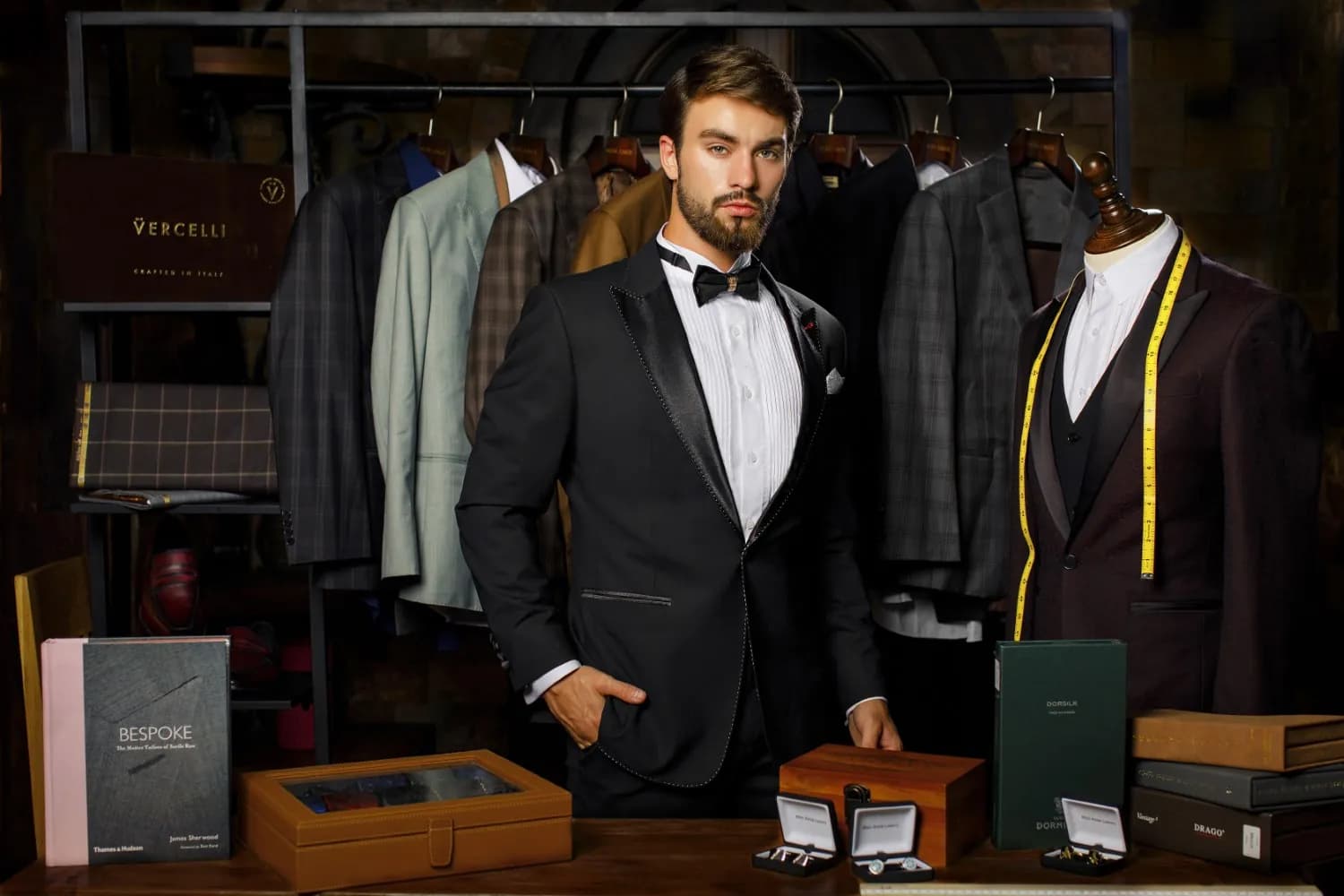
Tropical wool is a lightweight worsted, firmly twisted and openly woven, so air moves through the cloth while the jacket still drapes and holds its shape like ordinary wool. For a man wearing a tuxedo in Ho Chi Minh City, where it is hot and humid almost all year, it solves the main problem of eveningwear: a jacket formal enough for the occasion that does not turn the night into an endurance test.
Light wool, open weave
"Tropical" names the family of wool cloths made for warm countries. Worsted wool yarn is twisted tightly and woven at a looser density than cold-season cloth. The tight twist makes the yarn both firm and springy, and the gaps between the threads let air pass.
The weight is usually much lower than a winter cloth, typically under about 250 grams per metre depending on the mill. Some are woven in the style known as fresco, famous for its airiness. How to read the weight figure is explained in our guide to choosing cloth weight for a tuxedo.
Breathes, yet still drapes
Wool is a natural fibre that can take up a good deal of moisture vapour while the surface still feels dry. When the body perspires, vapour moves through the cloth rather than sitting on the skin. In a crowded reception or stepping into a car at midday, that feels very different from a closed-in synthetic layer.
What makes tropical wool interesting is that it does not trade shape for airiness. Wool fibre is naturally elastic, so the jacket springs back after sitting, the shoulder keeps its line and the cloth falls neatly over the body. The jacket is light but remains a proper tuxedo jacket, not a thin overcoat.
Compared with polyester blends
Wool-polyester blends are popular for their low price and low creasing. A comparison:
| Tropical wool | Wool-polyester blend | |
|---|---|---|
| Breathability | Good; takes up and releases moisture | Lower; tends to hold heat |
| Drape | Natural, soft | Slightly stiff, can look flat |
| Surface | Matte, natural | Can have an artificial shine |
| Crease resistance | Fair, but creases more than blends | Good |
| Price | Higher | Lower |
A polyester blend is not always a poor choice. If you need a suit for frequent travel, with little time for care and a modest budget, it works. But for many hours in humid heat, tropical wool is usually noticeably more comfortable. If you want some natural lustre and crispness as well, wool-mohair is worth a look.
Suited to Saigon all year
Saigon has no real winter. Daytime temperatures are high, humidity is heavy, and the rainy season makes the air closer still. Yet many venues run strong air-conditioning, so you want a jacket that is not stifling in the heat and not too thin in a chilled room.
Lightweight wool covers both: breathable outdoors, warm enough in a cold room. A black or midnight tropical-wool tuxedo can serve as the year-round suit for most occasions in the south. For outdoor events, see wearing a tuxedo in hot weather for advice on shirt, cummerbund and keeping the jacket in shape.
Points to note
- Light cloth builds less body than a heavy one, so the jacket's shape depends more on the tailor's skill with the pattern and canvas.
- Black on an open weave can let a hint of the lining show when strong light passes through. Choosing a suitable lining, as discussed in our piece on tuxedo linings, avoids this.
- Wool still needs to be hung to rest after wearing so the moisture evaporates and the cloth recovers its shape.
Book a fitting at Mon Amie
The sure way to know how airy a cloth is, is to wear it. A Mon Amie consultant can show you a light wool swatch, explain the weight, and then you feel it on the body. See more on the made-to-measure tuxedo page and book a visit at a showroom.