By occasion
Attending an Awards Ceremony in a Tuxedo: Stage and Camera Ready
Guests, nominees and presenters wear the tuxedo at different levels. Pick a colour that reads on the backdrop, test the fit on stage and check it under flash.
Mon Amie · 15/10/2026
At an awards ceremony you dress for two audiences: the people in the hall and the camera lens. A tuxedo that looks fine in person but vanishes into the backdrop, or burns out under flash, will not hold up in the photographs. This guide starts with your role on the night, then moves to colour, fit and a simple pre-event check.
One role, one level
The dress code may be black tie for everyone, but someone seated in the audience and someone walking up to the podium do not need to look identical.
- Guest: stay with the standard. Black or midnight blue tuxedo, white shirt, bow tie. You do not need to stand out, only to look in order. Red carpet photographs of guests are often full length, so the seams must be clean from shoulder to trouser hem.
- Nominee: you may be shown in close-up when your name is read. Put your effort into the upper half: flat lapels, a collar that hugs the neck, a balanced bow tie. A small personal touch such as a pocket square or lapel pin will register, but keep it to two accents at most.
- Presenter: you stand next to the recipient, so the suit should work with them, not compete. Choose a neutral tone and an upright cut, because you will shake hands, hold the trophy and turn half-way to the audience.
- Host: has needs of its own; see tuxedos for MCs.
If the award belongs to a specific trade, like a top-sales honour night, the organiser often sets the level of dress. Ask in advance so you do not end up out of step.
Colour that reads against the backdrop
The stage backdrop decides which colour shows. A simple principle: separate the person from the background.
- Dark backdrops (black, navy, deep purple): a black tuxedo can melt into the set, leaving only the white shirt visible. Midnight blue, or a jacket with some sheen at the lapel, helps the outline appear.
- Bright or LED-colour backdrops: a black tuxedo gives good contrast, while a white jacket can glare.
- Red, gold or copper backdrops: black and navy both work; avoid tones from the same family, such as burgundy against red.
There is no absolute formula because every stage uses different lighting. Ask the organiser for a photograph of the set or the lighting plan, and choose from that. If you must guess, a black or deep navy tuxedo is the low-risk option. For why one cloth can look so different between the ballroom and the lens, see tuxedo colours under lights.
Fit for the steps, the trophy and the bow
Going on stage is the hardest test of a jacket's cut. You will climb steps, raise an arm to take the trophy, bow and turn for the photographers.
- Shoulder and armhole: the armhole should not be cut too low, so that the body of the jacket does not ride up when you raise your arm. A tailor can adjust it to the postures you use most.
- Buttoning: a single-button tuxedo is normally fastened when standing and opened when seated. As you step up, fasten it and set the lapels flat; do not let the fronts hang slack.
- Length: long enough to cover the seat, but not so long that it shortens your figure.
- Collar: the back of the collar should hug the neck so it does not gape when you bow.
- Trousers: the hem should just touch the shoe with a slight break. Avoid trousers that drag, since stage stairs are easy to trip on.
Rehearse these moves during your fitting: raise an arm, bow, sit and stand, step up onto a stair. If anything binds or catches, say so at once so the tailor can adjust before finishing.
Checking it under flash
Flash and stage lights reveal what the eye overlooks:
- High-gloss satin lapels can catch the flash and turn into white patches. Grosgrain (ribbed) or matte satin keeps colour more stable.
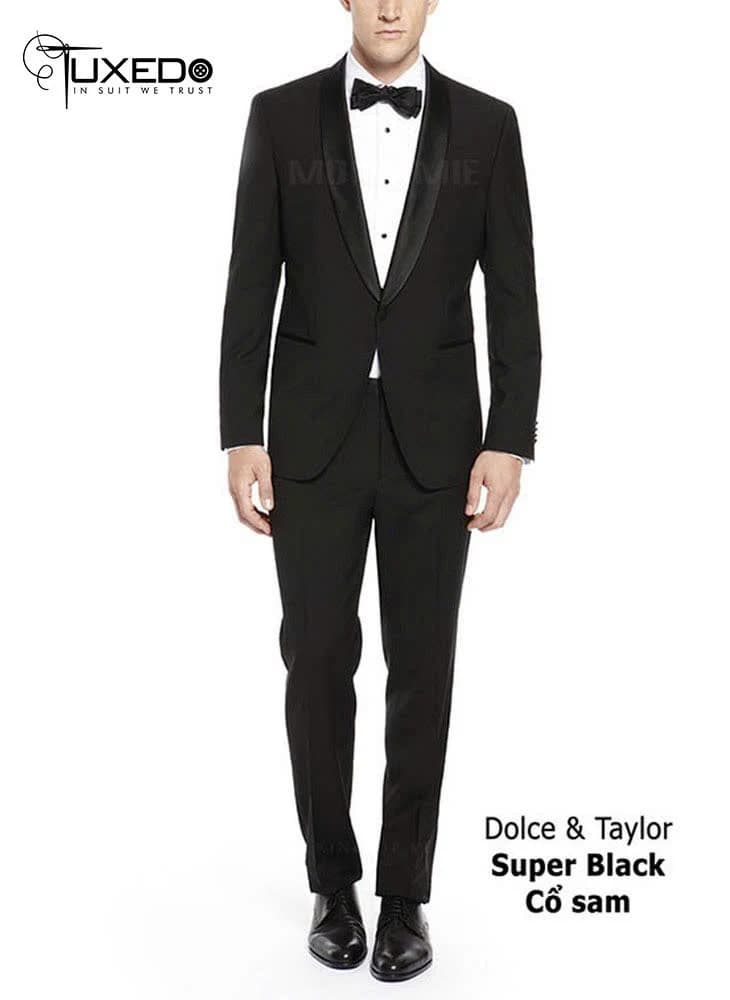
- Flat black cloth loses detail in photographs. A cloth with a light weave or a deep sheen has more depth; TUX-047, a black shawl-collar jacket with a clean cut, is one example.
- Brilliant white shirts burn out easily. Choose a white with a hint of cream or a cloth of moderate thickness.
- Creases show strongly under side lighting. Steam the jacket lightly before you leave.
A simple test: ask someone to photograph you on a phone with the flash on, both full length and chest up. Stand against a dark wall to imitate the backdrop. Compare the picture with the real colours; if the lapel or jacket shifts too much, consider a different finish.
When to ask your tailor
If you will be on stage or at a televised ceremony, tell your tailor before the cloth is chosen. He can then pick the weight, the gloss of the lapel and the closeness of the shoulder to suit the situation. Sending the backdrop photo and the organiser's dress code makes the advice more accurate.
You can try a jacket at a Mon Amie showroom and photograph it under light before the day. Book on the fitting page, or look at the classic black collection.