By occasion
Tuxedos for Event Hosts and MCs: Standing On Stage All Night
An MC stands for hours, holds a mic and changes between segments. A cut that frees the arms, colours for the backdrop and a mic placement that spares the lapel.
Mon Amie · 20/10/2026
An MC in a tuxedo has to do what guests never do: stand for hours, hold a microphone aloft again and again, move across the stage and shift posture between segments. The suit is judged on comfort as much as on looks. This guide covers four points: a cut for the arms, colour against the backdrop, multiple outfits for different segments, and how to place the microphone without damaging the lapel.
A cut that lets the arms move
The most irritating feeling for a host is the jacket riding up each time the arm is raised. The cause is usually an armhole cut too low or a shoulder that is too tight.
- A moderately high armhole: a higher armhole means the body of the jacket is pulled less when the arm lifts. The trade-off is a slightly narrower sleeve, so the tailor balances the bicep.
- Room through chest and back: when the host bends or turns, the jacket should not strain across the back. A little ease at mid-back helps.
- Sleeve length: reaching the wrist and showing a finger's width of cuff. When you lift your arm, the cuff should still show and not slip.
- Buttoning: a single-button tuxedo is easier to fasten while speaking and moving. Fasten when standing, open when seated.
- Light stretch: if the host moves a great deal, look at stretch cloth for tuxedos.
At the fitting, hold a microphone or something similar to mouth height, then turn and walk. If the shoulder or underarm pulls, the tailor can adjust it on the spot.
Colour that changes with the backdrop
The host stands closest to the camera, so the colour of the suit affects the entire frame.
- Dark backdrops: a black tuxedo can sink. Use midnight blue, or a crisp white shirt and a bow tie with a slight sheen.
- Bright or vivid backdrops: black or deep navy gives good contrast.
- Moving LED screens: prefer plain cloth without pattern, because patterns can shimmer on camera.
- White or beige backdrops: an ivory tuxedo may lose definition; use black or navy to stand out.
A practical rule: ask the organiser for a photo of the set before the day. You can read more in tuxedo colours under lights. When the host is in the same colour family as guests or award recipients, set yourself apart by style: peak against shawl lapel, or a coloured pocket square.
Several outfits for several segments
A long programme such as a gala dinner or awards night splits into parts: reception, opening, performance, awards, closing. The host may change outfits so each segment has its own mood.
- Opening and awards: black or midnight blue tuxedo, correct black tie.
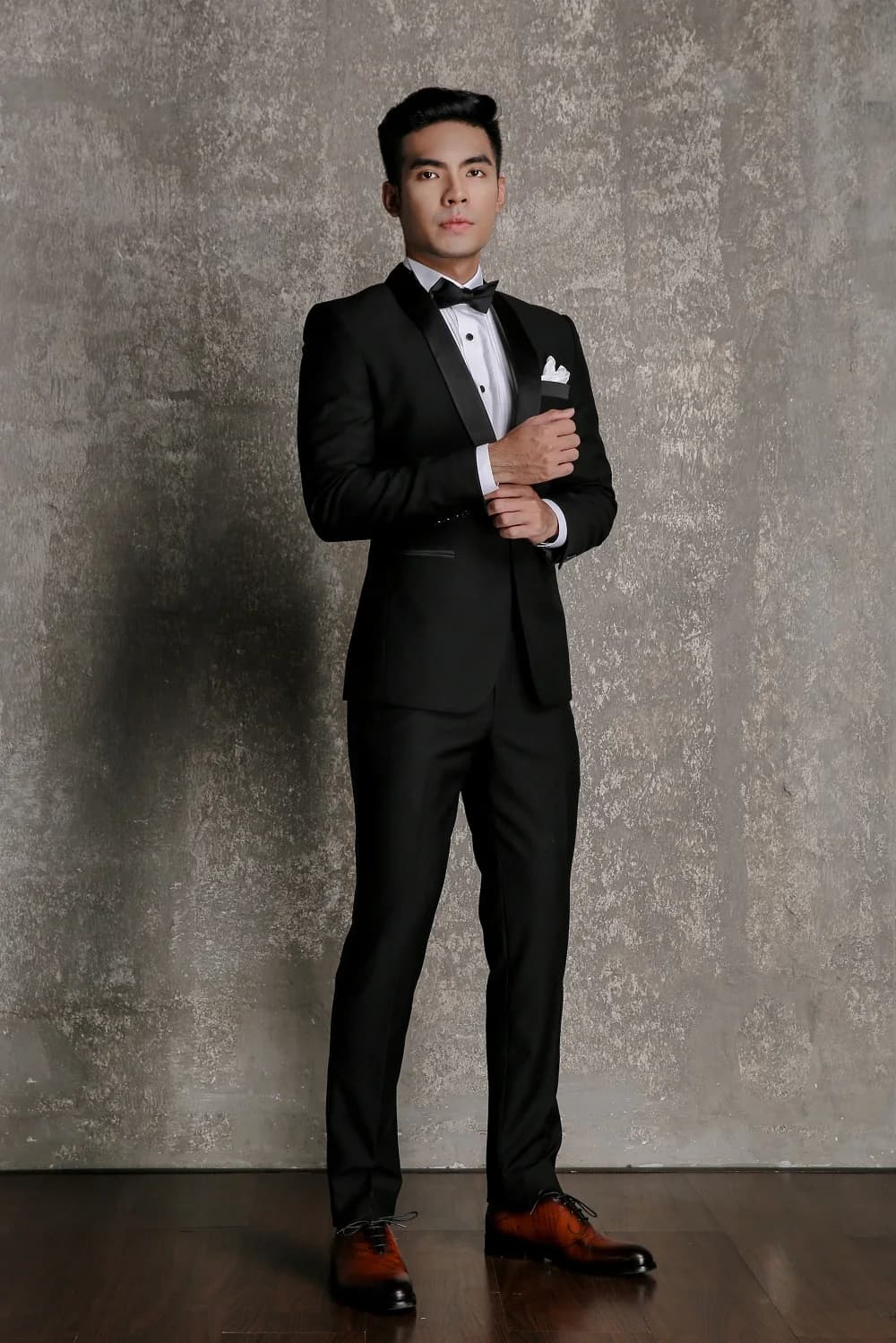
- Entertainment segments: a change to an outfit with an accent, such as a velvet lapel or a deeper colour. TUX-092 is a black shawl-lapel satin tuxedo with a white pocket square; TUX-105 is a night navy with a black waistcoat.
- Closing: return to the first outfit, or to the most formal one.
A few points when changing:
- Arrange a changing area near the stage and a helper to tie the bow tie.
- Rehearse the changeover speed for each outfit, especially the bow tie and cufflinks. A pre-tied bow tie with an adjustable hook changes faster, but a hand-tied one looks more natural.
- Keep one thing constant between outfits, such as shoes or shirt, so you can change quickly.
- Hang each jacket on a hanger immediately after taking it off to avoid creasing.
If you have only one suit, you can differentiate segments by changing the bow tie or pocket square, or adding a boutonniere. See one tuxedo, many ways to wear it.
Fixing the microphone without ruining the lapel
A lapel clip is the usual way to mount a microphone, and the common source of damage. A metal clip can scratch or leave a mark on satin facing, and a cable pulled in the wrong direction creases the front.
- Do not clip directly onto the satin face of the lapel. Attach the microphone to the inner edge of the lapel or the shirt placket just below the bow tie, depending on the microphone.
- A shawl lapel has no buttonhole, so there is no natural anchor; the tailor can add a small loop or covered button on the underside of the lapel to hold the microphone.
- Run the cable inside the jacket: lead it from the microphone down inside the lining, around the back, to a transmitter pack at the waistband. Avoid cable on the outside.
- An inside pocket for the pack: ask the tailor to add a pocket or small strap inside the jacket or at the trouser back so the pack does not drag the jacket off line.
- Use a fabric pad between clip and lapel if a clip is unavoidable.
More detail is in fixing a mic to a tuxedo jacket. The key is to tell the tailor you are an MC at the first measurement, because the inside details can only be built in while sewing, not added at the last minute.
Book a fitting at Mon Amie
If you host regularly, you can have one suit made with an easy arm cut, along with a few interchangeable accessories. A Mon Amie consultant will ask about your stage type, show length and microphone arrangement so the suit is made accordingly. See made-to-measure tuxedos and book on the fitting page. Making time depends on the style and fitting schedule, so book early ahead of the event season.