Stretch cloth for tuxedos: should you choose it
Stretch cloth, wool blended with a little elastane, makes a tuxedo comfortable in motion but can change how it holds its shape over time. Who should choose it.
Editor: Mon Amie · Published · about 3 min read
In this article
Yes, if you move a lot in your tuxedo. No, if you want a traditional suit that holds its shape for years. Stretch cloth is wool blended with a small share of elastic fibre, and it feels comfortable the moment you put it on. The price is that elastic fibre has a shorter life than wool, so it is worth understanding before you choose.
What stretch cloth is
Stretch in tailoring usually means wool blended with elastane, the fibre many people know by trade names such as Lycra or spandex. The share is normally tiny, a few percent, because a little is enough to let the cloth give when you move and return when you stop.
Wool already has natural elasticity from its crimped fibre. Elastane adds extra give across the cloth, which helps the sleeve, shoulder and thigh move more freely. That is why stretch cloth looks almost identical to pure wool from the outside.
The benefit in motion
This is why many men choose it.
- Raising an arm or reaching is easier, with no pull across the back or underarm when you shake hands, raise a glass or pose for photographs.
- Sitting for long hours is more comfortable, particularly at the thigh and seat of the trousers.
- A whole evening is easier for anyone who must stand, walk and mingle continuously.
- Less strain on the buttons for men with broad shoulders and chest.
To be clear, stretch does not replace correct fit. A suit cut to the wrong measurements still pulls or hangs loose however elastic the cloth. Careful measuring and a proper fitting come first.

The long-term effect on shape
This is the part many buyers are never told.
- Elastic fibre ages. Elastane weakens with time, heat and sweat. Hot steam from an iron or a garment steamer can reduce its spring if overdone.
- The shape may be less crisp. Firm woven pure wool holds the line of shoulder and lapel very well. Stretch cloth is softer, so the silhouette tends to be comfortable rather than sharp.
- A slight sheen is possible. Some stretch cloths have a faintly glossy face, worth weighing when the satin lapel is already shiny.
- Only the body cloth gives. Satin facings, lining and the internal canvas do not stretch like the body cloth, so the comfort comes mainly from the sleeves, back and trousers.
None of this means stretch cloth is poor quality. It means the life of the suit depends more on care: hanging it somewhere airy, limiting hot pressing and avoiding frequent dry cleaning.
Who should choose it and who can skip it
Consider stretch:
- MCs, entertainers and performers who must move strongly. Our piece on tuxedos for stage performance covers this need.
- Men with broad shoulders, chest or thighs. See also wearing a tuxedo with a muscular build.
- Grooms who want to dance at the reception.
- Anyone who travels and sits in cars for much of the day.
You can skip stretch:
- You want a suit to keep for many years and value pure wool and a crisp line.
- You move little, mainly standing for photographs and short receptions.
- You like a traditional matt face such as barathea.
A model for the silhouette
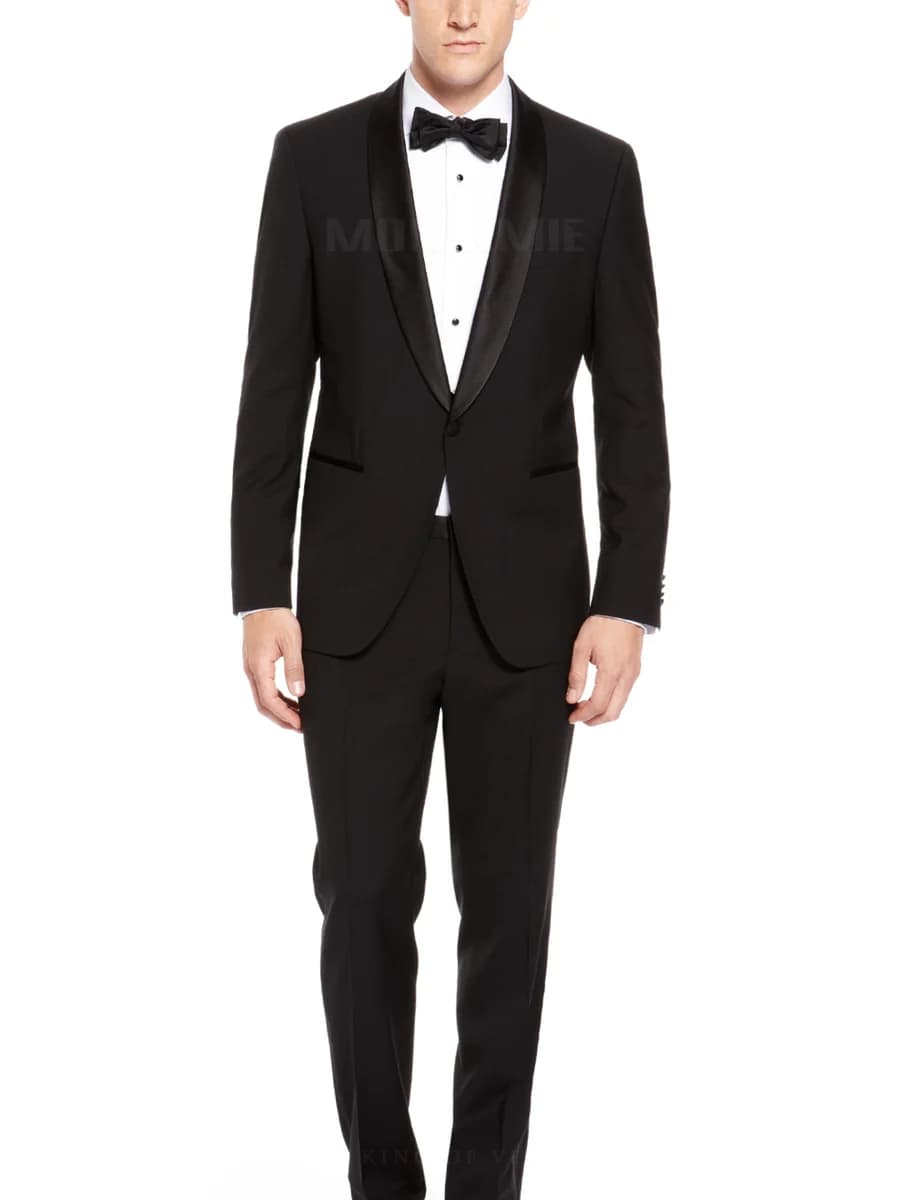
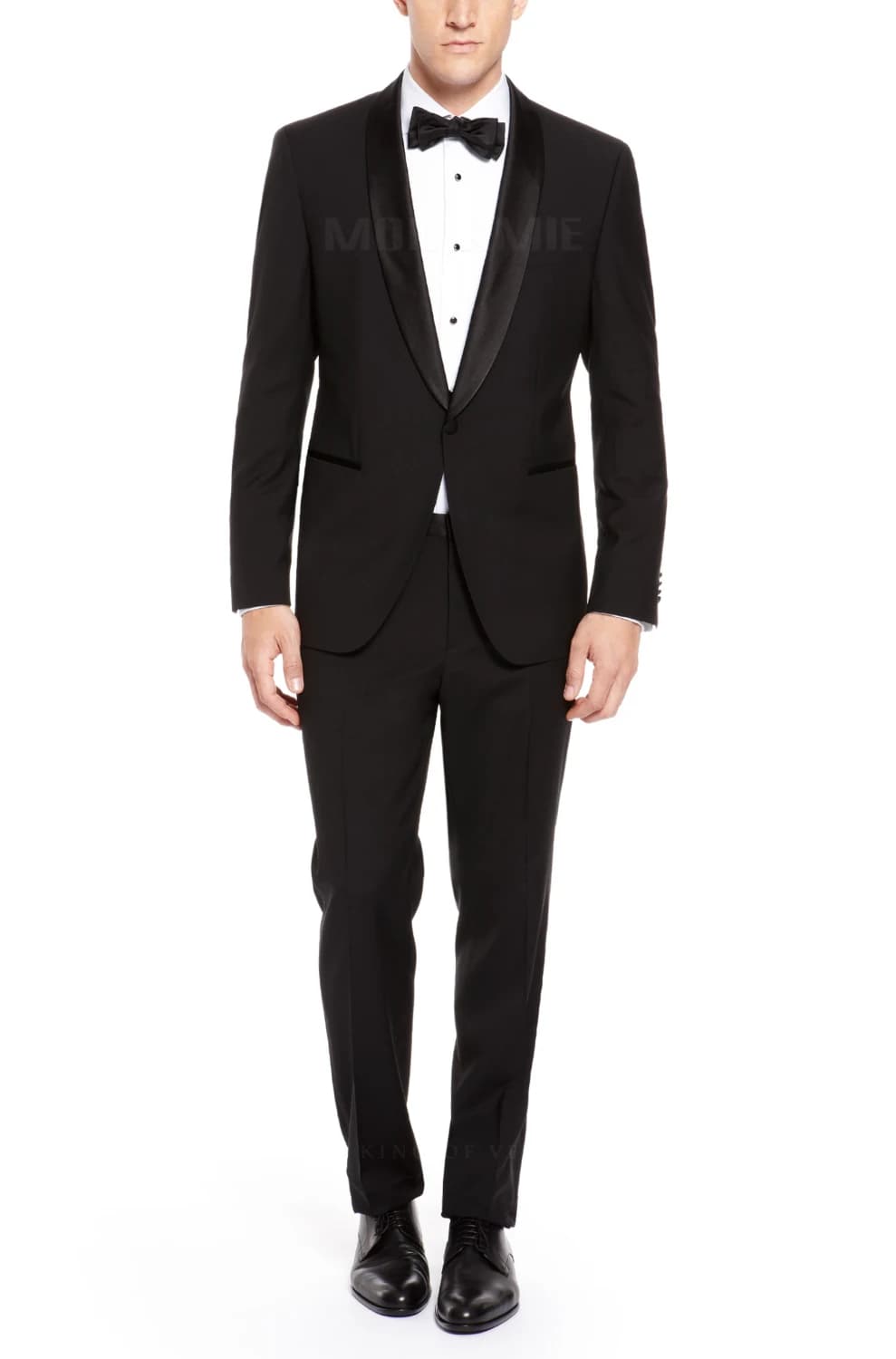
If you like a moderately close cut, look at TUX-089, a close-fitting shawl-lapel tuxedo in solid black with a black satin lapel. A trim cut is where stretch cloth does most of its work, but this is shown for style only, and the cloth for your suit is chosen separately with your adviser.
A word from the Mon Amie workshop
Describe to your adviser how you will actually wear the suit: mostly standing or sitting, dancing or performing or not. That decides between pure wool and a cloth with some give. Book a fitting to try raising your arms and sitting down in both kinds of cloth in the showroom, or read our bespoke tuxedo page.
Published 31/10/2026 · Editor: Mon Amie