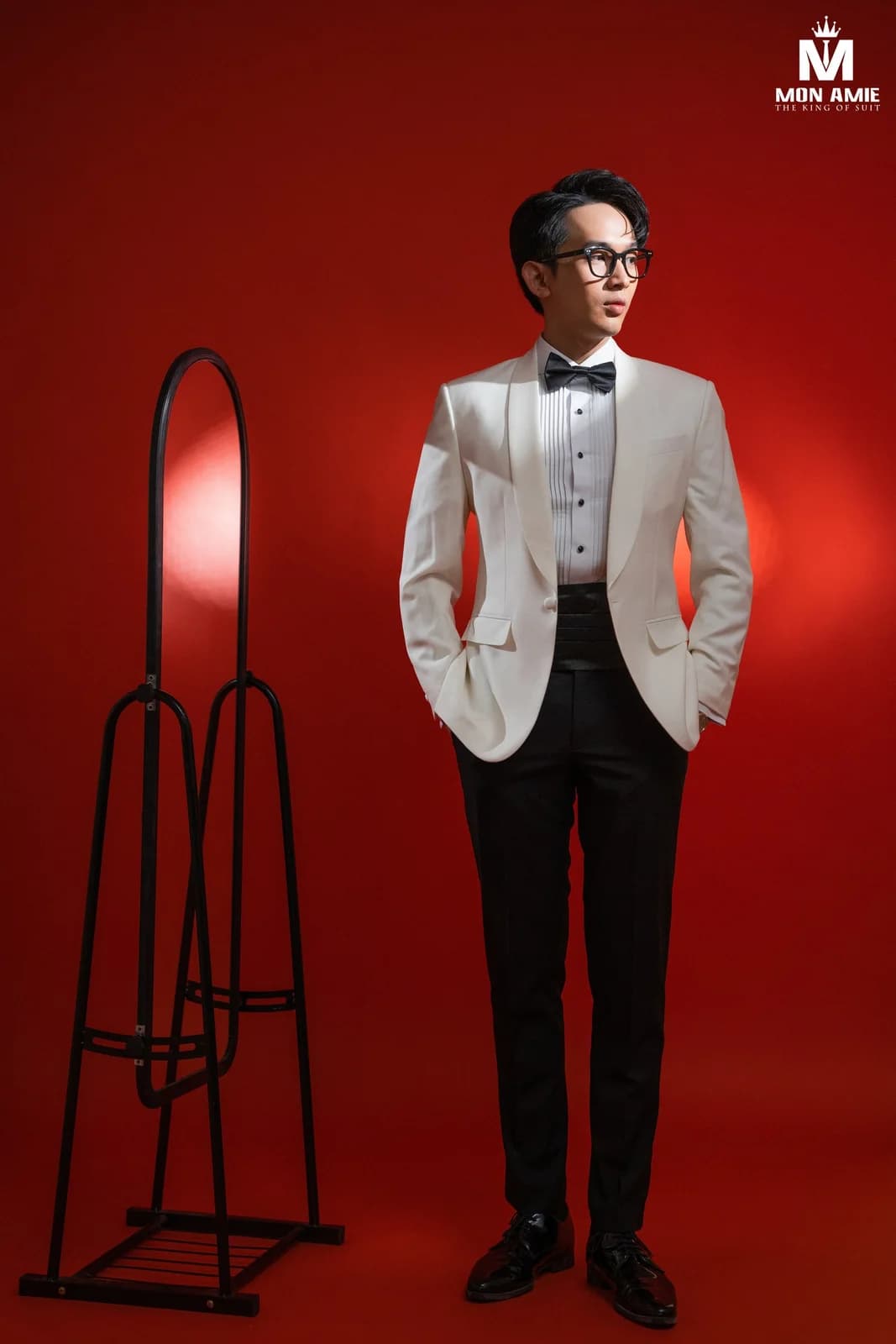
The tuxedo in Vietnamese life today
When Vietnamese men wear the tuxedo, what it is called, how it sits beside the ao dai at the same event and how to adapt it to climate and custom.
Editor: Mon Amie · Published · about 4 min read
In this article
In Vietnam the tuxedo is no longer unfamiliar, but it has not become a wardrobe habit as it is in the West. Men wear it for a few big occasions: their own wedding, a gala evening, or a turn on stage. Around those occasions, the way it is named, understood and paired with traditional dress has taken on a Vietnamese character. This piece records those features from a tailor's point of view, not a sociologist's.
Where Vietnamese men wear a tuxedo
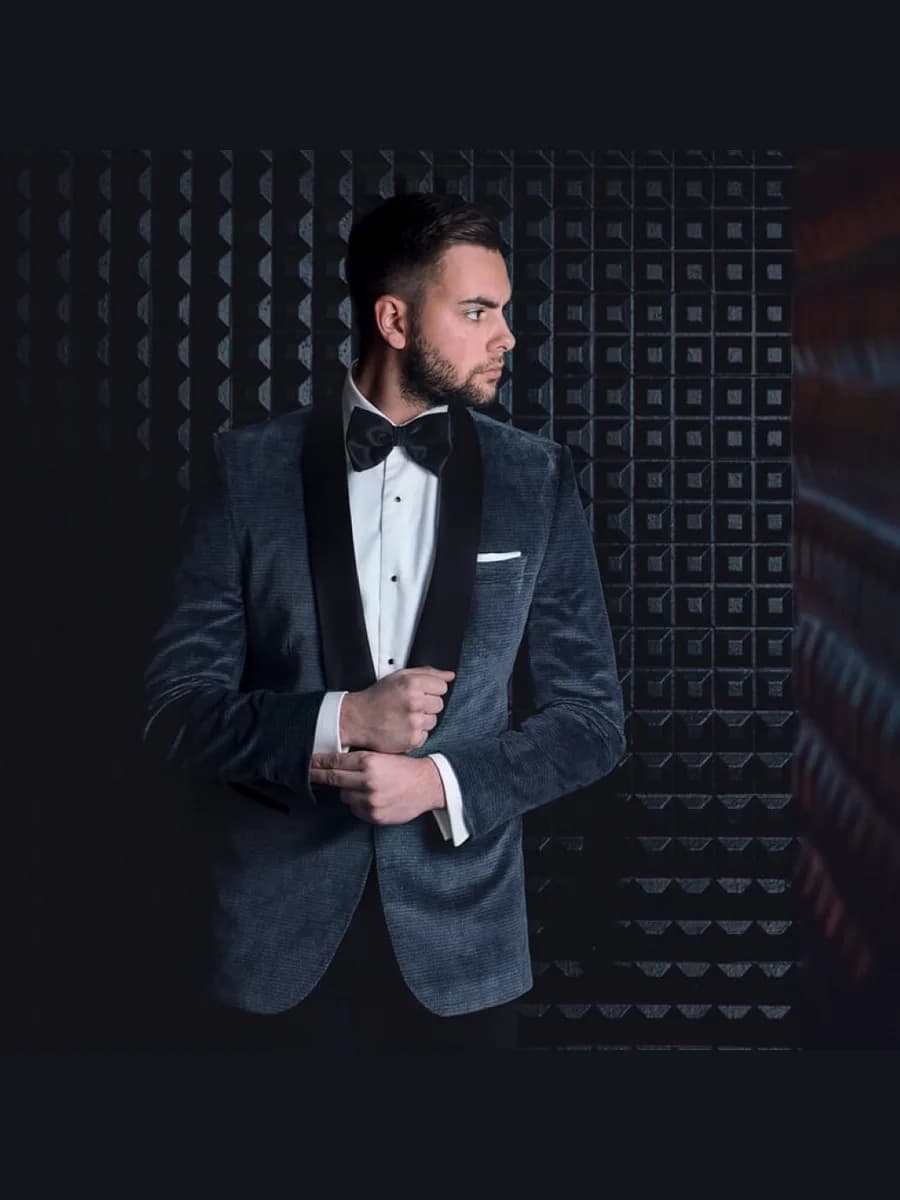
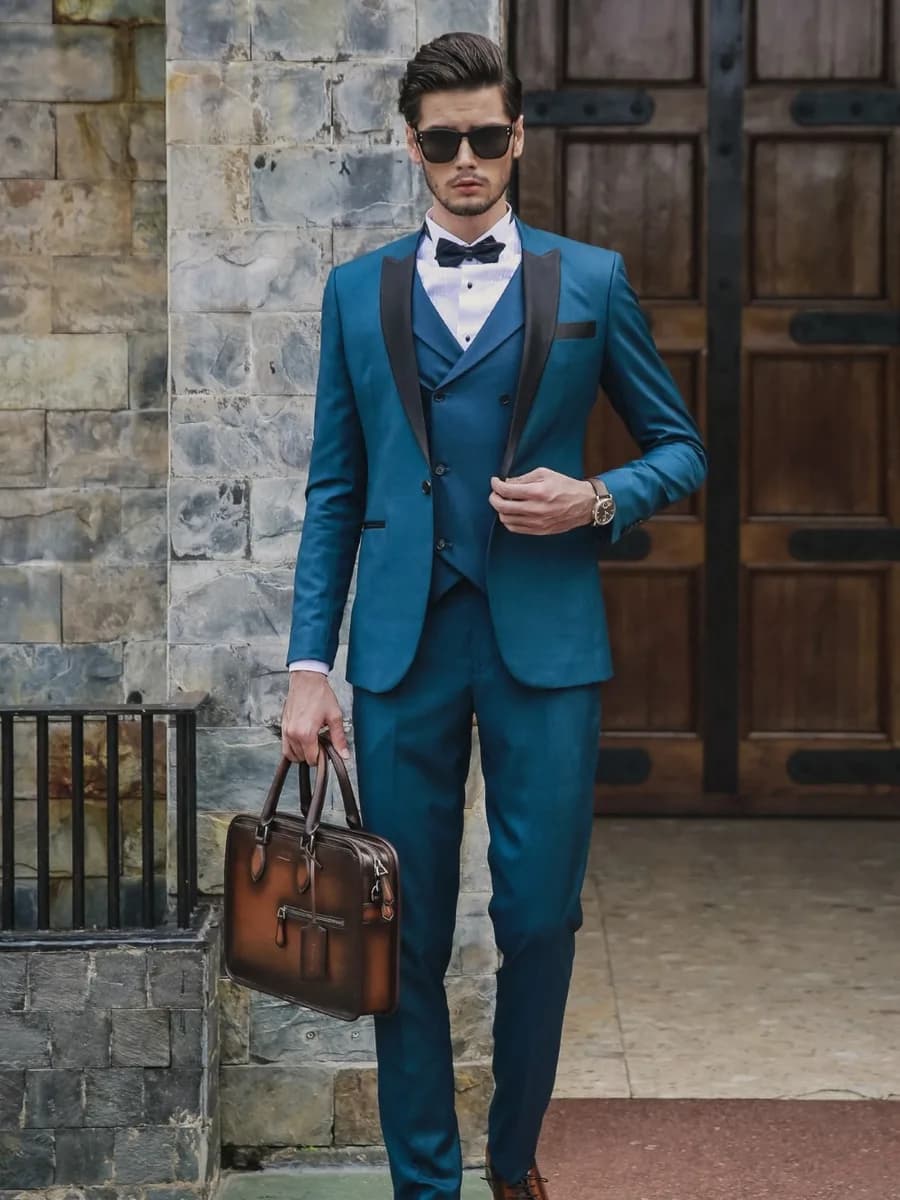
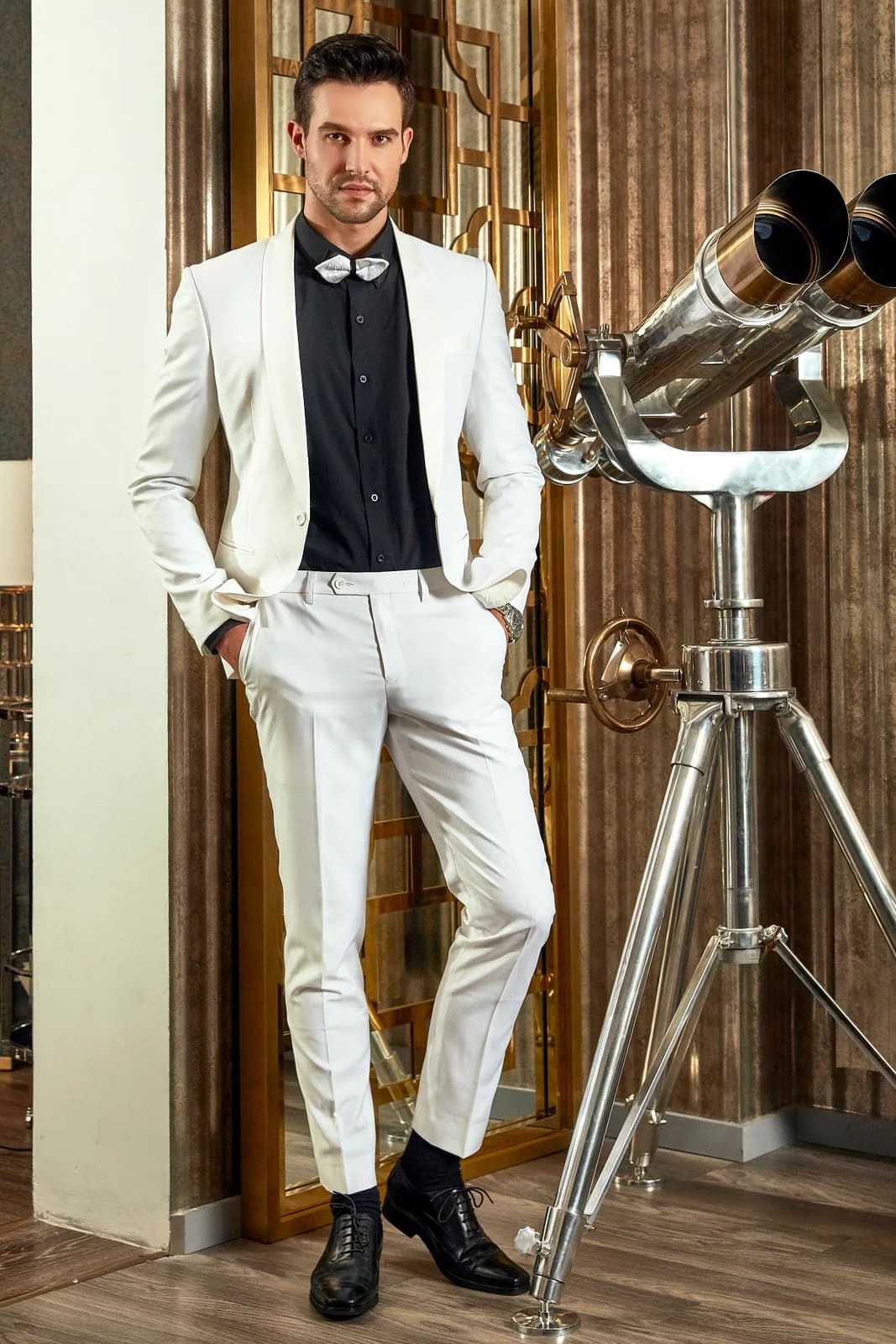
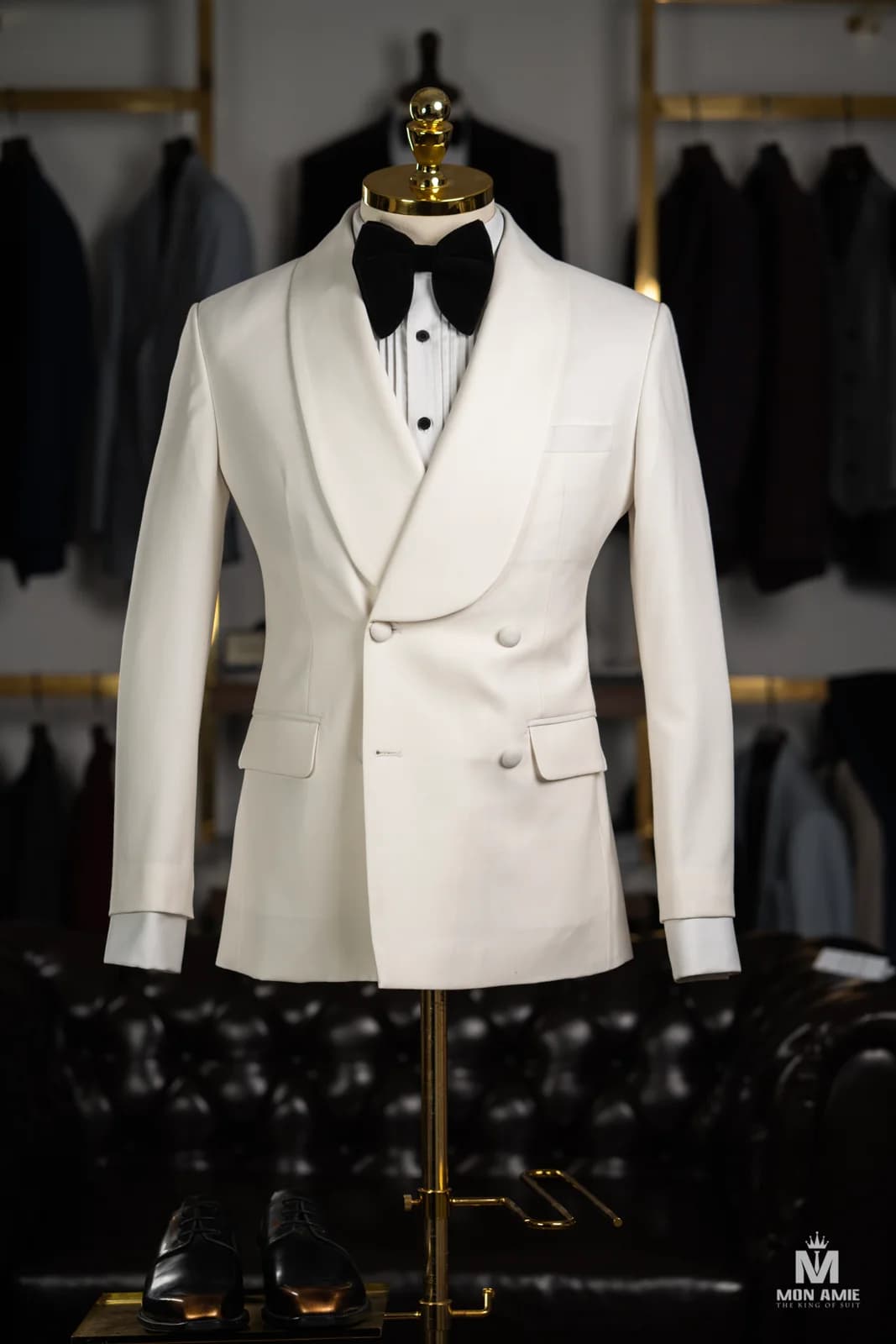
Weddings. This is the most common occasion. The groom often chooses a tuxedo for the evening reception or the wedding photographs, since the clean line, the glossy satin lapel and the black or midnight blue read very cleanly in pictures. Many couples divide the celebration into parts: the ancestral altar ceremony in ao dai, the reception in tuxedo and gown. See the groom's tuxedo.
Galas and corporate evenings. Anniversary celebrations, year-end parties, award nights and association events sometimes print black tie on the invitation. Guests often include businesspeople, artists and visitors from abroad, so the tuxedo is the safe choice. Our guide to what to wear to a gala dinner covers this in detail.
Stage and performance. Emcees, singers, musicians and hosts wear tuxedos because they look good under stage lights. Here the cloth needs to withstand hot lights and movement, with a cut that is easy at the shoulder and armhole.
Other occasions. Award ceremonies, the graduation parties of some international schools, commemorative photographs. These are often one-time wears, so many men choose to rent (see rent or make a tuxedo).
What it is called, and how it is understood
Vietnamese has several names for the same garment: "tuxedo", "tuxedo vest" (vest meaning jacket), "evening jacket", "formal wear", and some older people still say "smoking", following the French. In daily speech many people use "vest" for both suit and tuxedo, and "com-le" (from the French complet) for the office suit. As a result, when someone says "wear a vest to the wedding", they may not be thinking of a tuxedo at all.
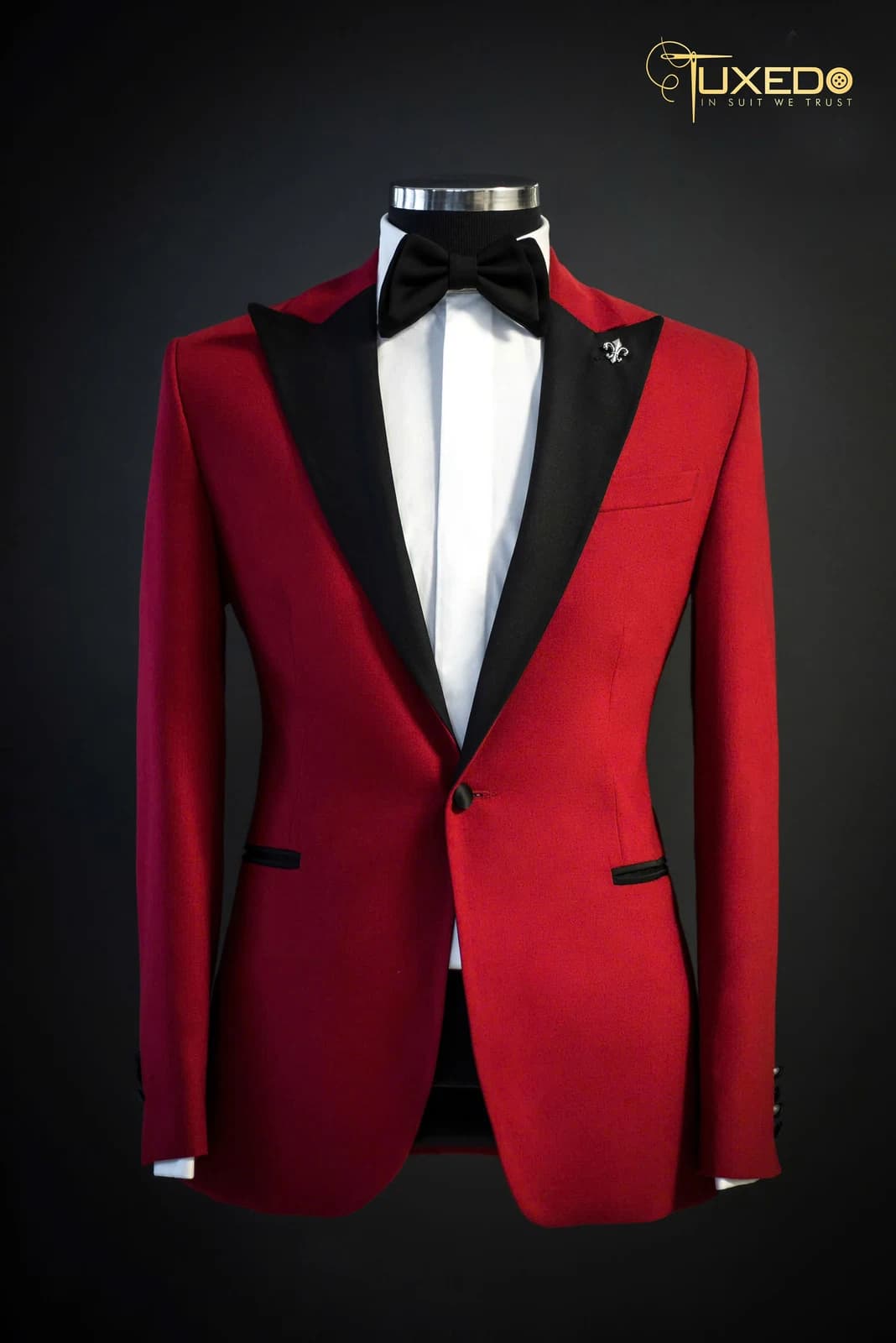
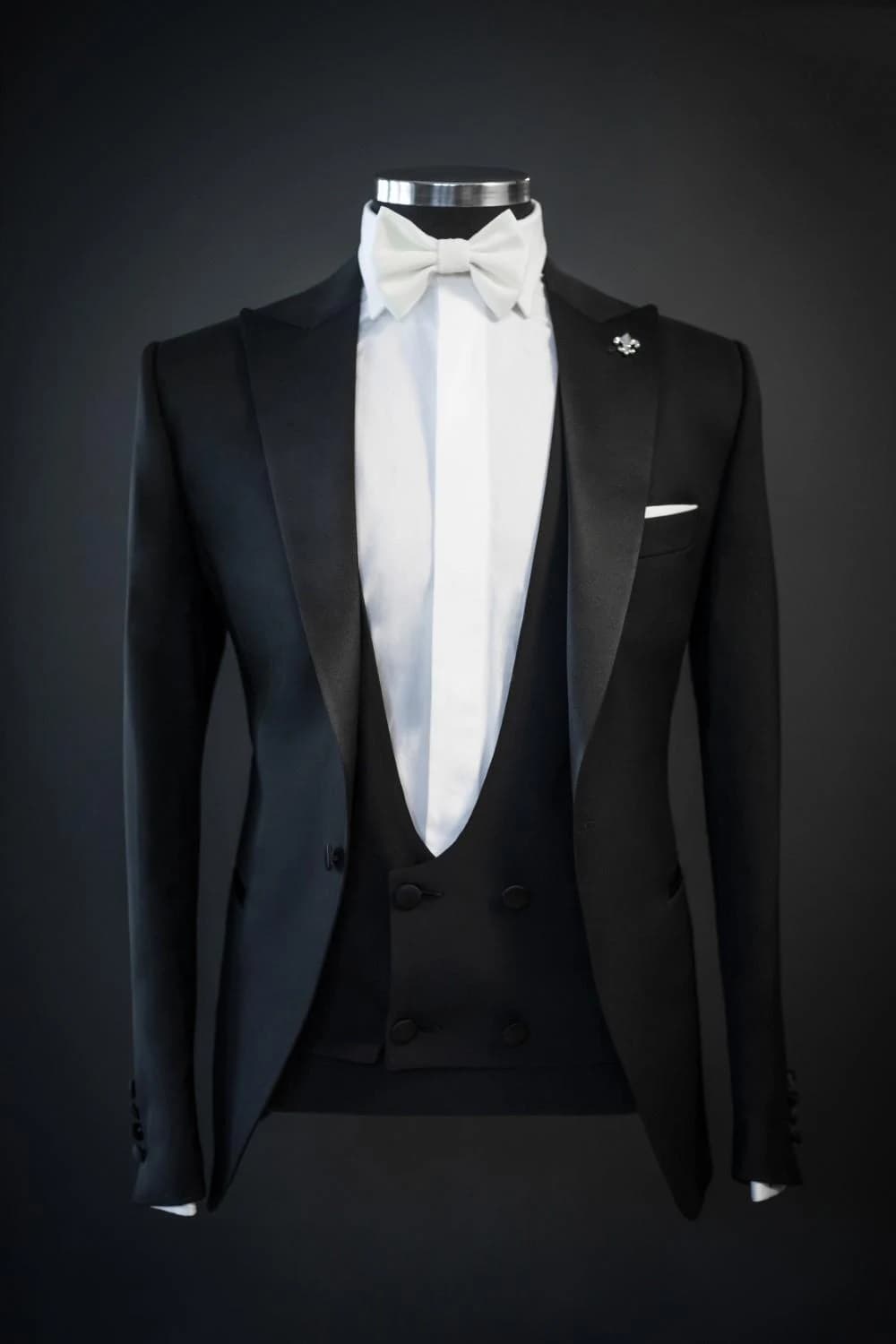
So the sensible thing is to confirm: does the invitation say black tie, or simply "formal"? If only "formal", a dark suit is correct. If black tie, the tuxedo is the standard, and the reading of the dress code is explained in What black tie means. People also confuse the tuxedo with a black suit; the difference lies in the satin lapel, the trouser stripe and covered buttons, as analysed in tuxedo versus suit.
Pairing with the ao dai at the same event
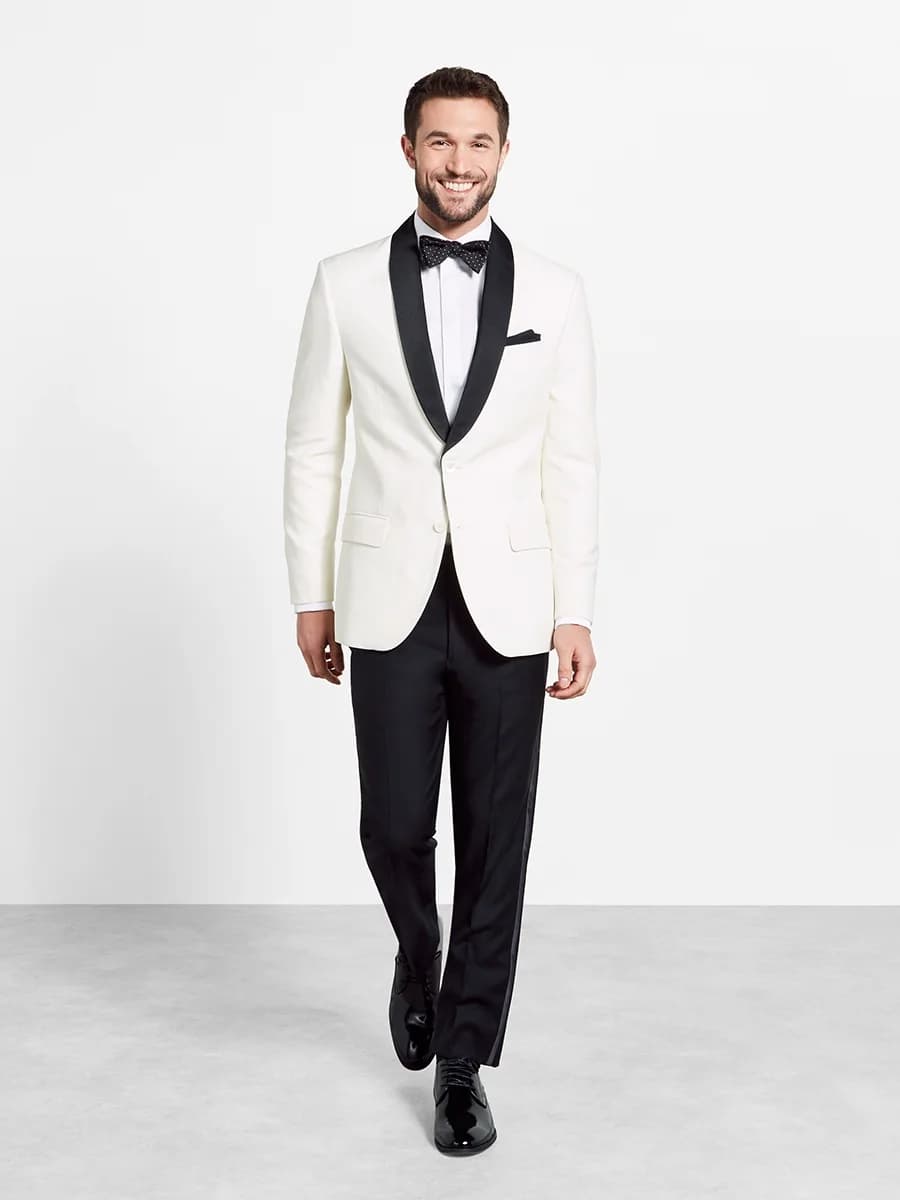
A feature particular to Vietnamese events: women often choose the ao dai rather than an evening gown, even at formal dinners. The ao dai is true formal wear, so there is no need to feel awkward standing beside a man in a tuxedo. A few points help the two outfits sit together:
- Choose the same colour family, or a contrast on purpose. A black tuxedo looks good with an ao dai in red, antique gold or emerald; a midnight blue tuxedo suits ivory or pale pink.
- Balance the level of formality: a classic tuxedo suits a silk, brocade or lightly embroidered ao dai; a velvet tuxedo suits a dark ao dai with little pattern.
- Do not let the two compete for detail. If the ao dai has heavy pattern, choose a plain tuxedo; if the tuxedo has a woven texture, keep the ao dai restrained.
- The groom may wear an ao dai and khan dong (the traditional turban) at the ancestral ceremony and then change into a tuxedo for the reception. The two outfits should share a secondary tone in photographs.
Adapting to climate and custom
The hot, humid climate of the south is the first practical fact of the Vietnamese tuxedo. A few adjustments we usually suggest:
- Cloth: lightweight, breathable wool in a moderate weave; avoid thick velvet outdoors. The velvet tuxedo explains when velvet suits.
- Lining: breathable, lined only where shape needs support, so the jacket does not trap heat during long standing.
- Waistcoat or cummerbund: the cummerbund is lighter and suits high temperatures.
- Shirt: fine cotton that absorbs sweat, with a thin undershirt so perspiration does not spread to the shirt.
- Temperature swings: many banquet rooms are quite cold while the garden where photographs are taken is hot; a single moderate layer and a small handkerchief in the pocket handle both.
- Long occasions: weddings here run long, with standing for photographs and table-by-table toasts. The jacket needs to be easy at the shoulder and arm to be worn for the duration.
As for custom, at a Vietnamese table, round tables, toasting each table and posing with each group of guests are routine. Choose a suit that looks good standing and does not crease sitting, and remember to button up when you stand for pictures.
Book a visit at Mon Amie
We make tuxedos for the climate and occasions of Vietnamese life: lighter cloth for outdoor receptions, an easy cut for a groom who stands for photographs, and advice on pairing with ao dai for each event. Book a visit to try one on and discuss the details.
Published 22/11/2026 · 19:00 · Editor: Mon Amie