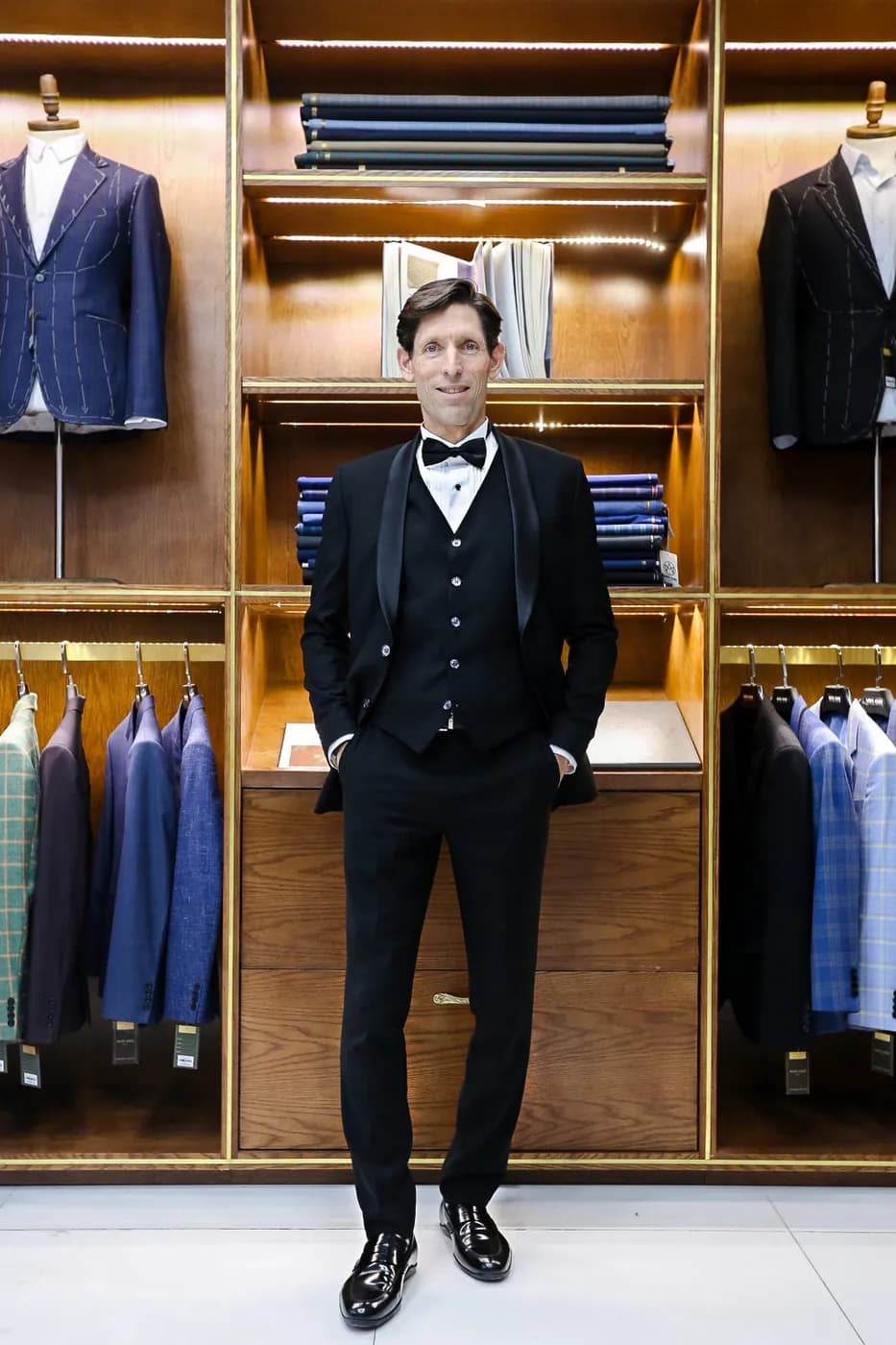
Tuxedo know-how
What Is Black Tie? From White Tie to Cocktail Attire
What does Black Tie mean, and how does it differ from White Tie, Black Tie Optional, Creative Black Tie and Cocktail? How to read an invitation and dress right.
Mon Amie · 15/10/2026
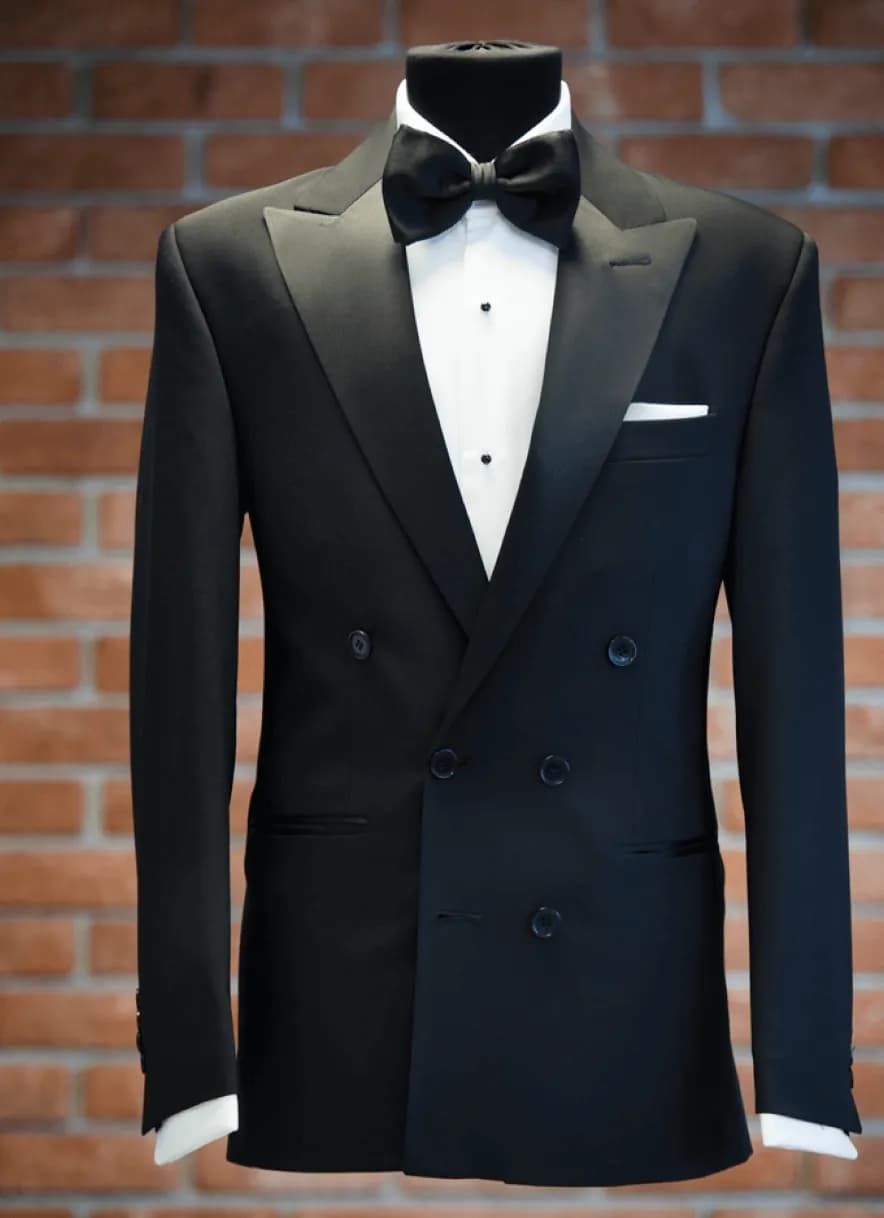
Black Tie is an evening dress code that asks men to wear a tuxedo: a dinner jacket with satin or grosgrain facings, matching trousers with a braid down the leg, a white dress shirt, a black bow tie and patent shoes. It sits just below White Tie, the summit of formal evening wear, and well above Cocktail or "smart" attire. Once you understand the levels, no invitation will leave you guessing.
Black Tie: the standard for formal evenings
Traditionally, Black Tie is worn in the evening, generally from about six o'clock onwards. Its daytime equivalent is morning dress, an entirely different set of clothes. A correct black tie outfit consists of:
- Jacket: a dinner jacket in black or midnight blue, single- or double-breasted. Shawl or peak lapels faced in satin or grosgrain; notch lapels are seen too, but are less formal.
- Trousers: cut from the same cloth, with a single satin or grosgrain braid down the outside leg and no belt loops.
- Waist covering: a cummerbund or a low-cut evening waistcoat, to hide the waistband.
- Shirt: white, with a pleated or marcella (piqué) bib, shirt studs and cufflinks. A turndown collar is the traditional black tie choice; the wing collar is common too, though it belongs more naturally to white tie.
- Bow tie: black and self-tied, ideally in the same silk as the lapels.
- Shoes: black patent oxfords or opera pumps, with black silk socks.
Beyond black and midnight blue, an ivory jacket is accepted at warm-weather events. You can read more in black or midnight blue tuxedo and the white dinner jacket.
White Tie: the top of the scale
White Tie is the most formal of evening dress codes, seen at state banquets, court balls, some award ceremonies and academic occasions. Men wear:
- A black tailcoat with silk-faced peak lapels, cut away at the waist in front and worn unbuttoned.
- Matching trousers, usually with two braids down each leg.
- A white piqué waistcoat, cut low, which should not show below the front of the coat.
- A white shirt with a stiff piqué front, wing collar, studs and cufflinks.
- A white piqué bow tie, with patent shoes or opera pumps.
The key point: a tuxedo cannot stand in for white tie. Wear one to a White Tie event and you are a full step under-dressed.
Black Tie Optional and Black Tie Preferred
When an invitation says Black Tie Optional, the hosts will wear tuxedos and encourage guests to do the same, but a suit is acceptable. If you do not wear a tuxedo, choose a dark suit in black, charcoal or deep navy, with a white shirt, a plain dark tie and black dress shoes.
Black Tie Preferred leans more firmly towards the tuxedo: a suit is still allowed, but most guests will be in evening dress. If you own a dinner suit, this is the time to wear it.
Creative Black Tie
Creative Black Tie keeps the structure of black tie but leaves room for personality. You might wear a velvet jacket, a dinner jacket in burgundy or green, a patterned bow tie, a dark-toned shirt or velvet slippers.
The line is polish: change one or two details, but do not turn evening dress into fancy dress. The jacket should still be evening wear and the trousers still properly tailored.
Cocktail and smart attire
Cocktail is a clear step down: a dark suit, usually with a tie, and no tuxedo required. Wearing a tuxedo to a cocktail party is not wrong, but you will be more formal than your host.
Vietnamese invitations often ask for "trang phục lịch sự", roughly smart attire. The safe reading is a suit, or at the very least trousers, a shirt and a jacket, rather than a tuxedo, unless the card clearly says Black Tie.
Dress codes compared
| Dress code | Jacket | Trousers | Collar and tie | Shoes | Tuxedo required |
|---|---|---|---|---|---|
| White Tie | Black tailcoat | Two braids | Wing collar, white piqué bow | Patent, opera pumps | No, a tailcoat is required |
| Black Tie | Black or midnight dinner jacket | One braid | Black self-tie bow | Patent | Yes |
| Black Tie Optional | Tuxedo or dark suit | Matching | Black bow or plain tie | Patent or black oxfords | Encouraged |
| Creative Black Tie | Tuxedo with a twist | Evening trousers | Bow may be patterned | Patent, velvet slippers | Effectively yes |
| Cocktail | Dark suit | Matching | Tie | Dress shoes | No |
For women, Black Tie usually means a floor-length evening gown or a very polished cocktail dress; White Tie calls for a full-length gown.
Common mistakes
- Wearing a long tie with a tuxedo at a Black Tie event. The bow tie is the standard.
- Wearing a leather belt with dinner trousers. Evening trousers have no belt loops; use braces inside, or side adjusters.
- Letting the waistband and shirt show between jacket and trousers. That is exactly what the cummerbund or waistcoat is for.
- Wearing everyday matte shoes or light-coloured socks.
- Keeping your jacket buttoned when seated. Unbutton a single-breasted jacket to sit, and button it again when you stand.
A basic accessory set such as the Black and White Tuxedo Accessory Set (TUX-046) helps you avoid most of these. For a complete black tie look in the classic manner, see the Shawl-Lapel Cummerbund Tuxedo (TUX-054): satin shawl collar, pleated cummerbund and pleated-front shirt. A summary of the dress codes is also on our dress code page.
How Mon Amie can help
If you are holding an invitation and are not sure what to wear, a Mon Amie consultant will help you read it correctly and choose the right evening wear and accessories. Making time depends on the model and your fitting schedule, and your consultant will give you specifics at measuring, so it is wise to book well ahead of your event. Book a showroom consultation.