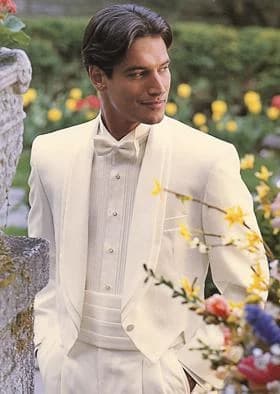
White Tuxedos with Tonal Pattern and Silver Stripes
White tuxedos with tonal pattern: woven checks and silver stripes add depth to the cloth. Real models TUX-074 and TUX-075, plus minimal accessories.
Editor: Mon Amie · Published · about 4 min read
In this article
A plain white tuxedo is elegant but can feel one-note. A tonal pattern, meaning a design woven in the same shade as the ground or only a step apart, adds a layer of depth: from a distance you see a clean white suit, and only up close does the cloth reveal a rhythm of squares or stripes. It is a way to give a white jacket character without shouting through colour.
What a tonal pattern is
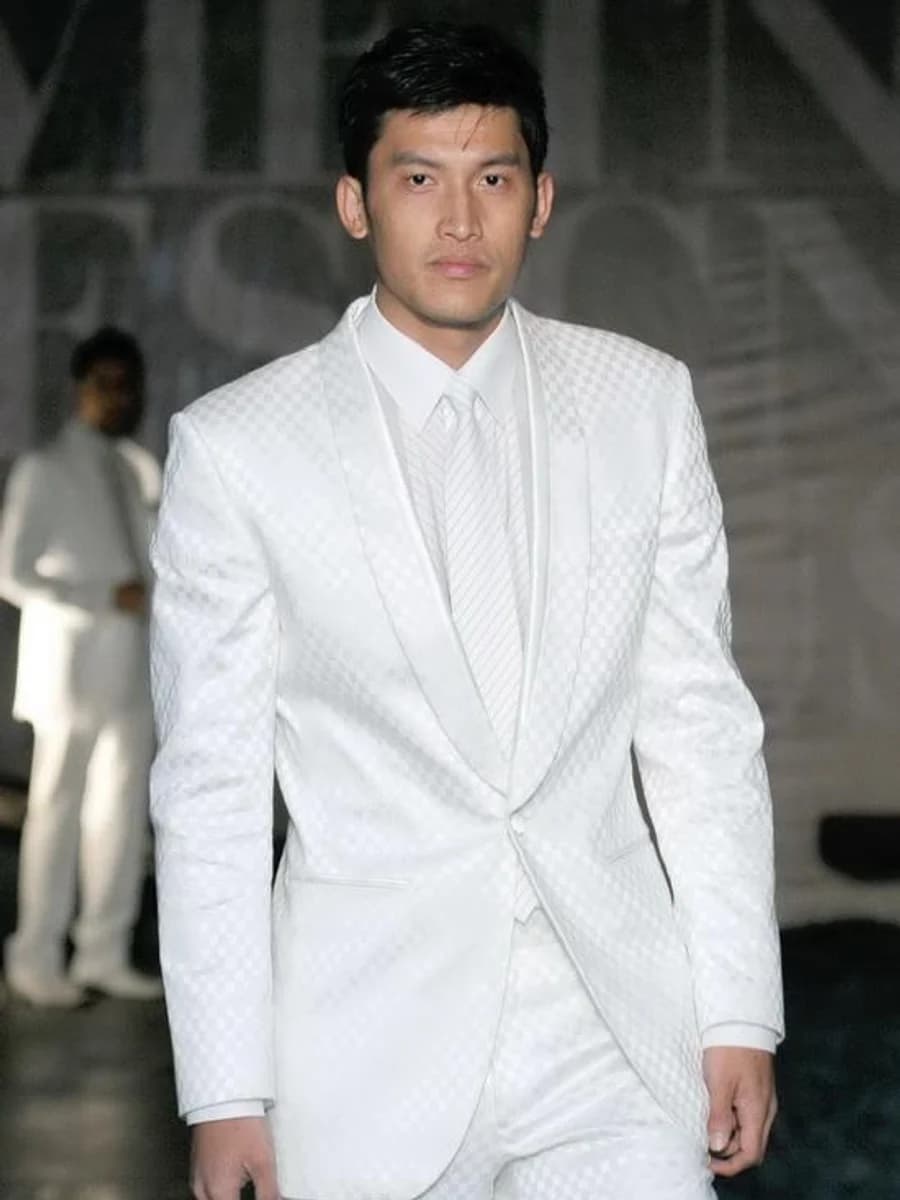
A tonal pattern is one where the thread colour nearly matches the ground, so you notice it only when light crosses it at an angle or when you stand close. It is usually created in the weave, as in jacquard cloth, not printed on the surface. That difference matters: a woven design has a slight relief, catches light and casts tiny shadows, so it reads far deeper than a flat printed one. See jacquard and woven-pattern tuxedos for more on this family of cloths.
On a white ground the effect shows even more, since the pale surface reveals every raised line. That is why a tonal white looks more expensive than plain white in the same fibre.
Two real models: TUX-074 and TUX-075
Both are in the Ivory Dinner Jacket collection.
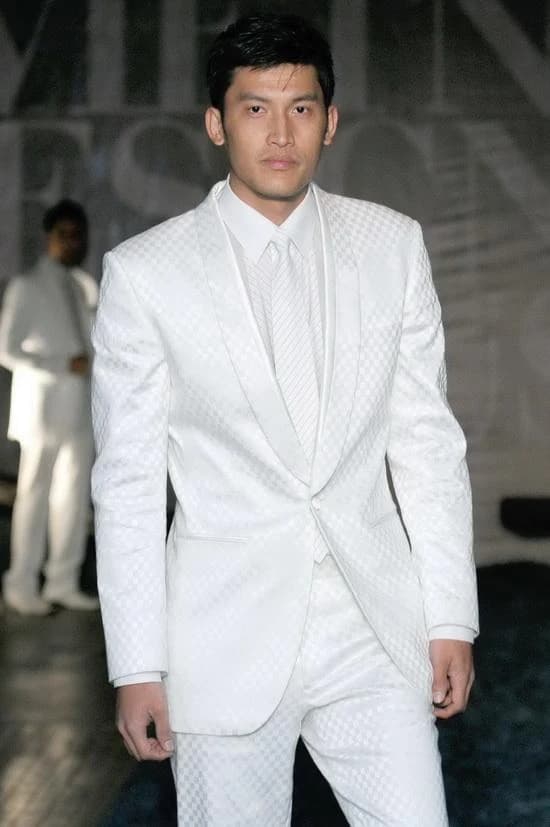
- TUX-074: a white tuxedo woven with a tonal check, shawl collar, with matching waistcoat and tie in white. The woven check gives the cloth depth, yet the outfit remains one unified white block.
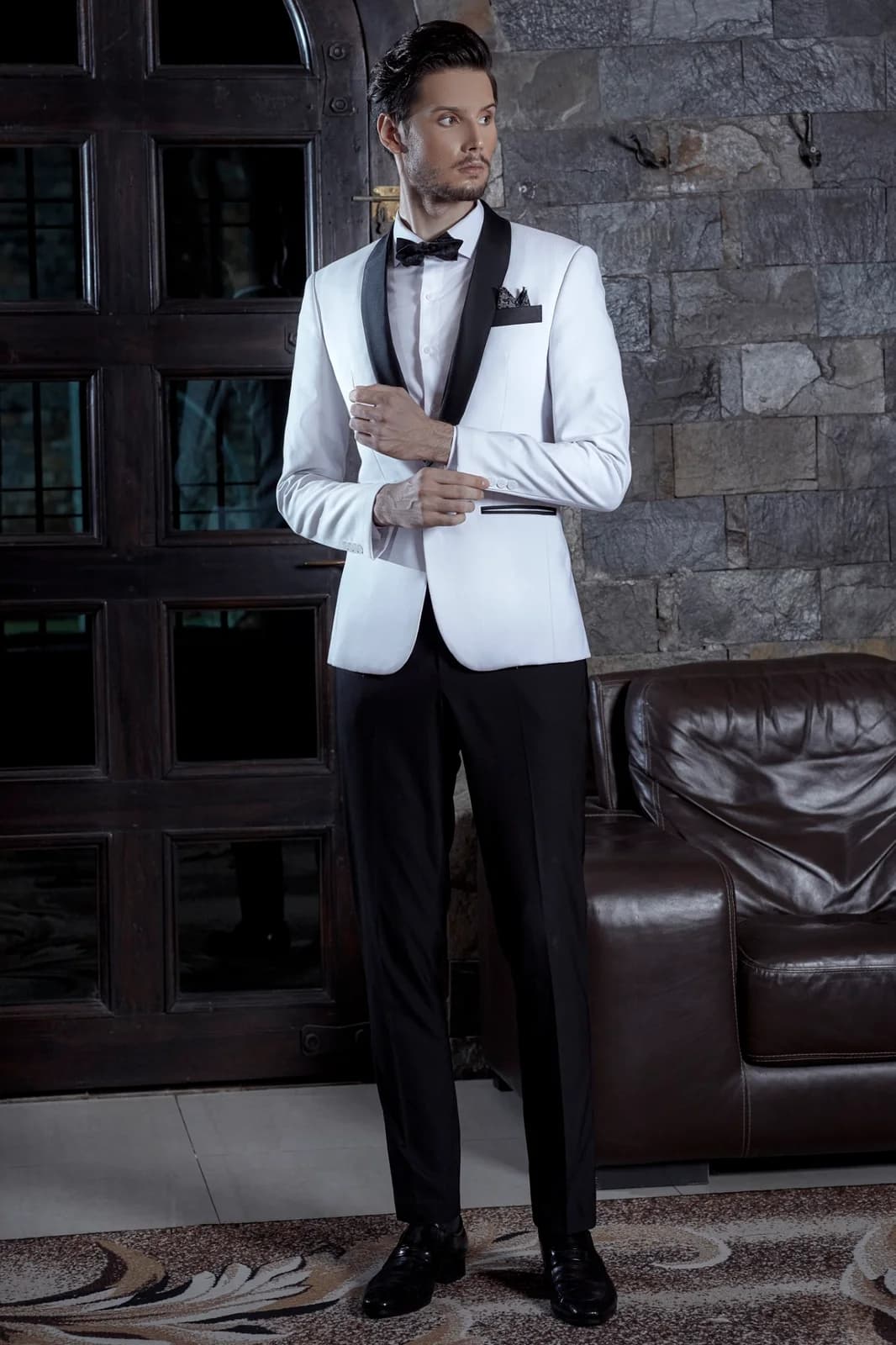
- TUX-075: white with panels of black and silver-grey stripes on the front, a shawl collar edged in white and matching white trousers. The silver stripe catches the light more than a tonal check, so it draws attention as you move.
They offer two levels. TUX-074 is discreet and appears only up close. TUX-075 is more assertive, because the striped panel at the front is the main focus of the suit.

When it works, when it gets busy
A tonal pattern works when you want a white suit with personality that stays polite. Good situations include:
- An outdoor wedding or cocktail party, where daylight brings the woven design out.
- A resort gala or fashion event, where plain white may feel familiar.
- A groom who wants to differ from black-clad groomsmen without changing to a full colour.
And situations where it gets busy:
- Adding a patterned shirt or tie. Two groups of pattern fight each other, especially a stripe beside a check.
- A pattern too small and dense under a camera. A very fine check can cause moiré on photos and video. Take a few test pictures on a phone in the showroom before you decide.
- A patterned jacket with a patterned waistcoat and trousers. If all three pieces are woven, it looks heavy. On TUX-074 the shared tone saves it, since everything is one shade.
- A strict black-tie evening. A patterned white jacket is a distant variant from convention, so ask the host. See what black tie means for the boundaries.
Minimal accessories
With a jacket that already carries a pattern, accessories should step back so the cloth speaks:
- A plain white shirt with a piqué or small pleated front. No striped shirts.
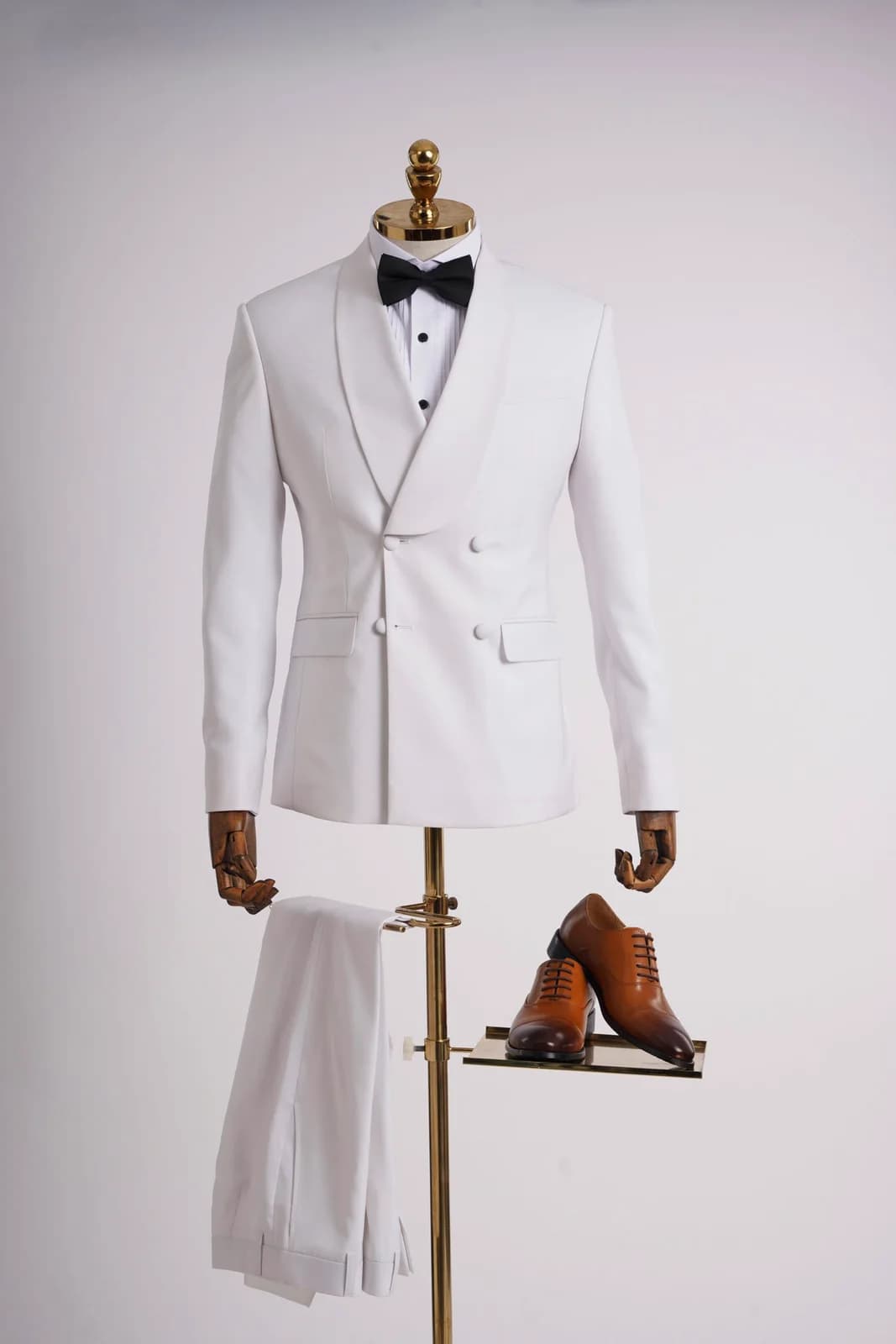
- A plain bow tie or tie: white to match, as on TUX-074, or a hand-tied black bow for a firmer structure.
- Cufflinks and studs in silver or onyx, one metal only.
- A flat white pocket square, or none. No patterned squares.
- Black patent shoes, or cream-white ones for a lighter formality.
The rule is simple: one lead singer. If the jacket carries the pattern, everything else is background.
Looking after a white patterned jacket
Raised weaves hold dust and skin oil more than flat cloth, so use a trusted dry cleaner and avoid pressing the face of the cloth directly with high heat (a tailor will use a pressing cloth or steam). Store the jacket in a breathable garment bag, never a sealed plastic one. White dinner jackets: when and how to wear them has more notes on pale suits in general.
From the Mon Amie workshop
A tonal pattern is almost impossible to judge from a photograph, because camera light flattens the depth. Come to a showroom, look at the cloth under several lamps and try the fit. The tailor can help choose a pattern scale that suits your build and gives the specific making time when you are measured. Book a fitting here.
Published 01/11/2026 · 14:30 · Editor: Mon Amie