Ruffled and patterned tuxedo shirts: when they work
Ruffled or patterned shirts suit a tuxedo on few occasions: themed parties, stage, creative black tie. Keep patterns tonal and the rest of the outfit plain.
Editor: Mon Amie · Published · about 3 min read
In this article
A ruffled or boldly patterned shirt suits a tuxedo on only a few occasions: themed parties, the stage, creative black tie. For true black tie, a white pleated or piqué bib is still the safe choice. If you want pattern and still want subtlety, go for a tonal pattern woven into the cloth, then keep everything else plain.
Where the ruffle comes from
A ruffled bib is a layer of gathered fabric running down the placket, sometimes up to the collar. It echoes the lace jabot of eighteenth-century menswear, but the picture most people carry today is the 1970s evening shirt, usually under a light-coloured tuxedo with a wide bow tie and broad lapels. That is why the ruffle is remembered as a mark of that decade, and of the stage, where a performer needs detail visible from far away.
Because of that association, wearing a ruffle today is a deliberate choice. The room will read it as nostalgic, theatrical or knowingly eye-catching, not as standard formalwear.
Keep pattern tonal
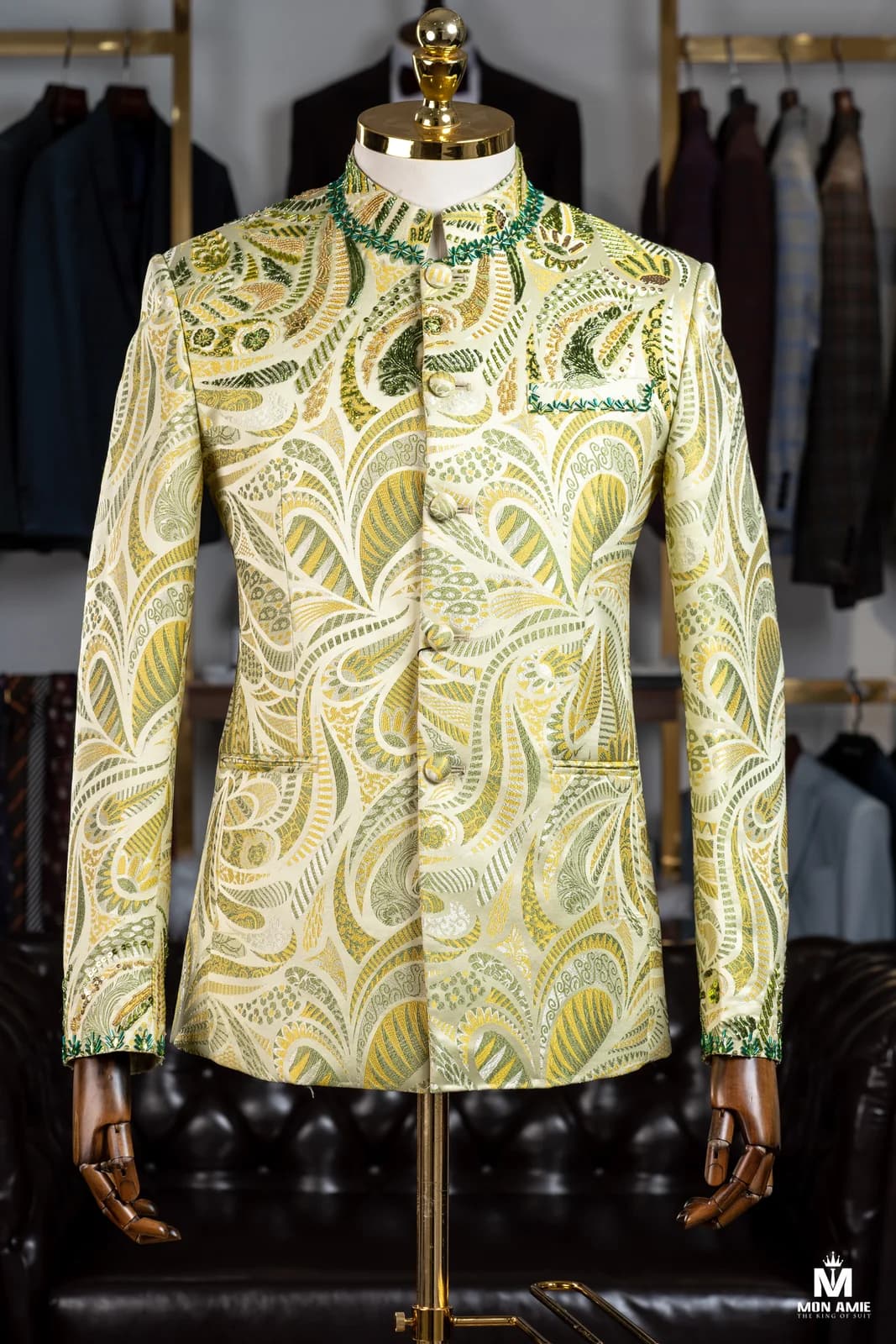
Unlike the ruffle, pattern can be very refined when it lives in the weave rather than on the surface. Common options:
- Piqué (marcella): a woven texture of small cords or cells, still white but with surface interest.
- Tonal jacquard: a pattern woven in the same colour as the ground, revealed only when you turn under the light.
- Dobby or very fine stripe: a tiny woven texture you only see up close.
- Pintucks: narrow stitched folds, lighter than broad pleats.
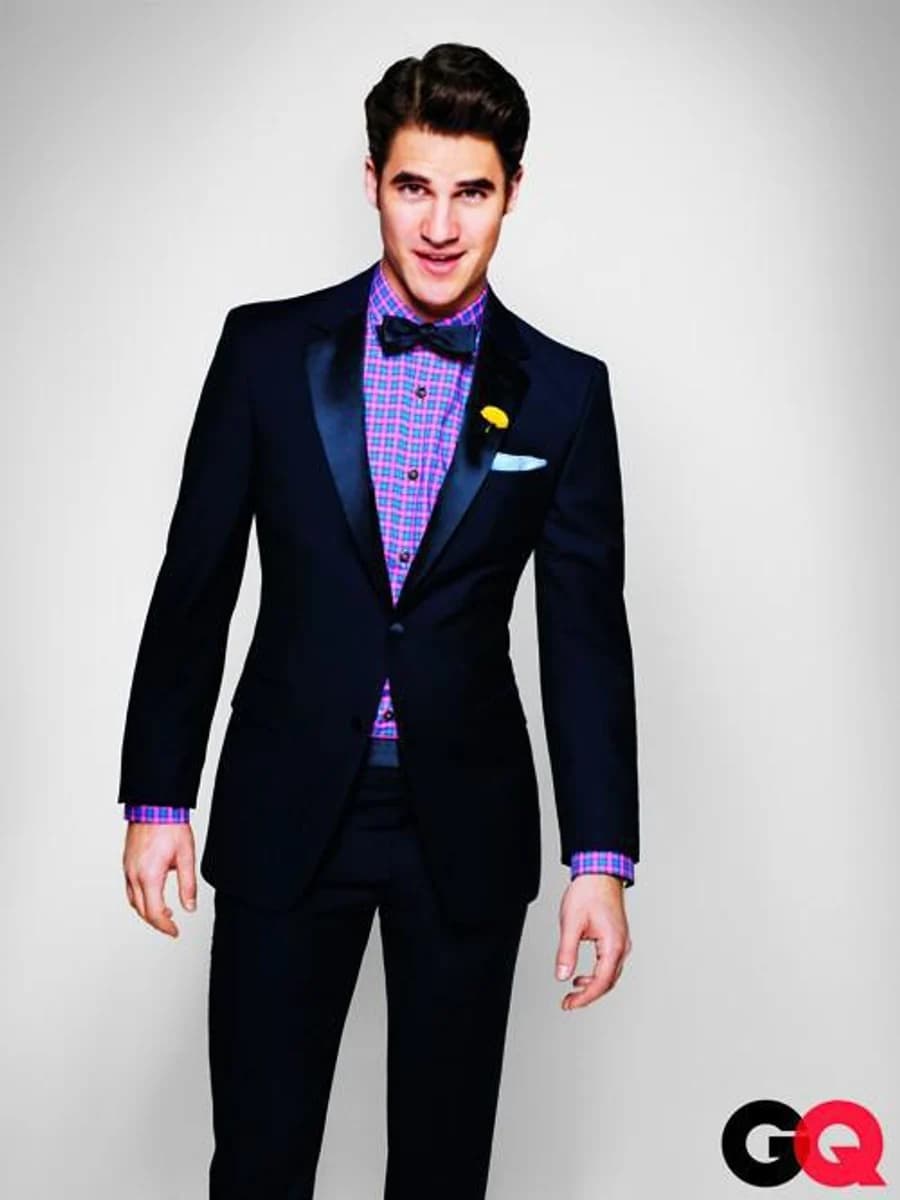
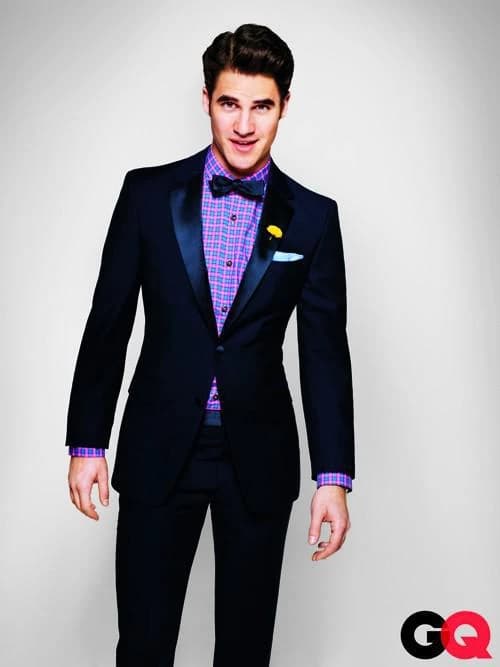
Loud patterns such as large checks, coloured stripes or prints belong to relaxed occasions. TUX-081 is an example: a navy suit with black satin peak lapels, paired with a pink and blue checked shirt, a navy bow tie and a yellow boutonniere. That combination suits a youthful wedding party, not a black tie night.
Occasions that accept it
- Themed parties: a 1970s evening, disco night, a costume event with clear instructions.
- Stage and performance: singers, musicians, hosts. See tuxedos for stage performance.
- Creative black tie: when the invitation explicitly invites invention, you may add one personal detail while keeping the spirit of eveningwear.
- Relaxed weddings and outdoor receptions: more fashion than ceremony.
Avoid it at strict black tie, traditional galas, ceremonial weddings, or business meetings where you are read through polish. For those, look back at black tie through the decades to see how the standard shifted and what stayed.
Keep everything else plain
The rule is one loud piece, the rest quiet.
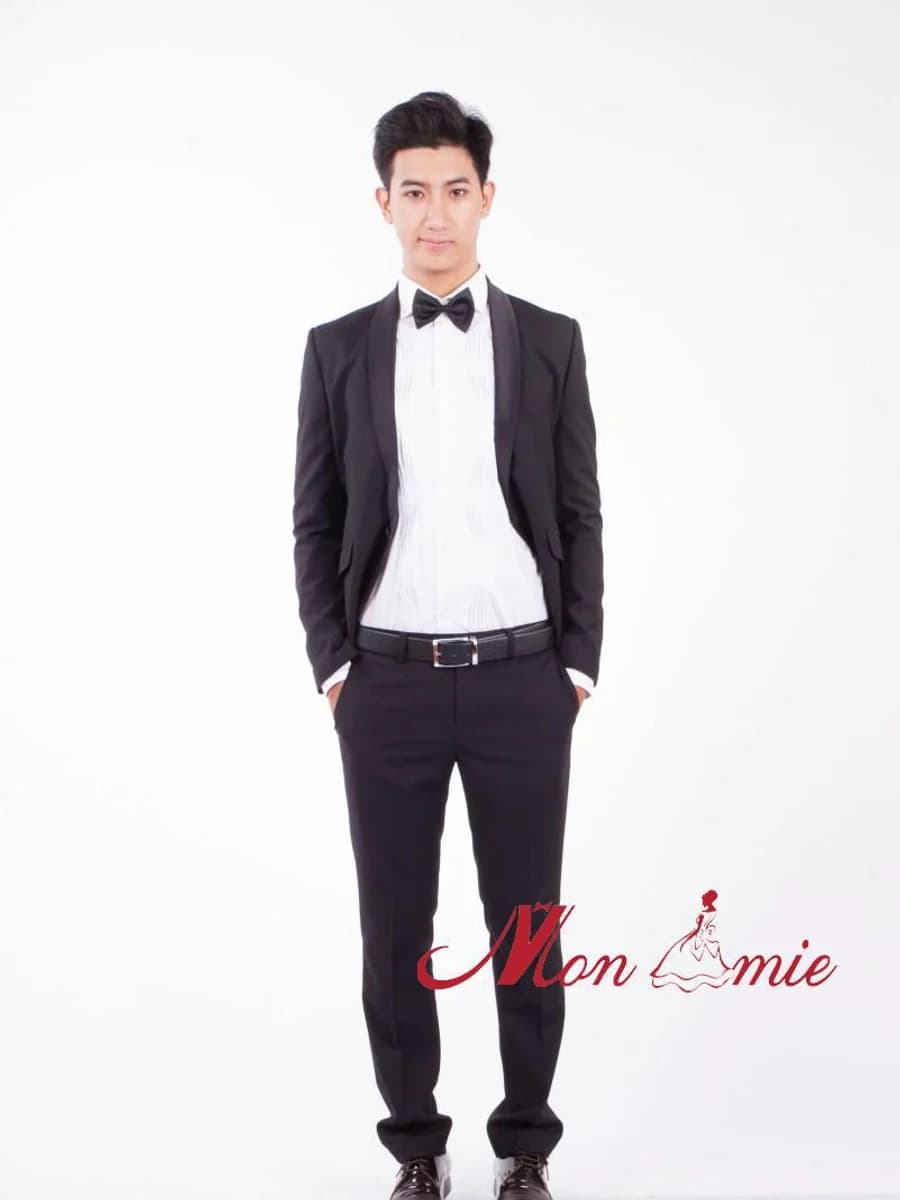
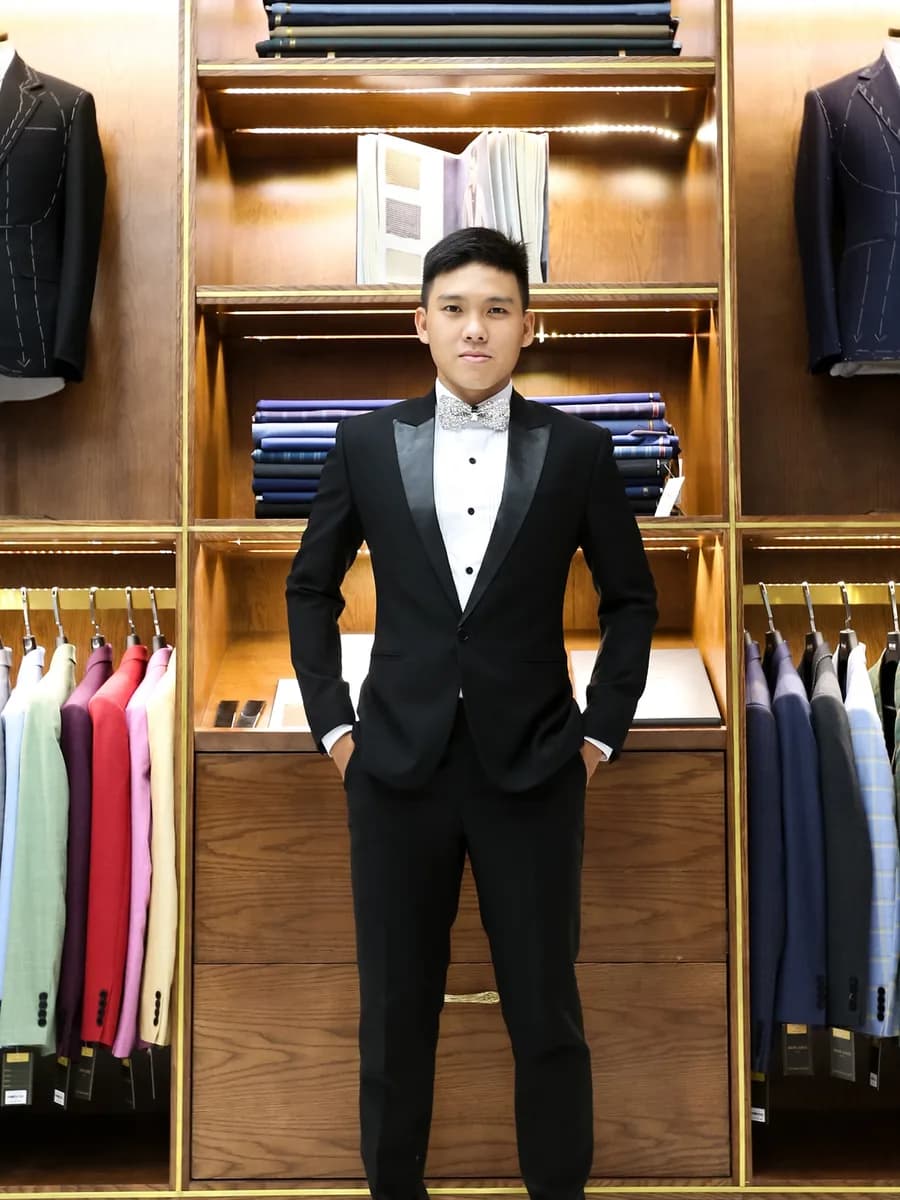
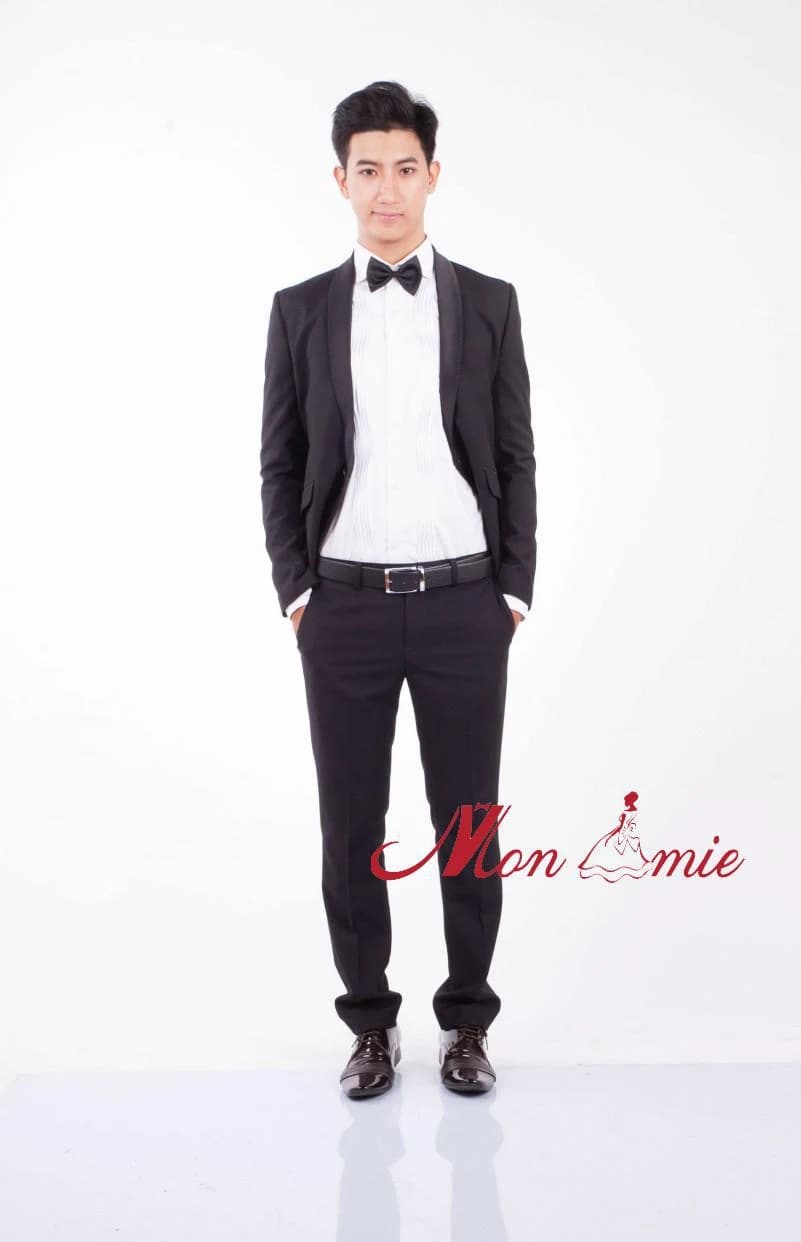
- Jacket and trousers: solid black or navy, with satin-faced shawl or peak lapels. On a black two-piece with a satin shawl lapel like TUX-079, a white pleated bib and black bow tie are both the standard base and the place to return to when you are unsure.
- Bow tie: plain, one colour, in the same cloth as the lapel facing. No patterned bow tie if the shirt already carries a pattern.
- Accessories: simple cufflinks and studs, a slim watch, a white pocket square folded flat.
- Shoes: black patent or opera pumps.
- Colour: no more than two colours beyond black and white.
One point people forget: a thick ruffle widens the upper body. If your shoulders are broad or your chest already full, think twice, since the extra cloth adds volume exactly there.
Before choosing a busy shirt
Ask three questions: does the invitation allow invention, do you want people to remember the outfit or the man, and will this shirt still stand up in photographs a decade from now. If in doubt, a piqué or small-pleat bib remains the lasting choice.
Try it at the showroom
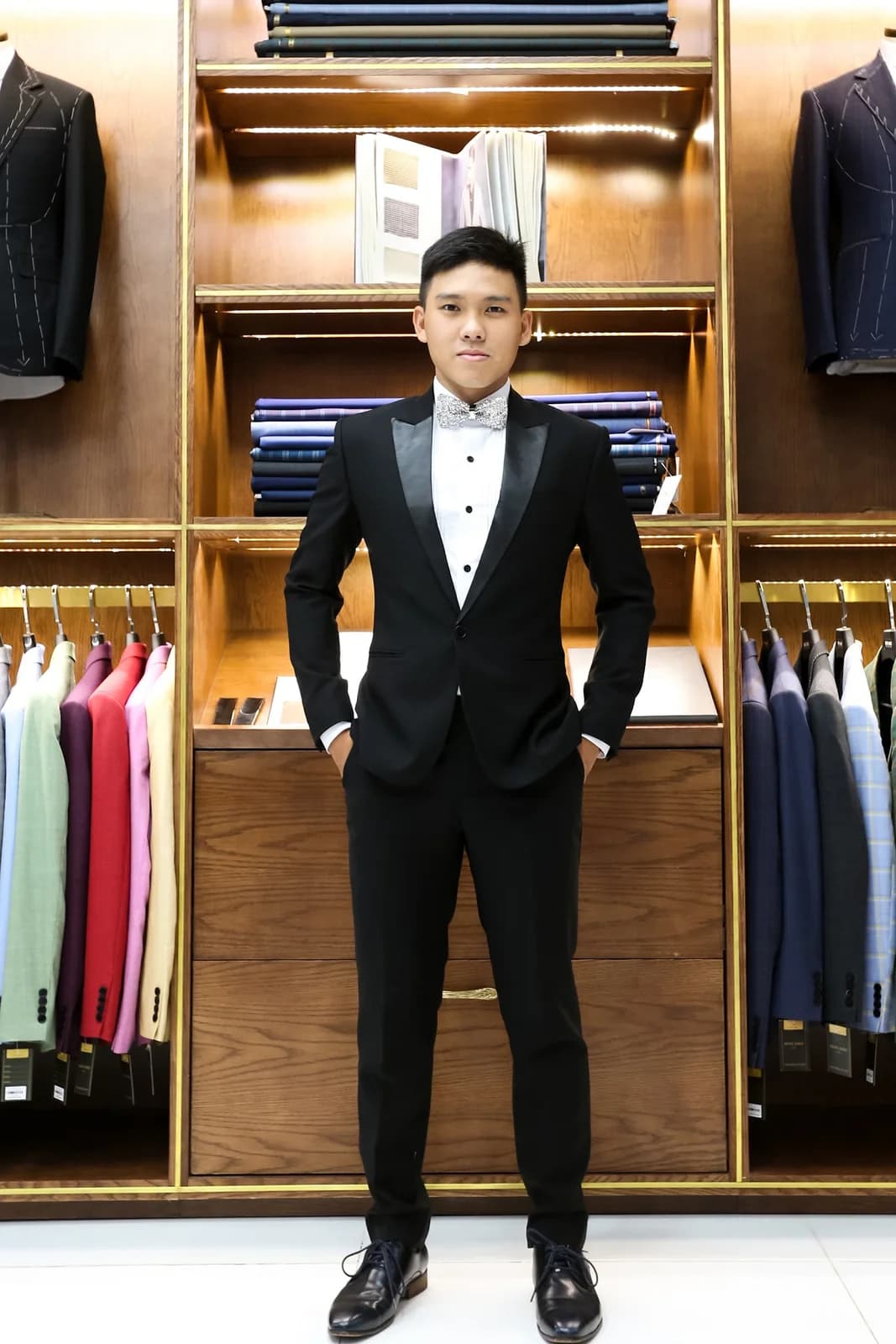
Bring the invitation to a Mon Amie showroom and try a ruffled or patterned shirt beneath the jacket to see the real proportions before you decide. The consultant will tell you plainly if the occasion does not suit it.
Published 08/11/2026 · 16:00 · Editor: Mon Amie