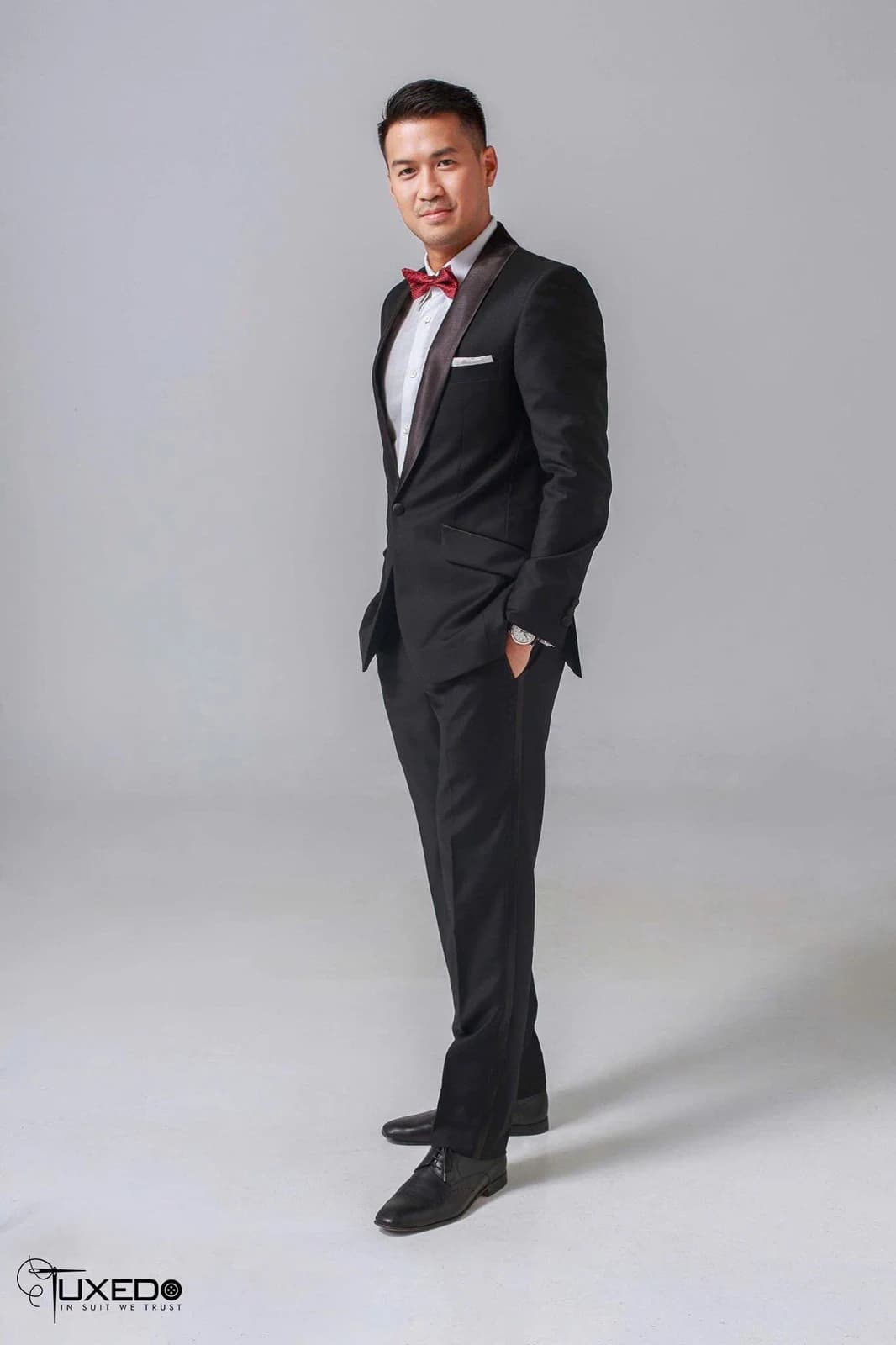
Weave types in tuxedo cloth: twill, plain, hopsack
Plain weave breathes, twill drapes and wears well, hopsack and fresco are airy. Understand weave to choose tuxedo cloth for the look, climate and use you need.
Editor: Mon Amie · Published · about 3 min read
In this article
Two cloths, both wool and both black, can still give two tuxedos with a different look and feel. That difference comes from the weave, meaning how warp and weft threads interlace. Understanding the four weaves below is enough to talk to your tailor in the same language.
Plain weave: simple and airy
Plain weave is the most basic structure, where each weft thread passes over one warp thread and under the next. The face is flat with no diagonal line, and the many crossing points make the structure fairly firm.
- Breathable. The small gaps between threads let air through.
- A flat, matt face, a good ground for satin lapels.
- More prone to creasing if the yarn is fine and the cloth light, because the threads are bent at every crossing.
Many summer cloths and lightweight eveningwear cloths use plain weave or a variation of it.
Twill: drape and durability
Twill shows fine diagonal lines on the face, made when the weft passes over two or three warp threads before going under. It is the commonest weave in suiting.
- Natural drape, since the structure is softer than plain weave.
- Durable, standing up well to wear at elbows and trouser hems.
- Better crease recovery when the cloth has enough weight.
- The fine diagonal adds slight depth to the face, visible up close.
For a tuxedo worn across many party seasons, twill is a safe and dependable choice.

Hopsack: airy and textured
Hopsack, also called basket weave, is a variation of plain weave in which two threads travel together as one. The cloth shows a clear grain and larger gaps.
- Breathable, suited to hot climates.
- Springy, so creases tend to fall out.
- A pronounced grain gives more texture and a less flat look.
- Less stifling when you sit for a long time.
In exchange, the cloth shows its structure a little more, so cutting and sewing must be precise for clean seams.
Fresco: the airiest of the wools
Fresco is an open-woven wool, typically made with high-twist yarn that is wiry, giving a rough face, a clear grain and generous gaps. It is the cloth people look for in hot weather.
- Very breathable, ideal outdoors or at parties in a warm country.
- High-twist yarn helps creases recover, so it resists wrinkling despite being open.
- A rougher face, less smooth than a twill.
Tropical-weight cloth is related, so see our piece on tropical wool.
Barathea, the traditional eveningwear weave
On tuxedos you will often meet barathea. It is a weave that gives a face with a tiny pebbled grain, matt and firm, long used for formal dress. The matt grain contrasts well with glossy satin lapels. Our guide to barathea goes into detail.
How weave changes the look
| Weave | Face | Feel | Suits |
|---|---|---|---|
| Plain | Flat, matt | Airy, neat | Hot season, ground for satin lapels |
| Twill | Fine diagonal | Drapes, durable | A suit worn often |
| Hopsack | Pronounced grain | Airy, springy | Outdoor and hot occasions |
| Fresco | Rough, clear grain | Very airy | Hot climate, lots of movement |
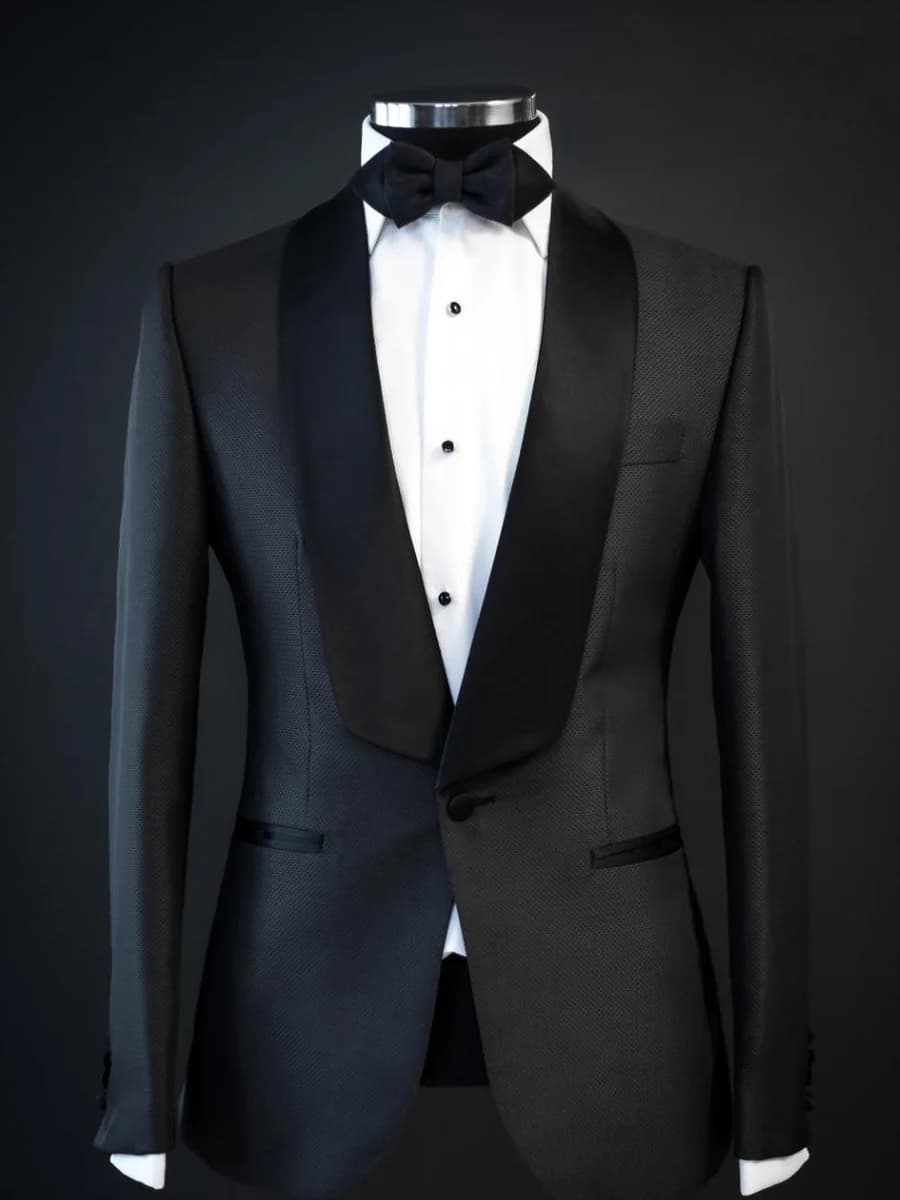
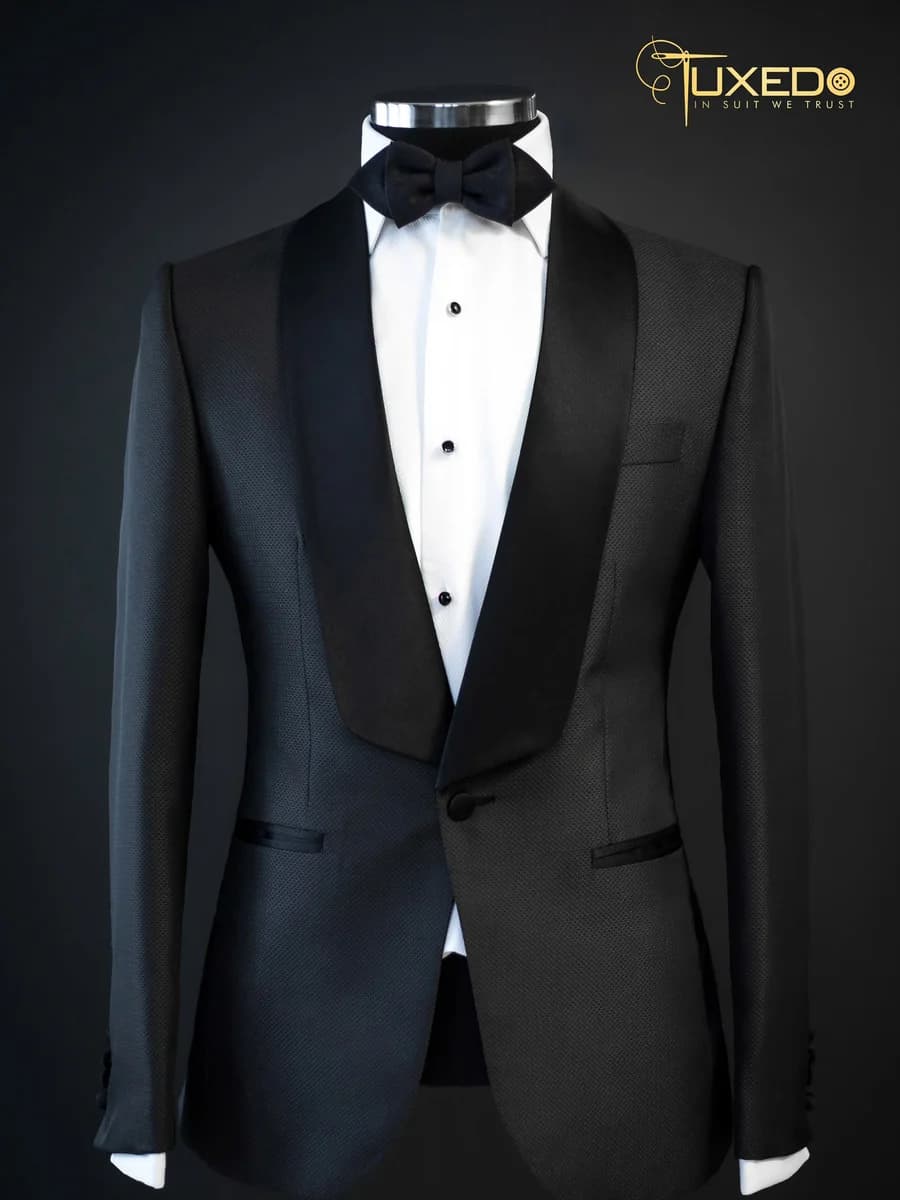
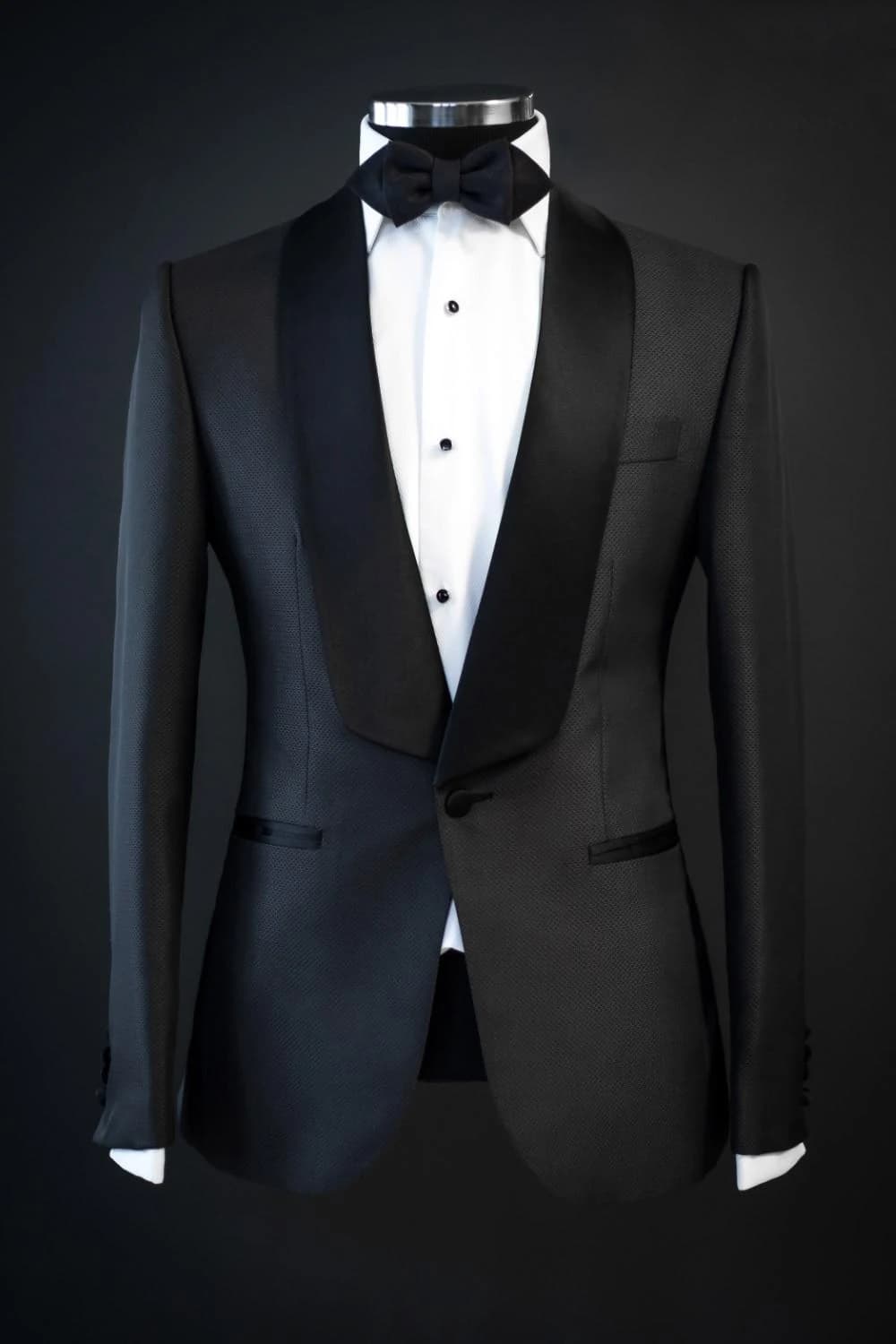
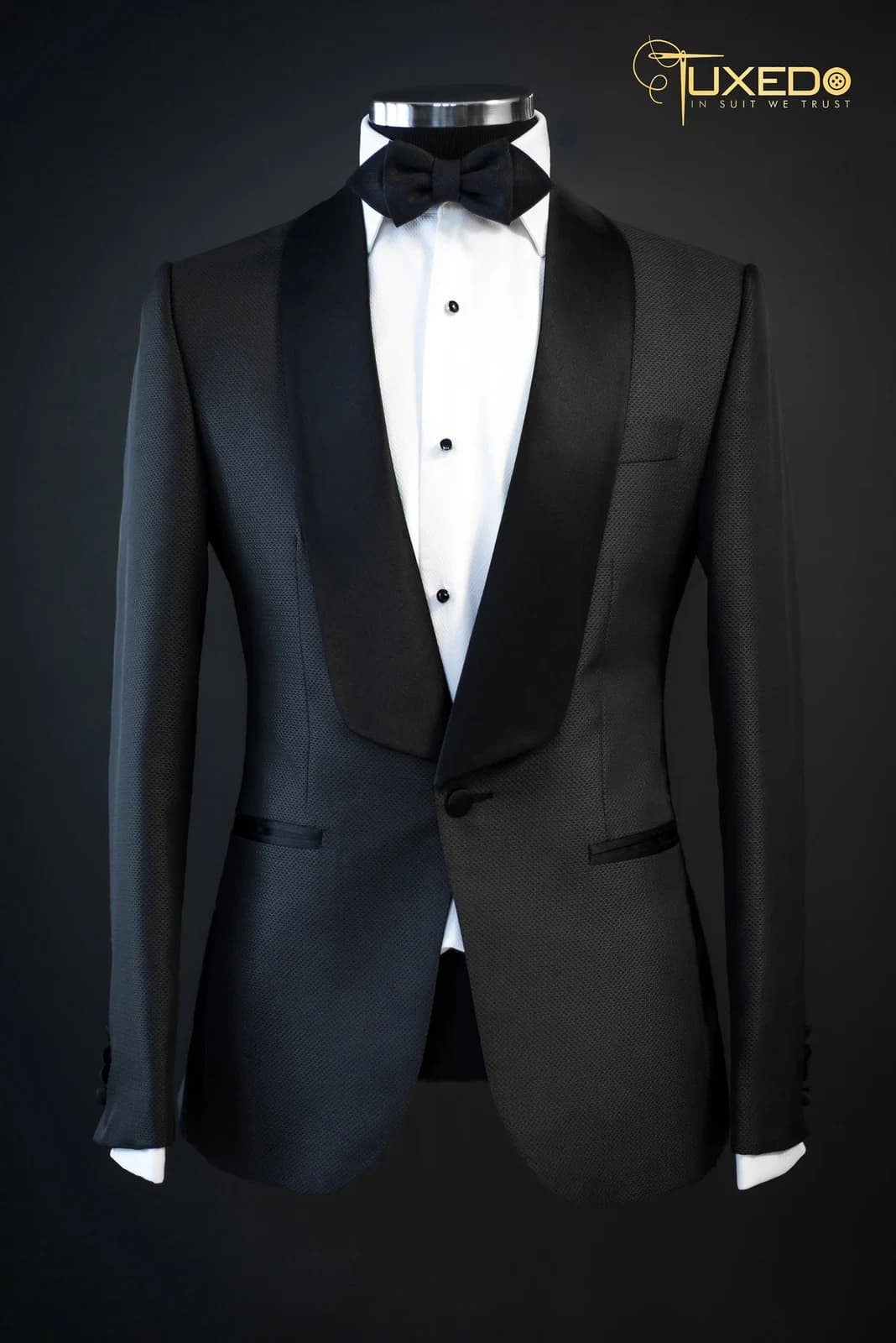
Look at the cloth from two distances. From far away, the weave almost disappears and only colour remains. Close up, especially in close photographs, the texture shows. A couple of web models illustrate this: TUX-062 pairs a body cloth in a matt, grainy weave with a glossy satin shawl lapel in one seamless strip, and TUX-001 uses black raised-weave cloth with a wide satin shawl lapel. They show the look only, and the weave for your suit is chosen separately.
A word from the Mon Amie workshop
Tell your adviser where you will wear the suit and whether you run hot or cold, and the right weave follows. Book a fitting to feel these four weaves on real cloth, side by side. One handling teaches more than ten readings.
Published 02/11/2026 · 20:30 · Editor: Mon Amie