Cloth & materials
Barathea: the classic tuxedo cloth and why it endures
Barathea is a fine, matte pebble weave that sets off satin lapels, wears well and stays low in shine. Learn its weave, usual weight and who it suits.
Mon Amie · 15/10/2026
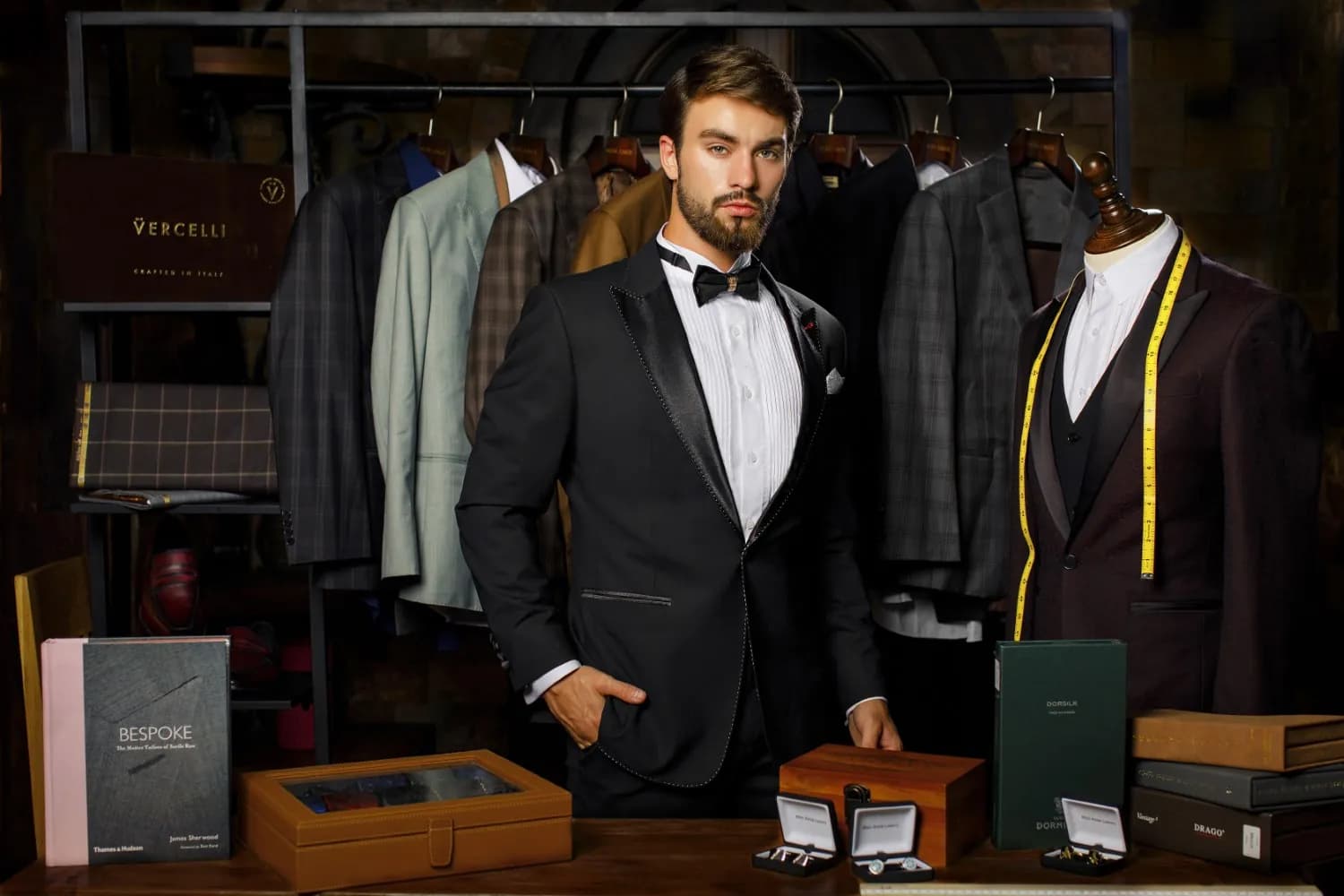
Barathea is a wool (or silk) cloth woven with a small pebbled grain and a matte face, which is exactly what a tuxedo needs beside a glossy satin lapel. Tailors have used it for evening wear for generations because it holds its shape, resists wear and keeps a deep black under party lights. That is why many people call it the standard tuxedo cloth, though it is far from the only choice.
The weave behind the grain
Barathea belongs to the textured-weave family: the yarns interlace in a variation of hopsack and rib, producing tiny raised grains across the surface. From a distance the cloth looks nearly flat. Tilt it under a lamp, or run a hand across it, and the fine grain shows.
That grain scatters light instead of bouncing it straight back. The result is a matte, dense face with more depth than a plain wool of the same colour. In black or midnight blue this matters: black reads as true black, and does not turn grey under camera flash.
The contrast with satin lapels
A good tuxedo lives on the contrast between two surfaces: a matte body and a glossy lapel. Barathea does the matte part very well, so satin or grosgrain facings stand out without needing to shine excessively.
If the body is as shiny as the lapel, the two merge and the jacket loses its outline. You can see the principle in the shawl-lapel jackets of the classic black collection, where the body cloth and the lapel facing are set against each other. Our piece on grain de poudre looks at a close cousin with an even quieter finish.
Durable, and slow to shine
Textured weaves lock the yarns more firmly into the cloth. Barathea therefore stands up to friction in the places that take it: elbows, lapel edges, chair backs. The grain also hides small marks that plain cloth tends to show.
One honest caution: any wool can pick up a sheen where it has been over-pressed or rubbed for years. Barathea resists this better than many smooth cloths, but it is not immune. Pressing through a damp cloth and hanging the jacket on a shaped hanger keeps the face matte for longer.
Typical weight
Barathea usually sits in the medium-to-heavy range, roughly 280 to 340 grams per metre depending on the mill, with lighter versions made for warm climates. Heavier cloth gives a firm shape and a crisp lapel line, but in Ho Chi Minh City it can feel warm during a long evening in a crowded room.
So if you are choosing barathea for wear in Vietnam, ask for a moderate weight. Our guide to choosing cloth weight for a tuxedo explains how to read the number and match it to the weather.
Who barathea suits
- You want a black or midnight tuxedo that is correct for black tie and will be worn for many years.
- You prefer a classic, quiet look over a cloth with sheen or pattern.
- You want a suit that asks for little care and keeps its shape through long evenings.
If you often attend outdoor or humid events and do not like heavier cloth, tropical wool will be more comfortable. Barathea is not the answer for every situation, and an honest tailor will tell you so.
Cloth advice from the Mon Amie workshop
Mon Amie's cloth library includes grain-weave wools from Italian and English mills. The right way to choose is to ask your consultant to lay a few swatches side by side under evening light, with a strip of satin beside each, so you can judge the contrast yourself. You can read about the process on our made-to-measure tuxedo page and then book a cloth fitting at a showroom.