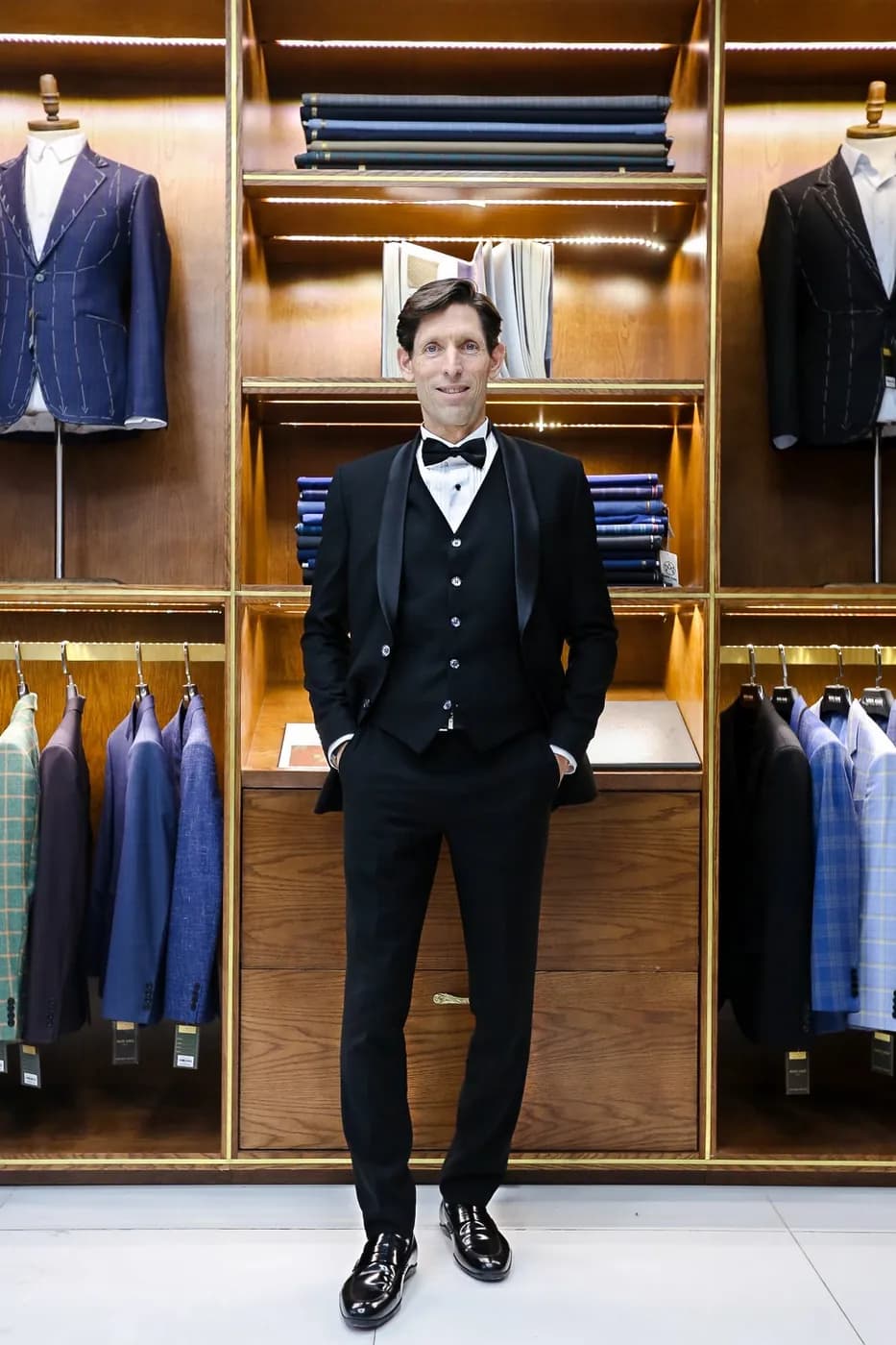
How to wear it
Button stance and waist suppression on a tuxedo
Where the single button sits and how the waist is shaped decide a tuxedo's V line. How to spot the X-shaped pull of a tight jacket and adjust for your build.
Mon Amie · 19/10/2026
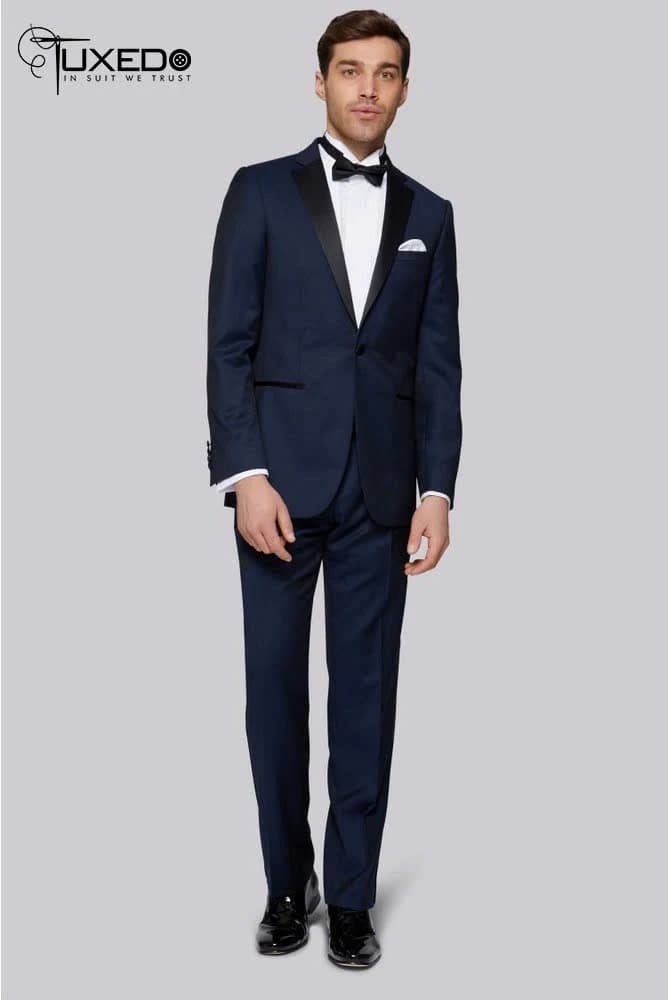
On a single-button tuxedo, the button belongs at your natural waist, a little above the navel. From that point the tailor draws the body of the jacket in at the waist and lets it open out toward the hem, and that line is what gives you the V-shaped silhouette every man hopes for under evening lights. Put the button in the wrong place or suppress the waist by the wrong amount and the whole suit sits off, however good the cloth and stitching are.
Why the button should sit just above the navel
The closing button is where the eye stops first. Set at a modest height, level with the natural waist, it divides the body into a neat upper half and a longer-looking leg. A tuxedo lapel rolls straight down to this point, so the lapel line stretches your height further.
If the button drops to belly or trouser-waist level, the effect reverses. The jacket looks long, the legs look short, and the fronts tend to flare over the stomach. A button set too high is no better: the chest feels bound, the lapels are dragged upward and the jacket loses its natural fall.
A quick self-check: stand straight, arms relaxed, and fasten the button. It should sit about a finger-width or slightly more above the navel, depending on your torso length. This is a rough test and does not replace a tailor's measurements.
Waist suppression and the V shape
Suppression is the shaping that takes cloth in at the middle of the jacket. On a tuxedo it works together with a straight shoulder and a wide peak or shawl lapel to form an inverted triangle: broad shoulders, a clean waist and a hem that flares slightly. TUX-011 shows it well. It is cut with a single button, fits closely across the chest and tapers at the sides, so the space between chest and waist reads as balanced.
The amount matters:
- Too little: the jacket hangs like a box and makes you look broader than you are.
- Too much: the waist is pinched, the skirt flares like a short dress, the seams drag creases sideways and the button is under constant strain.
- Just right: enough shaping to show a line, with room to move your arms, sit down and embrace a guest without strain.
The X-shaped pull tells you the jacket is tight
Fasten the button and look in the mirror. If creases fan out from the button in diagonal lines forming an X, the cloth is being pulled tight around it. Either the jacket is too tight at the waist or stomach, or the button sits too low relative to the fullest part of your torso.
Other signs often appear with it: the collar gapes, the lapels lift away instead of lying flat, and the hip pockets open like a smile. Do not hold your breath and hope the cloth will give with wear. Tuxedo cloth is usually woven dense with little stretch, so a tight jacket stays tight. More signs are covered in our piece on how to tell a tuxedo is too tight.
By contrast, shallow, even creases running vertically from shoulder to waist show a jacket that fits closely yet comfortably. That is how a jacket looks when it is ready to be buttoned.
Adjusting for your build
The same jacket pattern needs different handling on different bodies. Some guidance from the workroom:
- Slim, narrow frame: moderate suppression, not too much, or the jacket turns paper-thin. A wide lapel adds breadth across the shoulders, as on TUX-071.
- A fuller stomach: lower the button slightly so the fronts cover the stomach, and reduce the suppression so the body of the jacket falls straight and avoids the X pull. Choose a denser cloth with good drape over a thin, light one.
- Broad shoulders, narrow waist: more suppression is possible and still looks smooth; keep the shoulder line clean and straight.
- Tall with long legs: the button can go a touch lower to rebalance the upper body.
- Athletic build, big chest and arms: the tailor first leaves room in the chest and upper arm, then decides how much to take in at the waist. See tuxedos for a muscular build.
Ready-made tuxedos come in a few sizes, so the waist rarely fits at once. Made-to-measure lets the tailor draft the pattern to your numbers, try a baste on you and move the button stance and the suppression right on your body.
Book a fitting at Mon Amie
Button stance and waist shaping can only be set properly in a real fitting. In our showrooms the tailor measures you, fastens the jacket and adjusts it on the spot to find the position that suits your build. You can read how it works under made-to-measure tuxedos and book at the Mon Amie showroom.