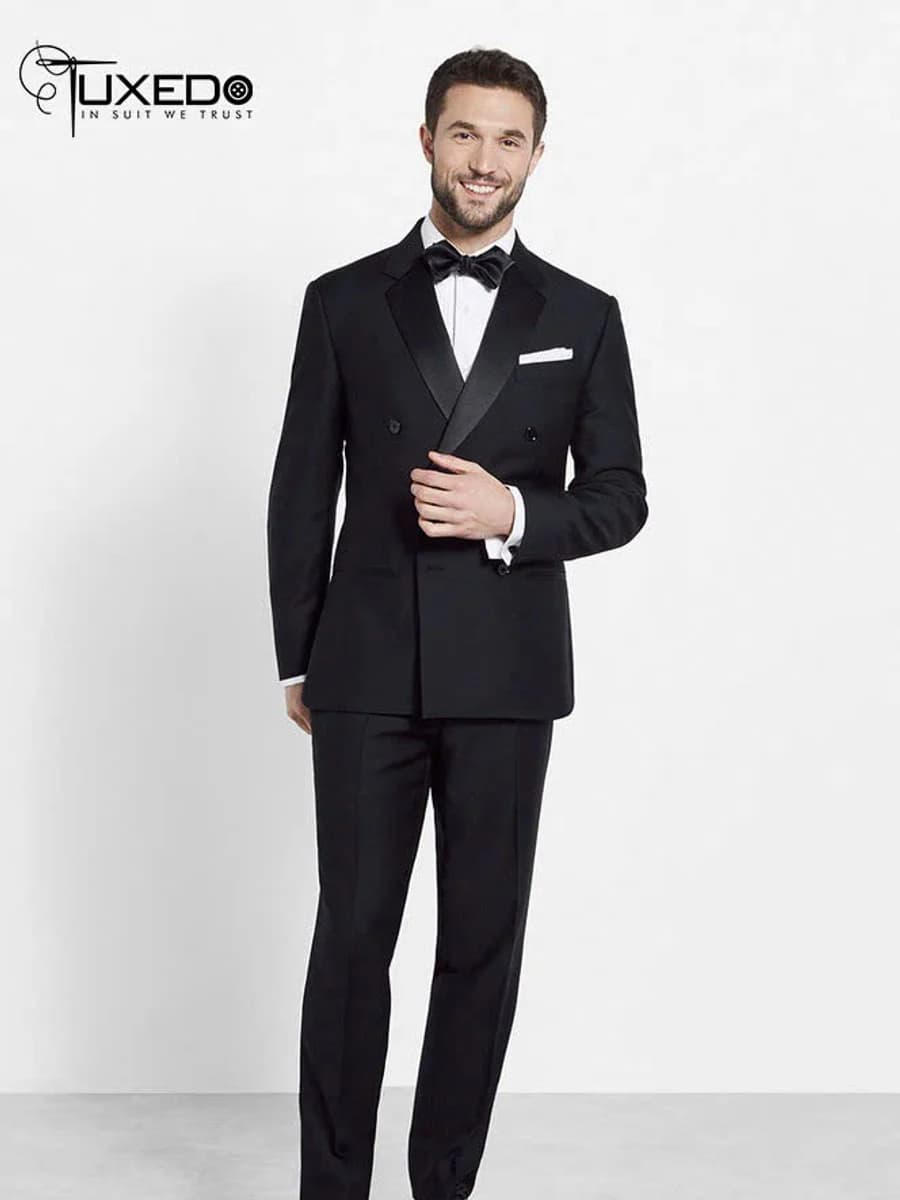
Can a black suit become a tuxedo
Satin lapel facing and a trouser braid bring a black suit nearer a tuxedo, but pocket flaps, vents and cloth cannot change. When to alter, when to make new.
Editor: Mon Amie · Published · about 4 min read

In this article
Partly. A tailor can face the lapels in satin and add a satin braid to the trousers, which makes a black suit look closer to a tuxedo. But the pocket flaps, vents, cloth and construction cannot be changed, so the result is a black suit with an evening character rather than a true tuxedo.
What a tailor can do
- Re-face the lapels in satin: the outer cloth of the lapel is removed and replaced with satin or grosgrain, then sewn back. It takes skill, because the lapel must keep its original roll.
- Add a braid down the trouser leg: set along the side seam from waistband to hem, in the same material as the lapel.
- Change the buttons for covered ones: buttons covered in satin or body cloth, replacing horn or glossy plastic.
- Remove belt loops and add brace buttons or side adjusters: loops can be taken off, though marks may remain on the waistband if the cloth has been pressed.
- Edge the breast pocket in satin (if it is already a welt pocket): a small detail that brings the jacket nearer to evening dress.
What cannot be changed
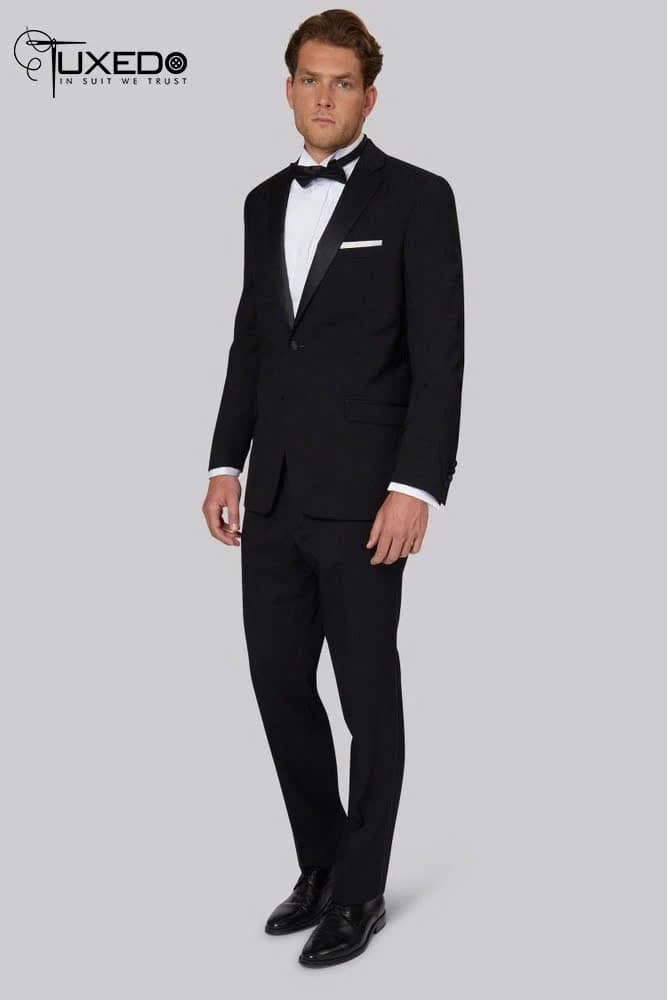
- Flap pockets: suits often have flaps on the hip pockets. A proper tuxedo has jetted pockets without flaps. The tailor can tuck the flaps inside, but that is only a stopgap; the flaps remain in the construction and may peek out when you move. A true jetted pocket means cutting the body of the jacket and rebuilding it.
- Vents: many suits have a centre vent or side vents. A traditional tuxedo has none. Sewing a vent closed after it has been pressed into shape tends to leave a crease at the seat.
- Cloth: a classic tuxedo uses a matt, smooth, deep black cloth (wool or a mohair blend). Many black suits are woven with a texture, a faint stripe or a slight sheen. Under evening lights these show, and a glossy cloth beside satin lapels competes for the light.
- The actual black: some "black" suits lean grey or blue. Next to a deep black braid, the difference is plain.
- Lapel shape: a notch lapel can be faced in satin, but it departs from tradition and reads as an adapted tuxedo rather than the standard.
When it is worth doing
An alteration makes sense when:
- The suit cloth is truly plain, matt and dark.
- You need evening dress for a limited occasion that is not strictly black tie.
- The suit already fits well, with shoulders and chest correct, so nothing else needs work.
- The dress code is "black tie optional" or a smart but flexible evening.
The cost covers unpicking the lapels, satin cloth, labour and braid. Ask for a firm quote first, since for many suits the total comes close to making a basic new one.
When to have one made
- The invitation says Black Tie, or you are a groom, host or performer who must stand up to the camera.
- The cloth is textured or glossy.
- The suit has flap pockets and vents but you want the correct pattern.
- You expect to wear it on many occasions, so a dedicated tuxedo will work harder.
You can compare in detail in how a tuxedo differs from a suit. If you only need it once, hire is also tidy. See also altering an existing tuxedo to fit.
Styling a black suit closest to black tie
If you keep the suit, these choices bring it closer:
- A plain white shirt, with a neat turndown collar or a wing collar for more formality; a finely pleated front if you have one.
- A black silk bow tie, self-tied, in place of a necktie.
- No belt: use braces or trousers that fit the waist, and keep the jacket buttoned through the evening.
- Black patent shoes, plain oxfords or opera pumps, with thin black over-the-calf socks.
- A white pocket square folded flat, with no pattern.
- Nothing in the breast pocket but the square, and no sports watch.
That is still not a tuxedo, but it keeps you in step at a formal dinner.

Advice from the Mon Amie workshop
The quickest way to learn how far your suit can go is to bring it to a tailor. The consultant will check the cloth, lapels and pockets and say plainly whether to alter or to make new. Book on the appointment page, or read about our made-to-measure tuxedo service first.
Published 05/11/2026 · 08:30 · Editor: Mon Amie