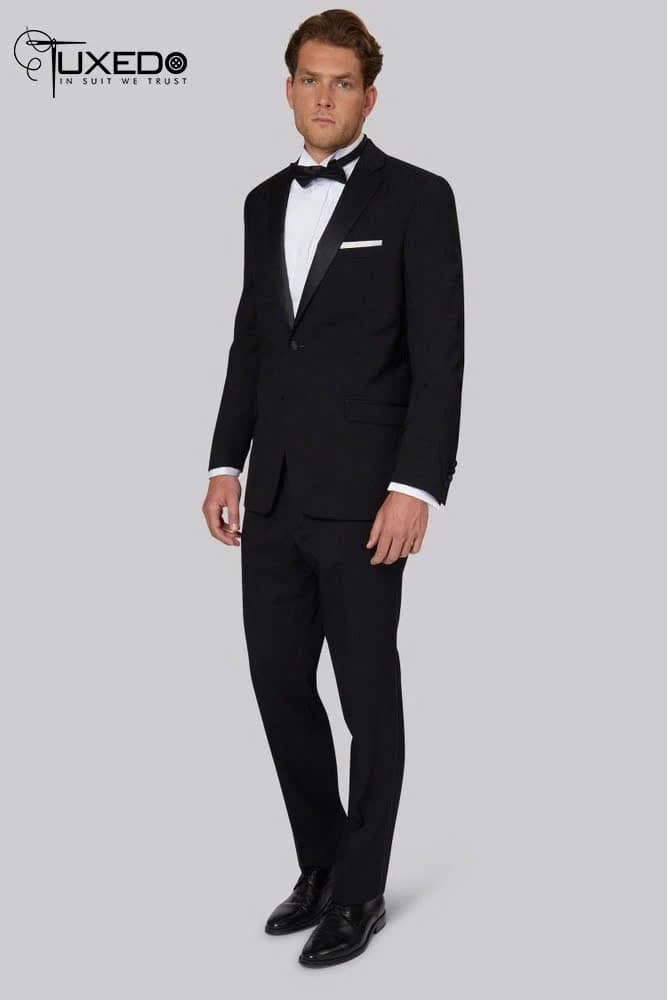
Why the Tuxedo Is Usually Black
Why is the tuxedo usually black? From nineteenth-century evening restraint to how black sets off a white shirt and your face, plus accepted alternatives.
Editor: Mon Amie · Published · about 3 min read
In this article
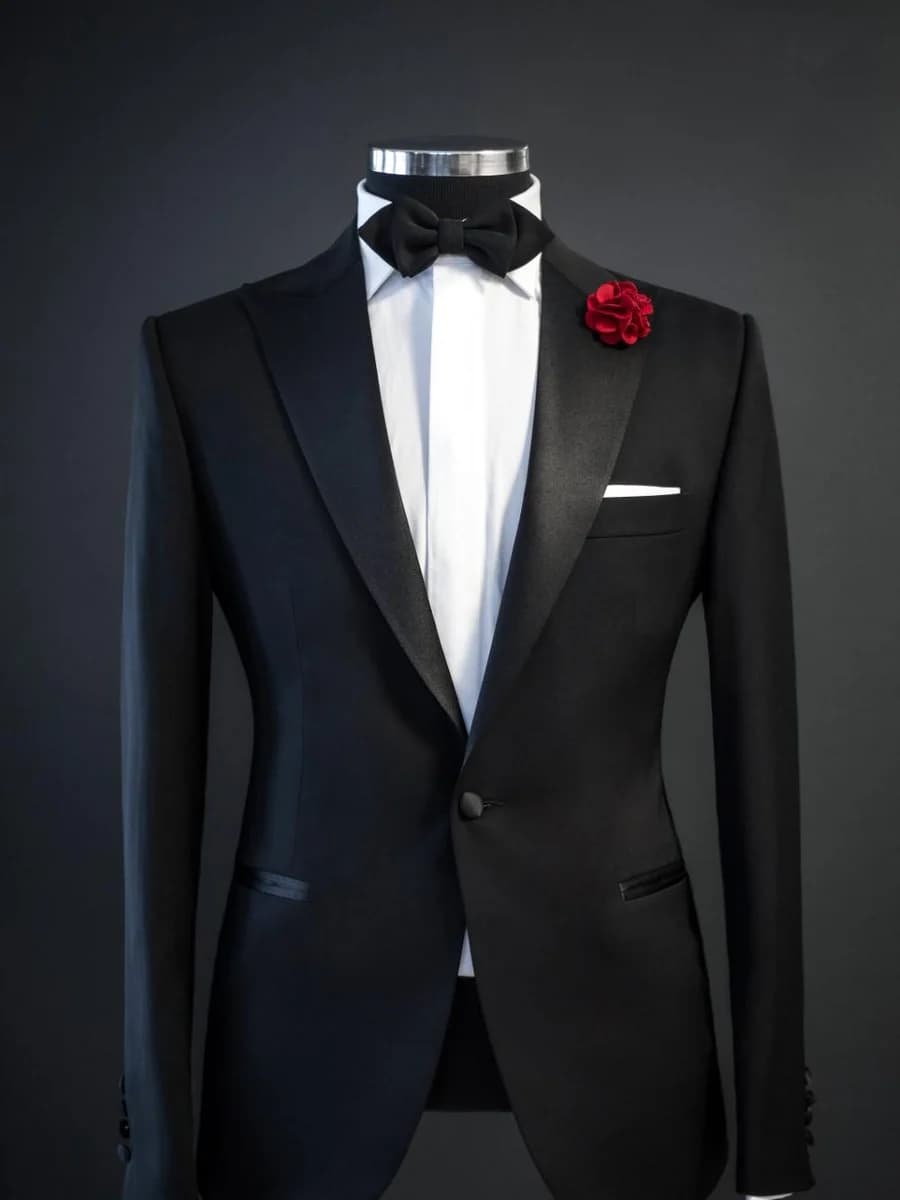
The tuxedo is usually black for three reasons that stack up: black was already the colour of men's evening dress by the nineteenth century, it gives a clean contrast with the white shirt and the face, and it later became the default that is easy to buy and easy to style. No single decision forced the choice; it is the result of habit repeated across generations.
The restraint of nineteenth-century evening dress
In the early nineteenth century, men's clothing moved away from the coloured silks, lace and embroidery of the court towards dark, plain tones. Beau Brummell, the arbiter of taste in British society at the time, is commonly cited as a champion of the quiet, well-fitted, dark look. By mid-century the black tailcoat had become standard evening dress for gentlemen.
When the dinner jacket appeared around the 1860s as a more relaxed alternative to the tailcoat, it inherited the same palette. A common explanation is that the men were the backdrop, and the women were meant to shine in colourful gowns. Dark suits on the men made the whole room look harmonious. The origin of the dinner jacket is covered in the origins of the tuxedo.
Black sets off the white shirt and the face
Visually, black has clear advantages:
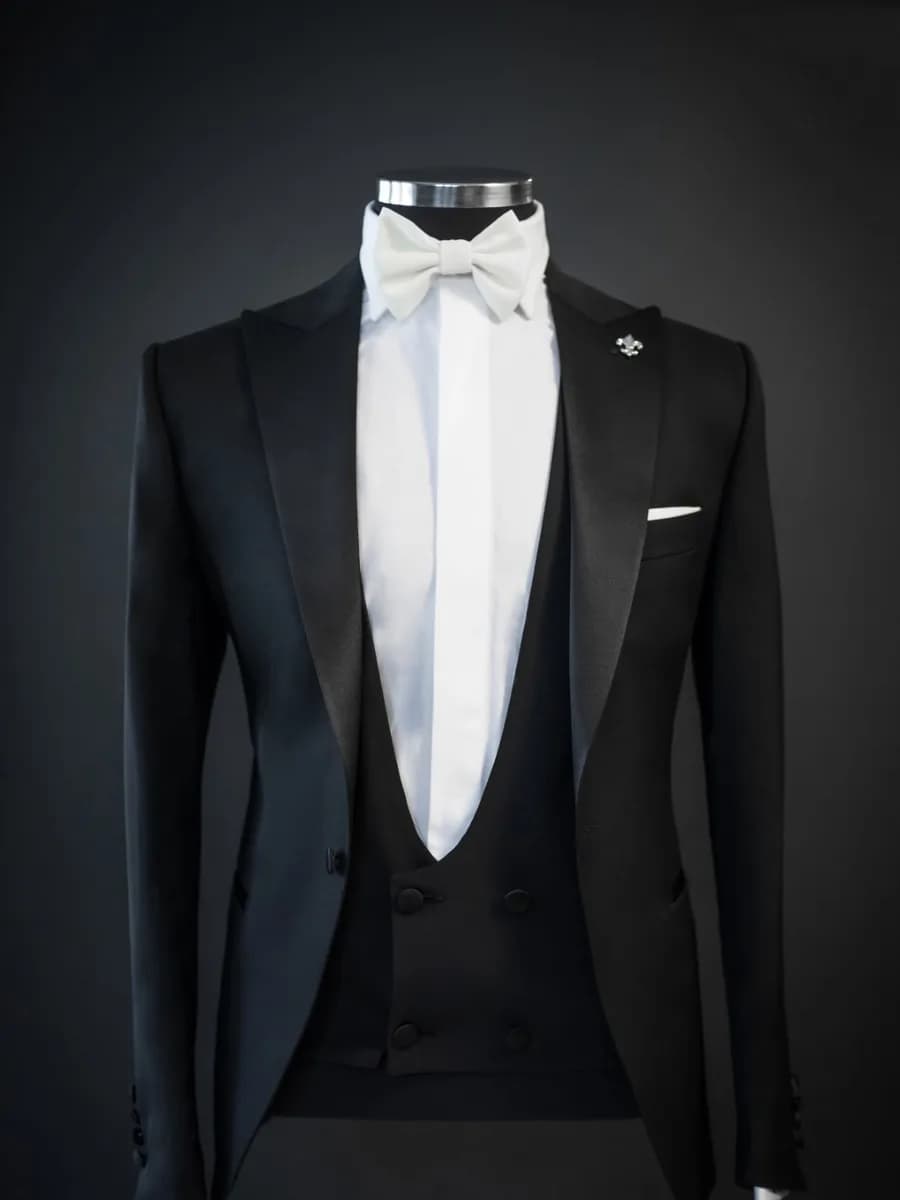
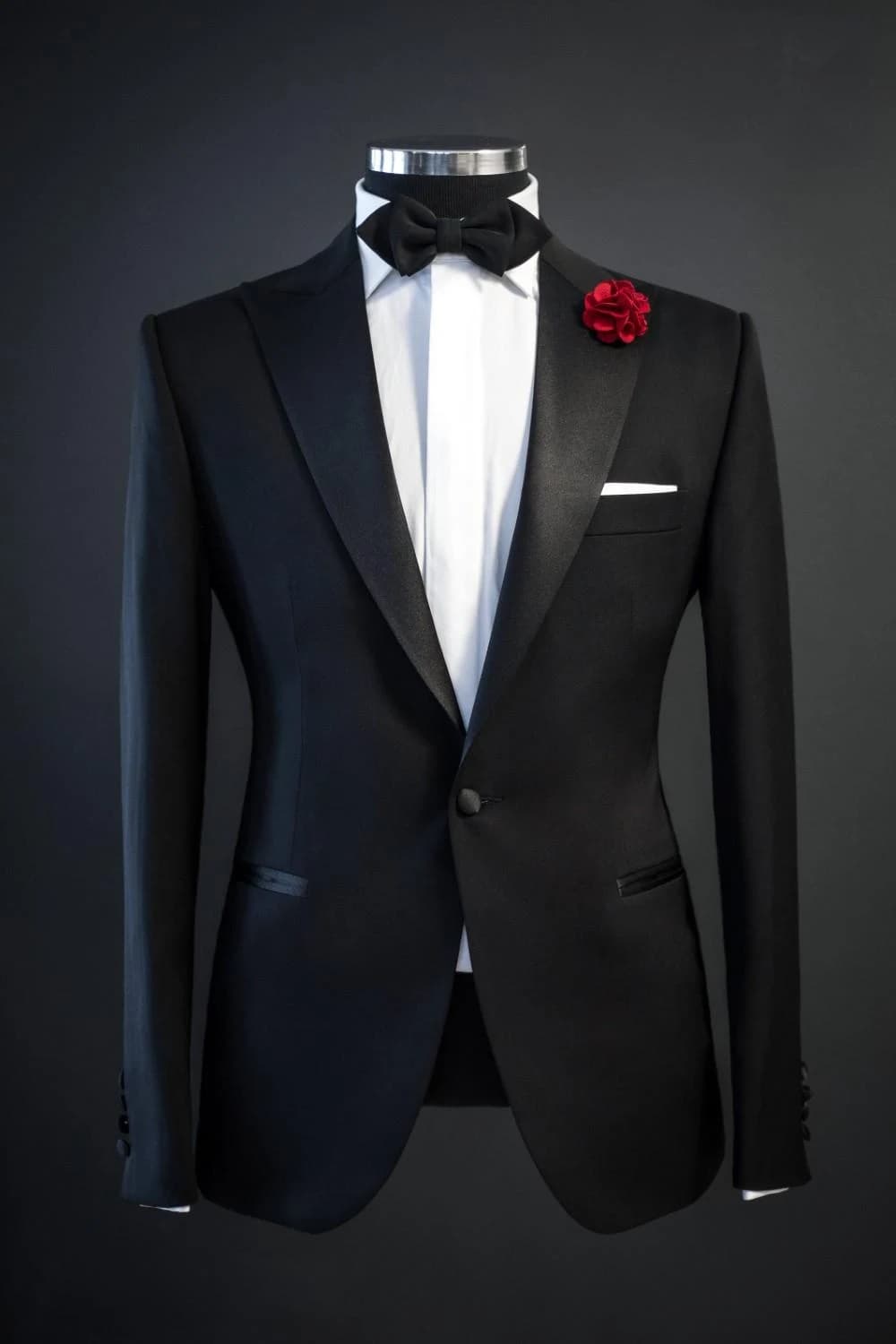
- The white shirt: a black ground makes the white shirt front, bow tie and studs stand out cleanly. That black-and-white contrast is the signature of black tie.
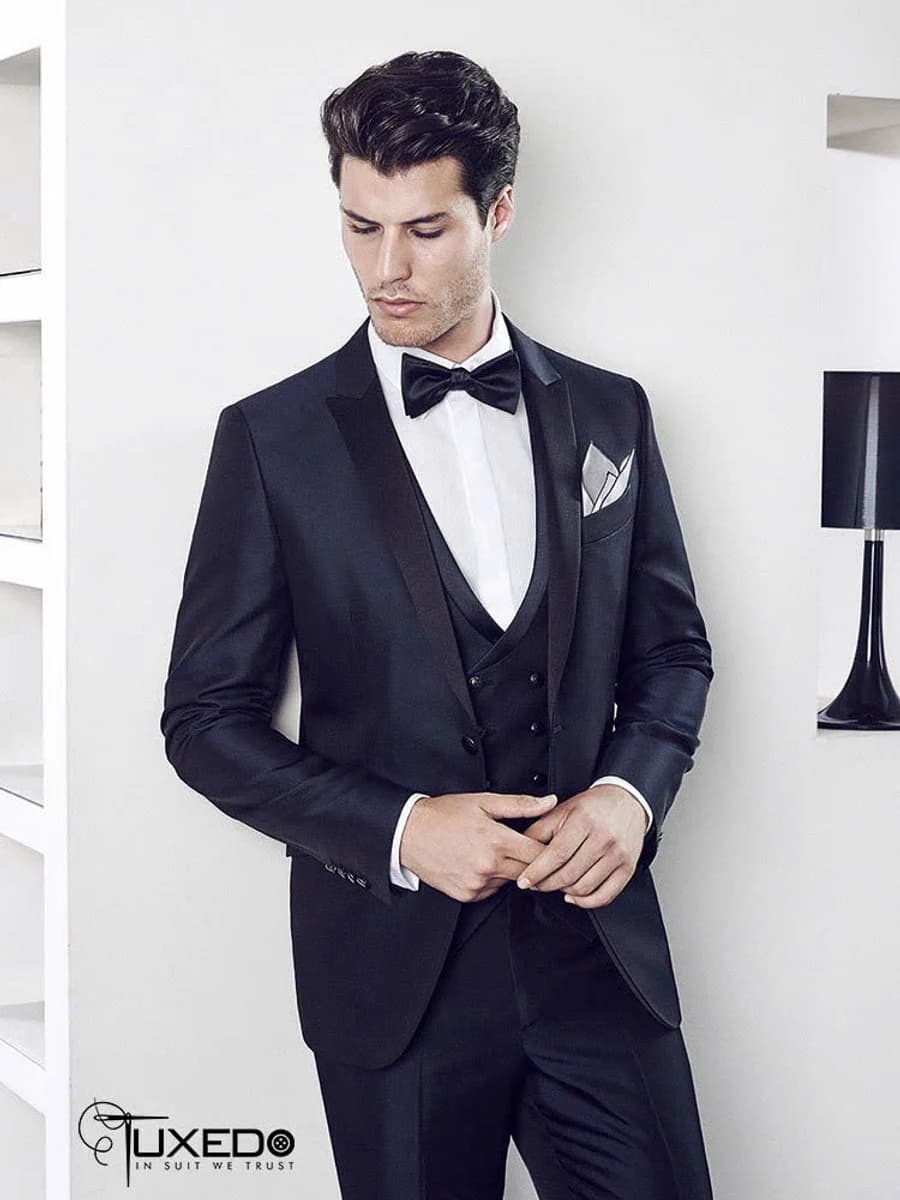
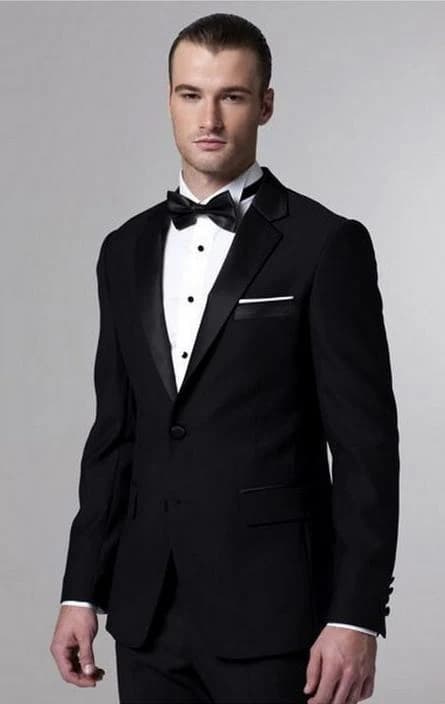
- The face: the pale areas draw the eye up to the collar and face, so in photographs under lights a man in a black tuxedo looks composed, with a clear focal point.
- Satin sheen: satin or grosgrain lapels on black wool give a quiet gloss that shows only as the light moves.
- Silhouette: dark colours draw the shape in, which is convenient for every build.
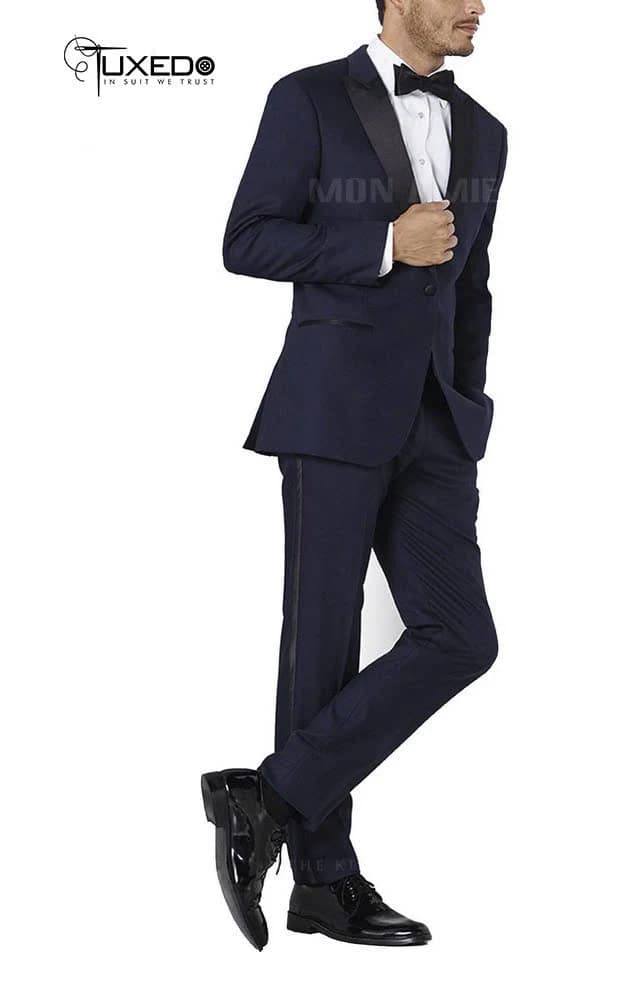
Under warm electric light, though, black cloth can sometimes look flat or slightly grey. That is why some tailors and discerning wearers prefer midnight blue, as in the comparison black or midnight blue tuxedo.
Black became the default: easy to buy, easy to style
Beyond history there is a practical side.
- Easy to style: black bow tie, black cummerbund, black patent shoes, black socks: every accessory comes ready in black, so there is no colour matching to worry about.
- Easy to wear again: a black suit suits many occasions, and leaves little memory of having been worn at the last event.
- Easy to make and to hire: tailors and hire shops stock more black sizes than any other, so the buyer faces fewer choices.
- Easy to avoid mistakes: black is almost impossible to wear "too loudly", which reassures anyone wearing formal dress for the first time.
You can browse the whole family in the Classic Black collection, for example the Classic Black Peak-Lapel Tuxedo (TUX-060).
Accepted alternatives
Black is not the only correct colour. These are the choices usually accepted:
| Colour | Suited to | Note |
|---|---|---|
| Midnight blue | Black tie evenings | The second original colour, nearly equal to black |
| Ivory (dinner jacket) | Warm-season, outdoor, resort parties | Worn with black trousers and bow tie |
| Burgundy, forest green, velvet | Creative black tie, private parties | Usually keep black lapels for balance |
| Grey, patterns | Looser events | Less orthodox, for occasions that say so |
This table is a summary, not a replacement for reading the invitation. Colours by occasion are listed in the tuxedo colour guide by occasion.
A note from the Mon Amie workroom
If this is your first tuxedo, black remains the safe starting point. Once you own one, you can add midnight blue or a coloured model for looser occasions. At a Mon Amie showroom a consultant will lay different black cloths side by side, because black itself varies: deep, brownish, greyish. Making time is confirmed at measuring, so book early. Book a consultation at a showroom.
Published 01/11/2026 · 07:00 · Editor: Mon Amie