Comparisons
Notch lapels on a tuxedo: acceptable or not
A notch lapel belongs to the suit, so on a tuxedo it reads as less formal. When it passes, the TUX-124 satin-faced notch, and advice for a single tuxedo.
Mon Amie · 25/10/2026
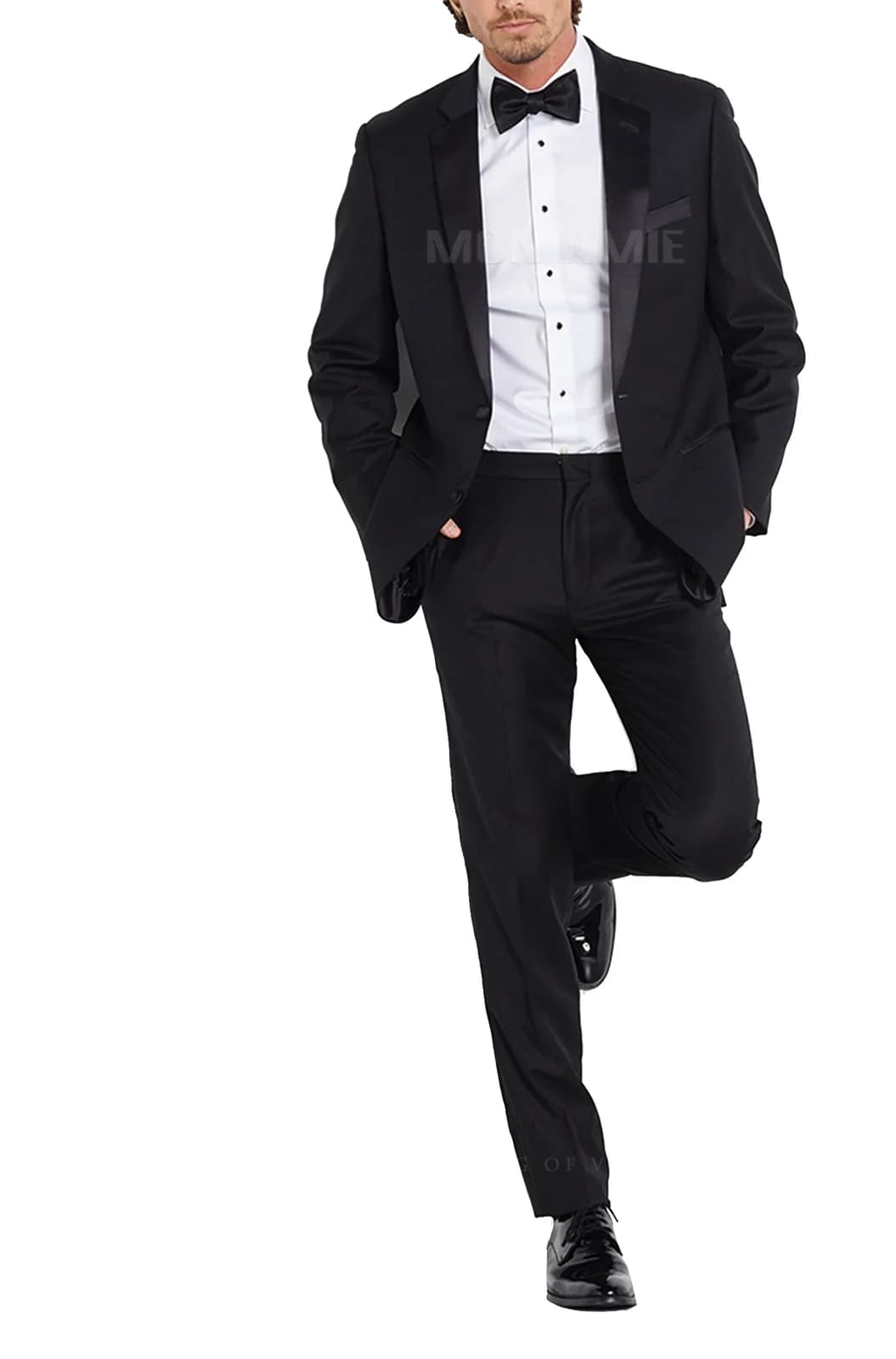
By classic black tie convention, the notch lapel is not a tuxedo lapel. It belongs to the business suit, and so it is considered less formal than the peak or the shawl. Even so, a satin-faced notch lapel is accepted at many relaxed events, especially for younger men or anyone wearing a tuxedo for the first time.
Why the notch lapel reads as less formal
The tuxedo inherits its shape from the nineteenth-century smoking jacket and dinner jacket, which used the shawl collar. The peak lapel came later, borrowed from the tailcoat. The notch, with its stepped cut between lapel and collar, appeared on daytime jackets and became the standard lapel of the business suit.
For that reason many traditional tailors say a notch lapel on a tuxedo is borrowed from the suit. A few strict traditionalists will not call a notch-lapelled jacket a true tuxedo at all. Our guide to choosing a tuxedo lapel compares the three shapes, and the history of the three tuxedo lapels explains where each came from.
When a notch lapel is still acceptable
Not every event demands the standard of strict white or black tie. A satin-faced notch lapel makes sense when:
- The invitation says black tie optional, or "dress to impress", rather than strict black tie.
- You are attending a wedding, a company party or a year-end dinner that is not highly ceremonial.
- You are young and wearing a tuxedo for the first time, and want a familiar shape that draws little attention.
- You want something to cover both evening dress and moderately formal occasions.
What matters is that the lapel is faced in satin or grosgrain, with covered buttons, jetted pockets and braided trousers. If a notch lapel stays in the body cloth, it is just a black suit, not a tuxedo.
A real example: TUX-124
TUX-124 is a black two-button jacket with satin-faced notch lapels, a black-button shirt and a black bow tie. The satin facing gives the outfit a line of light at the chest, while the familiar notch shape keeps the wearer from feeling out of place in a formal setting. It suits weddings, dinners and evening events.
It is the "safe" kind of outfit: not showy, not demanding any special build, and easy to accessorise.
If this will be your only tuxedo
If you are making a single tuxedo to wear for years, tailors usually suggest a peak or shawl lapel of moderate width, since these two shapes age gracefully and cannot be faulted under any dress code. A notch lapel can still be the right call if:
- Most of your occasions are weddings and company parties, and you rarely meet strict black tie.
- You want to be able to wear it as a smart black suit when you drop the bow tie for a necktie.
- Your build suits a notch lapel: balanced shoulders, a moderate chest, no need for a wider lapel.
If your priority is long-term correctness, the peak or shawl remains the safer answer. If your priority is ease and flexibility, a satin-faced notch lapel is perfectly usable.
A few points when making a notch-lapel tuxedo
- Choose a moderate lapel width, slightly narrower than on an ordinary suit, so the jacket leans towards evening dress.
- Use satin in the same tone as the bow tie, and avoid mixing too many materials.
- Keep the accessories correct: bow tie, dress shirt, patent shoes. Correct accessories make up for a lapel that is less ceremonial.
How Mon Amie can help
If you remain undecided between the notch and the other two lapels, try them on: the same body with a different lapel can change your whole outline. You can book a fitting at the showroom to compare them.