Velvet, satin or self-faced lapels: how they differ
Satin is the black tie standard, velvet is warmer and richer, self-faced lapels are minimal but low in contrast. Compare fabric, wedding photos and real models.
Editor: Mon Amie · Published · about 3 min read
In this article
The three lapels differ first in how they handle light. Satin reflects it, velvet swallows it, and a lapel cut from the same cloth as the jacket creates almost no contrast at all. Formality, warmth and minimalism all follow from that.
Satin: the black tie standard
A lapel faced in satin (or grosgrain, the ribbed silk) has defined the tuxedo since the late nineteenth century. The glossy facing against a matte wool body draws a bright line from collar to button, which is why you can recognise a tuxedo from across a room.
If the invitation says Black Tie and you are unsure what to wear, satin facing on black or midnight blue is the choice that is never wrong. For more on the facing fabrics themselves, read our piece on satin and grosgrain lapels.
Velvet: warm, deep and rich
Velvet has a short upright pile, so it does not reflect light, it absorbs it. Beside a matte black jacket body, a black velvet lapel gives real depth: darker, softer and warmer than satin. It even feels different in the hand, closer to fine felt than to silk.
The velvet lapel descends from the smoking jacket, the garment Victorian gentlemen wore at home and in the smoking room. That heritage gives it an intimate air: rich without display. It suits indoor evenings, cold-season galas and private dinners better than a strictly ceremonial event. In terms of rules, velvet is a valid variation on the tuxedo but less orthodox than satin.
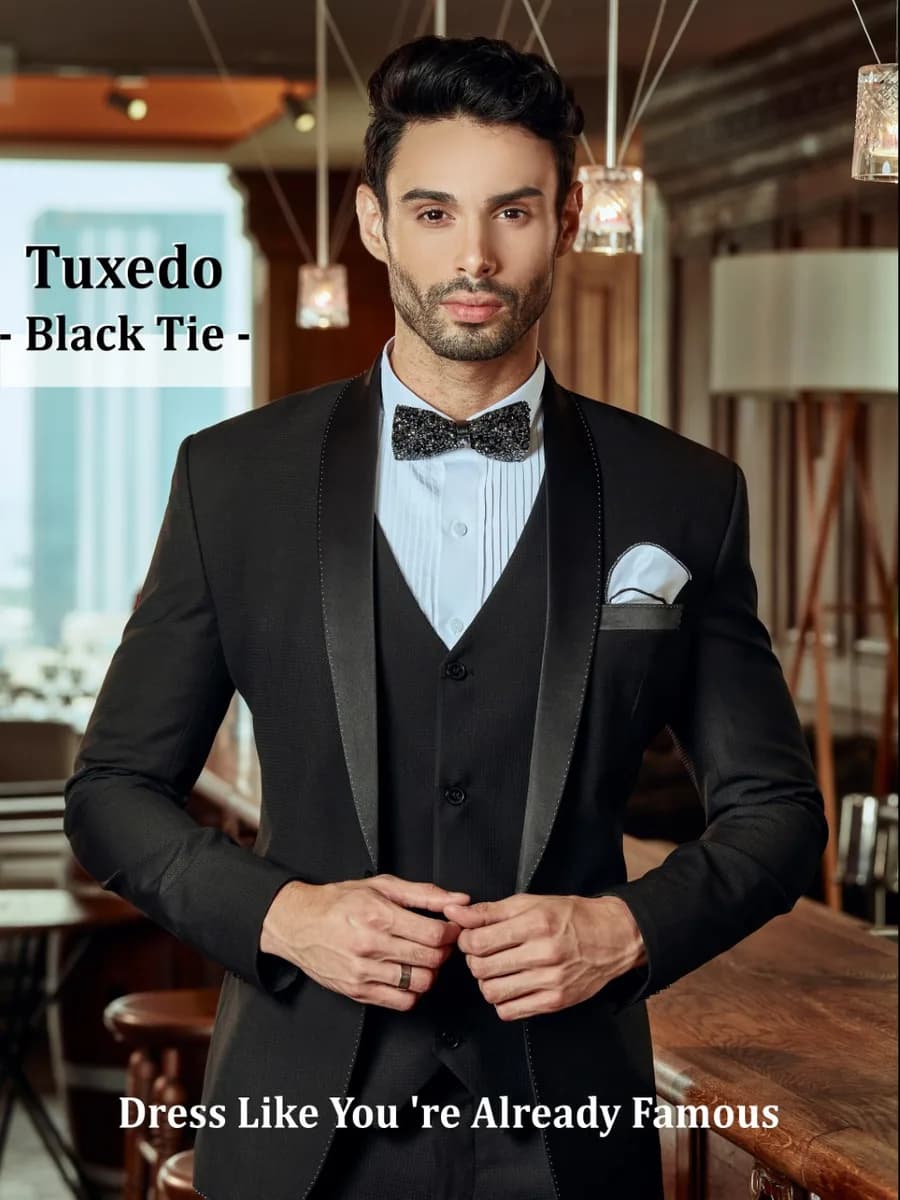
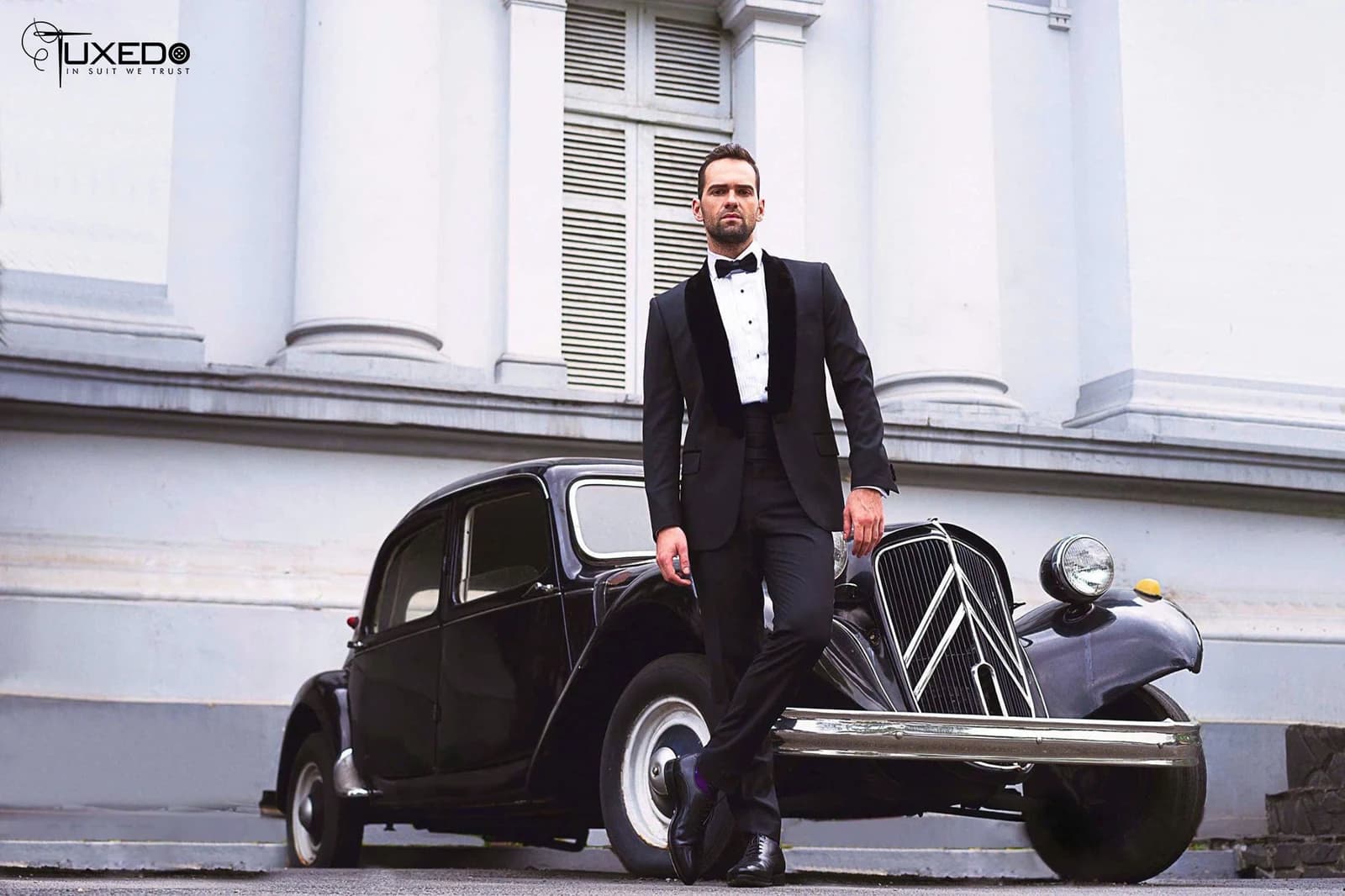
TUX-006 shows it clearly: a black tuxedo with a velvet shawl lapel, worn with a pleated shirt and a black cummerbund. The whole suit is one shade of black, yet two surfaces, so the lapel reads through texture instead of shine.
Self-faced: minimal and low in contrast
A self-faced lapel is cut from the same cloth as the jacket, with no extra facing. The result is continuous and quiet, closer to a very well-made suit than to classic eveningwear.
The gain is discretion and easy re-wear outside formal events. The loss is the contrast line: the lapel stops being the focal point, and the jacket loses a hallmark of the tuxedo. It works well in a colour with character, such as sapphire or burgundy, where the cloth is already doing the talking.
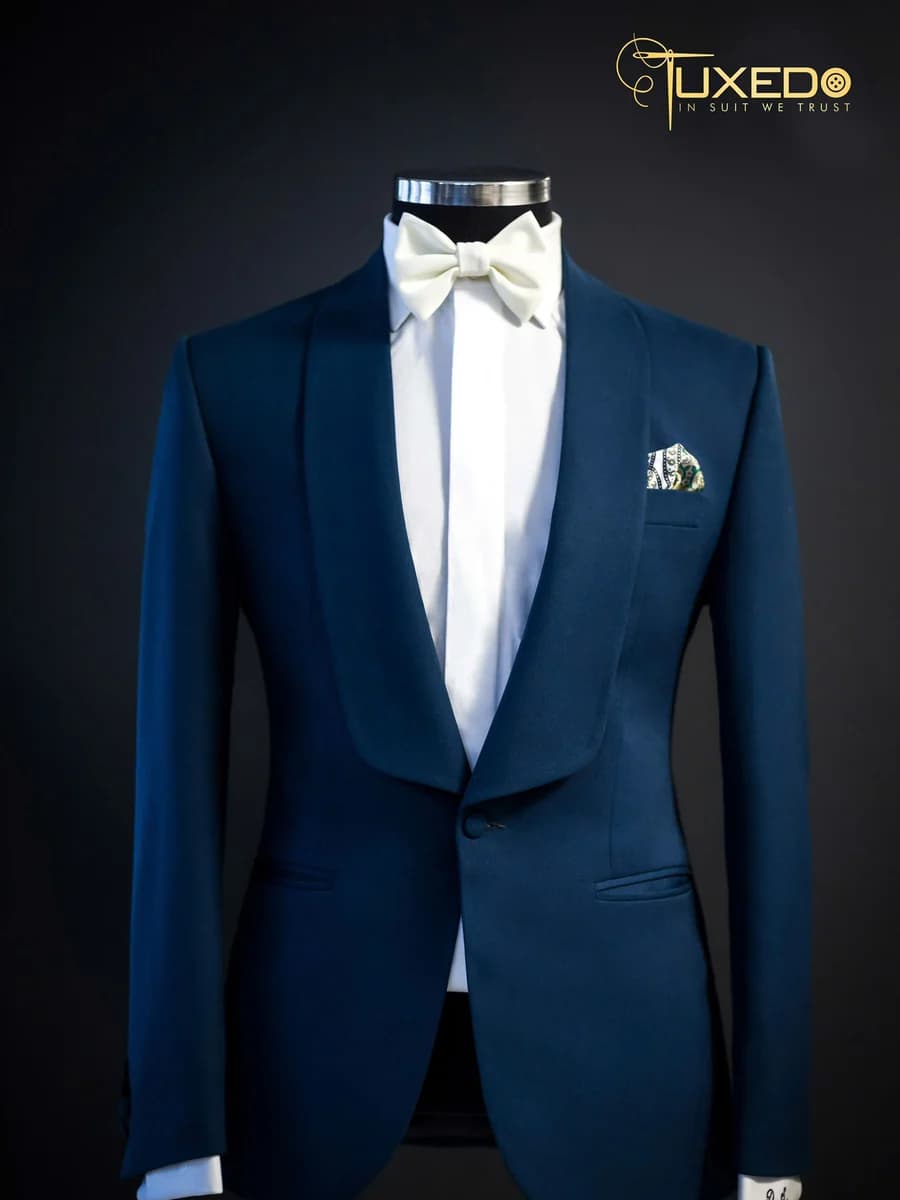
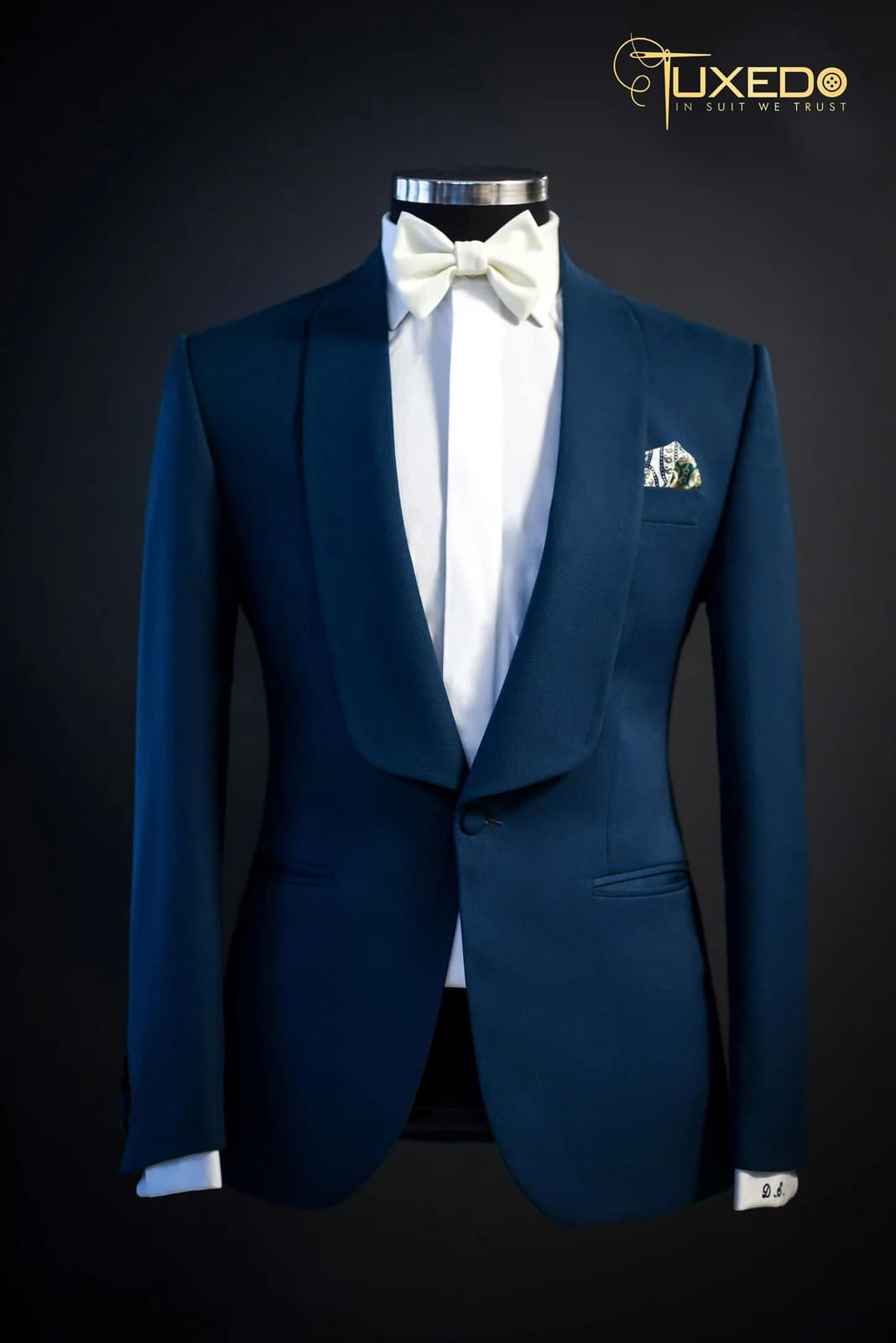
TUX-019 takes this route: a sapphire blue jacket with a shawl lapel made in the body cloth, not faced in black satin. The ivory bow tie and the blue-and-white paisley pocket square are where the eye lands.
A quick comparison
| Satin lapel | Velvet lapel | Self-faced lapel | |
|---|---|---|---|
| Light | Reflects, glossy | Absorbs, deep matte | No contrast |
| Feel | Crisp, ceremonial | Warm, soft, intimate | Minimal, discreet |
| Formality | Black tie standard | Valid, close to a smoking jacket | Lower, more fashion-led |
| Suits | Weddings, galas, opera | Indoor parties, cold season | Private parties, strong colours |
What happens in wedding photos
Photos are where the difference shows. Satin catches flash and sunlight, putting highlights along the lapel that keep the groom's chest defined even from a distance. Careless angles, though, can blow the highlight out to a white patch.
Velvet does the opposite: it photographs as an even, deep dark area and never glares. In a ballroom with warm light, a velvet lapel keeps the tones warm and lets the face stand out. A self-faced lapel gives one clean block of colour, lovely in portraits, but beside groomsmen in black it does not help you stand apart.
Choosing for the occasion
- Formal black tie events and plenty of future wear: satin.
- A warm, cold-season or private evening look: velvet.
- A bold cloth colour and a simpler suit overall: self-faced.
One tip from the workroom: a velvet lapel needs a velvet woven firmly enough to hold the roll line without flattening, so choosing the cloth matters as much as building the jacket.
When to ask your tailor
If you are torn between satin and velvet, the easiest way is to see and touch both under real light. Our consultants lay each lapel sample against your jacket cloth so you can compare before deciding. You can book a fitting at the showroom, or browse more lapel styles in the black tuxedo collection and on the made-to-measure page.
Published 11/11/2026 · 08:30 · Editor: Mon Amie