Comparisons
Tuxedo vs blazer: the differences, side by side
A blazer is a separate daytime jacket with metal buttons; a tuxedo has satin lapels and braided trousers for evening. Cloth, details, occasions, velvet.
Mon Amie · 15/10/2026
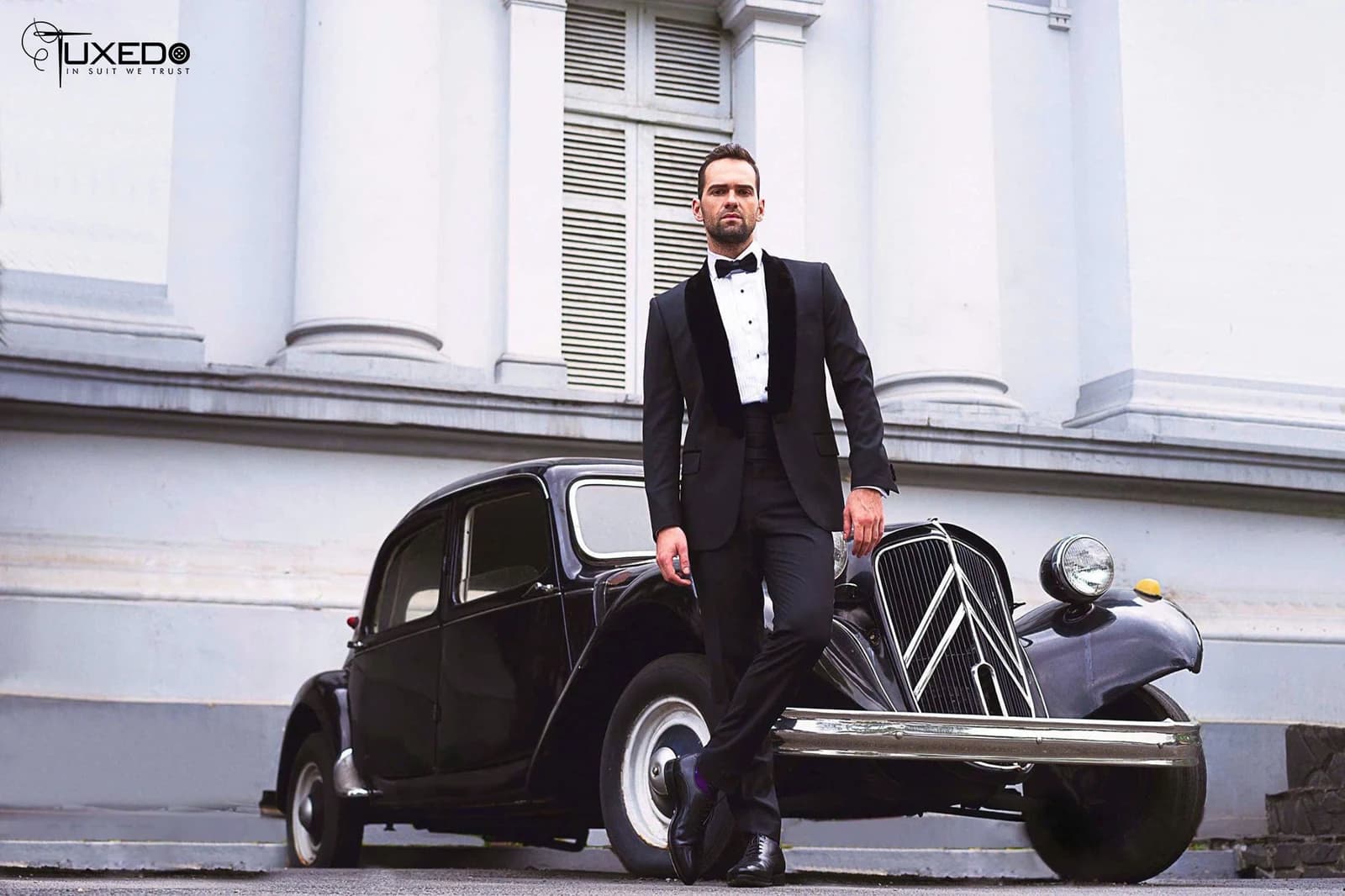
A blazer is a separate jacket, usually worn by day with trousers in another colour. A tuxedo is an evening suit: jacket and trousers in the same cloth, satin-faced lapels and a braid down the trouser leg. At a glance both are dark jackets, but they differ in function and in formality. A blazer at a black tie dinner is underdressed; a tuxedo at a business meeting is overdressed.
What a blazer is
The blazer is a structured sports jacket, usually in wool, most familiarly navy with metal or horn buttons. It has patch pockets, a natural shoulder and a relaxed shape. Because it is a separate jacket, it goes with trousers of a different cloth: chinos, grey flannels, even dark denim in casual settings.
Its job is to supply moderate smartness for daytime or informal evenings. It is not formal wear.
What a tuxedo is
The tuxedo is evening dress for black tie. Jacket and trousers are cut from the same cloth, normally black or midnight blue wool, with lapels faced in satin or grosgrain, covered buttons, jetted pockets and a satin braid down each trouser leg, worn with a white shirt, black bow tie and patent shoes. Every detail points to formality and consistency.
Comparison table
| Feature | Blazer | Tuxedo |
|---|---|---|
| Garment | Separate jacket, worn with other trousers | Evening suit, jacket and trousers in the same cloth |
| Cloth | Wool, flannel, linen, cotton | Fine black or midnight blue wool, mohair, velvet |
| Lapel | Same cloth as the jacket | Faced in satin or grosgrain |
| Buttons | Metal, horn or self-cloth | Covered in cloth or satin |
| Pockets | Often patch pockets | Jetted, flush and neat |
| Trousers | Different cloth and colour | Same cloth, satin braid down the leg |
| Shirt | Tie or open collar | White shirt, black bow tie |
| Occasion | Daytime, casual parties, office | Evening, black tie, formal receptions |
Two details that give it away
The first is the button. A blazer's metal buttons say daytime and sport, whereas a tuxedo deliberately hides its buttons under cloth to keep one unbroken dark surface. The second is the lapel: satin catches evening light, which is a way of telling evening clothes from day clothes. The braid on the trousers is a marker a blazer never has.
When a velvet blazer can stand in
There is a grey area: a dark velvet jacket with satin-faced or shawl lapels, worn with dark trousers. It carries the spirit of a dinner jacket but is built lighter. It suits invitations marked "black tie optional", "creative black tie" or "cocktail", where a full tuxedo might feel heavy.
But it is a substitute only when the invitation permits. If the card says black tie, choose a proper tuxedo; a velvet blazer, however handsome, lacks the matching trousers and some ceremonial details. See the velvet tuxedo jacket, or a real example such as TUX-006, a black tuxedo with velvet-faced shawl lapels.
If you already own a blazer
A good navy blazer serves many occasions, but it does not replace a tuxedo. Use it for cocktails, meetings and good restaurants. For black tie, you need a tuxedo or a well-fitted rental. For the contrast with a suit, read how a tuxedo differs from a suit; for the velvet-versus-sports-coat question, see dinner jacket vs sport coat.
Choosing by invitation
- Black tie: tuxedo.
- Black tie optional: tuxedo, or a sharp dark suit.
- Creative black tie: a tuxedo with a twist, or a well-finished velvet blazer.
- Cocktail or smart casual: blazer or suit.
The dress code page sets out each level.
Tips from the Mon Amie workroom
If you are unsure whether to buy a blazer or a tuxedo, bring the invitation to a showroom. An adviser will read the dress code with you and point you in the right direction. Book a visit here.