Comparisons
Satin vs grosgrain lapels
Satin lapels are glossy; grosgrain has horizontal ribs and a matte face. How each looks under lights and in photos, how durable it is, and how to choose.
Mon Amie · 24/10/2026
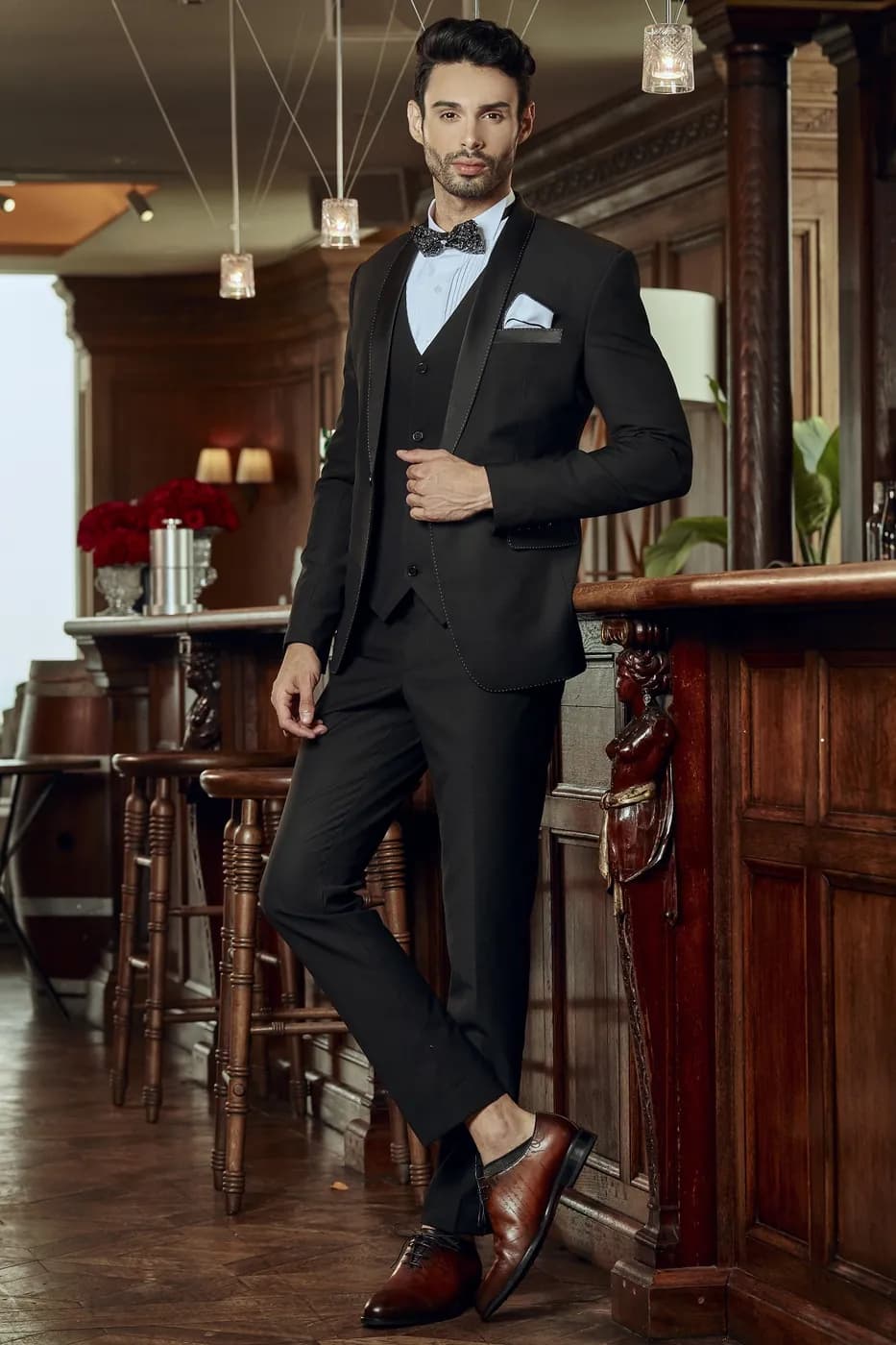
Satin is glossy and reflects light; grosgrain has fine ribs running across the weave and a matte, slightly textured face. Both are correct facings for a tuxedo lapel. Choose satin for evening sparkle, or grosgrain for a quieter, classic look that catches less light.
Satin: a glossy, reflective surface
Satin is a weave that gives a smooth, glossy face, usually made from silk or a synthetic such as polyester. On a tuxedo lapel it draws a line of light from collar to button, in contrast to the matte black wool of the body. It feels luxurious, eye-catching and a little theatrical.
In bespoke tailoring the common choices are silk satin and blended satin. Silk drapes well, with a soft glow and a warm hand; polyester shines harder and costs less but breathes poorly. Our pages on why tuxedo lapels are faced in satin and the types of lapel satin explain the history and the grades.
Grosgrain: ribbed, matte and discreet
Grosgrain (French, pronounced "grow-grain") is a woven cloth with fine ribs running across its width. The surface is matte rather than shiny, and up close you can see the weave. On a tuxedo lapel it reads as sober, serious and classic; many people see it as the more traditionally English facing.
Both have a place in the history of the dinner jacket, and the choice once varied by country and by tailor. Treat them as two schools of thought, not one right and one wrong.
Under lights and in photographs
| Satin | Grosgrain | |
|---|---|---|
| Surface | Smooth, glossy | Ribbed, matte |
| Under evening lights | Bright, a clear accent on the lapel | Absorbs light, dark and calm |
| Under flash | Can flare, and the lapel may look pale at some angles | Little flare, holds an even black |
| In close-ups | Crisp, luxurious lapel line | Visible rib texture, with depth |
| Feeling | Glamorous, modern | Discreet, classic |
Wedding photographers often prefer grosgrain at flash-heavy receptions because the lapel does not blow out. Satin, on the other hand, suits studio portraits with controlled light, where you want the lapel to lift off the cloth.
Durability and care
Satin snags easily on jewellery, a neighbour's buttons or a bag strap, and creases and marks show on a glossy face. Grosgrain has a firm structure and its ribs hide small scratches, so it tends to look better for longer under regular use.
General care for both:
- Never press directly on the lapel; use steam, or a thin cloth between iron and facing.
- Hang the jacket on a broad-shouldered hanger and never fold the lapel.
- Have it dry-cleaned by someone who knows faced garments, and tell them about the facing.
- Do not leave it for long in a sealed plastic bag.
If a lapel gets lightly scratched, bring it back to the workshop rather than trimming threads yourself.
Choosing by taste and build
On a slim man, a moderately wide satin lapel adds visual weight across the chest. On a fuller man, a matte grosgrain draws less attention to the torso and keeps the line neat. Shorter men should choose a peak or shawl lapel that is not overly wide to stay in proportion.
When you are unsure, look at both in the showroom: sample facings feel and look very different under lights. For more on lapel shapes, see our guide to choosing a tuxedo lapel.
How Mon Amie can help
At the showroom you can compare satin and grosgrain side by side on a fitting jacket, and a specialist will help you choose according to the occasion and the lighting of the venue. See our bespoke tuxedo page or book a fitting at the showroom.