Satin-faced lapels vs satin piping on a tuxedo
A fully satin-faced lapel is the formal standard; satin piping is a lighter variation. See how they differ in TUX-017 and TUX-051 and which occasions suit each.
Editor: Mon Amie · Published · about 3 min read
In this article
A fully satin-faced lapel is the tuxedo standard: the whole lapel surface is covered in a separate layer of satin. Satin piping is the lighter variation: the lapel stays in the jacket cloth, with only a narrow band of satin running along its edge and the pocket. Both belong to eveningwear, but they differ in prominence and in how formal they feel.
Fully faced: the standard
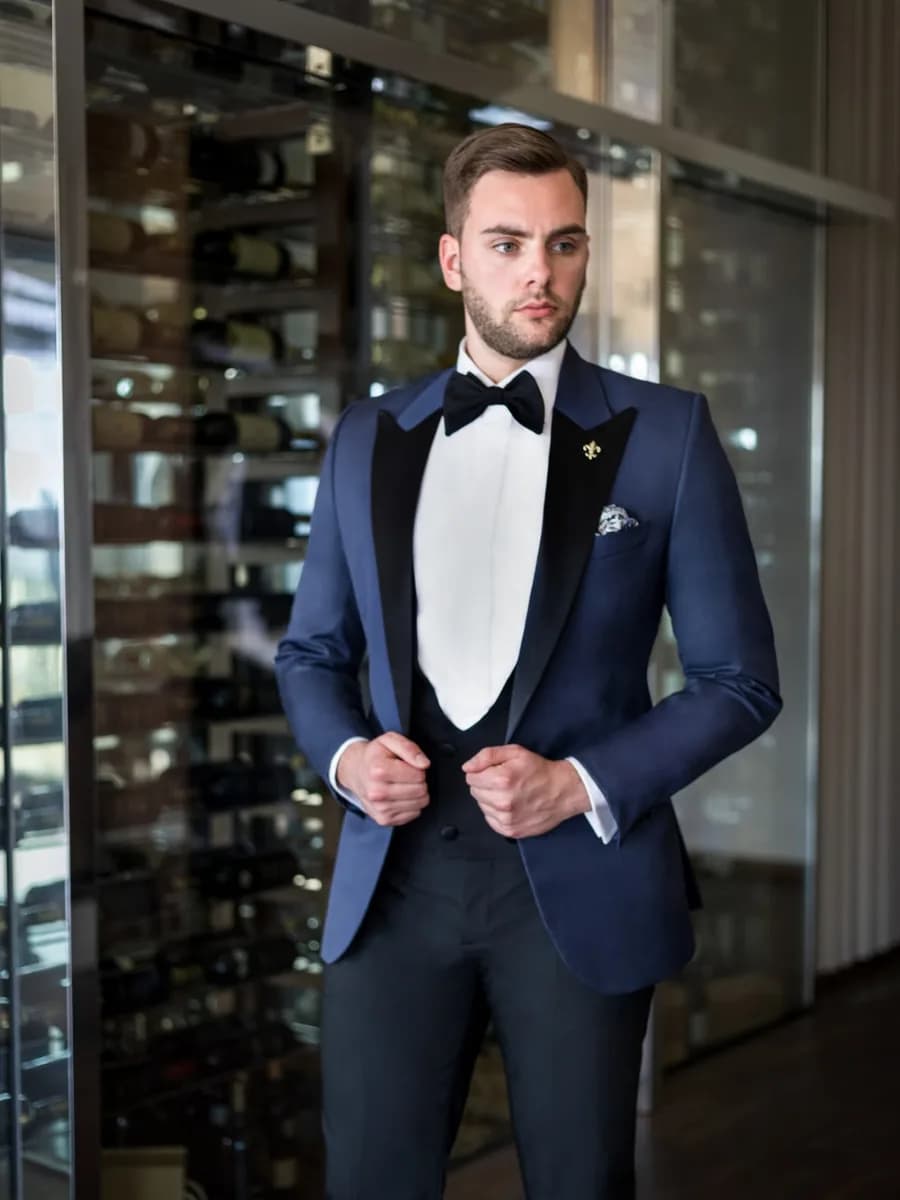
With full facing, the tailor cuts the lapel surface from satin or grosgrain and builds it onto the lapel, so the whole area catches light. The lapel separates from the jacket body at a distance, and that is the familiar signature of black tie. Usually it is joined by covered buttons and pocket trim in the same material, so every shiny detail speaks one language.
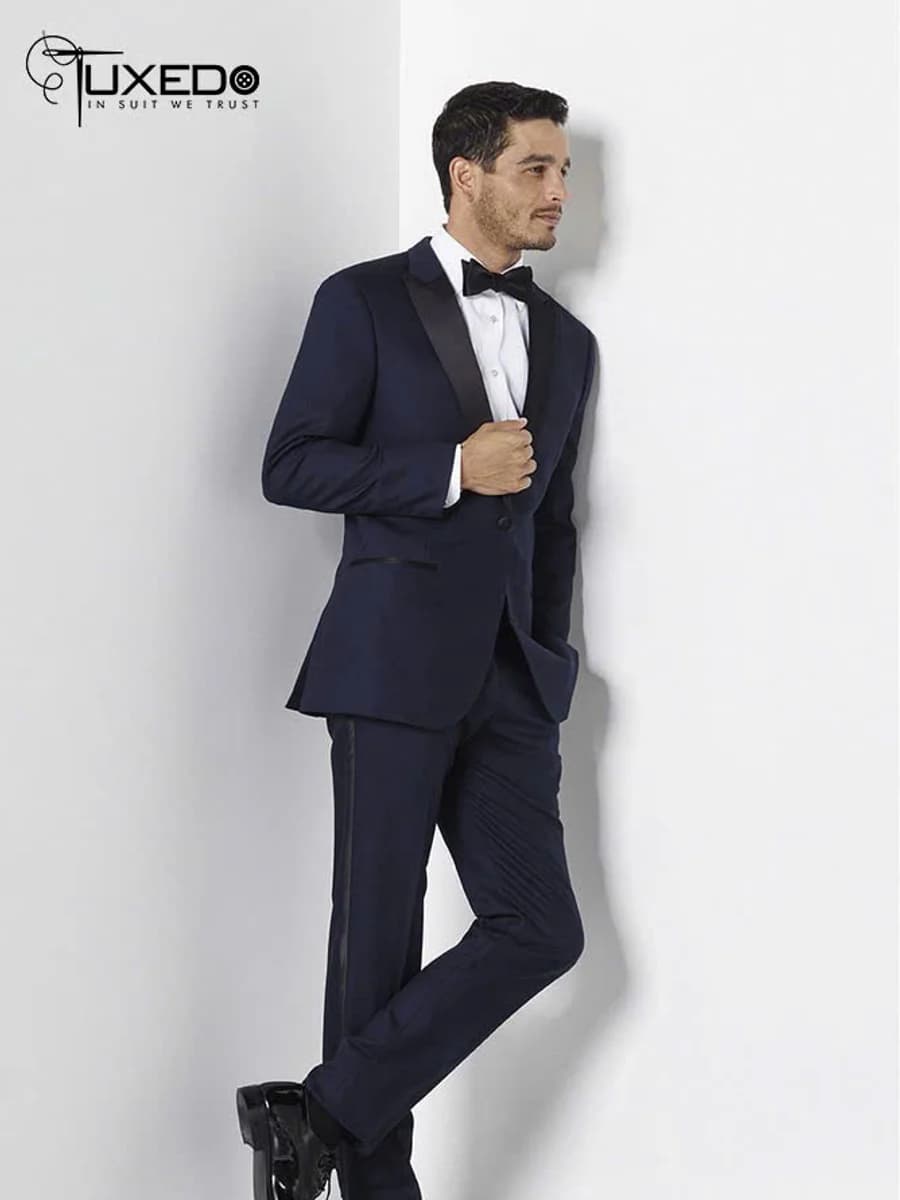
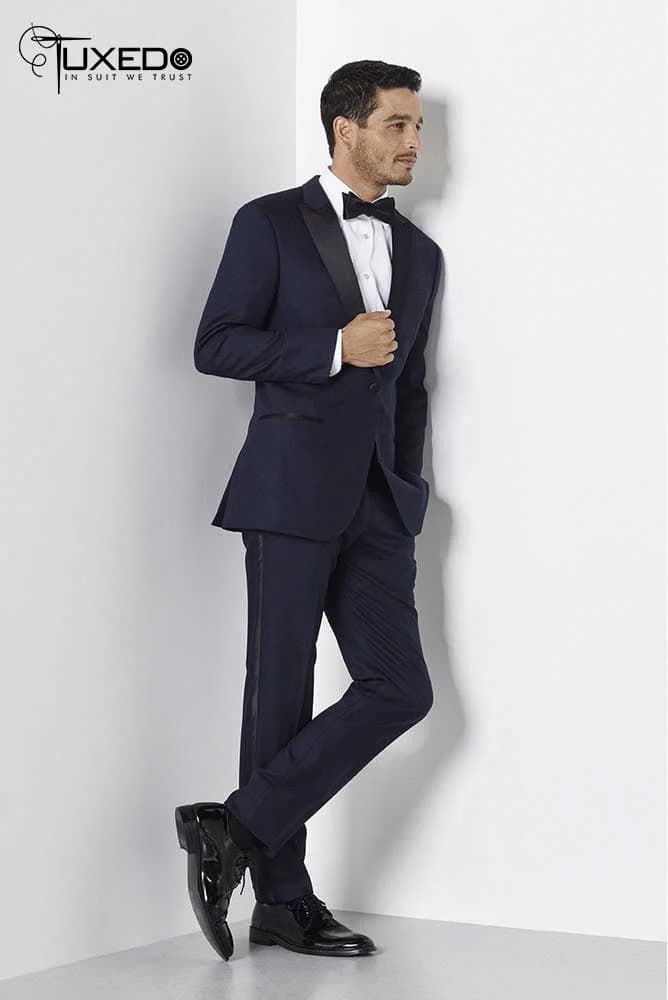
TUX-017 is an example: a deep navy that reads almost black, with a black satin-faced lapel of medium width running down in a clean V. The most valuable detail is in the trousers, with a black satin stripe down the leg. The whole outfit repeats one idea: black satin against matte cloth.
Looked at closely, it is easy to see why this is the standard. For more, see why tuxedo lapels are faced in satin.
Satin piping: the lighter variation
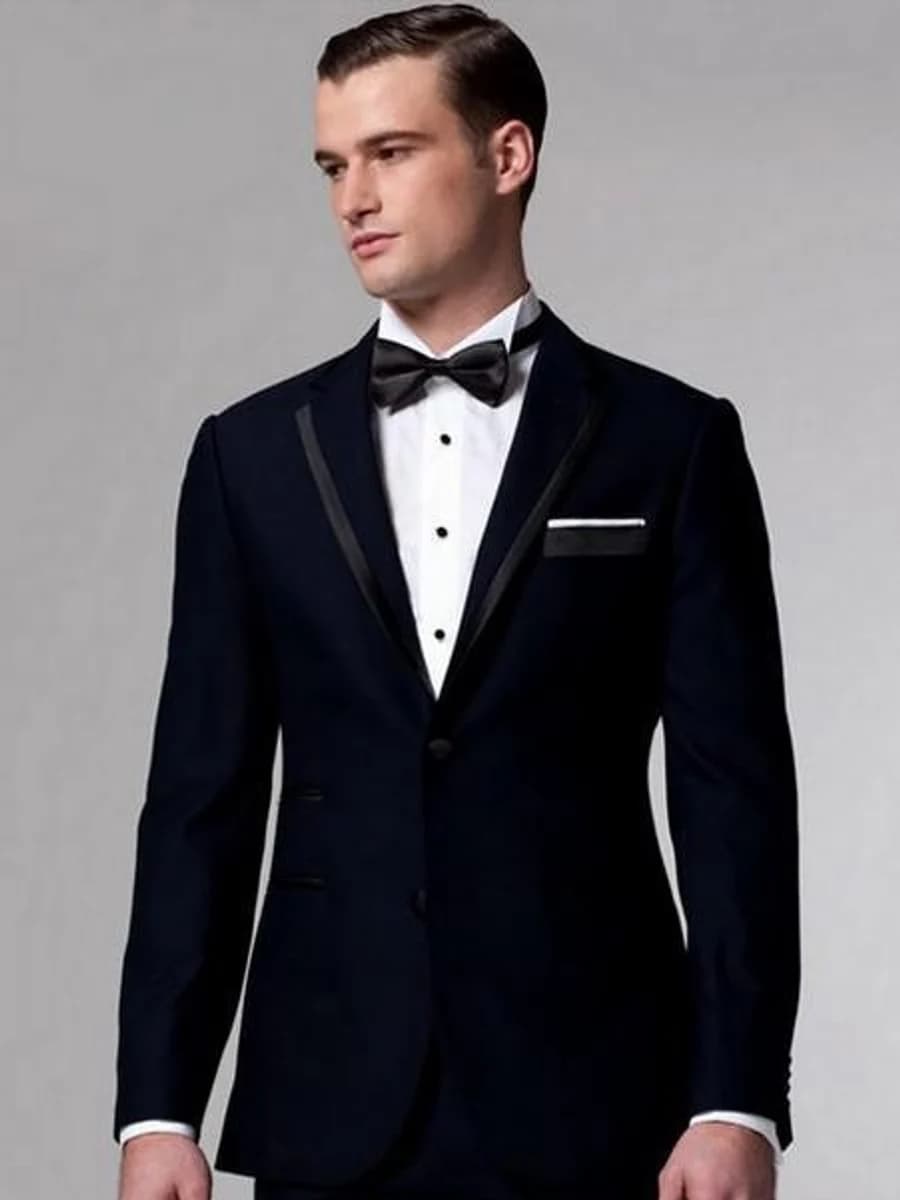
Piped jackets do not face the lapel. Instead a narrow band of satin, a centimetre or two wide, follows the lapel edge, often repeated on the breast pocket. The lapel surface remains the jacket cloth. The effect is a bright, tidy line instead of a shining area.
This treatment has a long history in formal dress and is popular today because it is more refined: the suit keeps the eveningwear signal without the show of a fully faced lapel. In photographs and under lights it still reads as a tuxedo, with less glare.
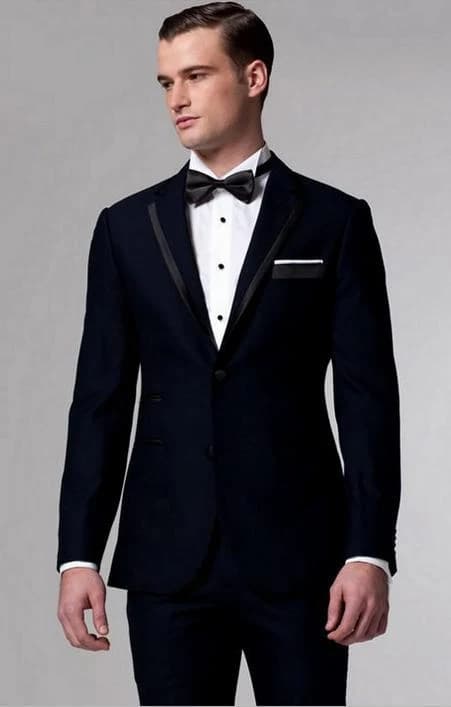
TUX-051 illustrates it: a deep navy tuxedo with a peak lapel edged in a slim black satin band, and matching piping on the breast pocket flap. That small detail is what separates eveningwear from an ordinary suit.
Details compared
| Fully satin-faced | Satin piping | |
|---|---|---|
| Satin area | The whole lapel | A narrow band along the edge |
| Prominence | Clear, crisp | Quiet, refined |
| Formality | Black tie standard | Close to black tie, more flexible |
| Re-wear | Suits many formal events | Easier at semi-formal parties |
| Shine under lights | High | Moderate |
Which occasions suit each
- Fully faced: a hotel wedding in the evening, a black tie gala, the opera, award ceremonies, any event whose invitation says Black Tie. If you want an outfit that can never be called underdressed, this is the safe choice.
- Piped: semi-formal evenings (black tie optional or formal cocktail), company events, a wedding where you are a guest, or when you want something part eveningwear that is easier to mix with ordinary tailoring.
A rule of thumb: if the invitation says black tie, favour full facing; if it only says formal dress, piping is a proper choice without being excessive.
When to hesitate
Grooms who want to stand out on the wedding day tend to lean toward full facing, since the satin keeps the lapel defined in photographs. If you are buying one outfit to wear regularly, piping is less conspicuous with each appearance. Compare both on the same navy in the midnight and navy collection.

Book a fitting at Mon Amie
The gap between facing and piping is hard to feel from a small photo. At the showroom the tailor can put two samples side by side under real lights, then you choose by occasion. You can book a fitting and read more on the made-to-measure page.
Published 16/11/2026 · 08:30 · Editor: Mon Amie