Holland & Sherry: English cloth for fine tuxedos
Holland & Sherry is a London cloth house founded in 1836, known for eveningwear cloth. Its feel, durability and why it sits in Mon Amie's Heritage line.
Editor: Mon Amie · Published · about 3 min read
In this article
Holland & Sherry is a London cloth house founded in 1836, in the mid-19th century and well before the tuxedo appeared. It is familiar to English tailors, and its range includes cloths made specifically for evening dress. At Mon Amie, Holland & Sherry cloth belongs to the Heritage line, where a two-piece bespoke suit starts above VND 20,000,000.
A London cloth house and the eveningwear tradition
The distinction worth making: Holland & Sherry is known as an English cloth house, the kind of place tailors go to choose cloth for their clients. England's tradition of evening dress is the root of the dinner jacket itself, so eveningwear cloths are a natural strength for a house like this.
In the eveningwear group you will meet two familiar names, barathea and mohair. Barathea has a very fine pebbled texture and a matt face, giving a quiet ground for satin facings. Mohair comes from the Angora goat and is blended with wool for a light sheen, good shape and breathability. See also our piece on Italian and English cloth for tuxedos.
Feel and durability
English cloth is usually firmer in the hand than Italian, with more structure, so shoulders and lapels keep a sharper line. That is a tendency, not a rule, because each cloth also depends on weight and weave.
- Holds shape. A firm weave and wool's natural spring keep the jacket from sagging after many wears.
- Stable face. On barathea the texture makes shine from rubbing less noticeable than on a smooth plain cloth.
- Firm, so allow a settling-in. If you prefer a soft drape, try Italian cloth too before deciding.
On durability, understand it as the result of good cloth, correct fit and proper care, not a figure to be promised.

Compared with Italian cloth in the same range
Mon Amie stocks both Italian and English cloth, so you can set them side by side. Italian cloth such as Vercelli or Canonico tends to feel soft, draping and light in the hand. English cloth tends to feel firm, with the shoulder and lapel holding a clearer line. Neither is right or wrong; they are two temperaments.
A simple way to decide: if you like a jacket that goes on like a soft second skin, lean Italian; if you like a jacket with a frame and a shape, lean English. Your adviser will let you try a sample jacket to feel the difference directly.
Why it sits in the Heritage line
Mon Amie's Heritage line is for premium cloth and elaborate detail, above VND 20,000,000 for a two-piece suit. Holland & Sherry and Vitale Barberis Canonico are the two mills placed there. The full ladder is in cloth tiers and on the price page.
Which tuxedo styles suit it
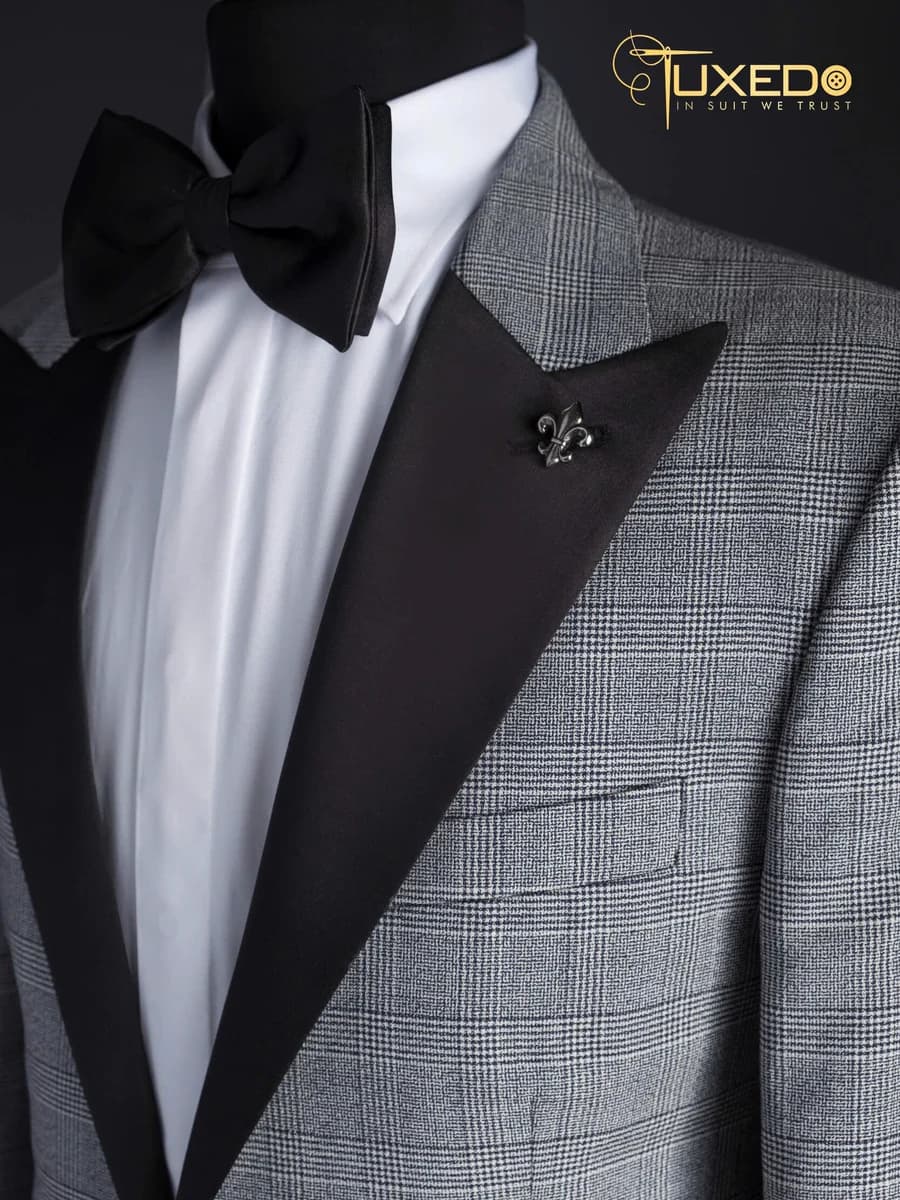
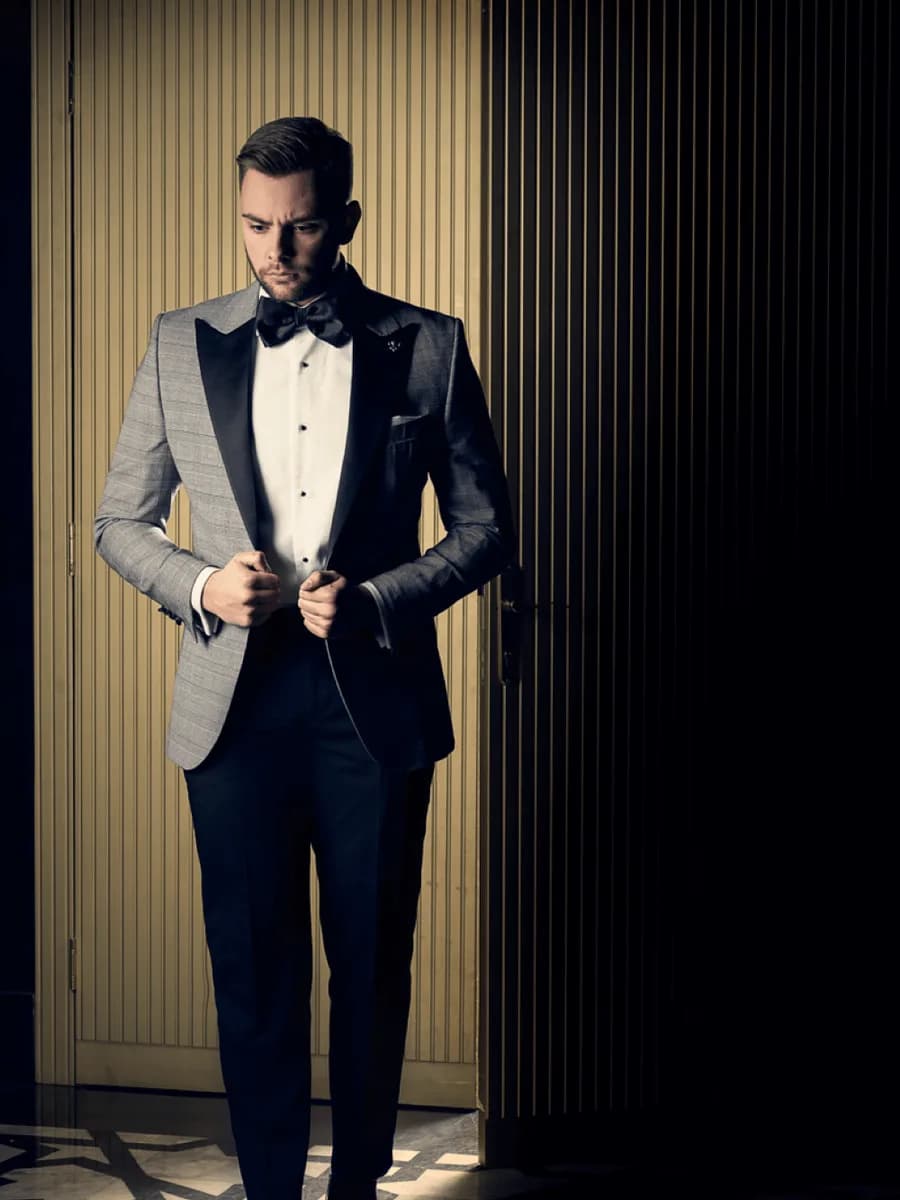
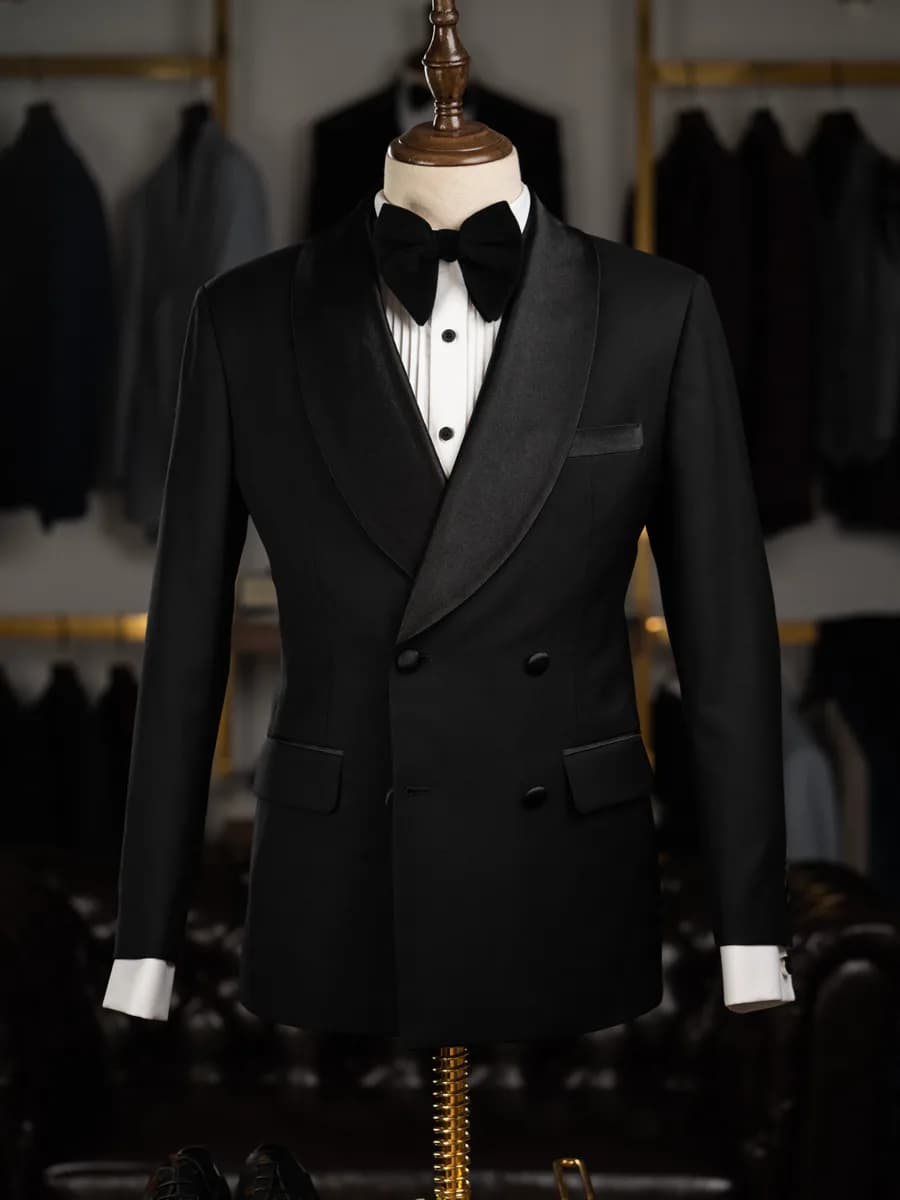
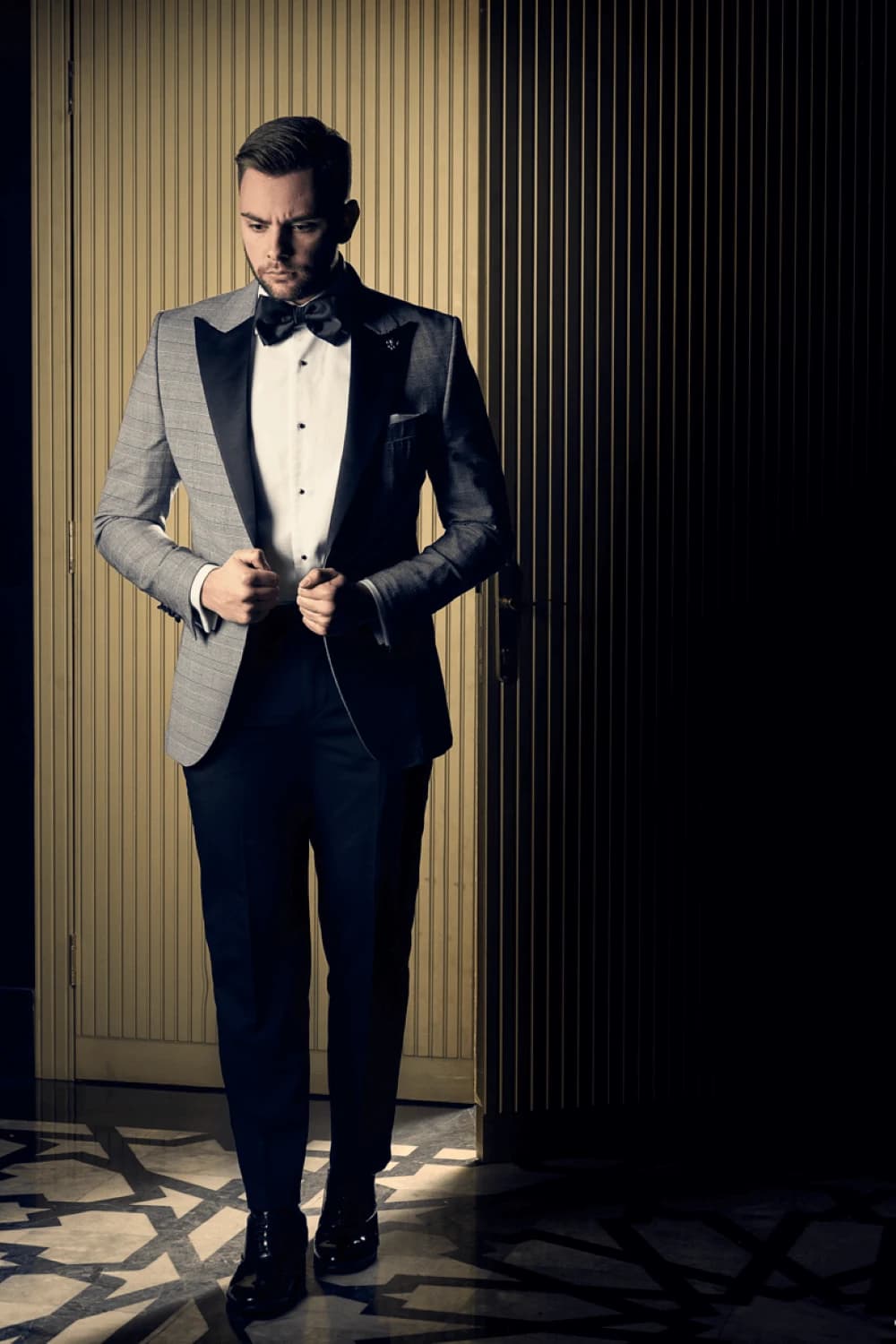
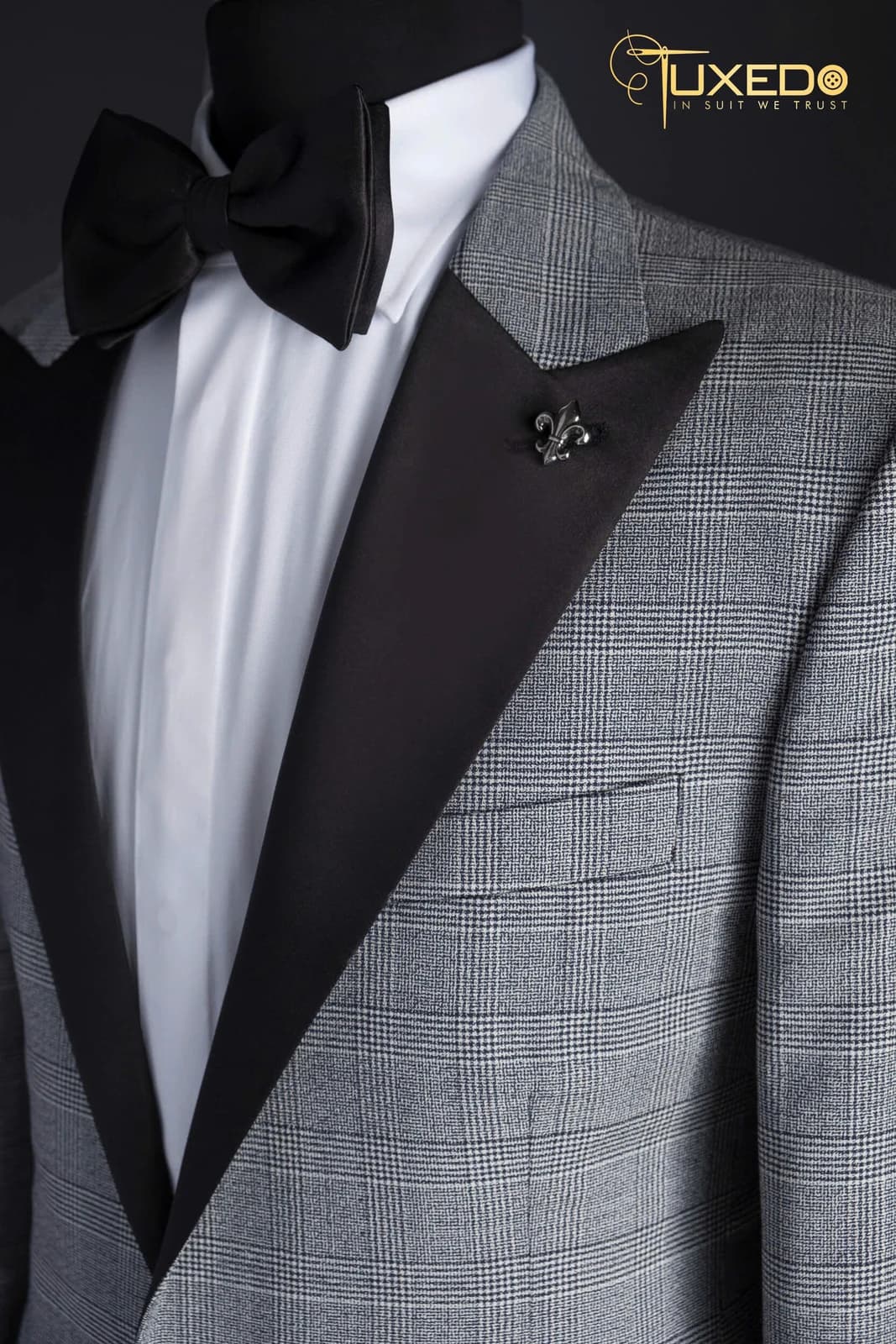
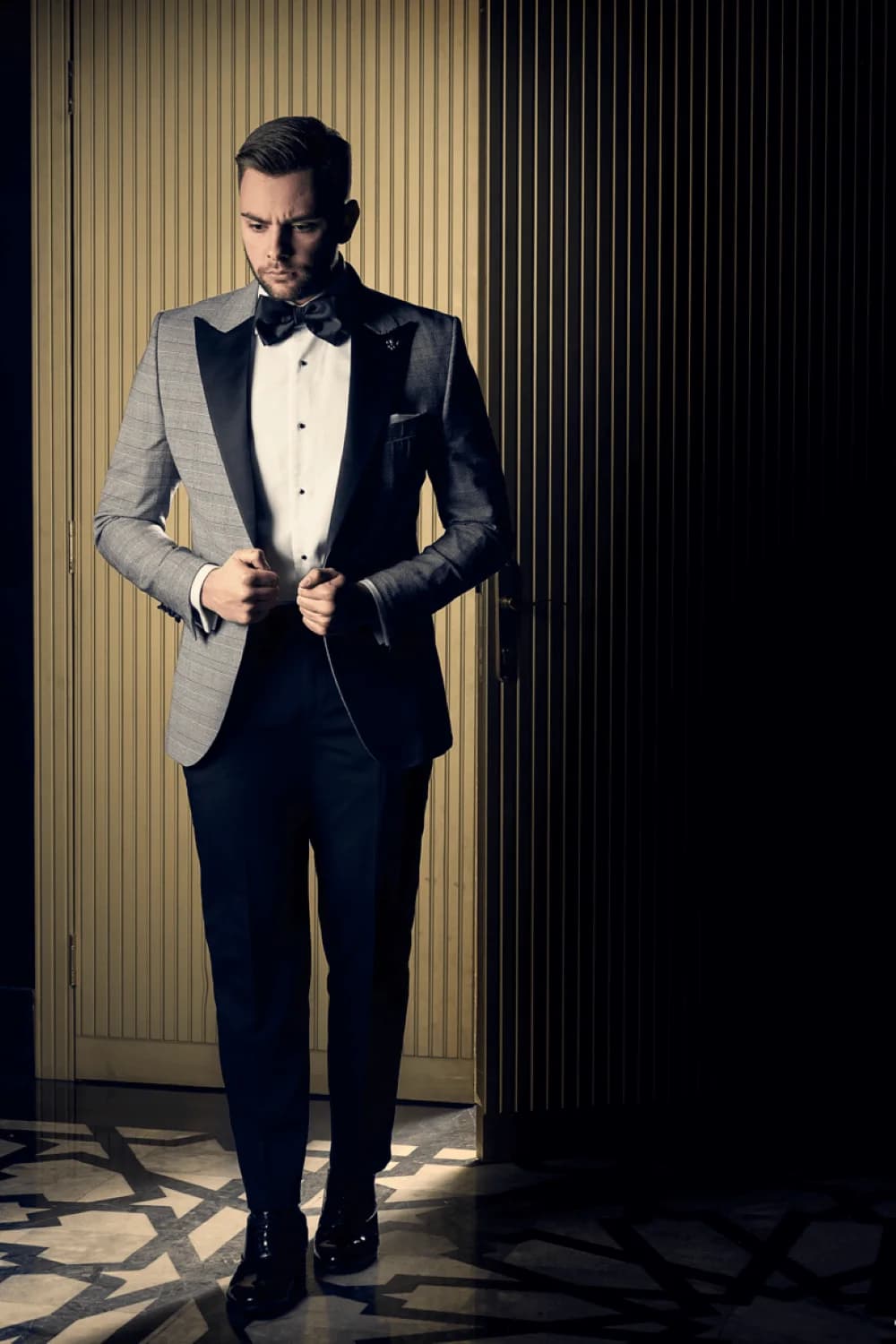
English cloth works well in a classic cut: satin peak or shawl lapels, single or double breasted, satin-braided trousers. If you like English checks, look at TUX-029, a Prince of Wales check tuxedo in silver grey with jet-black satin peak lapels. A grey Glen-check set such as TUX-109 gives a more characterful evening look. These two are shown for the style only, and the real cloth is chosen separately for your suit.
When to choose it
- You want a tuxedo with shape, crisp at the shoulder and lapel, for many years.
- You like the texture of traditional eveningwear cloth such as barathea over a smooth glossy face.
- The suit is a long-term investment for many black tie occasions.
If you will wear it only once, renting a tuxedo may suit better.
A word from the Mon Amie workshop
The surest way to know whether English cloth suits you is to hold it, try a jacket on and compare it with Italian cloth at the same table. Book a fitting and your adviser will have eveningwear swatches ready for the appointment.
Published 29/10/2026 · Editor: Mon Amie