Cloth & materials
Silk satin vs polyester satin facings on a tuxedo
Silk satin has a deep, soft glow and breathes; polyester satin is tough, glossy and cheaper. How they wear, how to tell them apart and how they affect price.
Mon Amie · 20/10/2026
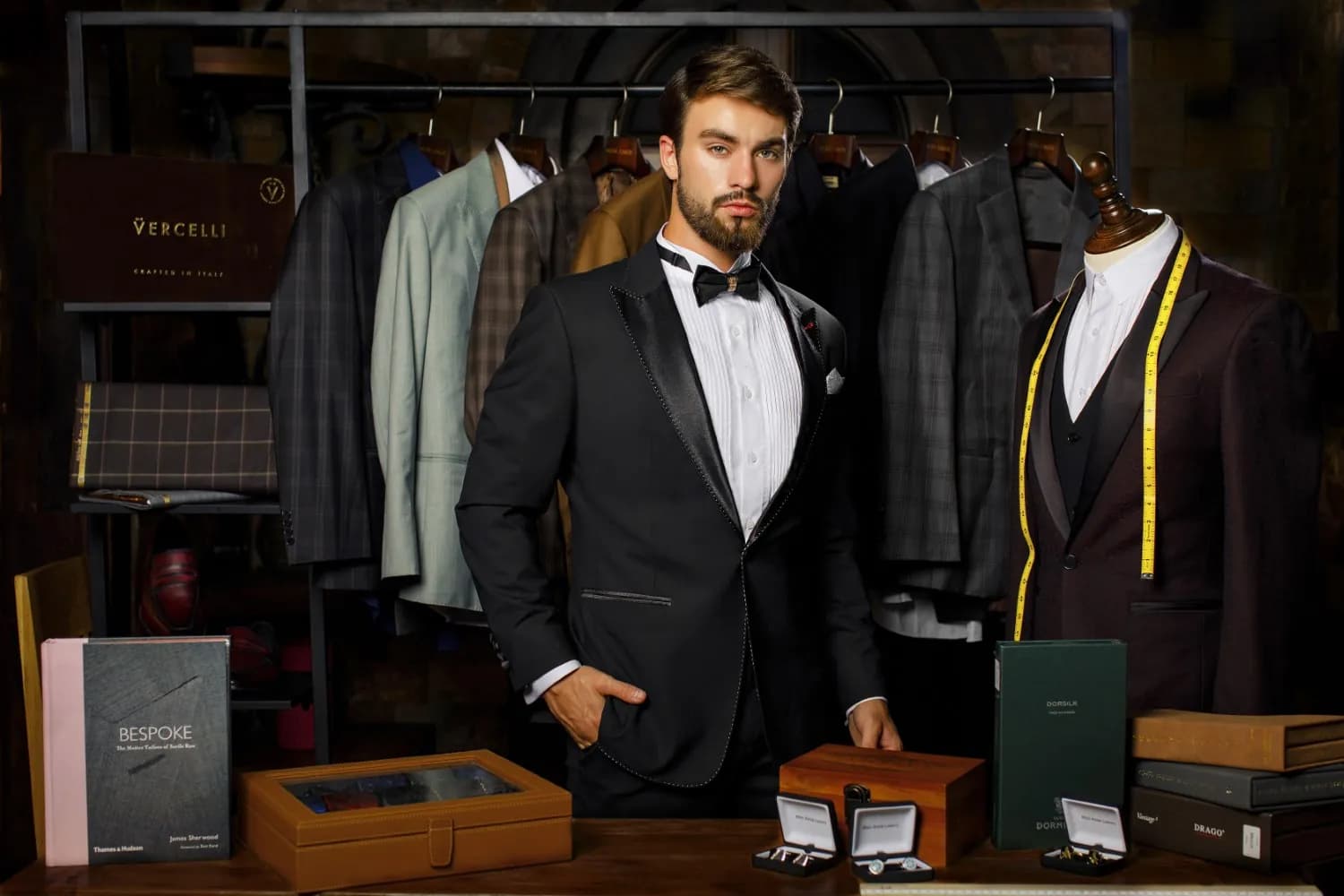
Silk satin gives a deep, soft glow and feels cool to the touch, while polyester satin is tough, sharply glossy and less expensive. Both can make a handsome tuxedo lapel, but they differ in richness, in how they age and in cost. The key point is that "satin" is only a weave; the fibre is what separates the two.
Satin is a weave, not a fibre
A satin weave lets long warp threads float across the surface, creating a smooth face that reflects plenty of light. The same weave can be made from silk, polyester, and also nylon or acetate. So when someone says "satin lapel", it is still worth asking: satin of what?
The lapel facing, pocket jettings and trouser stripe of a tuxedo are usually satin or grosgrain, set against a matte body. The reasoning behind that contrast is covered in why tuxedo lapels are faced in satin.
Lustre, softness and feel
Silk satin. Silk's lustre is gentle and has depth, closer to pearl than glass. It shifts smoothly as you move, and silk black is often dense and warm. The cloth is soft, fluid and cool, resting lightly on the skin. The collar sits comfortably when it brushes the chin.
Polyester satin. The shine is sharp, clear and evenly bright, a little flatter. Good polyester from certain mills is finished so well that it is hard to tell by eye at a distance. Standard grades, though, tend to feel slick, breathe less and flash harshly under camera lights.
Durability and how the shine ages
Here polyester has a genuine advantage. Synthetic fibre resists abrasion, rarely water-marks and is hardly affected by perspiration. After years of use a polyester lapel usually looks much as it did at the start.
Silk is more sensitive. Water and sweat can leave marks, hard rubbing can fuzz the fibre at the lapel edge, and the wrong pressing temperature can kill the lustre. In return, silk ages gracefully when looked after: the glow stays soft and does not turn hard. Sensible care avoids most damage, particularly hanging the jacket on a shaped hanger and keeping the lapel away from water.
Polyester has its own weakness: an iron that is too hot can melt the fibre and leave a permanent shiny patch. With either material, pressing the lapel through a damp cloth at low heat is the safe method.
How to tell them apart
- Read the fibre label. The most reliable method. You are entitled to ask your consultant what the lapel facing is made of, and to see the label on the bolt.
- Touch and look. Silk tends to warm up as you hold it and shows a multi-directional glow. Polyester feels slick and cool, with one even shine.
- Turn it under a lamp. Silk gives a gradual transition with soft light and dark zones. Polyester tends to show uniform bright patches.
- A burn test on a thread. A trade method, better left to the tailor on an off-cut. Silk smells like burnt hair and leaves crumbly ash; polyester melts into a hard bead.
No method is perfect from a photograph, so seeing real cloth at a showroom is still the most dependable way.
What it does to the price
Silk costs more than polyester, and the difference feeds into the price of the suit. Given the small area of lapel and trouser stripe, it is not huge against the total, but it can place a suit in a different price line depending on the other choices alongside it. Mon Amie's made-to-measure range has three lines, Essential, Signature and Heritage, and the satin is one of the factors that moves the price, as discussed in what a tuxedo costs to make.
Which one to choose
If you wear a tuxedo often, travel a lot and do not want to worry about water marks, a good polyester satin is the practical choice. If you wear it on few occasions, prize the richness of the glow and are willing to care for it, silk is worth it. Our guide to satin types for lapels covers other variants such as matte satin.
Advice from the Mon Amie workshop
The clearest approach is to lay two strips of satin on the same body cloth and look at them under evening light. Ask your consultant to do this at the showroom and book a fitting to compare both satins within your budget.