Tuxedos for Men Who Sweat a Lot: Jacket, Shirt and Colour
If you sweat heavily, choose an absorbent undershirt, breathable half-lined wool, colours that hide marks, and carry a handkerchief and spares.
Editor: Mon Amie · Published · about 3 min read
In this article
Sweating a lot is nobody's fault, but it can spoil an evening: wet patches under the arms, a damp back, a stained collar. The good news is that most of it can be managed with the right choices from the inside out: undershirt, shirt, jacket cloth, lining, colour, and a little backup. This article speaks from tailoring experience, not medical advice. If your sweating seems unusually heavy, speak to a doctor.
The innermost layer: an absorbent undershirt
The undershirt is your first barrier. It takes up moisture before it reaches the dress shirt, so the shirt and jacket stay drier. Choose a thin cotton undershirt, or a technical moisture-wicking fabric that dries quickly, with a low crew neck or a deep V so it does not show above an open collar. A skin-tone or ivory undershirt shows less under a white shirt than a bright white one. Our articles on undershirts under a tuxedo shirt and on full lining, half lining or unlined go further, the latter dealing with the jacket's lining rather than the undershirt.
Avoid thin synthetic undershirts that do not breathe, because they trap heat and the skin gets clammy.
The shirt: breathable cloth
A cotton shirt in an open, comfortable weave is the familiar choice. Cloth that is too thin will show damp marks clearly, and cloth that is too heavy holds heat, so aim for a medium weight with a firm weave. A white dress shirt can show marks when heavily wet, which is why the absorbent undershirt does the main work. A collar that fits properly, not tight, reduces friction and yellowing at the neck.
The jacket: breathable wool, half lined
Wool is a natural fibre that breathes: it absorbs moisture vapour and releases it fairly well, so for a hot wearer a lightweight to medium open-weave wool is usually more comfortable than a cloth with a large synthetic content. Open-weave wools such as fresco or tropical weaves are used by tailors for warm climates. Ask your tailor about them.
The lining matters too. A half-lined jacket is lined only through the shoulders and sleeves, leaving the back unlined so air can move. A cupro or other breathable lining feels better than glossy polyester. A half lining, however, needs the inside to be finished carefully, so it calls for a skilled workshop.
Colours that do not show marks
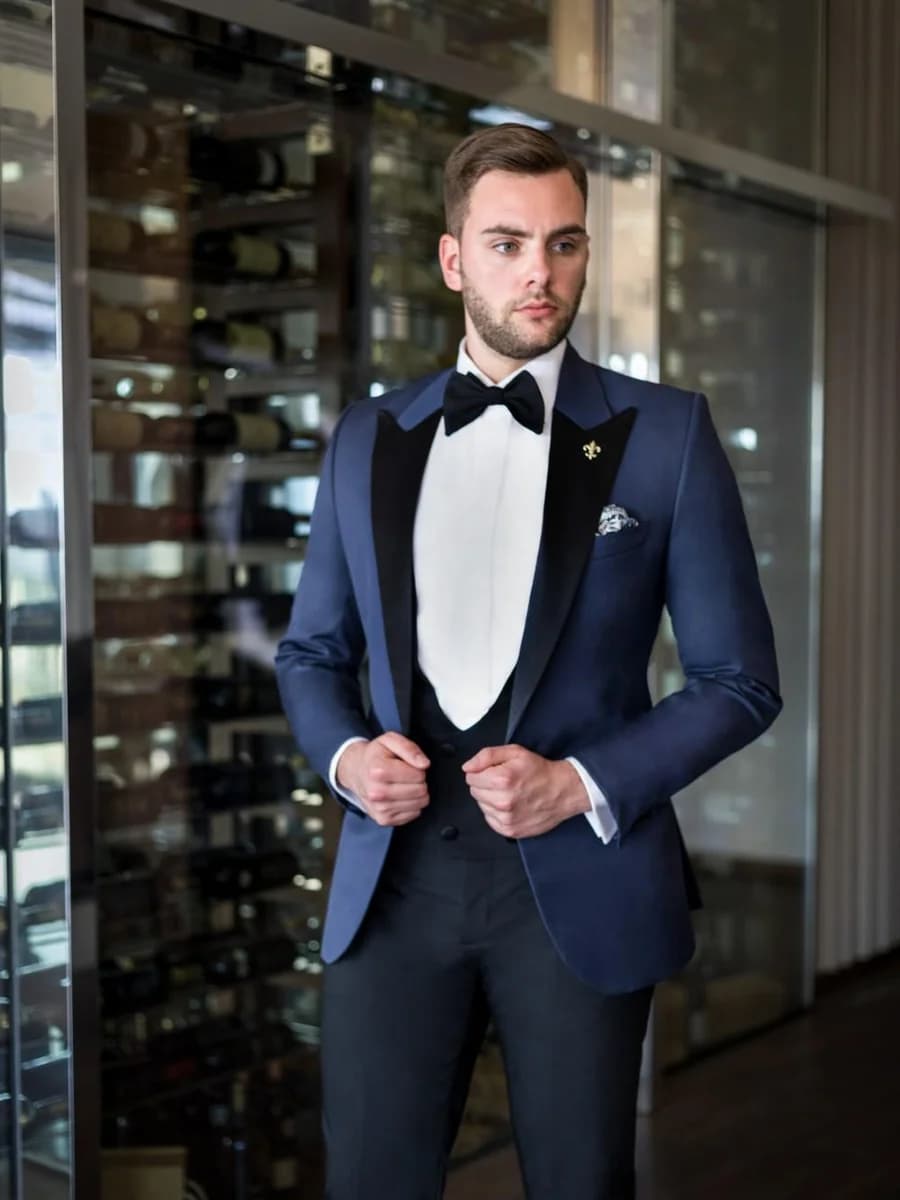
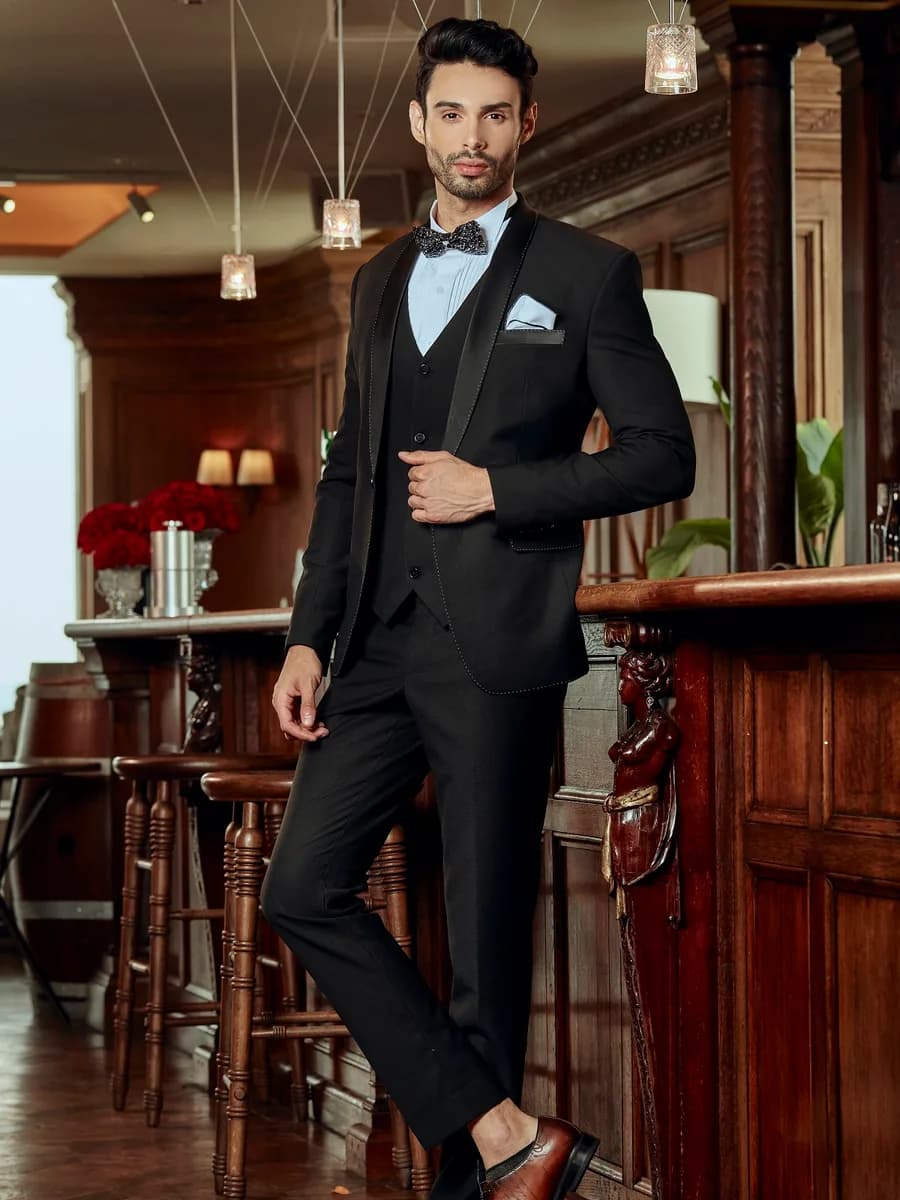
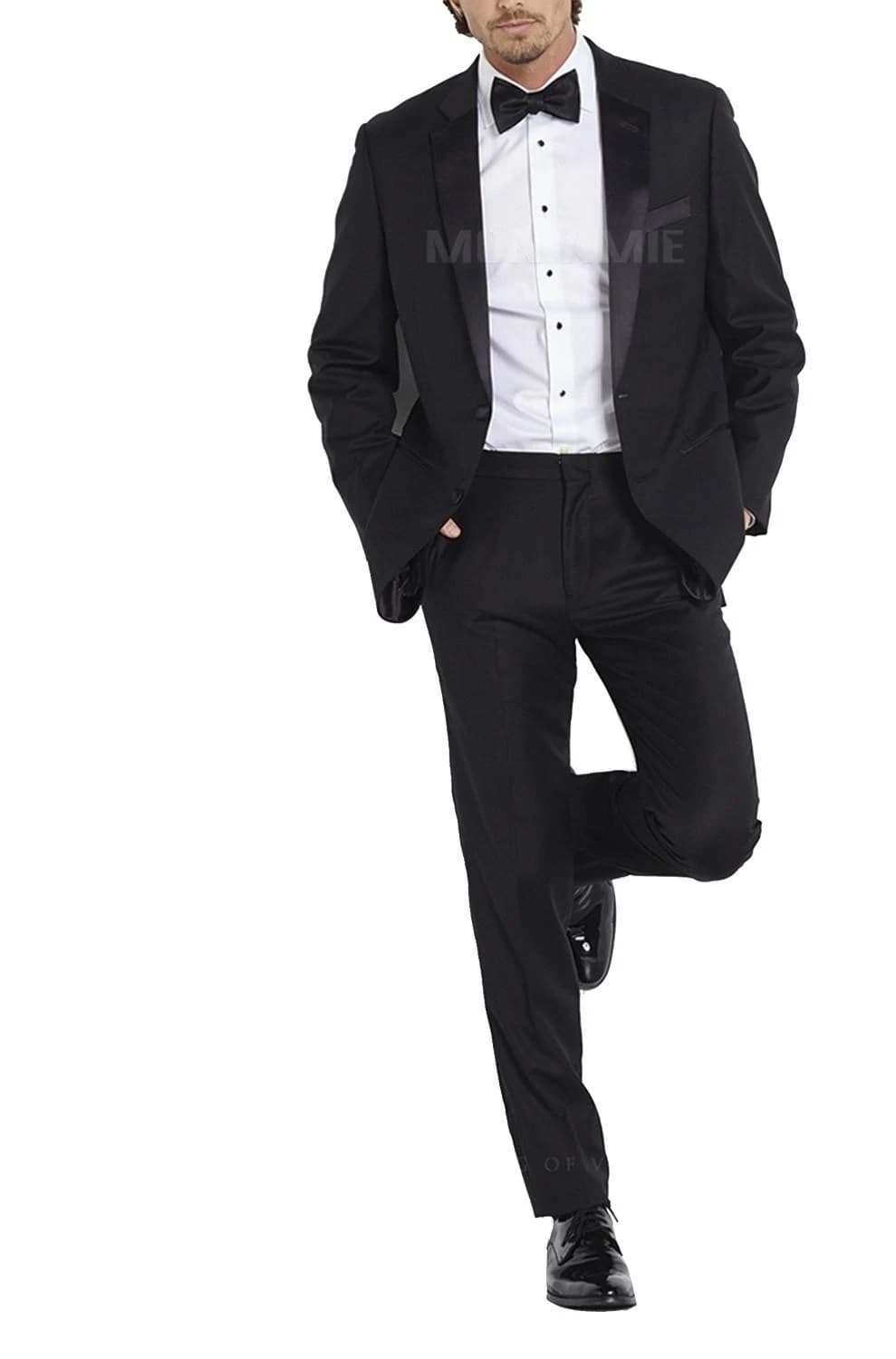
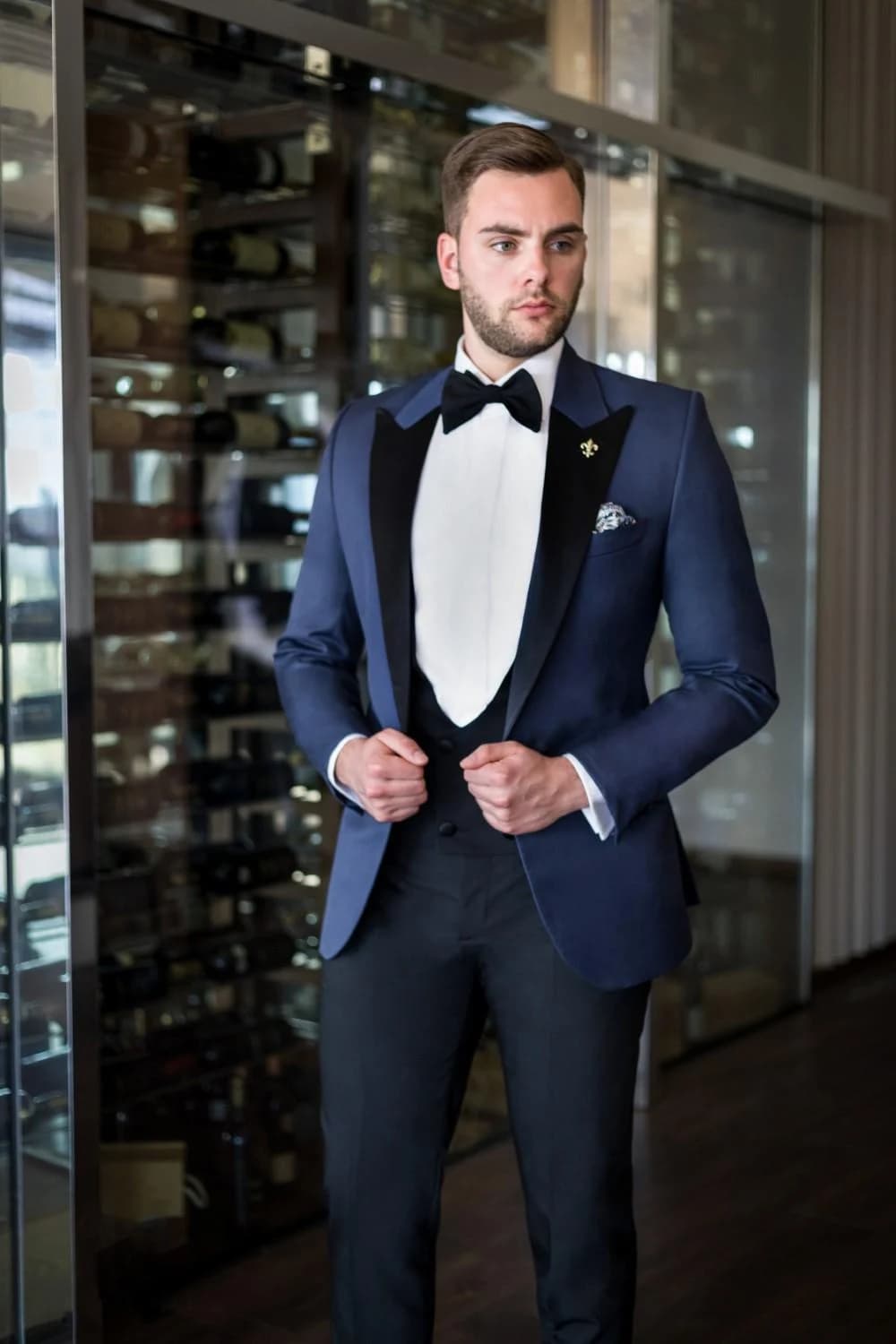
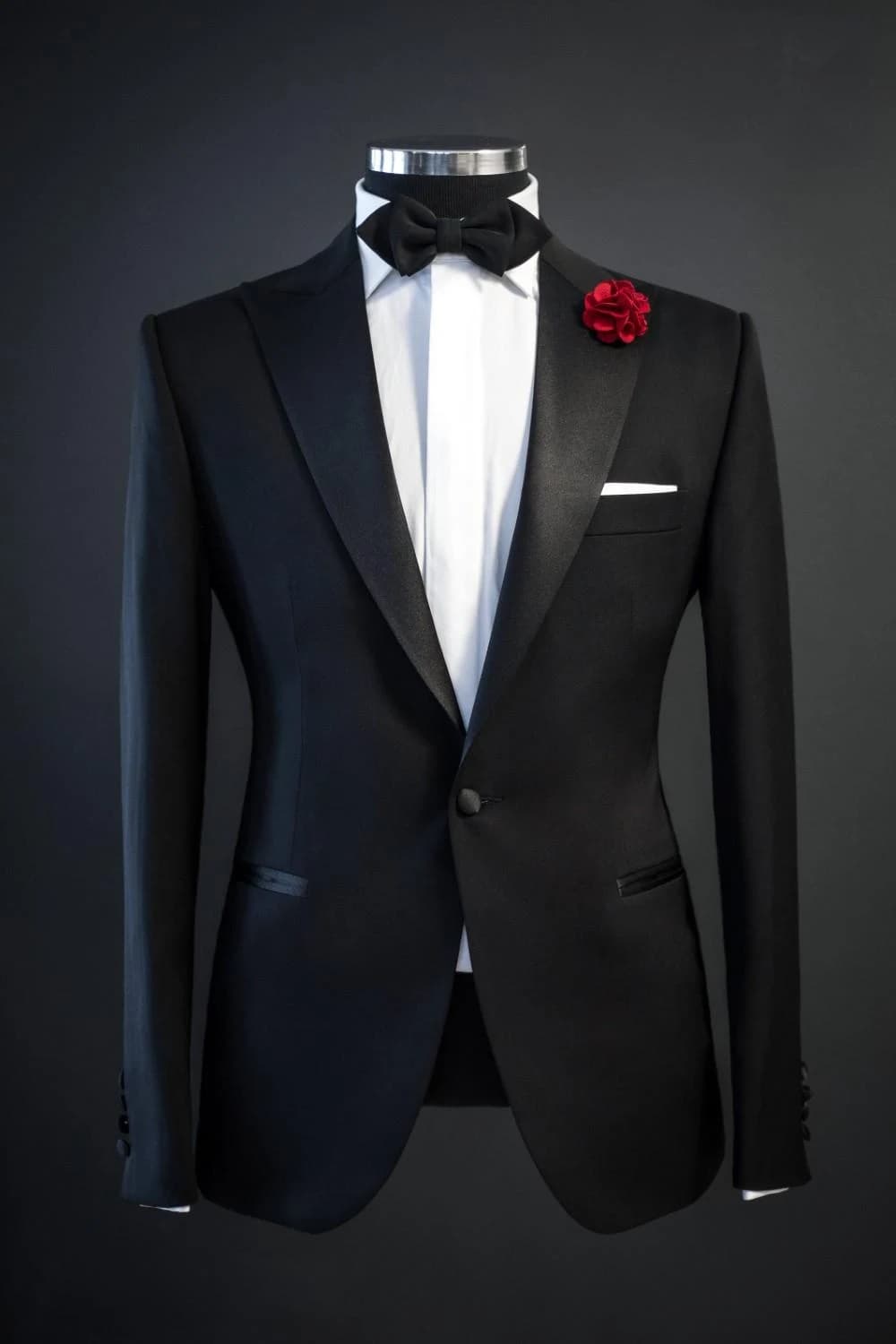
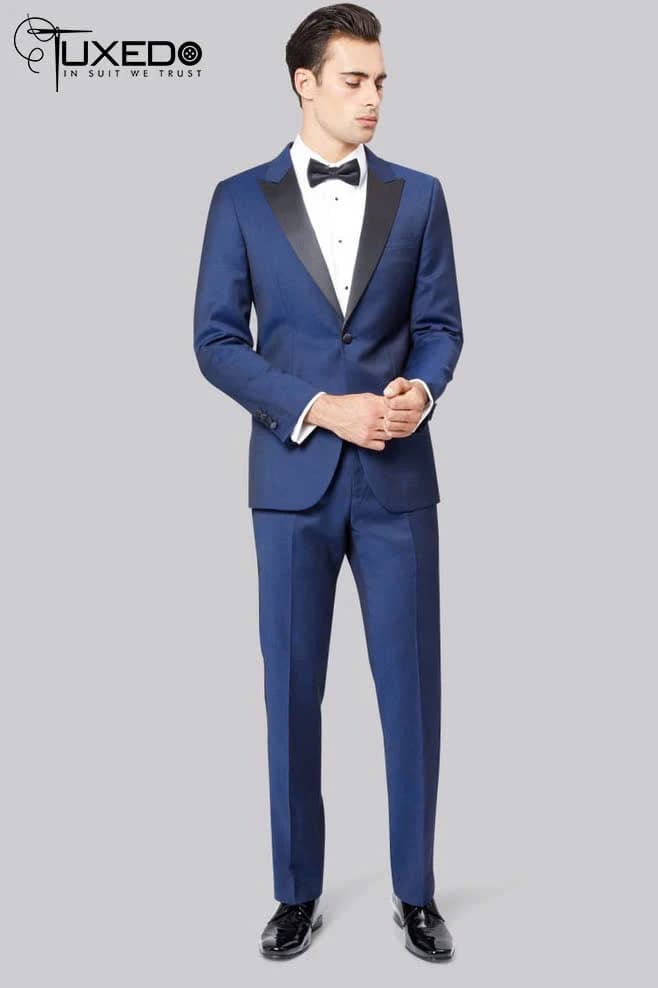
Colour decides whether damp patches show. Light grey, pale blue and ivory darken when wet and reveal the mark. Deep colours such as black, dark navy and charcoal hide it better, and a cloth with a fine woven texture or a quiet pattern conceals moisture more than a plain, glossy one. TUX-060 is a solid black tuxedo, and TUX-059 is a deep navy tuxedo with a black waistcoat and lapels, both in a dark, closed palette.
An ivory or white tuxedo needs more thought. It may show less of a damp mark than light grey does, but it stains easily at the underarm and collar.
A handkerchief and spares
A bit of backup is small but reassuring:
- A cloth handkerchief (not a decorative pocket square) for the forehead and palms.
- A spare undershirt and a spare dress shirt in a bag, if the event is long.
- Deodorant or antiperspirant applied the evening before, as directed on the product.
- Oil-blotting paper for the face, and small tissues.
- Somewhere outside the hall to hang your jacket when you need a break.
When you walk into an air-conditioned room, go in slowly and do not strip off your jacket in the middle of a crowd, so the moisture dries naturally.
Care after the event
After wearing, hang the jacket on a broad hanger somewhere airy until it is fully dry, and do not push it straight into a garment bag. Launder the shirt and undershirt soon. The underarm area of the jacket should be cleaned by a professional from time to time. The article on wearing a tuxedo in hot weather offers more for sticky conditions.
When to ask a tailor
If you sweat heavily, tell the tailor at the measuring stage so the cloth, lining and ventilation can be chosen for you rather than copied from a sample. See our bespoke tuxedo page and book a fitting for advice in person.
Published 03/11/2026 · 19:00 · Editor: Mon Amie