Why a tuxedo
Wearing Black Tie as a Courtesy to Your Host
A dress code is an invitation with a condition. Dressing correctly in black tie shows respect without upstaging your host, and what to do without a tuxedo.
Mon Amie · 19/10/2026
When an invitation says "Black Tie", it is more than a suggestion about clothing. It is the host telling you that they have prepared the evening with care and hope their guests will help hold that atmosphere. Arriving in a tuxedo is a courtesy, much like arriving on time or bringing a small gift to someone's home.
A dress code is an invitation with a condition
An invitation usually says when, where and also how to dress. The last part is easy to treat lightly, but it belongs to the invitation and is not decoration. The host chooses a dress code to set the tone for the entire event: a formal dinner, a gala, a wedding.
So think of it as a condition attached to the invitation. When you accept, you accept that too. If you find you cannot meet it, the courteous course is to ask the host or decline graciously, rather than arrive and leave others to take notice. For a close look at each level, read what black tie dress code means.
Dressing correctly is a form of respect
Hosts put in a great deal: choosing the venue, building the space, inviting guests, preparing their welcome. When you walk in wearing a tuxedo that fits, you show that you spent time preparing for the night. It is a small thing, but a host always notices.
There is another reason. When everyone dresses to the same standard, the event becomes visually coherent. Group photographs look better, the room looks composed, and nobody feels self-conscious about being over- or underdressed next to a neighbour. Each guest's small effort builds that.
Dress correctly without upstaging the host
Respecting a host also means not taking their stage. At a wedding the couple are the focus. At an awards evening the honourees are. A guest should be part of the scene, not a second centrepiece.
For a tuxedo, that has practical consequences:
- Classic colours, black or midnight blue, rather than bright red or metallic gold, unless the invitation clearly encourages it, as with a "creative black tie" line.
- At a wedding, avoid a full white or ivory jacket where the groom might wear one, since it can cause confusion.
- Restrained accessories. A pocket square and a refined pair of cufflinks are enough; loud badges and prints draw attention that is not needed.
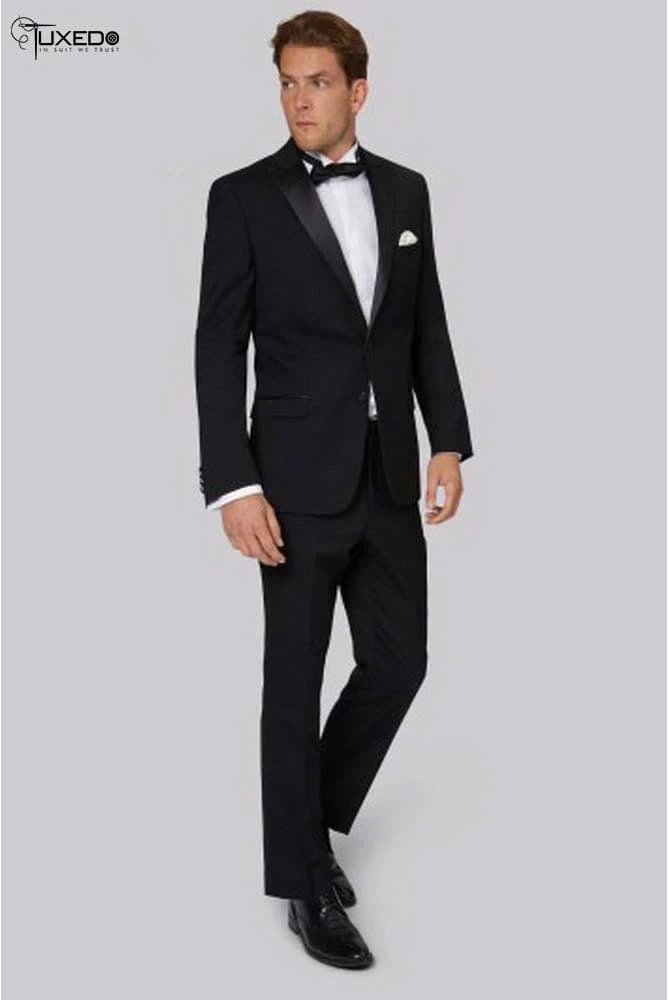
A classic black model such as TUX-041, black with peak lapels, is usually a safe choice for a guest. For more on conduct while wearing it, the article on etiquette in a tuxedo has suggestions.
When you do not own a tuxedo
Having no tuxedo does not mean missing the event. There are three ways forward, and you should act early.
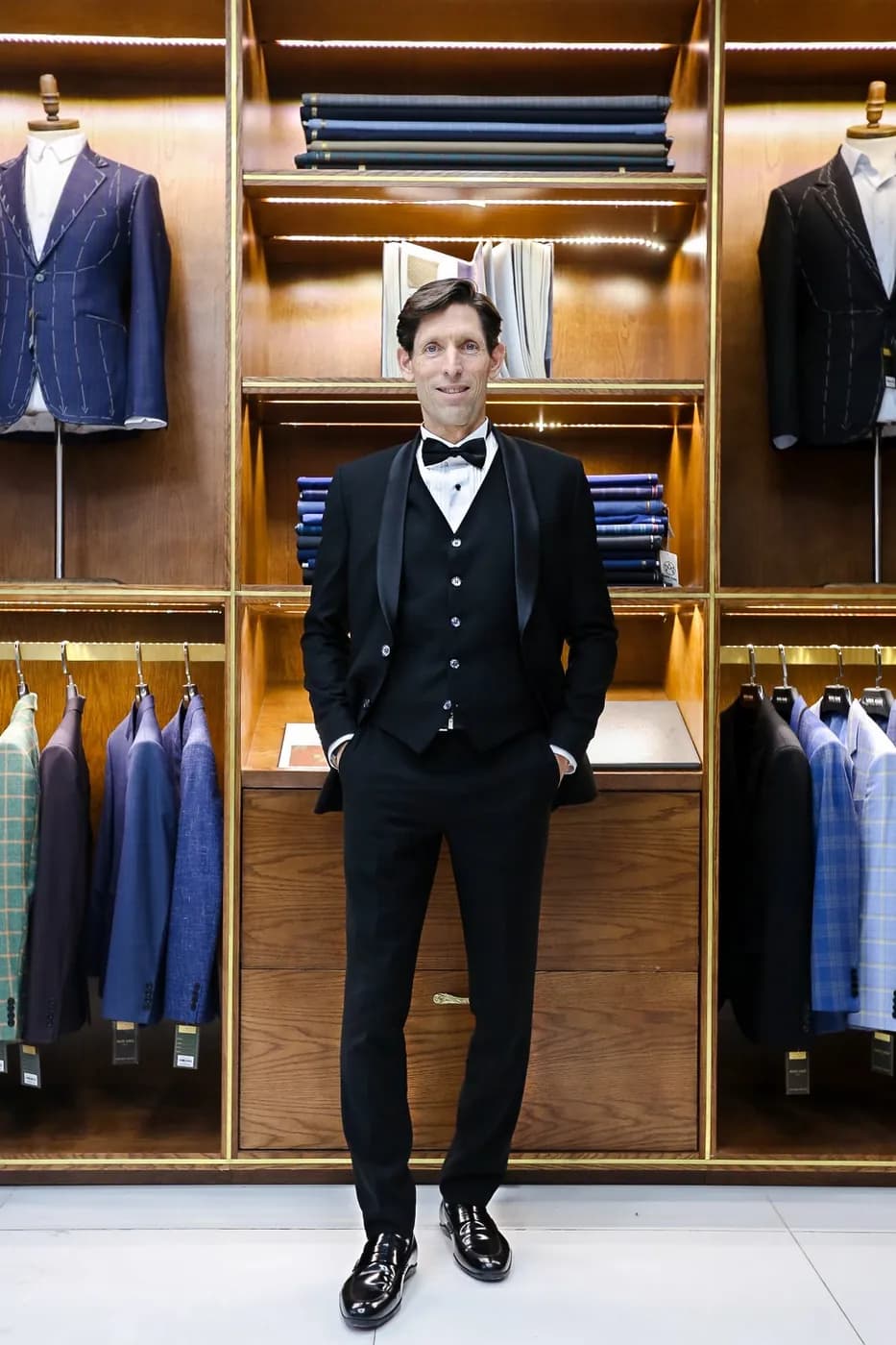
- Hire. For a single occasion, hiring is sensible. Mon Amie offers tuxedo hire: you try the suit at a showroom, it is altered to fit, and cleaning is included. Prices depend on the model, so ask a specialist.
- Have one made. If you know more occasions are coming, this is the time to commission a suit. Making time depends on the model and fitting schedule, so order well before the event.
- Ask the host. If it is truly impossible, you can ask whether a dark suit would be acceptable. Hosts usually appreciate being asked beforehand rather than being surprised. This is for genuine need; do not treat it as a shortcut.
What to avoid is arriving underdressed and then looking for an explanation at the door. People are generally understanding, but you will not feel at ease.
Book a fitting at Mon Amie
If a black-tie invitation has just reached you, get in touch early so a specialist can help you decide between hire and bespoke, and choose a style suited to the nature of the event. You can book a fitting at a showroom or call the hotline on 0888.111.118.