A history of the bow tie
From the seventeenth-century cravat to white and black bow ties and the pre-tied version: how the bow tie became the defining mark of black tie.
Editor: Mon Amie · Published · about 3 min read
In this article
The bow tie is a descendant of the cravat, the neckcloth of European soldiers and courtiers in the seventeenth century. Since then it has travelled four stages: the cravat spread across Europe; the white and black bow ties divided evening dress between them in the nineteenth century; the pre-tied version appeared for convenience; and today the self-tied black bow tie is the sign by which black tie is recognised. Knowing this history, you can see why tailors give such a small piece of cloth so much attention.
The seventeenth-century cravat
The most common explanation of the origin goes like this: during the Thirty Years' War (1618 to 1648), Croatian mercenaries serving on the French side wore knotted scarves at the neck. The French court liked the look, and Louis XIV made it fashionable at court. The French word "cravate" sounds close to "Croate", a Croat, and the name is usually said to come from there. This is widely reported, though historians still argue over details.
From there the cravat spread across Europe, each country with its own way of tying it. In the eighteenth and nineteenth centuries tying a cravat became an art; manuals gave instructions fold by fold, and elaborate knots were tied to the names of dandies. Among the many styles, the styles tied into a bow are the direct ancestors of the bow tie.
White and black bow ties in nineteenth-century evening dress
As menswear simplified, the long tie and the small bow separated. For evening dress a convention formed: the tailcoat was worn with a white bow tie, which is the source of the name white tie. The dinner jacket, which appeared around the 1860s as a less ceremonial evening suit, was worn with a black bow tie, which is the origin of the name black tie. In both cases the bow was the fastest signal of formality, so much so that it gave its name to the dress code. See why it is called black tie.
The white bow tie was typically made of starched cotton piqué and tied by hand; the black one of satin, grosgrain or woven silk. The two barely changed over a century and a half.
When pre-tied bows appeared
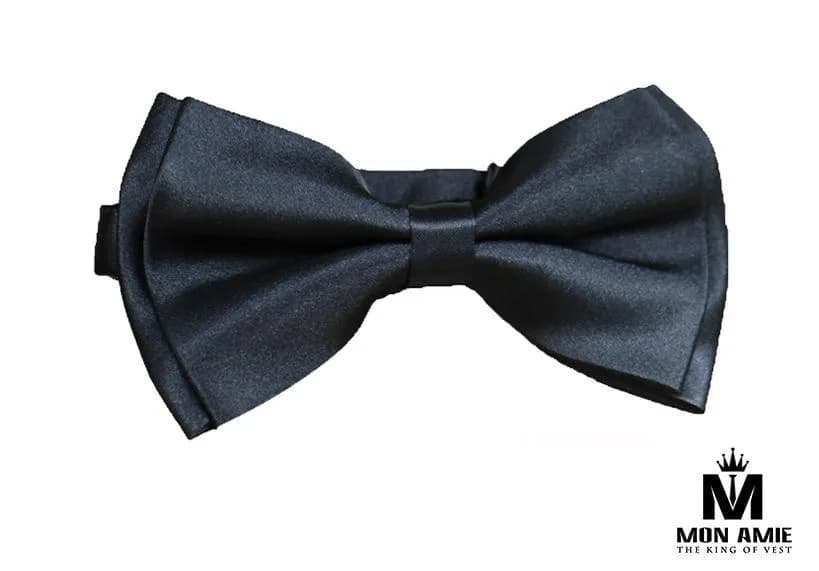
The pre-tied bow tie, already shaped and fitted with a strap or clasp for the neck, arrived when convenience grew important. As far as we know, pre-tied bows were being sold widely from the late nineteenth to the early twentieth century, along with stiff collars and other conveniences for the working man. For many it was a release from a difficult knot; for traditionalists it showed that the wearer had not bothered to learn.
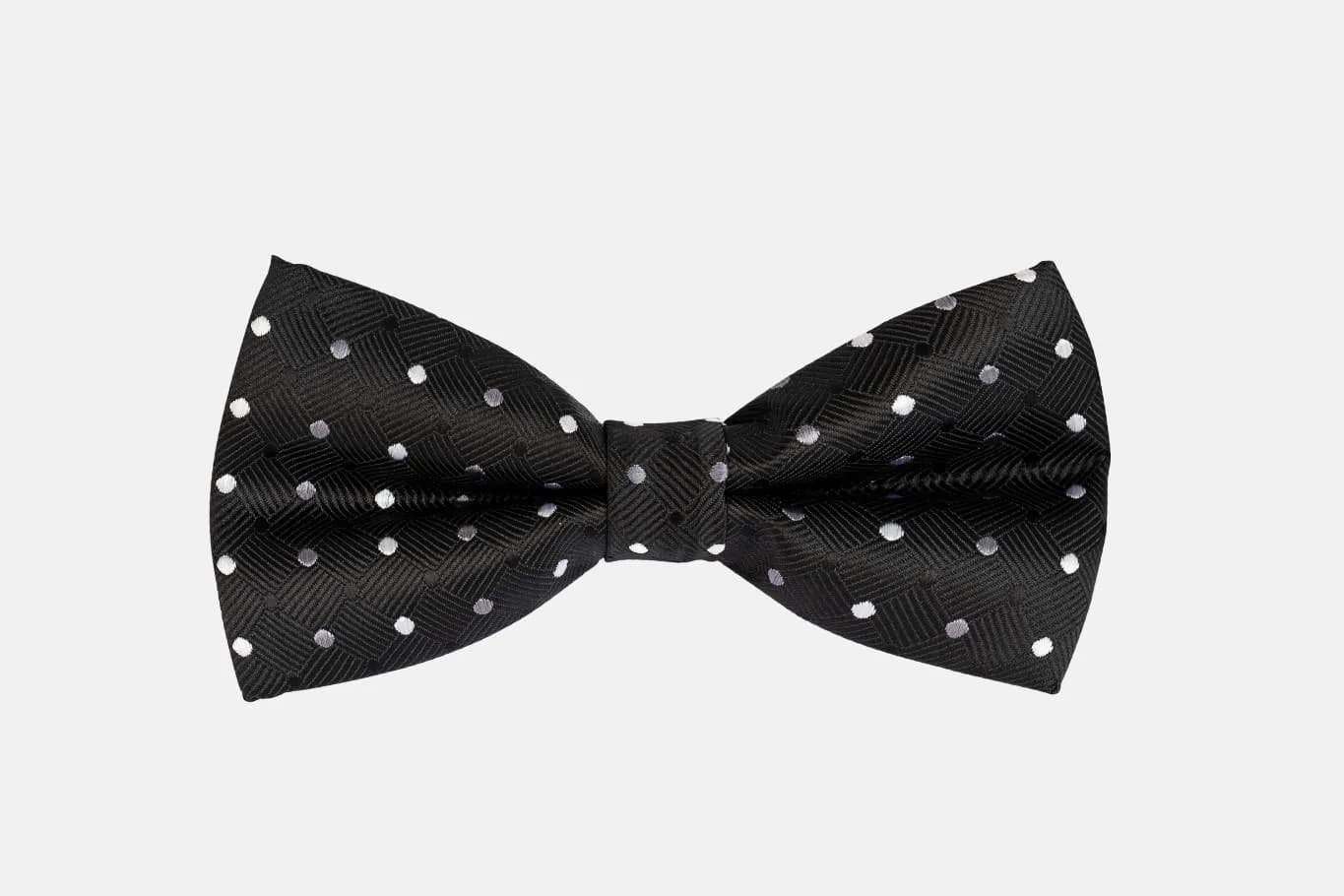
The visible difference is the shape: a hand-tied bow always has a slightly off-centre fold, a softer knot, wings that are not perfectly symmetrical. A pre-tied bow is too symmetrical and flat. That very imperfection gives the hand-tied bow its life.
What the bow tie means in black tie today
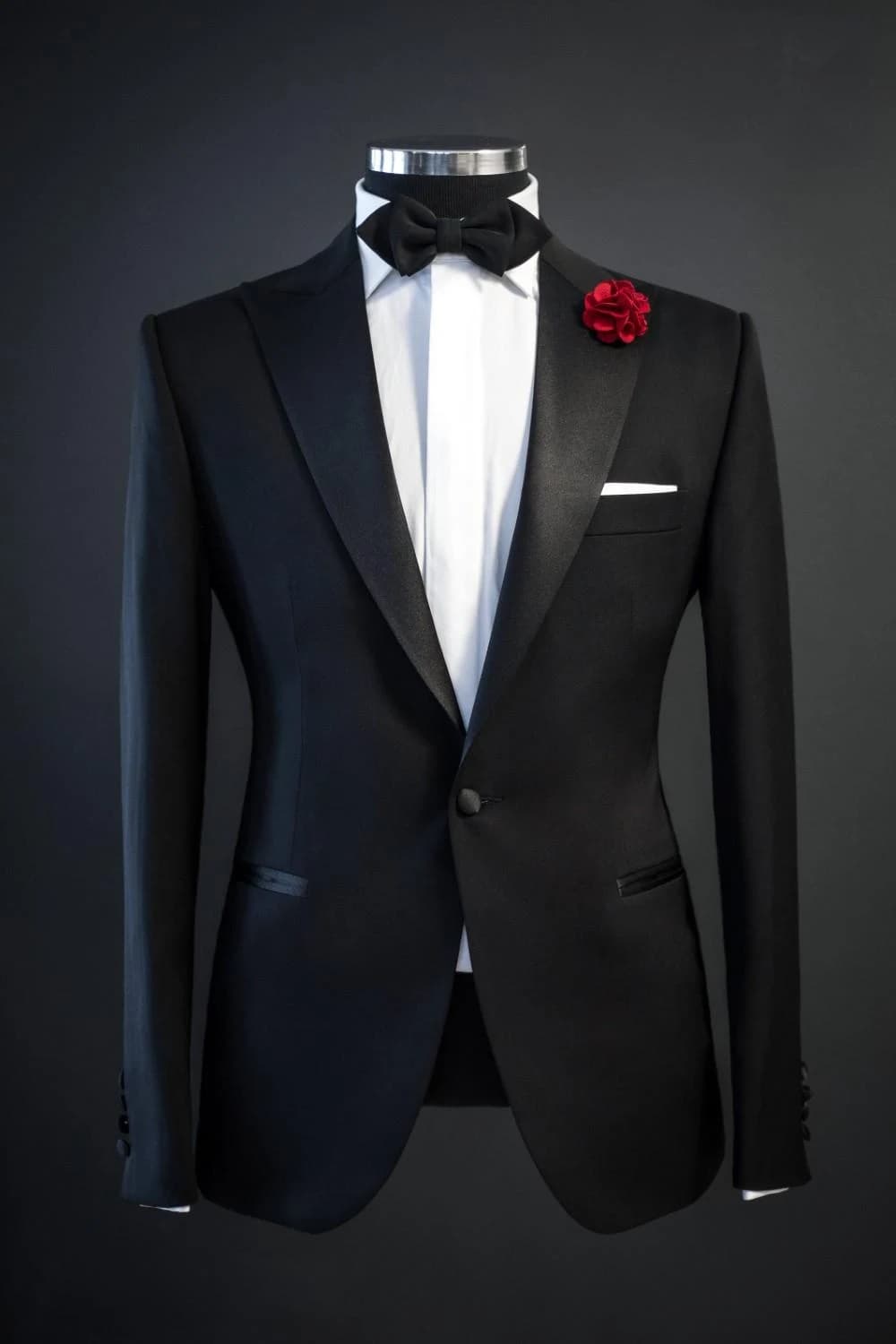
Today the bow remains the centre of black tie: you can drop the waistcoat, change your shoes, change the colour of the jacket, and yet the black bow tie is still what separates a tuxedo from a suit. The modern conventions are basically these:
- A black bow tie for black tie, in the same material as the lapel facing or at least the same black.
- A hand-tied bow is preferred to a pre-tied one on formal occasions, because it shows the wearer's own effort.
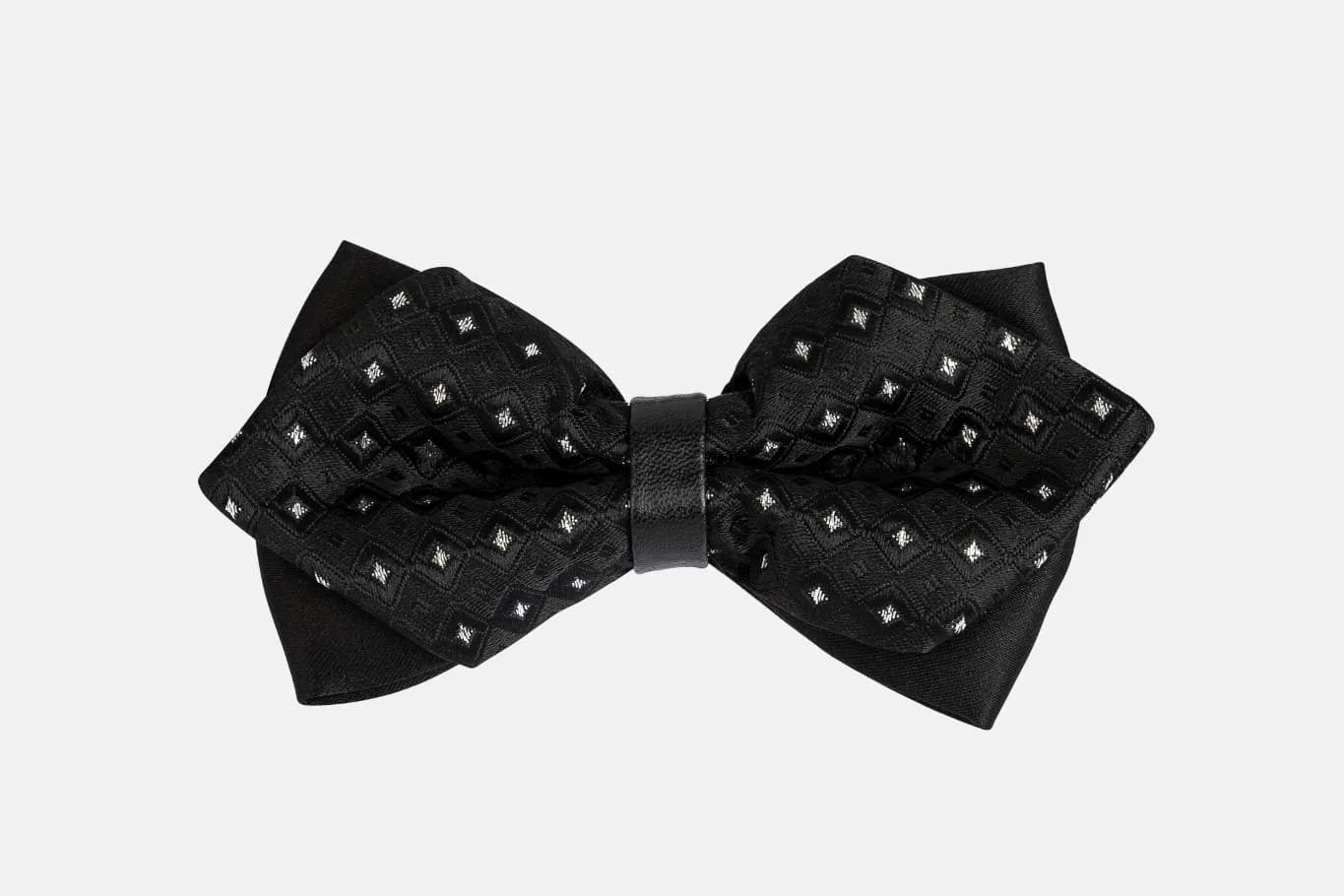
- Choose the shape to suit the neck and face: a broad butterfly suits a fuller face, a slimmer shape a narrower one.
- A coloured bow such as burgundy or navy belongs only when the whole outfit is a creative black tie version.
You can learn the knot in how to tie a bow tie. And if you want to know how strict an event will be, our dress code page sets it out.

A word from the Mon Amie workroom
We make tuxedos with the collar and shirt width suited to the bow tie you have chosen. If you have never tied a bow tie, an adviser in the showroom can show you at the fitting: book a visit.
Published 21/11/2026 · 13:00 · Editor: Mon Amie